CORRECTION: This article originally and unfortunately referred to Moeed Yusuf as a proxy of Pakistani officials. Due to a serious editorial lapse, for which I take personal responsibility, this was not removed prior to publication. It absolutely should have been removed and we are implementing stricter editorial practices to help ensure something like this does not happen again.
The Profession of Arms: A Guide for Young Army Officers
It takes courage, especially for a young officer, to check a man met on the road for not saluting properly or for slovenly appearance, but, every time he does, it adds to his stock of moral courage, and whatever the soldier may say, he has respect for the officer who does pull him up.
Read Document →The Dragon's Teeth: Assessing China's Military Modernization
PLA has focused on modernising its capabilities across all warfare domains to achieve these goals. This includes land, air, and maritime operations, nuclear, space, counter-space, electronic warfare and cyberspace operations, aiming to become a fully integrated joint force.
Read Document →Transforming the PLA: A Decade of reorganisation from SSF to ISF
PRC has engaged in a sustained and broad effort to transform the PLA from an infantry-heavy, low-technology, ground forces-centric military into a high-technology, networked force with an increasing emphasis on joint operations and naval and air power projection.
Read Document →Eyes without Borders: Exploring the World of Open Source Intelligence (OSINT) in the Digital Age
Open Source Intelligence (OSINT) is gaining prominence with the rise of social media, the digital society and the vast growth of publicly and commercially available information (PAI and CAI).
Read Document →
The PLA’s Developing Cyber Warfare Capabilities and India's Options
Informationised warfare blurs the lines between peacetime and wartime. A nation in the information age cannot wait for the hostilities to break out to collect intelligence, carryout influence operations, develop antisatellite systems or design computer software weapons.
Read Document →
Galwan and After
Why did China did this when he is under tremendous pressure in all fronts, is this China's salami slice tactics being progressed rigorously, what will be new Rules of Engagement, what will be escalatory control mechanism, who has taken this decision, will there be some pressure put by China in India's North-East through insurgency.
Read Document →
India’s Joint Doctrine for Cyberspace Operations: A Critical Review
Chief of Defence Staff (CDS) General Anil Chauhan and Secretary, Department of Military Affairs, formally released declassified versions of the Joint Doctrines for Cyberspace Operations during the Chiefs of Staff Committee meeting in New Delhi.
Read Document →
Know your Enemy General(now Field Marshal) Syed Aseem Munir
Gen SA Munir's position in the hierarchy of Pakistan was not very comfortable. The state of economy, insurgency in Pakhtoonistan and Balochistan, attack on the Jaffar Express, constant protests by supporters of Imran Khan's supporters inside and outside of parliament.
Read Document →
Decoding Operation SINDOOR: Key Aspects and Implications
Precision strikes were carried out on nine sites—four in Pakistan and five in PoK—linked to anti-India terrorist groups such as the LeT, JeM and the Hizbul Mujahideen. The targeted sites included Muridke (LeT headquarters) and Bahawalpur (JeM headquarters).
Read Document →
Chinese Cyber Exploitation in India's Power Grid - Is There a linkage to Mumbai Power Outage?
The New York Times (NYT), based on analysis by a U.S. based private intelligence firm Recorded Future, reported that a Chinese entity penetrated India’s power grid at multiple load dispatch points. Chinese malware intruded into the control systems that manage electric supply across India, along with a high-voltage transmission substation and a coal-fired power plant
Read Document →23 June 2017
*** PAKISTAN’S ANXIETIES ARE INCURABLE, SO STOP TRYING TO CURE THEM
CORRECTION: This article originally and unfortunately referred to Moeed Yusuf as a proxy of Pakistani officials. Due to a serious editorial lapse, for which I take personal responsibility, this was not removed prior to publication. It absolutely should have been removed and we are implementing stricter editorial practices to help ensure something like this does not happen again.
*** Iran, Russia, and the Taliban: Reassessing the Future of the Afghan State
***ISIS Captures Tora Bora, Once Bin Laden’s Afghan Fortress
KABUL, Afghanistan — Tora Bora, the mountain redoubt that was once Osama bin Laden’s fortress, fell to the Islamic State early Wednesday, handing the extremists a significant strategic and symbolic victory, according to Afghan officials and local elders and residents.*** A Coalition of the Less-Than-Willing
** Pentagon Cyberwarriors Find Fertile Ground in Silicon Valley
** Information Warfare: THAAD The Hack Attack Magnet
* Google ramps up efforts to combat online terrorism, recruitment efforts
Ideas and ivory towers
A substitute for planning - Learning to do better by looking at other states
As chief minister, Narendra Modi had to spend a few days every year in meetings with the Planning Commission. It was a begging trip; the Planning Commission decided the allocation of plan funds to states. He had to accept whatever he was given. Gujarat's fiscal and economic performance was good. He was not rewarded for it; instead, he was given less because he was raking in so much in taxes. He hated the supercilious looks and shrill sermons of Montek Singh Ahluwalia; he did not see why Ahluwalia should lord it over just because he had been to Oxford. He was determined to abolish the Planning Commission if he ever came to power in Delhi.India wants to be a trade, transit hub; inks UN pact in bid to counter China’s OBOR
Yoga: India’s Soft Power That Can Change The World
As U.S. Adds Troops in Afghanistan, Trump’s Strategy Remains Undefined
WASHINGTON — When President Trump made his first major decision on the war in Afghanistan, he did not announce it in a nationally televised address from the White House or a speech at West Point.Why the West treats China with kid gloves
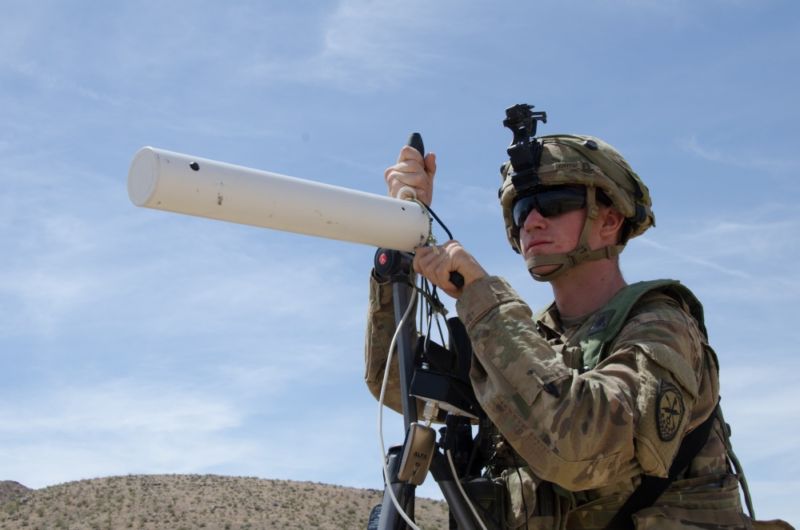
Facing limits of remote hacking, Army cybers up the battlefield
The US military and intelligence communities have spent much of the last two decades fighting wars in which the US significantly over-matched its opponents technologically—on the battlefield and off. In addition to its massive pure military advantage, the US also had more sophisticated electronic warfare and cyber capabilities than its adversaries. But those advantages haven't always translated into dominance over the enemy. And the US military is facing a future in which American forces in the field will face adversaries that can go toe to toe with the US in the electromagnetic domain—with disastrous physical results.Mosul Old City Battle Goes House to House as IS Fighters Defend
After Terror Attacks, Britain Moves to Police the Web
After deadly terrorist attacks and a nationwide election, Britain is once again focusing on a controversial plan: to regulate the internet.What happens after the Islamic State is defeated in Iraq and Syria?
THE UNITED STATES is committed to defeating the Islamic State in Iraq and Syria, but as that goal nears realization, another strategic question looms: What security order will replace it, and which of the outside powers enmeshed in the region will stand behind that order? The Trump administration doesn’t appear to have a strategy for that, but others clearly do — which helps to explain the incidents over the weekend in which the United States downed a Syrian government warplane , while Iran fired intermediate-range missiles from its territory at Islamic State targets in eastern Syria. Dealing with Jihadist Returnees: A Tough Challenge
DOD RELEASES REPORT ON ENHANCING SECURITY AND STABILITY IN AFGHANISTAN
The Proposed Nuclear Ban Treaty: The Road to Utopia?
Why Russian Hybrid Warfare is a Threat to … Russia
owards a Dual Fleet? The Maritime Doctrine of the Russian Federation and the Modernisation of Russian Naval Capabilities
In this article, Richard Connolly examines Russia’s most recent maritime doctrine and whether the country has the material capabilities it needs to meet its naval objectives. More specifically, Connolly 1) compares the current maritime doctrine with its predecessor; 2) gauges the progress that has been made in an admittedly ambitious naval modernization program; 3) assesses how the program has been affected by financial and industrial constraints; and 4) wonders whether the naval structure that’s being created will actually serve Russia’s maritime ambitions.India kick-starts military satellite programs
Speed Up Light Tank, Heavy Armor Modernization, HASC Tells Army
Obstacles to Information Sharing in the Virtual Battlefield
Intelligence community must embrace the digital era: DIA director
Locked Shields: The world's largest cyber-war game
Cyberwar blurs lines between military/civilian, public/private sectors [CyCon Tallinn]
Don’t Blame NSA for WannaCry
Personal details of nearly 200 million US citizens exposed
Can Facebook Fix Its Own Worst Bug?
In early January, I went to see Mark Zuckerberg at MPK20, a concrete-and-steel building on the campus of Facebook’s headquarters, which sits across a desolate highway from the marshy salt flats of Menlo Park, Calif. The Frank Gehry-designed building has a pristine nine-acre rooftop garden, yet much of the interior — a meandering open-plan hallway — appears unfinished. There are exposed air ducts and I-beams scribbled with contractors’ marks. Many of the internal walls are unpainted plywood. The space looks less like the headquarters of one of the world’s wealthiest companies and more like a Chipotle with standing desks. It’s an aesthetic meant to reflect — and perhaps also inspire employee allegiance to — one of Facebook’s founding ideologies: that things are never quite finished, that nothing is permanent, that you should always look for a chance to take an ax to your surroundings.