The more power China has accumulated, the more it has attempted to achieve its foreign-policy objectives with bluff, bluster, and bullying. But, as its Himalayan border standoff with India’s military continues, the limits of this approach are becoming increasingly apparent.The Profession of Arms: A Guide for Young Army Officers
It takes courage, especially for a young officer, to check a man met on the road for not saluting properly or for slovenly appearance, but, every time he does, it adds to his stock of moral courage, and whatever the soldier may say, he has respect for the officer who does pull him up.
Read Document →The Dragon's Teeth: Assessing China's Military Modernization
PLA has focused on modernising its capabilities across all warfare domains to achieve these goals. This includes land, air, and maritime operations, nuclear, space, counter-space, electronic warfare and cyberspace operations, aiming to become a fully integrated joint force.
Read Document →Transforming the PLA: A Decade of reorganisation from SSF to ISF
PRC has engaged in a sustained and broad effort to transform the PLA from an infantry-heavy, low-technology, ground forces-centric military into a high-technology, networked force with an increasing emphasis on joint operations and naval and air power projection.
Read Document →Eyes without Borders: Exploring the World of Open Source Intelligence (OSINT) in the Digital Age
Open Source Intelligence (OSINT) is gaining prominence with the rise of social media, the digital society and the vast growth of publicly and commercially available information (PAI and CAI).
Read Document →
The PLA’s Developing Cyber Warfare Capabilities and India's Options
Informationised warfare blurs the lines between peacetime and wartime. A nation in the information age cannot wait for the hostilities to break out to collect intelligence, carryout influence operations, develop antisatellite systems or design computer software weapons.
Read Document →
Galwan and After
Why did China did this when he is under tremendous pressure in all fronts, is this China's salami slice tactics being progressed rigorously, what will be new Rules of Engagement, what will be escalatory control mechanism, who has taken this decision, will there be some pressure put by China in India's North-East through insurgency.
Read Document →
India’s Joint Doctrine for Cyberspace Operations: A Critical Review
Chief of Defence Staff (CDS) General Anil Chauhan and Secretary, Department of Military Affairs, formally released declassified versions of the Joint Doctrines for Cyberspace Operations during the Chiefs of Staff Committee meeting in New Delhi.
Read Document →
Know your Enemy General(now Field Marshal) Syed Aseem Munir
Gen SA Munir's position in the hierarchy of Pakistan was not very comfortable. The state of economy, insurgency in Pakhtoonistan and Balochistan, attack on the Jaffar Express, constant protests by supporters of Imran Khan's supporters inside and outside of parliament.
Read Document →
Decoding Operation SINDOOR: Key Aspects and Implications
Precision strikes were carried out on nine sites—four in Pakistan and five in PoK—linked to anti-India terrorist groups such as the LeT, JeM and the Hizbul Mujahideen. The targeted sites included Muridke (LeT headquarters) and Bahawalpur (JeM headquarters).
Read Document →
Chinese Cyber Exploitation in India's Power Grid - Is There a linkage to Mumbai Power Outage?
The New York Times (NYT), based on analysis by a U.S. based private intelligence firm Recorded Future, reported that a Chinese entity penetrated India’s power grid at multiple load dispatch points. Chinese malware intruded into the control systems that manage electric supply across India, along with a high-voltage transmission substation and a coal-fired power plant
Read Document →20 August 2017
*** Calling the Chinese Bully’s Bluff
The more power China has accumulated, the more it has attempted to achieve its foreign-policy objectives with bluff, bluster, and bullying. But, as its Himalayan border standoff with India’s military continues, the limits of this approach are becoming increasingly apparent.Doklam Crisis: Testament To India’s Strategic Confidence, An Exclusive Piece
India’s lethargic approach to national security
For past 70 yrs, India’s fauj has been its strongest shield
Twice-decorated Army war veteran decodes Doklam standoff
Talk Point: Does border infrastructure determine India’s military posture towards China?
Over the last decade, China has invested in strengthening the infrastructure along its border areas. The Chinese army began building a permanent road in Doklam this year in an effort to boost its military capabilities in the region. Analysts say, with regards to infrastructure, India woke up late, tried playing catch up, but still lags behind.A new strategy for Afghanistan: change course, quit the fight
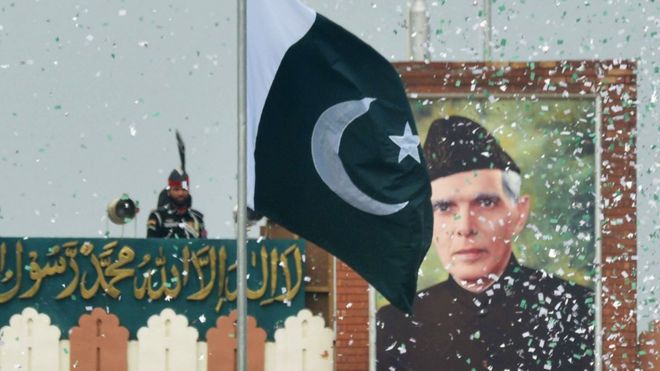
How Jinnah's ideology shapes Pakistan's identity
In 1940 in Lahore Muhammad Ali Jinnah, the man who founded Pakistan, gave a seminal speech setting out the need for a separate state for Muslims on the subcontinent.Sri Lanka's Debt and China’s Money
Modernize the South Asia Nuclear Facility “Non-Attack” Agreement
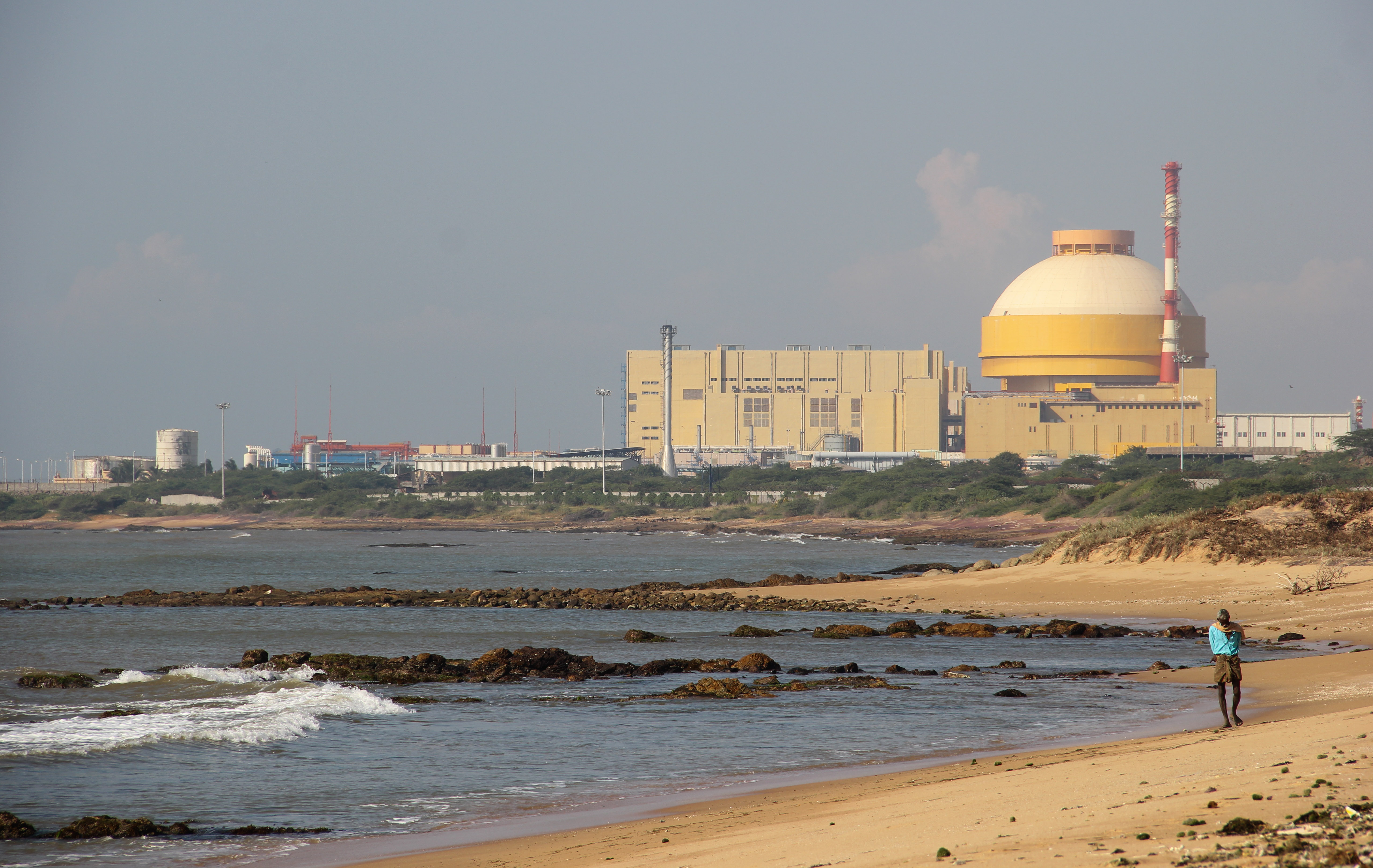
On January 1, 2017, Indian and Pakistani diplomats exchanged official lists of the nuclear facilities located in their respective countries. According to news accounts at the time, this was the 26th such annual exchange of lists, pursuant to a 1988 bilateral confidence building agreement not to attack each other’s nuclear installations.[i] The fact that this exchange has been implemented without interruption, during periods of both calm and military crisis, makes it the most enduring nuclear confidence-building measure (CBM) on record in South Asia. At the same time, the banality of this exchange suggests that the agreement has little practical contemporary meaning for peace and security in the region.A Triangular MIRV Restraint Regime in Southern Asia
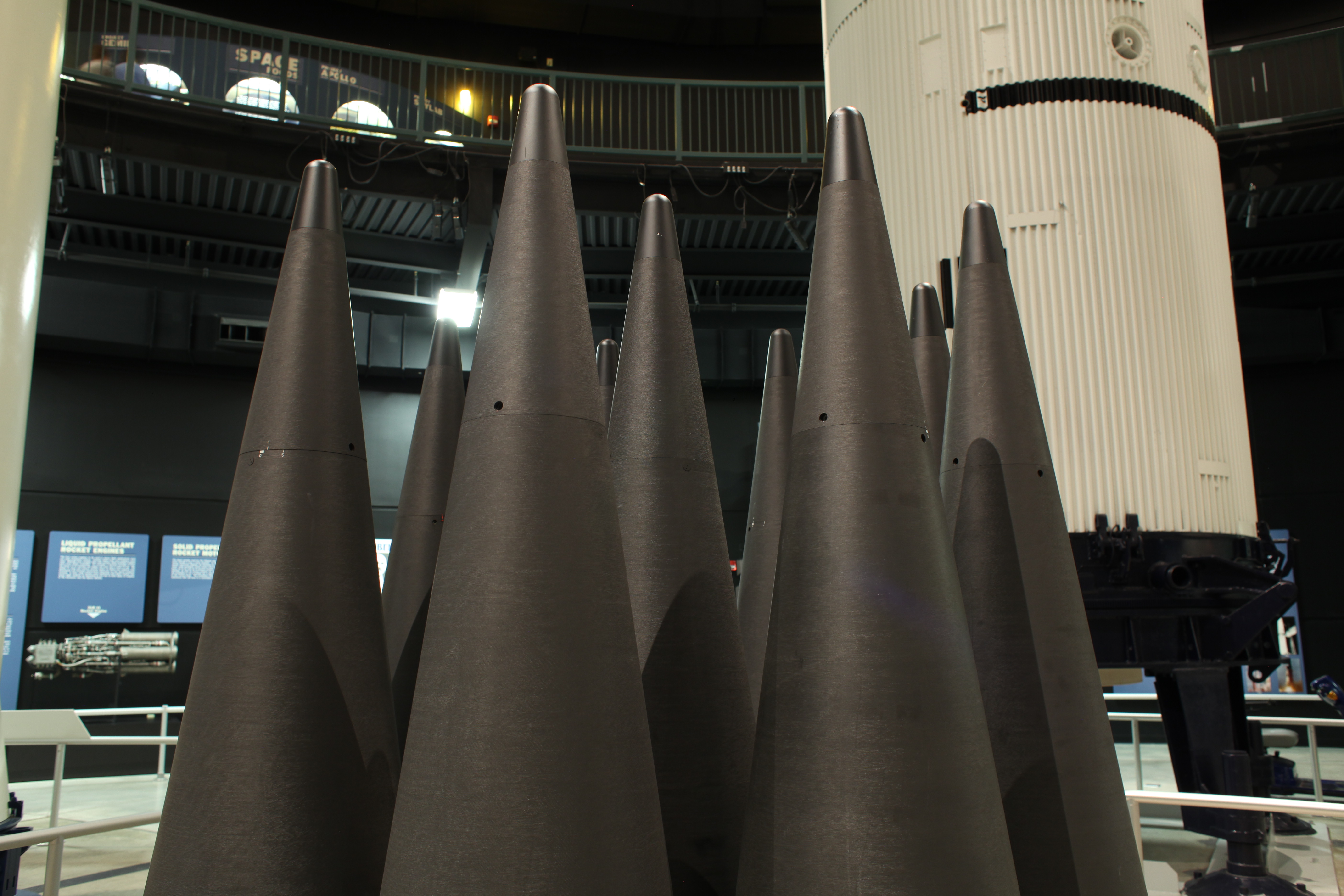
The advent of multiple independently-targetable re-entry vehicles (MIRVs) in Southern Asia can be quite consequential in terms of the unfolding triangular nuclear competition involving China, India, and Pakistan. The three nuclear-armed neighbors have demonstrated their MIRV capabilities, with China being the earliest entrant, having reportedly placed them on its DF-series missiles.[1] In decades ahead China’s MIRV programs would be sure to mature. In the absence of confidence-building and nuclear risk-reduction measures (NRRMs), the advent of MIRVs will exacerbate concerns for the respective national security policies of all three countries and for the regional strategic balance. Although the presence of MIRVs in Southern Asia will not be as pernicious as it was during Cold War [2] they will have ripple effects in threat-perception, doctrine, and the perceived need for counter-measures.[3] The complicated nuclear interactions among China, India, and Pakistan are about to become even more complex.Create a Channel for a U.S.-China Dialogue on South Asia
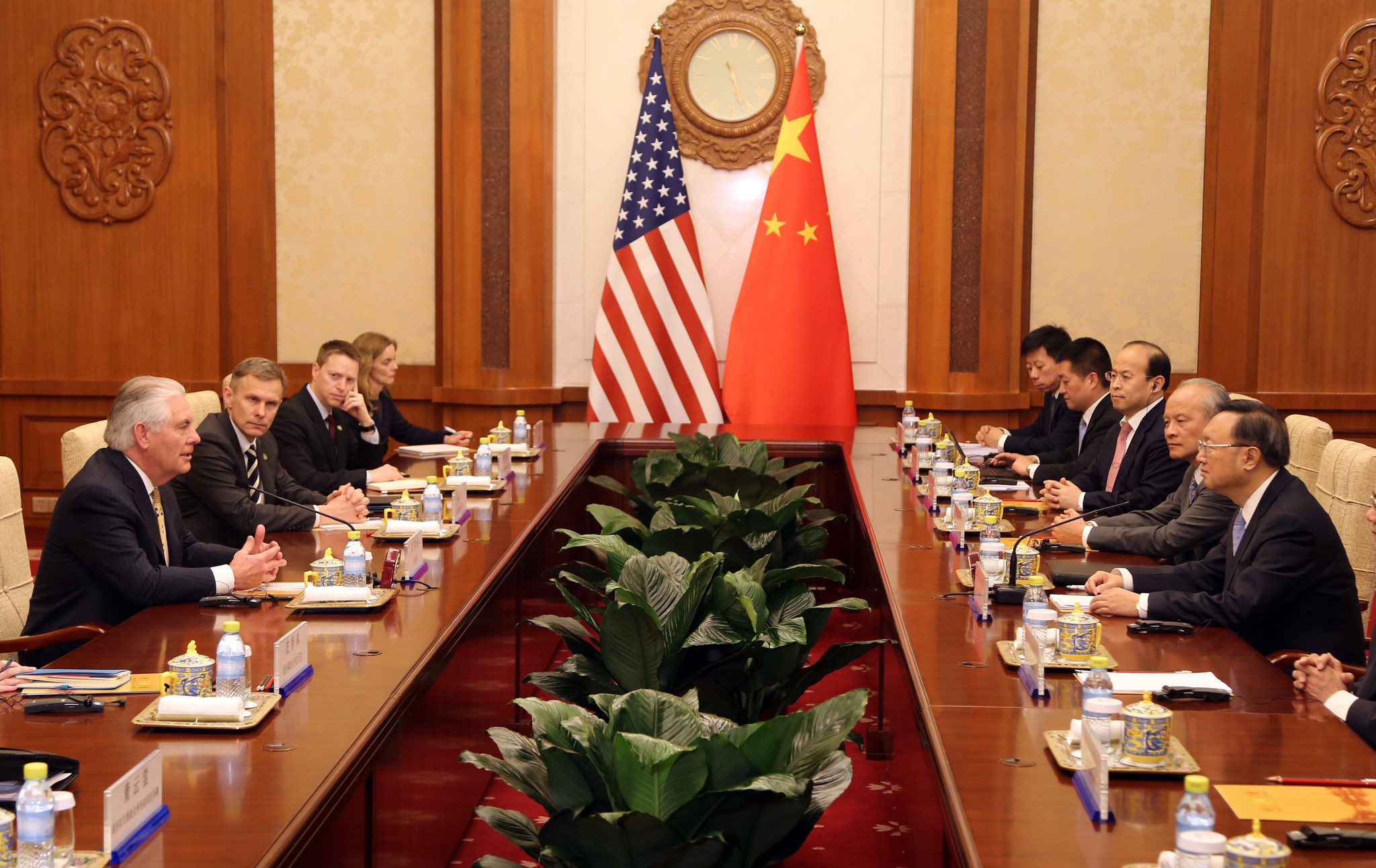
The real danger of an explosive conflict and potential nuclear war lingers in South Asia. Relations between India and Pakistan remain distrustful, confrontational, and highly volatile as the result of decades-long hostility. War plans are being refined on both sides – a war that could be triggered by terrorist attacks launched by Pakistan-based groups. Escalation control seems to be assumed by both sides, but miscalculation of intentions and reactions could ignite a catastrophic nuclear war.China’s Intellectual Property Theft Must Stop
President Trump on Monday instructed the office of the United States Trade Representative to consider an investigation into China’s sustained and widespread attacks on America’s intellectual property. This investigation will provide the evidence for holding China accountable for a decades-long assault on the intellectual property of the United States and its allies.Chinese Double Standards in the Maritime Domain
‘Drive Russians Bananas’ With Rockets In Boxes: CSIS On Hidden Missiles
Israel girds for next round of battle in Gaza Strip
North Korea’s Dangerously Rudimentary Nuclear Command-and-Control Systems
The Profexer: FBI Has Interviewed a Malware Expert in the Ukraine Who Wrote the Code Used by Russian Intelligence to Penetrate the DNC Computers
Korean War 2.0? The Signs To Watch
America's Darwinian Nationalism
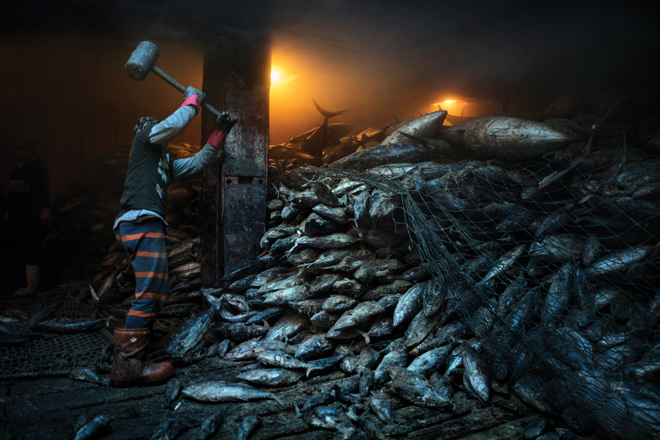
A Global Fish War is Coming
Nearly two decades into the 21st Century, it has become clear the world has limited resources and the last area of expansion is the oceans. Battles over politics and ideologies may be supplanted by fights over resources as nations struggle for economic and food security. These new conflicts already have begun—over fish.The Ongoing Challenge of Irregular Warfare: Thoughts on Responses and Intelligence
IKE’S LAMENT: IN SEARCH OF A REVOLUTION IN MILITARY EDUCATION
It was the day after Suzy died. Congressman Ike Skelton’s dearly loved soulmate was gone, and Ike’s call to me that night was heart-rending. Our annual House Armed Services Committee battlefield staff ride was the next day so I assumed Ike was calling to cancel. After offering my condolences, I suggested that we might put off the event until the next year. Ike said no. We’d meet as usual in front of the Russell Building at 8 AM sharp. Then off to Antietam. At the time I wondered why.Air Force CISO says innovation key to future cyber defense
Securing cyberspace at the edge of the fight is not just about compliance, it is about agility and innovation, according to Peter E. Kim, Chief of Information Security Officer for the Air Force who spoke at the 2017 FCW Cybersecurity Summit. The Weaker Foe – Part 3
The Finnish success in the Winter War case study suggests that it is possible to win as the weaker foe, but not if we fight in the same way as the stronger enemy. Since we don’t know we will remain the strongest military power, the U.S. Army must develop the attributes necessary to win as the weaker foe, as the near-peer. The good news is these attributes—cunning, risk-taking, problem-generating, and asymmetrical operations—are those that effective military organizations ought to practice anyway. Our challenge has been that because we have thought, acted, prepared, and resourced as the superpower that we are, those attributes have gradually atrophied out of our organizations, individuals, and culture. Still, all is not lost, and it is not too late to change.Adarsh Committee Report: Oddities Galore
Thunder Drone: Best Name Ever, But What Is It?
Big Data enters Indian policy
Defensive cyber teams take on more missions under new model
Given the obfuscation afforded to actors in cyberspace and the low barrier of entry, cyber protection teams within the U.S. Central Command area of responsibility were conducting no more than two missions a year, as they were becoming bogged down in preparatory intelligence for defensive operations.Strategy Considerations Across the Spectrum of Warfare
Today, warfare is characterized by low-intensity conflicts, nuclear deterrence, and emergent cyber conflicts, yet the United States military must engage in all three while simultaneously remaining prepared for high-intensity conflicts. For the U.S., the main character of conflict post-World War II has been in limited warfare. For example, the U.S. has not committed all its resources, such as nuclear weapons, into any specific conflict because a total war with a nuclear country would obliterate entire populations. The modern era has also seen the rise of compelling and effective non-state actors who have become influential by using social media to organize and resource their activities./arc-anglerfish-arc2-prod-mco.s3.amazonaws.com/public/LUXAJP7WVBCQHNQ73WJBMCDBNM.jpg)