


 The news that China is planning to divert the waters of the Yarlung Tsangpo (the upper stream of India’s Brahmaputra) to its water-starved Xinjiang province is hardly surprising. It has been a long-standing part of the grand South-North Water Transfer project conceptualised as early as in the 1950s by Mao Zedong and somewhat grandly restated in Li Ling’s 2005 book Tibet’s Water will Save China.
5 December 2017
The Brahmaputra conundrum
The news that China is planning to divert the waters of the Yarlung Tsangpo (the upper stream of India’s Brahmaputra) to its water-starved Xinjiang province is hardly surprising. It has been a long-standing part of the grand South-North Water Transfer project conceptualised as early as in the 1950s by Mao Zedong and somewhat grandly restated in Li Ling’s 2005 book Tibet’s Water will Save China.MALI IS FRANCE’S AFGHANISTAN, BUT WITH A DIFFERENCE
STEPHANIE PEZARD AND MICHAEL SHURKIN
 In a recent editorial in Le Monde, French journalist Christophe Ayad draws disturbing parallels between the French military operations in Mali — which will reach their five-year mark in January — and America’s involvement in Afghanistan. At first glance the comparison is compelling, and in some important ways, accurate. Yet these two interventions present some fundamental differences that make the Afghanistan case likely more intractable than Mali’s, and give reason for optimism in France.
The Resurgence of Central Asian Connectivity
By Luca Anceschi
 It is early September 2017 at the Dostyk border post, where southern Kyrgyzstan meets Uzbekistan’s Andijan region. Located only a few kilometers outside of Osh, Dostyk became instrumental in separating communities that were once united: until the summer, people could only cross it by producing a so-called telegramma – an official proof of invitation received from across the border. A lively ceremony is held to mark the reopening of Dostyk or, more precisely, the termination of this strict invitation-only policy. Local leaders from either side of the border and Kyrgyzstan’s deputy prime minister noted the progress made by bilateral relations in the preceding year, highlighting the benefits that a working border post may bring to the economies of the neighboring regions and, most importantly, the daily lives of local communities.
New Era of China’s Development and Prospects for China-Russia Relations
Li Hui
I would like to thank Mr. Ivanov for his initiative, and members of the Russian International Affairs Council for organizing this event, which provides a platform for us to share views on the 19th National Congress of the Communist Party of China and its influence, the development of China in a new era, and the prospects for Russia–China relations moving forwards.
China's Multinational Corporations
 Only a decade ago, Chinese companies accounted for barely 1 percent of the world’s largest companies and multinationals. Today, their share has grown by more than tenfold. After mid-November, Alibaba again won the highest ecommerce sales day in history on China’s Singles’ Day beating last year’s record by almost 40 percent - hitting some $25.4 billion.In the United States, the 2016 combined Black Friday and Cyber Monday sales amounted to $6.5 billion, while Amazon’s 2017 Prime Day sales rose to $600 million to $1 billion range. Even combined, all of these revenues account for less than one-third of Alibaba’s Singles’ Day sales.
Iran and Russia, Growing Apart
By Alex Vatanka
Today, the latest round of UN-brokered Syria peace talks begins in Geneva, with the goal of bringing President Bashar al-Assad and various armed opposition factions to a political settlement that could put an end to half a decade of civil war in the country. The Geneva talks come one week after another set of Syria talks, this time in Sochi. The November 22 gathering, which included some of the conflict’s key remaining players—Iran, Turkey, and Russia—was supposed to be a turning point in the issue of Syria’s future. At least that had been Tehran’s hope. Instead, the talks highlighted emerging fissures between Assad’s two main foreign backers, Iran and Russia, and even divisions within Iran between the civilian government of President Hassan Rouhani and the leadership of the Islamic Revolutionary Guards Corps (IRGC).
RUSSIA IS NOW PROVIDING NORTH KOREA WITH INTERNET: WHAT THAT COULD MEAN FOR CYBER WARFARE
 Amid diplomatic fallout between North Korea and China, its only major trade partner, Russia is positioning itself to be a stronger North Korean ally, reaching out to provide North Korea with an internet connection. As a result, Russia may embolden North Korea to launch more destructive cyberattacks. Stronger cooperation between the two raises the possibility that they will even collaborate on cyberattacks themselves, which would be devastating for the international community.
NORTH KOREA’S MILITARY CAPABILITIES
David Maxwell’s Comment: “As as aside, I just participated in a review of an unclassified DIA report on the North Korean Military that is based on the format of the old Soviet Military Reports. When it is published it will be able to serve as the authoritative common reference for discussing north Korea military capabilities. It will be of great use to students, researchers, staffers, and policy makers.”
Introduction
The Promise and Peril of Trump’s Cyber Strategy
BY JOSEPH MARKS
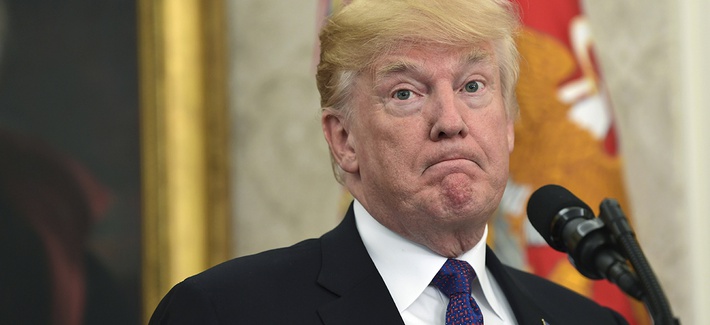 Is Donald Trump’s cybersecurity policy humming along at the 10-month mark of his administration, a rare space of continuity amid myriad shifts and realignments? Or is Trump blazing a new path that could set dangerous precedents in cyberspace and leave the internet more ungovernable in the future? The answer, according to cyber analysts and former officials in Republican and Democratic administrations, might be both. When it comes to basic management of the government’s cybersecurity responsibilities, they say, it might be difficult to distinguish Trump’s cybersecurity program from his predecessor’s.
Destroyer of Worlds Taking stock of our nuclear present
By Elaine Scarry
In February 1947, Harper’s Magazine published Henry L. Stimson’s “The Decision to Use the Atomic Bomb.” As secretary of war, Stimson had served as the chief military adviser to President Truman, and recommended the attacks on Hiroshima and Nagasaki. The terms of his unrepentant apologia, an excerpt of which appears on page 35, are now familiar to us: the risk of a dud made a demonstration too risky; the human cost of a land invasion would be too high; nothing short of the bomb’s awesome lethality would compel Japan to surrender. The bomb was the only option.
What the future of work will mean for jobs, skills, and wages
By James Manyika, Susan Lund, Michael Chui, Jacques Bughin, Jonathan Woetzel, Parul Batra, Ryan Ko, and Saurabh Sanghvi
In an era marked by rapid advances in automation and artificial intelligence, new research assesses the jobs lost and jobs gained under different scenarios through 2030. The technology-driven world in which we live is a world filled with promise but also challenges. Cars that drive themselves, machines that read X-rays, and algorithms that respond to customer-service inquiries are all manifestations of powerful new forms of automation. Yet even as these technologies increase productivity and improve our lives, their use will substitute for some work activities humans currently perform—a development that has sparked much public concern.
Negotiating The EU's Future On Even Ground
by Adriano Bosoni
 From its very inception, the European Union has depended on the alliance between France and Germany. The bloc's predecessor, the European Economic Community, formed with the principal goal of binding the two countries together so closely that another war on the Continent would be impossible. And from the 1950s on, a tacit agreement underlay their partnership: France was the main political and military power in the bloc, and Germany was the main financial supporter (paying for, among other things, onerous subsidies for French farmers). After German reunification in 1990, France even pushed for the creation of the euro as another way to strengthen Paris’ links with Berlin.
NATO mulls 'offensive defense' with cyber warfare rules
Robin Emmott
A group of NATO allies are considering a more muscular response to state-sponsored computer hackers that could involve using cyber attacks to bring down enemy networks, officials said. The United States, Britain, Germany, Norway, Spain, Denmark and the Netherlands are drawing up cyber warfare principles to guide their militaries on what justifies deploying cyber attack weapons more broadly, aiming for agreement by early 2019. The doctrine could shift NATO’s approach from being defensive to confronting hackers that officials say Russia, China and North Korea use to try to undermine Western governments and steal technology. “There’s a change in the (NATO) mindset to accept that computers, just like aircraft and ships, have an offensive capability,” said U.S. Navy Commander Michael Widmann at the NATO Cooperative Cyber Defence Centre of Excellence, a research center affiliated to NATO that is coordinating doctrine writing.
Internet of Things Device Security and Supply Chain Management
By Stacia Lee, Jessica Beyer
From refrigerators (Brandom, 2016) to buildings, nearly everything in our everyday lives is connected to the Internet (Intel, n.d.). While the Internet of Things (IoT), provides valuable modern conveniences, it also raises new security concerns. Unlike rigorous national and international standards for aviation and automobile safety, or even an established “Good Housekeeping” seal for certain household products (Good Housekeeping, 2014) – there are no conventions dictating or communicating the security of IoT devices.
How Blockchain Technology Can Serve the Have-nots
Can the blockchain, a distributed ledger technology that underpins cryptocurrencies such as the Bitcoin, be used to help millions of poor people gain access to financial services? Recent announcements by companies such as IBM and MasterCard suggest that it can, writes social venture capitalist Mir Haque in this opinion piece.Haque is the CEO of Aphaea Capital, a blockchain and cryptocurrency venture fund. Previously, he worked at McKinsey & Co., Deutsche Bank and Google. Haque also recently moderated the conference panel, ‘How Blockchain Can Advance Social and Economic Justice,’ at the 2017 Blockchain Economic Forum in New York.
A digital migraine? How the Americas can step up cybersecurity strategies
By: Aaron Mehta
/arc-anglerfish-arc2-prod-mco.s3.amazonaws.com/public/Z6HSDVPRKRC75LP56RGOAOIANM.jpg) Making a cybersecurity policy for just one nation is difficult. Developing a joint agreement between two nations on digital issues represents a raging headache. Finding common ground about 33 nations? That’s essentially impossible. And yet, according to Brig. Gen. S.M. Lacroix, a Canadian officer serving as director general of the Secretariat of the Inter-American Defense Board, some sort of unified cybersecurity agreement among the countries in the Americas needs to be reached in the future.
Making a cybersecurity policy for just one nation is difficult. Developing a joint agreement between two nations on digital issues represents a raging headache. Finding common ground about 33 nations? That’s essentially impossible. And yet, according to Brig. Gen. S.M. Lacroix, a Canadian officer serving as director general of the Secretariat of the Inter-American Defense Board, some sort of unified cybersecurity agreement among the countries in the Americas needs to be reached in the future.IoT is changing the meaning of ‘critical infrastructure’
By: Jessie Bur
/arc-anglerfish-arc2-prod-mco.s3.amazonaws.com/public/3IWN5ZHZONE2ZDHXRD63UCA2KE.jpg) The proliferation of internet of things devices tied into critical industries such as transportation and healthcare is changing the perspective on what constitutes critical infrastructure, according to government and industry experts who spoke at the 2017 CyberCon. “The attack surface is going to expand greatly,” said Ret. Maj. Gen John Davis, vice president and federal chief security officer at Palo Alto Networks. “When we start connecting all of these other devices, like devices that are involved in life-saving functions – transportation, cars – when we start connecting these things, we’re opening up a whole different category of impact. I think we will put people’s lives at risk, and I think there will be tremendous impact to national security, economic prosperity, public safety. So, I worry about the direction that this is going in.”
The proliferation of internet of things devices tied into critical industries such as transportation and healthcare is changing the perspective on what constitutes critical infrastructure, according to government and industry experts who spoke at the 2017 CyberCon. “The attack surface is going to expand greatly,” said Ret. Maj. Gen John Davis, vice president and federal chief security officer at Palo Alto Networks. “When we start connecting all of these other devices, like devices that are involved in life-saving functions – transportation, cars – when we start connecting these things, we’re opening up a whole different category of impact. I think we will put people’s lives at risk, and I think there will be tremendous impact to national security, economic prosperity, public safety. So, I worry about the direction that this is going in.”U.S. wargame highlights role of commercial space imagery in military conflicts
 Rising military powers like Russia and China have built an elaborate network of sensors to monitor regions of the world that are of strategic importance to the United States. A mix of military and commercial surveillance and targeting technologies is helping both Russia and China extend the reach of their long-range weapons, undermining U.S. access and influence in regions such as Eastern Europe and the South China Sea.
NATO mulls 'offensive defense' with cyber warfare rules
Robin Emmott
A group of NATO allies are considering a more muscular response to state-sponsored computer hackers that could involve using cyber attacks to bring down enemy networks, officials said. The United States, Britain, Germany, Norway, Spain, Denmark and the Netherlands are drawing up cyber warfare principles to guide their militaries on what justifies deploying cyber attack weapons more broadly, aiming for agreement by early 2019. The doctrine could shift NATO’s approach from being defensive to confronting hackers that officials say Russia, China and North Korea use to try to undermine Western governments and steal technology.
How the Army hopes to accelerate decision-making
By: Mark Pomerleau
/arc-anglerfish-arc2-prod-mco.s3.amazonaws.com/public/2PBQ3SXBDVAUJPWON24CQQD6WE.jpg) If the Army wants to be successful in future conflicts, its senior leaders believe they will have to make decisions faster.
If the Army wants to be successful in future conflicts, its senior leaders believe they will have to make decisions faster.
To help do that, the Army is trying to avoid the problems that have plagued the service in the last few years, including interoperability between IT, mission command systems and sensors. The concept called asymmetric vision/decide faster, or AVDF, is a philosophy of integrating systems at low technology readiness levels (TRL) as opposed to later in development, officials told C4ISRNET during a visit to the Army Communications-Electronics Research, Development and Engineering Center (CERDEC) Night Vision and Electronic Sensors Directorate at their Fort Belvoir facility.
Subscribe to:
Posts (Atom)