The Profession of Arms: A Guide for Young Army Officers
It takes courage, especially for a young officer, to check a man met on the road for not saluting properly or for slovenly appearance, but, every time he does, it adds to his stock of moral courage, and whatever the soldier may say, he has respect for the officer who does pull him up.
Read Document →The Dragon's Teeth: Assessing China's Military Modernization
PLA has focused on modernising its capabilities across all warfare domains to achieve these goals. This includes land, air, and maritime operations, nuclear, space, counter-space, electronic warfare and cyberspace operations, aiming to become a fully integrated joint force.
Read Document →Transforming the PLA: A Decade of reorganisation from SSF to ISF
PRC has engaged in a sustained and broad effort to transform the PLA from an infantry-heavy, low-technology, ground forces-centric military into a high-technology, networked force with an increasing emphasis on joint operations and naval and air power projection.
Read Document →Eyes without Borders: Exploring the World of Open Source Intelligence (OSINT) in the Digital Age
Open Source Intelligence (OSINT) is gaining prominence with the rise of social media, the digital society and the vast growth of publicly and commercially available information (PAI and CAI).
Read Document →
The PLA’s Developing Cyber Warfare Capabilities and India's Options
Informationised warfare blurs the lines between peacetime and wartime. A nation in the information age cannot wait for the hostilities to break out to collect intelligence, carryout influence operations, develop antisatellite systems or design computer software weapons.
Read Document →
Galwan and After
Why did China did this when he is under tremendous pressure in all fronts, is this China's salami slice tactics being progressed rigorously, what will be new Rules of Engagement, what will be escalatory control mechanism, who has taken this decision, will there be some pressure put by China in India's North-East through insurgency.
Read Document →
India’s Joint Doctrine for Cyberspace Operations: A Critical Review
Chief of Defence Staff (CDS) General Anil Chauhan and Secretary, Department of Military Affairs, formally released declassified versions of the Joint Doctrines for Cyberspace Operations during the Chiefs of Staff Committee meeting in New Delhi.
Read Document →
Know your Enemy General(now Field Marshal) Syed Aseem Munir
Gen SA Munir's position in the hierarchy of Pakistan was not very comfortable. The state of economy, insurgency in Pakhtoonistan and Balochistan, attack on the Jaffar Express, constant protests by supporters of Imran Khan's supporters inside and outside of parliament.
Read Document →
Decoding Operation SINDOOR: Key Aspects and Implications
Precision strikes were carried out on nine sites—four in Pakistan and five in PoK—linked to anti-India terrorist groups such as the LeT, JeM and the Hizbul Mujahideen. The targeted sites included Muridke (LeT headquarters) and Bahawalpur (JeM headquarters).
Read Document →
Chinese Cyber Exploitation in India's Power Grid - Is There a linkage to Mumbai Power Outage?
The New York Times (NYT), based on analysis by a U.S. based private intelligence firm Recorded Future, reported that a Chinese entity penetrated India’s power grid at multiple load dispatch points. Chinese malware intruded into the control systems that manage electric supply across India, along with a high-voltage transmission substation and a coal-fired power plant
Read Document →8 January 2018
5 Asia’s New Geopolitics
Strategy in Indian Policy Studies
India Could Become a Military Powerhouse Thanks to Russia and Israel
2017: A Tough Year for China-India Relations
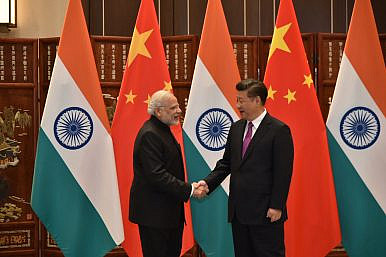
2017 was an extremely difficult year for China-India relations. With military tensions close to their disputed border, increasing competition in their neighborhood, and growing strategic mistrust, Beijing and New Delhi’s relations reached a nadir in 2017. Happily, the damage 2017 has inflicted on the relationship between the two Asian giants is not irreparable. Nevertheless, it reflects larger trends and indicates that Sino-Indian relations increasingly stand at a crossroads, with growing likelihood that they could go in the wrong direction. Hence, New Delhi and Beijing need to start rethinking their relations in 2018.Pakistan Says Alliance With U.S. Is Over
The History of Chinese Mediation Between Afghanistan and Pakistan
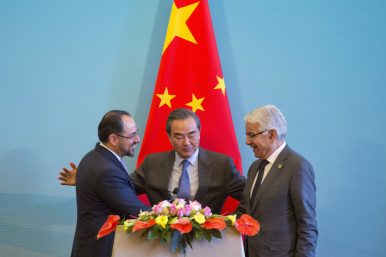
On December 26, 2017, the first China-Afghanistan-Pakistan Foreign Ministers’ Dialogue was held in Beijing. The two most important takeaways from this trilateral dialogue were Beijing’s “read[iness] to play a constructive role in improving Afghanistan-Pakistan relations” and decision on “extending CPEC [the China-Pakistan Economic Corridor] to Afghanistan.” This is the first time that China has been willing to play the mediator and facilitator role between Kabul and Islamabad. But it was decades ago, during the Cold War, that both top Pakistani and Afghan government officials first urged China to play such a role — to no avail. Moreover, although the recent trilateral foreign ministers’ dialogue was proposed by China in mid-2017 amid tense Afghanistan-Pakistan ties, Afghanistan put forward the original idea for tripartite meetings among the three countries in 2012. Why is China only responding now?The long history of incredibly fraught relations between the U.S. and Pakistan
The Long History of Incredibly Fraught Relations Between the U.S. and Pakistan
‘Persistent, Expanding and Worrisome’: ISIS Rebounds in Afghanistan
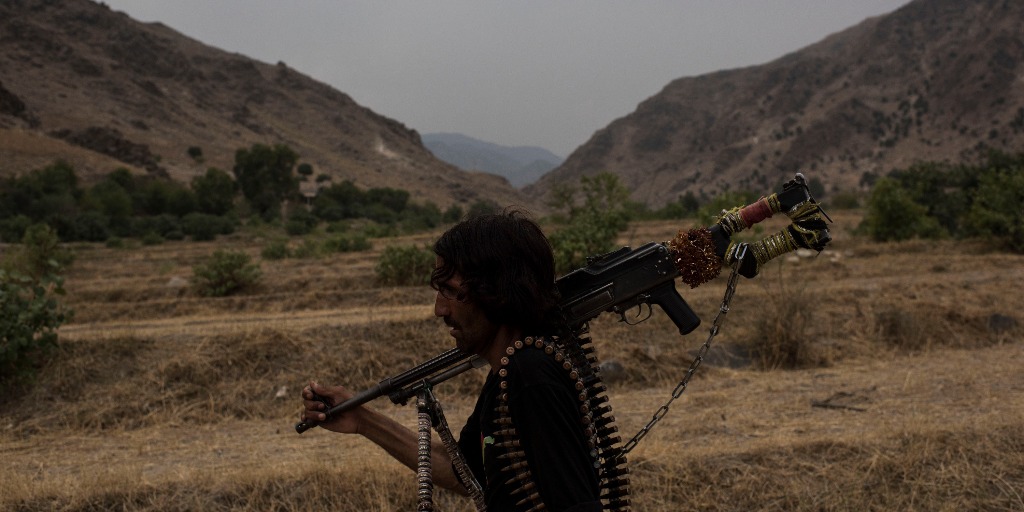
Bottom Line: With the original ISIS core nearly expelled from its so-called caliphate in Syria and Iraq, other ISIS branches are growing in influence and lethality. Skilled fighters and funding are flowing to ISIS Khorasan Province in Afghanistan where the group has taken advantage of the country’s weak central government and harsh geographic terrain to fend off invaders and exude a winning aura. U.S. and Afghan forces claim they have killed ISIS fighters by the thousands, but those numbers are being replenished by new militant recruits eager to join what they see as a “winning” team.China building military base in Pakistan
Pakistan's Dangerous Slide to Extremism
Counterinsurgency Math Revisited
What’s With the New India-Myanmar Border Pact?
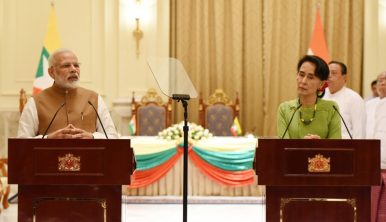
On January 3, the Indian Cabinet approved an agreement between India and Myanmar on land border crossing. Though specifics remain unclear, particularly amid challenges faced by both countries including confronting the Rohingya crisis and aligning on various aspects of cross-border regulation, the move is nonetheless notable. India has been engaging the Southeast Asian region through its “Act East” Policy under Prime Minister Narendra Modi – billed as a more active approach relative to the Look East Policy of the 1990s – and Myanmar is the only Southeast Asian country with which India shares a land border. Though there are several important aspects of the India-Myanmar relationship, one of these is the management of this shared 1,643 kilometer border.Can China really take over Taiwan?
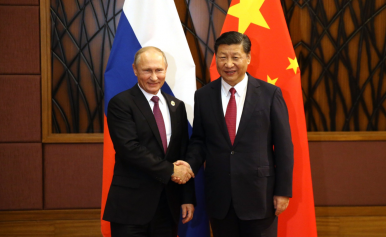
Chinese air force fighters have begun escorting bombers around Taiwan in “encirclement drills” and spokesmen for the Communist government have warned Taiwan to get used to it . On Wednesday, China’s president Xi Jinping, dressed in military fatigues, convened a military mobilization meeting— the first ever for the entire Chinese armed forces and commanded China’s military to become “battle ready.” Chinese officials are threatening that relations with Taiwan will turn “grave” because Taiwan’s government refuses to acknowledge that the island is part of China. A leading Chinese analyst predicts that China has accelerated its timetable to 2020 for taking over the island by military means.The Geopolitics of the Beijing-Moscow Consensus
In the late 1950s the deterioration of Sino-Russian relations paved the way for the historic meeting between U.S. President Richard Nixon and Mao Zedong in 1972. The offspring of that meeting was the Shanghai Communiquรฉ, and the onset of the Sino-American dรฉtente on one side and that Soviet containment in the Asia-Pacific on the other, a divide that would define the relations between the two communist countries for decades to come.Iran’s Cyber Threat: Espionage, Sabotage, and Revenge
Iran Reminds Us of the Dangers of Islamism
Iran’s Cyberwar on Dissidents Could Infiltrate Your Mailbox
Iran’s crackdown on protesters could affect almost anyone in contact with them, thanks to a sophisticated internal police operation that routinely targets not only academics and dissidents but also those who have interacted with them — and even people only tangentially linked. Cybersecurity firms and prominent researchers of Iranian digital espionage efforts say one government-backed group in particular, Infy, will likely continue to increase its attacks even after the current unrest ends.The Iranian security forces use many of the same tactics that nation-state actors and criminal groups deploy against corporate and political victims, particularly spear phishing — basically, emails from a phony source that urge the recipient to click a link that downloads information-exfiltrating malware. But unlike common crooks, Tehran and its agents are constantly refining and improving their phishing emails.Daniel Pipes: Achieving Peace Through Israeli Victory
Turkey: Learning From the Ottomans’ Mistakes
In Syria, an Attack on Russia’s Narrative
It has been less than a month since President Vladimir Putin declared a successful end to Russia’s intervention in the Syrian civil war and announced the imminent withdrawal of Russian forces from the country. Not even a fortnight later, Islamist militants conducted a deadly mortar attack against Russian forces in Syria. The Syrian civil war is not over, and it won’t be anytime soon. The short-term damage to Russia’s public relations campaign is acute. But far more important is whether Russia is getting dragged into its very own Middle Eastern morass, and what this means for the various forces competing for power in Syria.Is Bitcoin the tulip craze of the 21st century, or something else?
Running out of time
Surviving the Future: Looking Back at the Toynbee-Wakaizumi Dialogue of 1970
Forty-eight years ago, British historian Arnold J. Toynbee and Japanese professor Kei Wakaizumi held a dialogue of sorts, addressing some concerns of the student generation in Japan and throughout the world. Toynbee and Wakaizumi talked for seven days, three hours each day. The dialogue was initially published in Japanese in daily installments in the Mainichi Shimbun between August 24 and December 9, 1970, and the next year it appeared in book form in English under the title Surviving the Future. The dialogue’s format was a series of deeply philosophical questions posed by Wakaizumi to the famed British historian, and Toynbee’s lengthy responses and reflections on the topics suggested by Wakaizumi. It makes interesting reading in light of what has transpired during the last half-century.The British Are Coming (to Asia)
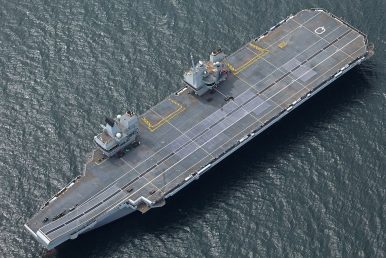
Almost 200 years ago, as recounted in Robert K. Massie’s Dreadnought, German Chancellor Otto von Bismarck remarked to the Russian ambassador in Berlin his fundamental thoughts on international relations: “All politics reduce themselves to this formula: try to be a trois in a world governed by five powers.” Bismarck was not using a literal expression; his point was that every state maneuvers itself to be on the side with the preponderance of power whenever possible.While his statement is as realpolitik as it gets, there is wisdom in it. In East Asia, the U.S. “hub-and-spoke” alliance system closely resembles Bismarck’s thinking, especially the United States’ military alliances with Japan and South Korea. While it is no secret the United States is working toward closer military cooperation with and between the aforementioned Asian powerhouses, it is equally clear the three partners continually face adversity in improving their comprehensive trilateral defense cooperation. Despite its potential boon to regional security, a more formal military arrangement between the three nations has revealed itself to be politically redoubtable.Top 5: Tech trends that will make headlines in 2018
One of humanity’s greatest minds shows us the 21st century
“The great globe itself” is in a rapidly maturing crisis — a crisis attributable to the fact that the environment in which technological progress must occur has become both undersized and underorganized. To define the crisis with any accuracy, and to explore possibilities of dealing with it, we must not only look at relevant facts, but also engage in some speculation. The process will illuminate some potential technological developments of the next quarter-century. In the first half of this century the accelerating industrial revolution encountered an absolute limitation – not on technological progress as such but on an essential safety factor. This safety factor, which had permitted the industrial revolution to roll on from the mid-eighteenth to the early twentieth century, was essentially a matter of geographical and political Lebensraum: an ever broader geographical scope for technological activities, combined with an ever broader political integration of the world. Within this expanding framework it was possible to accommodate the major tensions created by technological progress.