The Profession of Arms: A Guide for Young Army Officers
It takes courage, especially for a young officer, to check a man met on the road for not saluting properly or for slovenly appearance, but, every time he does, it adds to his stock of moral courage, and whatever the soldier may say, he has respect for the officer who does pull him up.
Read Document →The Dragon's Teeth: Assessing China's Military Modernization
PLA has focused on modernising its capabilities across all warfare domains to achieve these goals. This includes land, air, and maritime operations, nuclear, space, counter-space, electronic warfare and cyberspace operations, aiming to become a fully integrated joint force.
Read Document →Transforming the PLA: A Decade of reorganisation from SSF to ISF
PRC has engaged in a sustained and broad effort to transform the PLA from an infantry-heavy, low-technology, ground forces-centric military into a high-technology, networked force with an increasing emphasis on joint operations and naval and air power projection.
Read Document →Eyes without Borders: Exploring the World of Open Source Intelligence (OSINT) in the Digital Age
Open Source Intelligence (OSINT) is gaining prominence with the rise of social media, the digital society and the vast growth of publicly and commercially available information (PAI and CAI).
Read Document →
The PLA’s Developing Cyber Warfare Capabilities and India's Options
Informationised warfare blurs the lines between peacetime and wartime. A nation in the information age cannot wait for the hostilities to break out to collect intelligence, carryout influence operations, develop antisatellite systems or design computer software weapons.
Read Document →
Galwan and After
Why did China did this when he is under tremendous pressure in all fronts, is this China's salami slice tactics being progressed rigorously, what will be new Rules of Engagement, what will be escalatory control mechanism, who has taken this decision, will there be some pressure put by China in India's North-East through insurgency.
Read Document →
India’s Joint Doctrine for Cyberspace Operations: A Critical Review
Chief of Defence Staff (CDS) General Anil Chauhan and Secretary, Department of Military Affairs, formally released declassified versions of the Joint Doctrines for Cyberspace Operations during the Chiefs of Staff Committee meeting in New Delhi.
Read Document →
Know your Enemy General(now Field Marshal) Syed Aseem Munir
Gen SA Munir's position in the hierarchy of Pakistan was not very comfortable. The state of economy, insurgency in Pakhtoonistan and Balochistan, attack on the Jaffar Express, constant protests by supporters of Imran Khan's supporters inside and outside of parliament.
Read Document →
Decoding Operation SINDOOR: Key Aspects and Implications
Precision strikes were carried out on nine sites—four in Pakistan and five in PoK—linked to anti-India terrorist groups such as the LeT, JeM and the Hizbul Mujahideen. The targeted sites included Muridke (LeT headquarters) and Bahawalpur (JeM headquarters).
Read Document →
Chinese Cyber Exploitation in India's Power Grid - Is There a linkage to Mumbai Power Outage?
The New York Times (NYT), based on analysis by a U.S. based private intelligence firm Recorded Future, reported that a Chinese entity penetrated India’s power grid at multiple load dispatch points. Chinese malware intruded into the control systems that manage electric supply across India, along with a high-voltage transmission substation and a coal-fired power plant
Read Document →20 January 2018
Modi govt saddling India’s military with more bureaucracy
China and India: An Emerging Gulf in Infrastructure Plans
As 2017 drew to a close, Beijing made two surprising proposals to further the Belt and Road Initiative (BRI): one, extending the China-Pakistan Economic Cooperation (CPEC) to Afghanistan; and two, linking Pakistan’s Gwadar and Iran’s Chabahar Ports. These propositions assume significance because as BRI continues to hog the global limelight, India has been quietly promoting its own North-South Transport Corridor (NSTC). These infrastructure plans not only intensify Sino-Indo competition — even potentially working at cross-purposes — but also risk duplicating partnership opportunities for several countries, including those in the Gulf interested in contributing to the projects.Is China really building a military base in the northern province of Afghanistan?
Beijing has long refrained from engaging militarily beyond its borders. However, as some recent reports suggest, this situation may soon change. Ferghana News reported that China will build a military base in the northern province of Afghanistan, and, according to the news agency, the Ministry of Defense of Afghanistan is already expecting a Chinese expert delegation to discuss the location and further technicalities for the base. If these reports are true, China will fully fund the new military base in Badakhshan, covering all material and technical expenses, including both lethal and nonlethal weaponry and equipment.Rohingyas and the Unfinished Business of Partition
As Myanmar (formerly known as Burma) celebrated70 years of independence in January 2018, the “textbook example” of ethnic cleansing unfolding in the northwestern part of the country continued. The plight of the Bengali-speaking Muslim population of Rakhine state (formerly Arakan province), which can be traced back to the 19th century, follows the larger pattern of violent ethnic conflicts rooted in religion, language, and mass migration that have plagued the Indian subcontinent immediately prior to and soon after its 1947 Partition.China Is Hard At Work Developing Swarms Of Small Drones With Big Military Applications
As North Korea Goes Nuclear, U.S.-China Relations Sour
China’s big favor
Africa Should Think Twice About Accepting China's Aid
HOW TERRORISTS AND PROVOCATEURS ARE USING SOCIAL MEDIA AGAINST WESTERN DEMOCRACIES
I Heard Their Screams, and Then They Were Gone'
Korea's Place In History
While Germany Slept
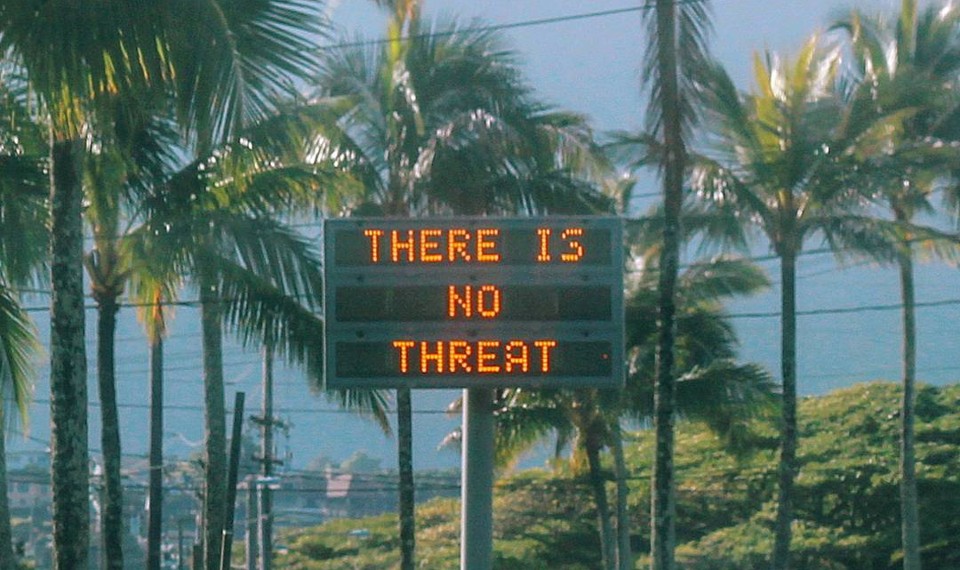
Here Is What America Should Learn from Hawaii's Missile Scare
Europe’s biggest test will come in Poland
DISA preps for the ‘terabyte of death’
When Lt. Gen. Alan Lynn retires as director of the Defense Information Systems Agency next month, he’ll leave behind a tangle of threats to the agency’s networks and a host of cutting-edge commercial technologies to offset them. Naturally, those networks are a target for attackers and DISA leaders such as Lynn are anticipating a worst case scenario. “We call it the terabyte of death,” he said. “We’re preparing for it, we know it’s coming and it’s just a matter of time before it hits us.” This approach is indicative of the evolution of threats. “When I first took over as director, we’d get a 1-gig to 2-gig attack at the internet access point, and we thought, ‘Ooh that’s a big deal.’ And we did all the things we were supposed to do. Fast forward a couple years, now we get 600-gig attacks on the internet access points. Unique, different ways of attacking that we haven’t thought of before,” Lynn said.NotPetya: From Russian Intelligence, With Love
Citing no sources by name, The Washington Post report instead references "classified reports cited by U.S. intelligence officials." It says the CIA concluded last November with "high confidence" that Russia's GRU military intelligence agency was behind NotPetya, aka SortaPetya, Petna, ExPetr, Diskcoder.C, Nyetya and GoldenEye. The CIA didn't immediately respond to a request for comment about the report. European intelligence agencies also reportedly attributed NotPetya to the Kremlin, which may have been probing how quickly Ukraine could respond to a cyberattack. The Ukrainian government was quick to blame Russia for unleashing NotPetya. The Kremlin has denied those accusations.Terrorists Could Use Teslas to Kill Us
Business Risk Intelligence - 2017 Review, 2018 Flashpoints
Cyber-attacks are a top three risk to society, alongside natural disaster and extreme weather
A Year After Trump, Davos Elite Fear Cyberattacks and War
Planning for Electronic Warfare - The Communication Problem
What An Artificial Intelligence Researcher Fears About AI
Deception as a Pervasive and Elemental Force
Hawaii and the Horror of Human Error
The Cold War came to an end, somehow, without any of the world’s tens of thousands of nuclear warheads being fired. But there were decades-worth of close calls, high alerts, and simple mistakes that inched world leaders shockingly close to catastrophe.Saturday’s terrifying, 38-minute episode in Hawaii will not go down as one of those close calls: Residents of the state waited for the bombs to fall after receiving text messages that a ballistic missile was on its way. FCC Chairman Ajit Pai on Sunday said “the government of Hawaii did not have reasonable safeguards or process controls in place to prevent the transmission of a false alert”—a case of human error, in other words.