I write this after the president of the Maldives has arrested judges of the Supreme Court instead of following its orders to release all political prisoners arrested under trumped up charges. It’s only the latest turn in a drama that started exactly six years ago when the country’s first democratically elected pro-India president was ousted in a coup. Among others, his successor repudiated an airport development contract that had been awarded to an Indian company. The $270 million in damages that international arbiters forced the Maldives to pay was financed through funds injected by Chinese and Saudi investors.The Profession of Arms: A Guide for Young Army Officers
It takes courage, especially for a young officer, to check a man met on the road for not saluting properly or for slovenly appearance, but, every time he does, it adds to his stock of moral courage, and whatever the soldier may say, he has respect for the officer who does pull him up.
Read Document →The Dragon's Teeth: Assessing China's Military Modernization
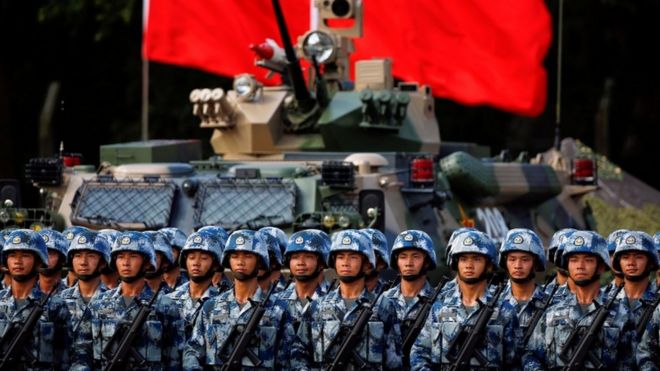
PLA has focused on modernising its capabilities across all warfare domains to achieve these goals. This includes land, air, and maritime operations, nuclear, space, counter-space, electronic warfare and cyberspace operations, aiming to become a fully integrated joint force.
Read Document →Transforming the PLA: A Decade of reorganisation from SSF to ISF
PRC has engaged in a sustained and broad effort to transform the PLA from an infantry-heavy, low-technology, ground forces-centric military into a high-technology, networked force with an increasing emphasis on joint operations and naval and air power projection.
Read Document →Eyes without Borders: Exploring the World of Open Source Intelligence (OSINT) in the Digital Age
Open Source Intelligence (OSINT) is gaining prominence with the rise of social media, the digital society and the vast growth of publicly and commercially available information (PAI and CAI).
Read Document →
The PLA’s Developing Cyber Warfare Capabilities and India's Options
Informationised warfare blurs the lines between peacetime and wartime. A nation in the information age cannot wait for the hostilities to break out to collect intelligence, carryout influence operations, develop antisatellite systems or design computer software weapons.
Read Document →
Galwan and After
Why did China did this when he is under tremendous pressure in all fronts, is this China's salami slice tactics being progressed rigorously, what will be new Rules of Engagement, what will be escalatory control mechanism, who has taken this decision, will there be some pressure put by China in India's North-East through insurgency.
Read Document →
India’s Joint Doctrine for Cyberspace Operations: A Critical Review
Chief of Defence Staff (CDS) General Anil Chauhan and Secretary, Department of Military Affairs, formally released declassified versions of the Joint Doctrines for Cyberspace Operations during the Chiefs of Staff Committee meeting in New Delhi.
Read Document →
Know your Enemy General(now Field Marshal) Syed Aseem Munir
Gen SA Munir's position in the hierarchy of Pakistan was not very comfortable. The state of economy, insurgency in Pakhtoonistan and Balochistan, attack on the Jaffar Express, constant protests by supporters of Imran Khan's supporters inside and outside of parliament.
Read Document →
Decoding Operation SINDOOR: Key Aspects and Implications
Precision strikes were carried out on nine sites—four in Pakistan and five in PoK—linked to anti-India terrorist groups such as the LeT, JeM and the Hizbul Mujahideen. The targeted sites included Muridke (LeT headquarters) and Bahawalpur (JeM headquarters).
Read Document →
Chinese Cyber Exploitation in India's Power Grid - Is There a linkage to Mumbai Power Outage?
The New York Times (NYT), based on analysis by a U.S. based private intelligence firm Recorded Future, reported that a Chinese entity penetrated India’s power grid at multiple load dispatch points. Chinese malware intruded into the control systems that manage electric supply across India, along with a high-voltage transmission substation and a coal-fired power plant
Read Document →16 February 2018
When should India employ hard power? There’s an urgent need to answer the question thoughtfully
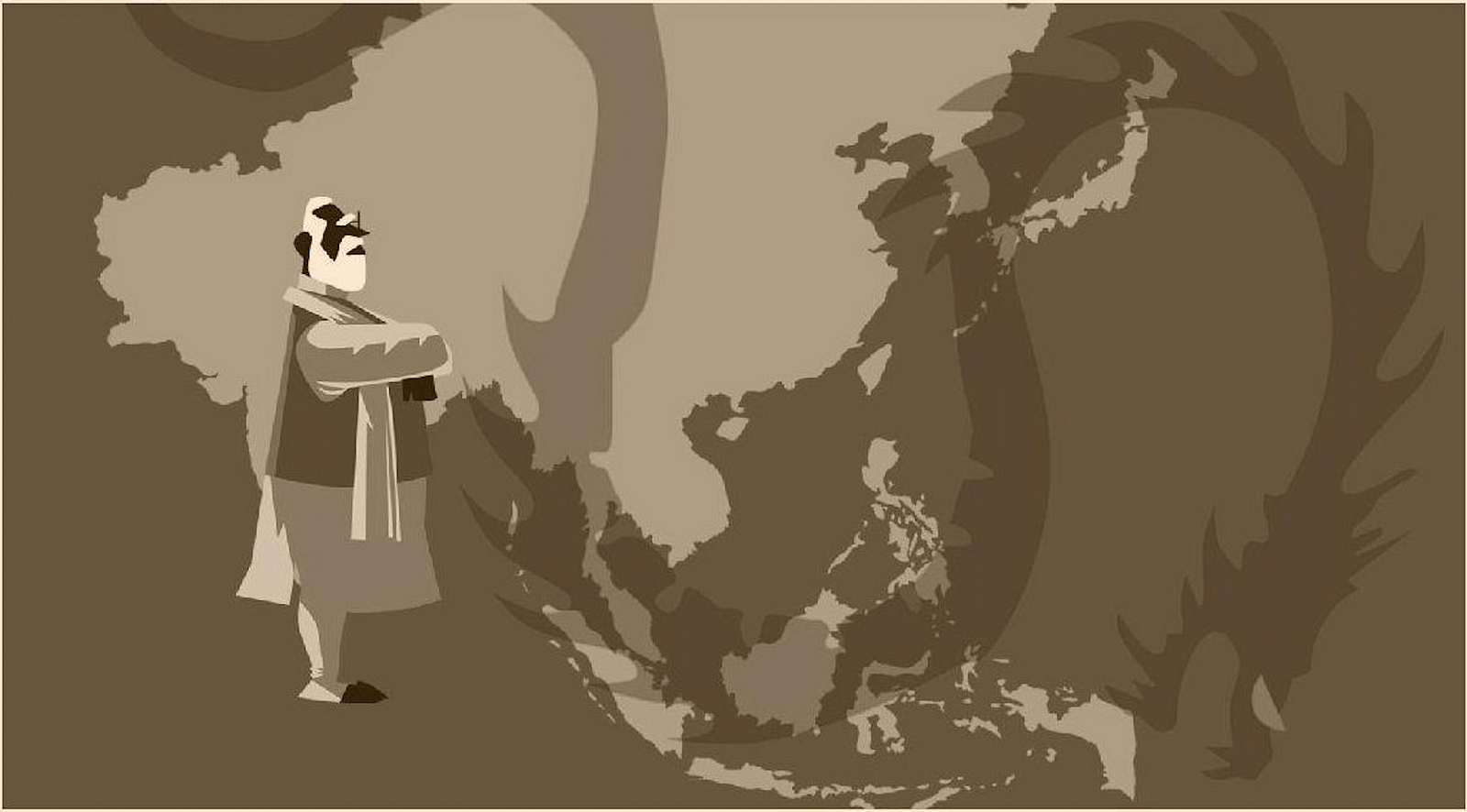
I write this after the president of the Maldives has arrested judges of the Supreme Court instead of following its orders to release all political prisoners arrested under trumped up charges. It’s only the latest turn in a drama that started exactly six years ago when the country’s first democratically elected pro-India president was ousted in a coup. Among others, his successor repudiated an airport development contract that had been awarded to an Indian company. The $270 million in damages that international arbiters forced the Maldives to pay was financed through funds injected by Chinese and Saudi investors.An Idea or a Threat? Islamic State Jammu & Kashmir
In early February 2016, the Islamic State announced its intention to expand into Kashmir as part of its broader Khorasan branch.1 One of the causes of concern associated with the spread of the Islamic State affiliate in Jammu and Kashmir (ISJK) is the existing instability within the region due to the controversial Line of Control (LoC) that divides the region into Indian and Pakistani controlled areas. The highly militarized Jammu and Kashmir (J&K) region constitutes a long-running territorial dispute between India and Pakistan, which has triggered at least three wars. The region also hosts three prominent militant groups—the Hizb-ul-Mujahideen (HM), Lashkar-e-Taiba (LeT), and Jaish-e-Mohammad (JeM)—which historically have been linked to elements of the Pakistani state and largely favor Pakistan. If successful, an Islamic State-inspired movement may have severe negative consequences in the already volatile environment of Jammu and Kashmir, such as increased rivalry amongst militant groups and sectarian violence. This would not only exacerbate Pakistan’s current instability but also antagonize relations between the two nuclear-armed countries.The Major Flaws in Afghanistan’s Intelligence War
In Afghanistan, Hard Is Not Hopeless—but Time Is Running Out
Chinese Projects in Pakistan Prove Tempting Targets for Terrorist Groups
What Is China’s Military Doing on the Afghan-Tajik Border?
What happened in Mauritius
The 'globalisation' of China's military power
Seven Chinas A Policy Framework
Rejecting The Grey Zone
For most of my life, terrorism and Islam have occupied overlapping spaces in the public consciousness. It goes without saying that the attacks on September 11 dramatically changed the world, and the West’s relationship with Islam took a turn along with it.Japan’s North Korea Strategy: A Solid Defense
Ukraine’s Grey-Zone Conflict: What Lies Ahead?
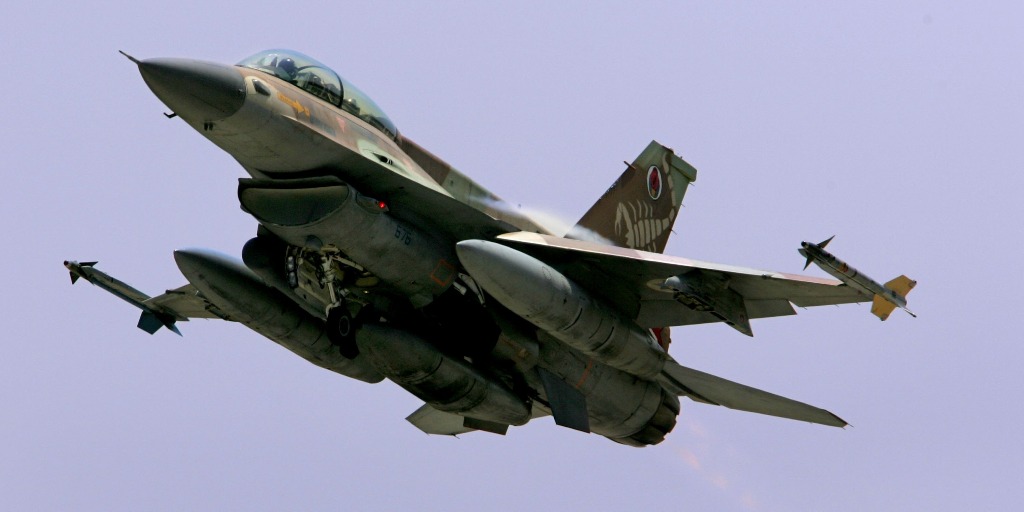
On Jan. 18, 2018, Ukraine’s parliament voted in favour of a controversial full draft of a new law on the conflict in Eastern Ukraine.1 The law has gained a lot of attention, despite the fact there is no final document yet, because it identifies Russia as an aggressor and occupying state. The new law is important for a few other reasons. First, its primary purpose is to stymie Russia’s geopolitical aspirations by having Ukraine retake the disputed territories by force. Second, it makes no mention of the Minsk agreements, the acceptance of which was a provision for the lifting of sanctions against Russia. Nor does it recognize the Luhansk People’s Republic (LNR) and the Donetsk People’s Republic (DNR) as legitimate parties to the conflict. Indeed, there is no reference to the peace agreement brokered by France and Germany in 2015, which obliged Kiev to develop legislation regarding autonomy and amnesty for its minorities. Instead, the trade and transport blockade between Ukraine and the Donbass will be strengthened. And last, the law dramatically realigns Ukraine’s military forces by granting extra powers to the Ukrainian president, commander of the country’s united forces.Israel Lost a Jet, but Proved it would Win the War
It was no surprise when two strategic vectors clashed this weekend on Israel’s northern front: The Iranian determination to build an advanced military force in Syria collided with Israeli determination to prevent that from happening.America’s Strategy, or Absence of a Strategy, in Syria is Failing
A war that began with peaceful protests against Bashar al-Assad has morphed into a global scramble for control over what remains of the broken country of Syria
South Africa Moves Beyond Zuma
The new president of South Africa's ruling party, Cyril Ramaphosa, is set on ousting South African President Jacob Zuma.Tit for Tat? The Shape of U.S. Restrictions on Chinese FDI

Assessing the Conventional Force Imbalance in Europe Implications for Countering Russian Local Superiority
SCIENTISTS KNOW HOW YOU’LL RESPOND TO NUCLEAR WAR—AND THEY HAVE A PLAN
IT WILL START with a flash of light brighter than any words of any human language can describe. When the bomb hits, its thermal radiation, released in just 300 hundred-millionths of a second, will heat up the air over K Street to about 18 million degrees Fahrenheit. It will be so bright that it will bleach out the photochemicals in the retinas of anyone looking at it, causing people as far away as Bethesda and Andrews Air Force Base to go instantly, if temporarily, blind. In a second, thousands of car accidents will pile up on every road and highway in a 15-mile radius around the city, making many impassable.Moore's law has ended. What comes next?
Fake News: National Security in the Post-Truth Era
Cyber peacekeeping: A cyberwar issue businesses need to consider now
Soldiers will inevitably put devices in their bodies. Then what?
When the military asks for fiction, it’s for the purpose of sketching out the landscape of future war. Not the exact players - fickle elements prone to political circumstance and random accident - but the stuff of war: the tools, the people, the kinds of locales that will see battles and the use of force.Improving the Understanding of Special Operations A Case History Analysis
This report examines major U.S. decisions related to the development or employment of special operations forces (SOF). The purpose of the report is to analyze how change has previously occurred in Army, Joint, and U.S. Department of Defense policy regarding SOF to inform future development of options for policymakers and to better articulate the ways in which the varied Army Special Operations Forces capabilities can help to meet U.S. national security objectives. The report aims to assist the special operations community to better understand the policy process; formulate appropriate, sound courses of action; and engage with other members of the U.S. government interagency community in a constructive manner.