The Profession of Arms: A Guide for Young Army Officers
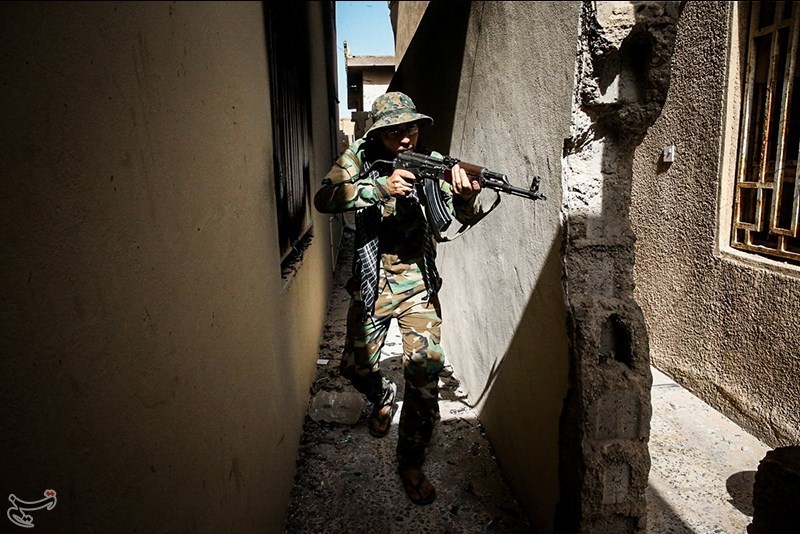
It takes courage, especially for a young officer, to check a man met on the road for not saluting properly or for slovenly appearance, but, every time he does, it adds to his stock of moral courage, and whatever the soldier may say, he has respect for the officer who does pull him up.
Read Document →The Dragon's Teeth: Assessing China's Military Modernization
PLA has focused on modernising its capabilities across all warfare domains to achieve these goals. This includes land, air, and maritime operations, nuclear, space, counter-space, electronic warfare and cyberspace operations, aiming to become a fully integrated joint force.
Read Document →Transforming the PLA: A Decade of reorganisation from SSF to ISF
PRC has engaged in a sustained and broad effort to transform the PLA from an infantry-heavy, low-technology, ground forces-centric military into a high-technology, networked force with an increasing emphasis on joint operations and naval and air power projection.
Read Document →Eyes without Borders: Exploring the World of Open Source Intelligence (OSINT) in the Digital Age
Open Source Intelligence (OSINT) is gaining prominence with the rise of social media, the digital society and the vast growth of publicly and commercially available information (PAI and CAI).
Read Document →
The PLA’s Developing Cyber Warfare Capabilities and India's Options
Informationised warfare blurs the lines between peacetime and wartime. A nation in the information age cannot wait for the hostilities to break out to collect intelligence, carryout influence operations, develop antisatellite systems or design computer software weapons.
Read Document →
Galwan and After
Why did China did this when he is under tremendous pressure in all fronts, is this China's salami slice tactics being progressed rigorously, what will be new Rules of Engagement, what will be escalatory control mechanism, who has taken this decision, will there be some pressure put by China in India's North-East through insurgency.
Read Document →
India’s Joint Doctrine for Cyberspace Operations: A Critical Review
Chief of Defence Staff (CDS) General Anil Chauhan and Secretary, Department of Military Affairs, formally released declassified versions of the Joint Doctrines for Cyberspace Operations during the Chiefs of Staff Committee meeting in New Delhi.
Read Document →
Know your Enemy General(now Field Marshal) Syed Aseem Munir
Gen SA Munir's position in the hierarchy of Pakistan was not very comfortable. The state of economy, insurgency in Pakhtoonistan and Balochistan, attack on the Jaffar Express, constant protests by supporters of Imran Khan's supporters inside and outside of parliament.
Read Document →
Decoding Operation SINDOOR: Key Aspects and Implications
Precision strikes were carried out on nine sites—four in Pakistan and five in PoK—linked to anti-India terrorist groups such as the LeT, JeM and the Hizbul Mujahideen. The targeted sites included Muridke (LeT headquarters) and Bahawalpur (JeM headquarters).
Read Document →
Chinese Cyber Exploitation in India's Power Grid - Is There a linkage to Mumbai Power Outage?
The New York Times (NYT), based on analysis by a U.S. based private intelligence firm Recorded Future, reported that a Chinese entity penetrated India’s power grid at multiple load dispatch points. Chinese malware intruded into the control systems that manage electric supply across India, along with a high-voltage transmission substation and a coal-fired power plant
Read Document →25 March 2018
Why Peace Talks Are Washington's Best Bet in Afghanistan
Pakistan Is Feeling US Pressure. Now What?
US military will not pursue Taliban into Pakistan
Quad: The way ahead and the key challenges
How Beijing’s Push for China-Centric Asia Impacts the Indo-Pacific
The latest China Security Report published by Japan’s National Institute for Defense Studies (NIDS) in February aims to analyze China’s military and security affairs from a mid- to long-term perspective. It assesses the development of China’s foreign and security policy towards the United States and vice versa, and the overall China-US relationship in East Asia. Unfortunately, the NIDS report falls short in taking account of the emerging reality, such as the expansive breadth of the Indo-Pacific and the way its importance has re-imaged Asia’s map with great power and regional re-alignments. While the report concludes by arguing that any conflict leading to war between China and the US is undesirable for the US and for the Asia-Pacific as a whole, it does not discuss the determinants, or the dependent and independent variables, in the specific context of the larger Indo-Pacific region.The End of the Petrodollar?
MAPPED: China's most ambitious megaproject — the new Silk Road
China's "One Belt, One Road" initiative will cost between $4 trillion and $8 trillion and affect 65 countries. It's expected to stretch from East Asia to East Africa and Central Europe and be completed in 2049. Costing between $4-8 trillion and affecting 65 countries, China's ambitious One Belt, One Road (OBOR) initiative is the granddaddy of all megaprojects. By the time of it's estimated completion in 2049, OBOR will stretch from the edge of East Asia all the way to East Africa and Central Europe, and it will impact a lengthy list of countries that account for 62% of the world's population and 40% of its economic output. The Return of the Iraq War Argument
The buzz about a summit this spring between Donald Trump and Kim Jong Un has tamped down talk of war with North Korea. But the bellicosity bubbles just below the surface, and could boil over if the diplomatic gamble fails. Recall how George W. Bush’s press secretary once justified the war in Iraq: “The United States exhausted every legitimate and credible opportunity to resolve this peacefully.”Al Qaeda 3.0: Turning to Face the Near Enemy
Turkey’s Middle East Aspirations Beyond Afrin
2017 NUCLEAR STOCKPILE TOTAL DECLASSIFIED
Give North Korea All the Prestige It Wants
In Dorothy L. Sayers’s short story “Talboys,” the noble sleuth Lord Peter Wimsey at one point gives his young son Bredon an important lesson about adult behavior. “I’ll tell you a secret, Bredon,” he says. “Grown-up people don’t always know everything, though they try to pretend they do. That is called ‘prestige,’ and is responsible for most of the wars that devastate the continent of Europe.” I thought of that passage when I heard about U.S. President Donald Trump’s decision to accept North Korean leader Kim Jong Un’s invitation to a summit meeting. Like the “grown-up people” in Sayers’s story, Trump and Kim are both leaders who try to pretend they know everything. Moreover, the petty war of insults between “Little Rocket Man” and the “dotard” might have led to a war that devastated not the continent of Europe but the Korean Peninsula. In addition to the tangible conflicts of interest dividing the two states, issues of status, prestige, and ego are clearly involved as well.Strategic Insights: Making Good on the NSS and NDS: Competing with Russia in Europe and Beyond
Inside Israel’s Secret Raid on Syria’s Nuclear Reactor
HAS IDF INTELLIGENCE LEARNED THE LESSONS FROM THE SYRIAN REACTOR STRIKE?
AFTER A DECADE ISRAEL ADMITS: WE BOMBED SYRIA NUCLEAR REACTOR IN 2007
HAS ISRAELI INTELLIGENCE LEARNED THE LESSONS FROM THE 2007 SYRIAN REACTOR STRIKE?
On Seeing America's Wars Whole
The Era of Urban Warfare is Already Here
Aleppo. Mosul. Sana’a. Mogadishu. Gaza. These war-ravaged cities are but a few examples of a growing trend in global conflict, where more and more of the world’s most violent conflicts are being fought in densely populated urban areas, at a tremendously high cost to the civilians living there. Despite their aversion to urban warfare, American and NATO military strategists increasingly acknowledge that the future of war is in cities. Concurrently, humanitarian agencies such as International Committee of the Red Cross (ICRC) and United Nations High Commissioner for Refugees (UNHCR) are adjusting their response to relief operations in urban centers in real time. This rise in urban violence and the resurgence of warfare in cities comes from three key factors: the global trend toward urbanization, increasingly volatile domestic political conditions in developing countries, and changes in the character of armed conflict.The Army Needs to Go Big With Futures Command
The End Of The American Way of War; The Cold War Really Is Over
The American way of war — using overpowering industrial might, crushing firepower, and owning the sea and skies — may have come to an end, a top Pentagon official says. For the past two decades, “the Chinese and the Russians have been working to undermine that model,” said Elbridge Colby, deputy assistant secretary of defense for strategy and force development. By spending billions on modernizing their militaries and fielding new technologies like artificial intelligence and hypersonic missiles at a faster clip than the Americans, the two countries have changed the way the United States must approach future conflict. John Boyd on Clausewitz: Don’t Fall in Love with Your Mental Model
Relationships with God and Community as Critical Nodes in Center of Gravity Analysis
How is each country spending on their military forces?
Army Patches Its Network For Near Term
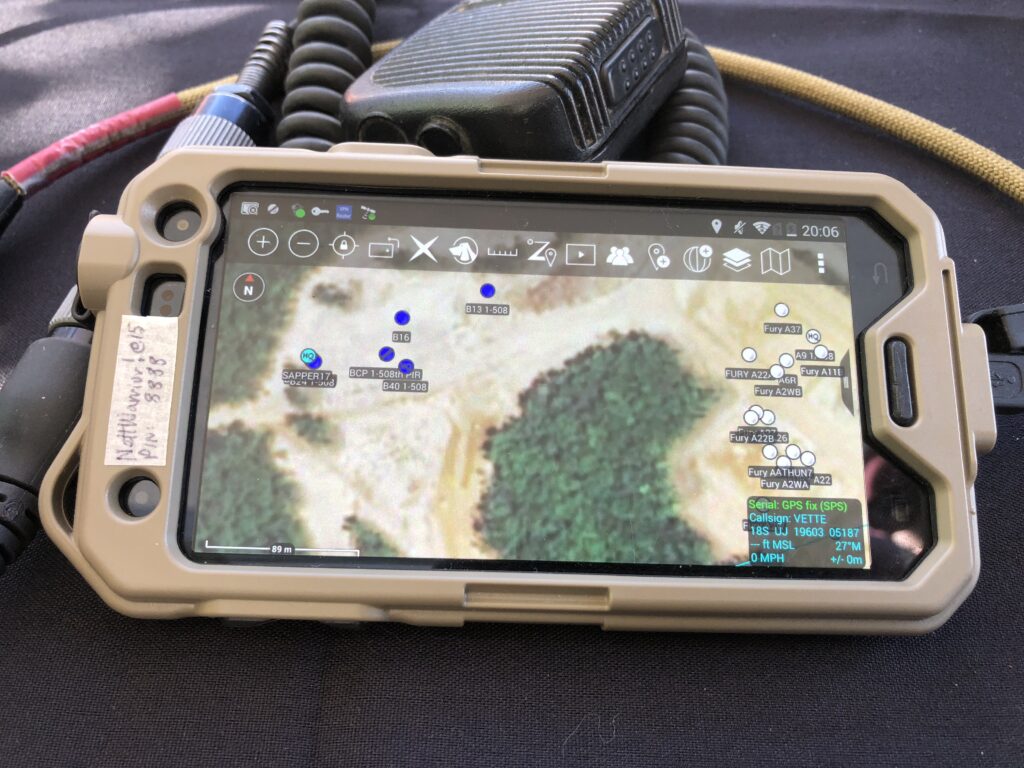
The long-term solution may take "big, leap-ahead technology," said Maj. Gen. Pete Gallagher, head of the Cross Functional Team leading the network overhaul. But short-term solutions can be as simple as replacing bulky metal antennas with inflatable ones or loading new software on an off-the-shelf Android phone. So the service is trying to fix things. The long-term solution may take “big, leap-ahead technology,” said Maj. Gen. Pete Gallagher, head of the Cross Functional Team leading the network overhaul (more on that below). But, as Gallagher and other soldiers showed off here yesterday, short-term solutions can be as simple as replacing old server stacks with new ones one-third the size, replacing bulky metal antennas with inflatable ones, or loading new software on an off-the-shelf Android phone.