


GWADAR, Pakistan -- The idea of transforming the ancient fishing village of Gwadar into a bustling port city has been around since at least 1954, when Pakistan commissioned the U.S. Geological Survey to examine its coastline. Their conclusion: Gwadar, which sits on the Arabian Sea, would be an ideal location for a deep-water port. Gwadar's potential went unrealized for decades, but it is now at the heart of a hugely ambitious plan known as the China-Pakistan Economic Corridor, or CPEC. China has pledged to spend $63 billion to bolster Pakistan's power plants, ports, airports, expressways and other infrastructure under the initiative, which Beijing positions as one of the pillars of its $1 trillion global Belt and Road Initiative championed by Chinese President Xi Jinping.
5 April 2018
* KASHGAR: Lost Frontier

Lost to India, of course, and being profitably milked by Pakistan and China. Farooq Renzushah recounts the fascinating intrigue and geostrategic games played along the old Silk Route in the northern Kashmir borderlands, and how the much talked about CPEC came to be THE APPLECART THAT AMBLED: The ancient city of Gaochang in China’s Xinjiang Uyghur Autonomous Region kicked up a lot more dust when it was part of the Silk Route; PICS: AFP About 600 kilometres north of Kashmir, in far western China's ear-shaped Xinjiang region, lies Kashgar. Apart from the first half of its name, Kashgar shares with Kashmir its fragile celestial beauty. Again like Kashmir, it is strategically located - surrounded by Kyrgyzstan, Tajikistan, Afghanistan, Pakistan, India - causing successive generations of men to lose their heads and hearts over it.
Why Russia no longer cares for friendship with India
 As was expected, Vladimir Putin won Russia’s Presidential elections comfortably and will be leading Russia for another six years. He got more than 76 per cent of the vote and became the longest serving Russian leader since Stalin, being at the helm of Russia as either president or prime minister since 1999. He wanted to ensure that the scale of victory was higher than the last time when he had won around 64 per cent and he succeeded in drumming up that support.
Regional priorities ::
India Spurns the Dalai Lama’s Celebration, Worried About China
By MARIA ABI-HABIB
 McLEOD GANJ, India — An original song of thanks to India had been rehearsed, and a stadium in New Delhi had been reserved for a celebratory rally — all a gesture of gratitude from the Dalai Lama and his followers for India’s role in sheltering them after a Chinese crackdown on rebellious Tibetans 60 years ago. Instead, the planned “Thank You India” celebrations, set for this coming weekend, set off apprehension in New Delhi and embarrassment among Tibetans. A directive from India’s foreign secretary urged officials to discard their invitations, and it was blunt in saying the timing of the events coincided with a “sensitive time” for New Delhi’s relations with Beijing. A series of high-level meetings between Indian and Chinese officials are being billed in India as an attempt to smooth over an increasingly tense relationship.
Is America Winning to Lose in Afghanistan?
By Nathan Jennings
The United States has experienced a troubled history with a variety of foreign interventions since achieving definitive victory in the Second World War. While the 1991 Persian Gulf War stands as a notable exception, the global power has intermittently found itself mired in long, bloody, and inconclusive engagements across the Asian continent. America’s ill-fated military involvements in Vietnam from 1962 to 1975 and in Iraq from 2003 to 201l, in particular, emerged as largely successful tactical efforts that later devolved into strategic catastrophes. While stark contrasts in landscape, political contexts, generational separation, and cultural meaning differentiate the conflicts, each reflected large military efforts where the client state proved fractious and weak following American withdraw. These failures may hold insights for the seemingly interminable—and troublingly similar—NATO campaign in Afghanistan.
The Birth And Spread Of Urban Naxals
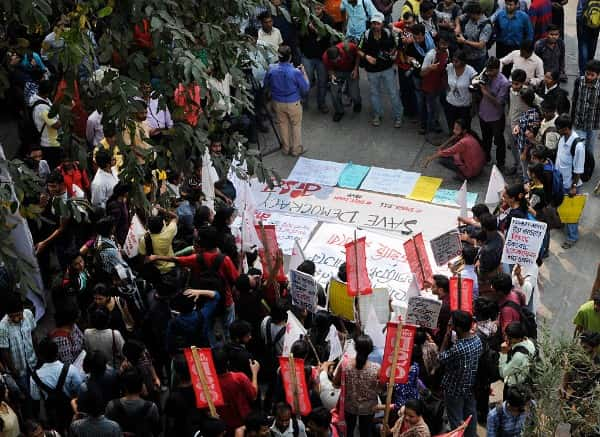 Some educational institutions in Kolkata and other cities in the country have become breeding grounds for urban Naxalism.Many students get led on to the path of extreme left in these universities.Silently and stealthily, below the radar of intelligence and security agencies, an army of urban Naxals is being bred in the toxic environs of some reputable institutions of higher learning in Kolkata and some other cities of the country over the past few decades. Many of them have taken up jobs and migrated to other parts of India where they form veritable sleeper cells, awaiting the “revolution” and indulging in or facilitating various types of insidious, anti-India activities.
The primary breeding ground of these ultra-left radicals who believe in a violent overthrow of the Indian state, ‘annihilation’ of all those they consider ‘class enemies’, and imposition of a harsh and regressive communist dictatorship is the Jadavpur University (JU) and, to a lesser extent, Presidency University (PU). A group of teachers who hold radical leftist views in these two reputable universities has been incubating and sheltering these urban Naxals, and preparing them for the revolution to come.
Though these urban Naxals have been operating under the radar for many years now, their existence came to light with the destruction of a bust of Syama Prasad Mukerjee in Kolkata early last month. A hitherto unknown group of left-wing terrorists called “Radicals” was behind the vandalism. Subsequent police investigations have revealed that the roots and tentacles of these left-wing terrorists run deep, wide, and strong. They have built up a spider-like web through many cities and towns of the country, including the National Capital Region (NCR). Some teachers, alumni, and students of Jawaharlal Nehru University (JNU) and some colleges affiliated to Delhi University (DU) form an important part of this red terror network.
China’s Communist Party Is Abandoning Workers
 HONG KONG — China is a sea of labor unrest. During the first 10 weeks of this year there were more than 400 publicly reported strikes, more than double the number during the comparable period last year. President Xi Jinping’s government has responded with a firm hand: Labor activists are being arrested and assaulted simply for demanding their wages. As China’s rate of economic growth has slowed over the past few years, China Labour Bulletin, a Hong Kong-based organization, tracked a surge in reported strikes — most likely a small measure of all the actual strikes — from fewer than 200 in 2011 to 1,256 in 2017. Government data indicates a 38 percent increase in the number of labor dispute cases heard by Chinese courts, from 589,244 in 2011 to 813,589 in 2015.
Mirroring the recent trend of manufacturing moving from the coasts to the middle of the country, the most labor strife this year appears to be happening in central provinces such as Henan, Jiangsu and Anhui. And the unrest isn’t affecting only traditional industries like manufacturing. White-collar workers and new-economy industries like e-commerce and green tech are also dealing with labor struggles.
In January, hundreds of teachers from all over China assembled in Beijing to bring attention to missing pensions and other perks. Last month, workers at a solar power factory in Guizhou Province staged a sit-in, and poorly paid taxi-app drivers protested in Shandong and Guangxi. Medical staff in Hebei demonstrated in February over unequal pay and the nonpayment of social insurance.
Mohamed Nasheed on the Maldives Crisis
By Aaquib Khan
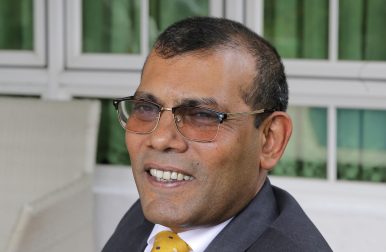 On March 22, President Abdulla Yameen lifted a state of emergency in the Maldives, a day after four of his political opponents were formally charged with terrorism. Yameen had declared the emergency on February 5, after the Maldives’ Supreme Court ordered the release of political prisoners. Rather than obliging, Yameen doubled down by having two of the Supreme Court judges arrested. Former President Maumoon Abdul Gayoom, Yameen’s half-brother turned political opponent, was also arrested; all three were among those charged with terrorism last week.
White House criticises China for $3bn tariffs on US imports
 The White House has criticised China after it imposed retaliatory tariffs against the US on a range of goods, including pork and wine. Beijing put duties of up to 25% on 128 American imports following President Donald Trump's decision to slap taxes on imports of steel and aluminium. China said the move was intended to safeguard its interests and balance losses caused by the new tariffs.
What we know—and don’t—about the meeting between Kim Jong-un and Xi Jinping
Ryan Hass
Many questions remain unanswered about North Korean leader Kim Jong-un’s visit to China from March 25 to 28. For example, did Xi Jinping and Kim reach any private understandings on loosening pressure and supporting North Korea’s economic development? Did Xi counsel Kim on how to deal with President Trump and, if so, what advice did he provide? Did the two sides reach any shared view on a sequence of steps for lowering tensions on the Korean Peninsula?
Russia and China have cyber operation plans, while we lag far behind
BY MORGAN WRIGHT
 Myths make for good campfire stories. Over time, the legend grows in direct proportion to the size and scope of the perceived escapades. Pretty soon, Billy the Kid has taken on the entire Union Army by himself without nary a scratch. Except history tells us differently about these cowboys. But never let facts get in the way of a good story, especially with Russia and China.It’s not that Russia and China are that good on offense. It’s just we’re that bad on defense. One of the main reasons is because 77 percent of global business leaders admitted they don’t have a formal cybersecurity incident response plan, even though 65 percent of the same group said the “severity of cyberattacks is increasing”.
China warns against 'trade war,' appeals for cooperation
John Bacon
Stocks around the world plunged Friday as investors feared that a trade conflict between the U.S. and China, the biggest economies in the world, would escalate. A second day of big losses pushed U.S. stocks to their worst week in two years. A top Chinese official bitterly decried a growing trade war with the United States on Sunday, saying the economic clash can only harm both nations. “A trade war serves the interests of none," Vice Premier Han Zheng said at the China Development Forum in Beijing. "Unilateralism and a trade war will harm others ... and invite greater conflict." Han, in his first speech since being appointed vice premier at the National People's Congress last week, urged negotiation and collaboration, the South China Morning Post reported.
Would A China-US Trade War Be ‘Just’?
RAJ BHALA
The ‘Just War Theory’ is invariably applied to military conflict. But, with fears rising of a Sino-American trade war that would cause global collateral damage, that theory should be applied to US President Donald Trump’s decision to target China under Section 301 of the Trade Act of 1974. Would it be ‘just’ for America to catalyse a trade war with China? The answer is yes, partly so. This question has not been asked, at least not with the Just War Theory in mind. Yet, the theory is a potent, qualitative tool to evaluate whether going to war is morally defensible. Thank India for the Just War Theory. The theory emerges in the 4th century BC, in the world’s longest epic poem, Mahabharata. Thereafter, Saints Augustine (354-430 AD) and Thomas Aquinas (1225-1274 AD) elaborated on the theory, as did Michael Walzer in his 1977 classic, Just and Unjust Wars.
Counterterrorism Yearbook 2018
By Isaac Kfir, Sofia Patel and Micah Batt
The Counter Terrorism Yearbook is ASPI’s annual flagship publication curated by the Counter Terrorism Policy Centre, now in its second year of publication. It is a comprehensive resource for academics and policymakers to build on their knowledge of counterterrorism developments in countries and regions around world. Each chapter in the Yearbook is written by internationally renowned subject matter and regional experts, who provide their insight and commentary on counterterrorism policy, legislation, operations and strategy for a specific country/region, concerning the year in review, and looking at challenges for the year ahead.
The discreet charm of hypocrisy: An EU-Turkey Power Audit
Among European elites, there is still substantial support for a strategic partnership with Turkey – albeit not for advancing the beleaguered accession process. Europe needs to find new channels through which to engage with Ankara. Since Turkey shows no immediate desire to restore the rule of law or a reform process, for the time being EU member states can, at best, strive to engage in transactional bilateral relations with Turkey, as an effective partnership with the country is critical to their interests. Ankara and the Council of Europe should work together to address issues such as human rights, the rule of law, and political freedoms in Turkey – outside of the EU accession process but in line with the Copenhagen Criteria. The EU should update its customs union with Turkey, not least because trade between the two sidess has generally benefited pro-European Turkish businesses and civil society groups. The EU and Turkey should establish a framework for addressing disputes that involve the Turkish diaspora in Europe, while coordinating their policies on conflicts in the Middle East.
Who Made the Worst Decision of the Iraq War? We may never know for sure. But there’s reason to suspect Cheney.
By FRED KAPLAN
A story this week on Task & Purpose, a military-affairs website, brings news that L. Paul “Jerry” Bremer—the first proconsul of the American occupation in post-Saddam Iraq and the man who signed what may be the most catastrophic orders in U.S. diplomatic history—is living out his days as a professional ski instructor in Vermont. The invocation of Bremer’s name, following the 15th anniversary of the invasion of Iraq, stirs up the single biggest enduring mystery of the war: Who wrote the orders Bremer signed? Who is responsible for the one decision that—more than any other, except the decision to go to war in the first place—wreaked such horrendous damage to human life and geopolitical stability?
COMBATING TERRORISM CENTER SENTINEL – MARCH 2018 NOW ONLINE
 This issue focuses on counterterrorism challenges in Africa. Next month marks the four-year anniversary of Boko Haram’s kidnapping of as many as 276 schoolgirls in Chibok, Nigeria. The hostage attack created global outrage and sparked the social media campaign #BringBackOurGirls. In our cover article, Jacob Zenn outlines the internal dynamics within Boko Haram that led the group to eventually enter into negotiations and release many of the girls. Zenn compares and contrasts the terrorist calculus in this earlier hostage crisis with the kidnapping of 111 schoolgirls in Dapchi, Nigeria, last month, which also resulted in many of the girls being released.
Russia Employs New ‘Hybrid War’ Methods Against Georgia
By Giorgi Menabde
The Moscow-backed authorities of separatist South Ossetia released, on March 23, Georgian citizens David Gerkeuli and Iosif Gundishvili (Imedinews March 23). The two men had been arrested by South Ossetian KGB agents (the special service of this breakaway republic still carries the old Soviet name) and Russian border guards (Kavkazsky Uzel, March 22). Gerkeuli and Gundishvili were accused of “violating the state border of South Ossetia.” Relatives of the detainees told reporters that they were going to church when the agents seized them in an ambush. The arrested were released after the family paid a fine (Imedinews, March 23).
How the Dutch will take Britain’s place in Europe
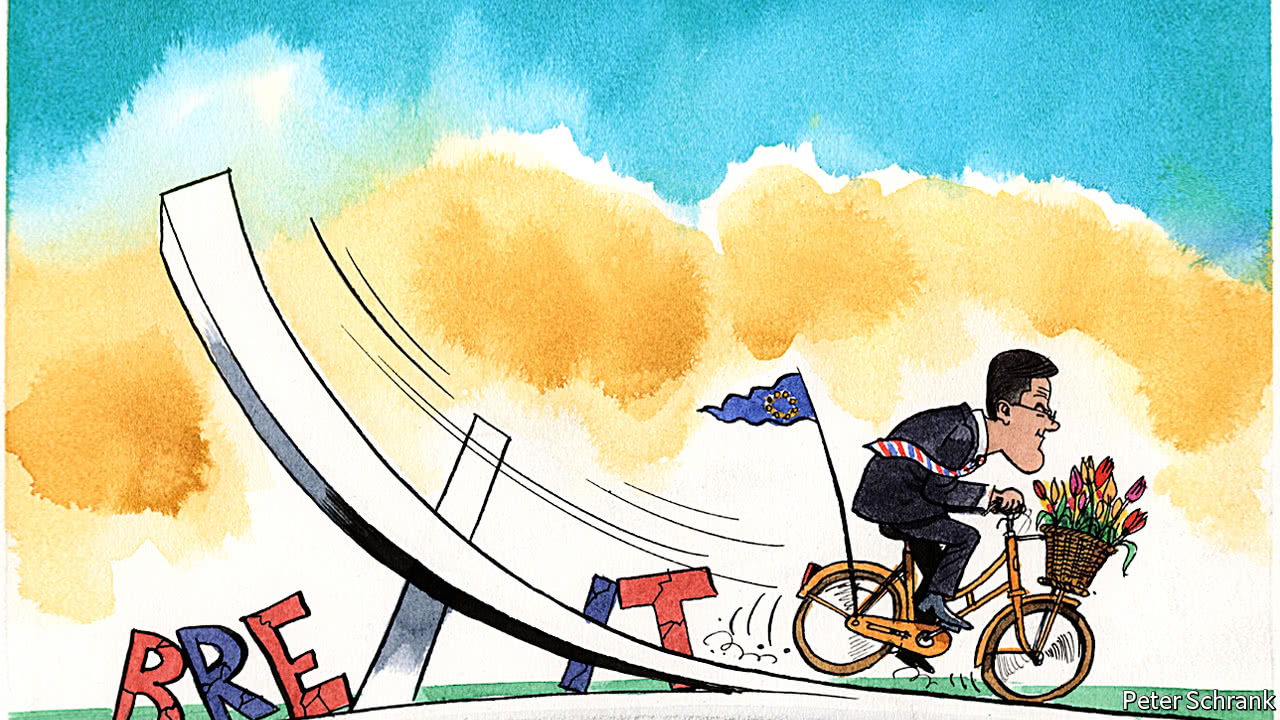 “ALL the North Sea’s people are connected to each other,” muses Hans de Boer, president of VNO-NCW, the Dutch business lobby, as he gazes from his 12th-floor office in The Hague. It is not a bad place for a Dutchman to consider the consequences of Brexit. The port of Rotterdam, Europe’s busiest, is just visible in the morning haze. Eighty thousand Dutch firms trade with Britain; 162,000 lorries thunder between the two countries each year. Rabobank, a Dutch lender, calculates that even a soft Brexit could lop 3% off GDP by 2030. Bar Ireland, no country will suffer more. “Brexit was not our preferred option,” offers Mr de Boer, drily.
Learning the right lessons, too late
Author: Lincoln Pigman
Wherever one looks, Russian foreign policy is missing the mark. Ukraine continues to integrate into European institutions, with a liberalized visa regime put into force in June 2017 and Ukraine designated as an aspirant country by NATO in March 2018. In the United States, President Donald Trump has largely preserved and occasionally gone beyond the Russia policy of his predecessor, even if his muted criticism of Russia stands out in stark contrast to the rhetoric of other members of his administration. In Europe, the electoral gains of Russian-backed Euroskeptic parties in France, Germany, and Italy have thus far failed to shatter the EU’s unity in favor of extending economic sanctions against Russia or prevent an unprecedented wave of diplomatic expulsions. Nor has the messy process of Britain’s exit from the European Union distracted London from, or led it to abandon, its role helping to safeguard European security; London’s still unfolding response to Moscow’s use of a nerve agent in the small English town of Salisbury makes that clear.
NIGERIA'S TROUBLING COUNTERINSURGENCY STRATEGY AGAINST BOKO HARAM
by Vanda Felbab
The kidnapping of 110 schoolgirls from Dapchi last month is the latest event to cast doubt on the Nigerian government’s claims that Boko Haram has been technically defeated. Unfortunately, the attack should have come as no surprise. Since 2015, the jihadist group has lost significant territorial control and no longer holds major cities. But as I saw during my fieldwork in Nigeria in January, the jihadist threat is far from gone, and counterinsurgency policies continue to be troubled and troubling.
Trump Loads The Bolton Bullet
by Reva Goujon
 The door to the White House had not yet shut in Secretary of State Rex Tillerson's wake when a mustachioed war hawk came in to take over another seat in President Donald Trump's Cabinet late last week. In replacing national security adviser H.R. McMaster, former U.N. Ambassador John Bolton will join the newly designated secretary of state, Mike Pompeo, to craft U.S. foreign policy as the world waits on edge for the White House's next moves. Analyzing personality to predict policy is a limited endeavor. But the concentration of hawks and the winnowing of pragmatists in the White House have the effect of bending constraints and raising tolerance to risk on high-stakes issues. As a result, we must lay any baseline, constraint-laden forecast we make against the personalities charged with making fateful political decisions.
Fewer Diplomats, More Armed Force Defines US Leadership Today
by Monica Duffy Toft
A strong legacy of U.S. leadership and engagement in global politics has been reduced today to what I call kinetic diplomacy - diplomacy by armed force. As of March 2018, the Trump administration has appointed only 70 of 188 U.S. ambassadors. At the same time, it has increased the deployment of special operations forces to 149 countries - up from 138 during the Obama administration in 2016. So while U.S. ambassadors are operating in one-third of the world’s capitals, special operations forces are active in three-fourths. The use of military force expanded not only under the Trump administration, but under Barack Obama’s as well. Now the Trump administration and Congress are also cutting back on foreign aid.
EU-NATO Alignment after Brexit
By Daniel Keohane
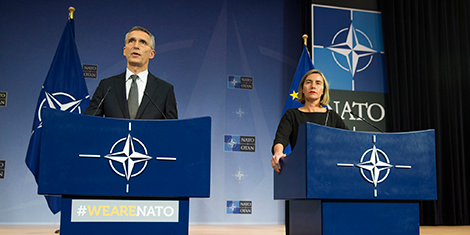 After Brexit, there is no guarantee that the major powers in NATO and the EU will agree on how to respond to future crises. At a summit in Brussels on March 22, EU heads of government will issue a statement of solidarity with the United Kingdom following the recent nerve agent attack on double-agent Sergei Skripal in Salisbury. This statement of support follows similar strong declarations by NATO and the EU’s Foreign Affairs Council.
Technology and National Security: The United States at a Critical Crossroads
 James Kadthke and John Wharton argue that American leadership in science, technology and innovation (ST&I) has long been the foundation of US national security. As a result, the rapid globalization of science and technology capacities presents a serious and long-term risk to the US. Indeed, so does America’s own reduced investment in certain technology areas, the lack of a clear ST&I national strategy and more. So, how can the US maintain its technological preeminence and security into the future? Here are our authors’ recommendations.
Too Close for Comfort: European Geostrategy and the Transatlantic Alliance
By Jeremy Shapiro
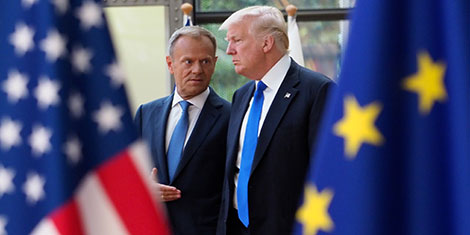 The question for Europe now is whether it needs to de-couple its strategy toward regional great powers from that of the United States. Geopolitical competition has made a roaring come back in recent years. Russian President Vladimir Putin, always on the cutting edge of new fads, welcomed the new era with flair last week by introducing an entire new generation of nuclear weapons aimed at the United States. But despite Putin’s nostalgia for the bipolar arms race of the Cold War, U.S.-Russian rivalry is just one example of the new era of great power competition. Indeed, the United States, under its mercurial president and a hawkish Republican administration, seems to be at odds with a growing array of powers.
Google's Replacing Facebook As Top Referrer To Publishers
by Dyfed Loesche
The company’s announcement, it would de-prioritise publishing content in its algorithm had many in the industry up in arms. However, there are signs that the drop in referral traffic from Facebook is offset by traffic gains coming from Google searches, especially in the mobile section. Research by Chartbeat indicates that this phenomenon isn’t all that new. The below infographic shows that Google mobile searches have closed in and overtaken mobile referral traffic from Facebook from August last year onwards. This is probably linked to the fact that “more publishers have been signing up for the Google publishing format launched in 2015 known as Accelerated Mobile Pages," according to Recode. The AMP service hosts publishers’ content on Google servers, which reduces loading time for mobile users.
Increasing International Cooperation in Cybersecurity and Adapting Cyber Norms
By Elena Chernenko, Oleg Demidov and Fyodor Lukyanov
 Information and communications technology (ICT) presents one of the most critical modern challenges to global security. Threat assessments predict that the next major international crisis could be due to a state or terrorist group weaponizing ICTs to devastate critical infrastructure or military logistics networks. The proliferation of asymmetric warfare (i.e., conflicts between nations or groups that have disparate military capabilities) has increased states’ use of ICTs, which necessitates the development of an international code of cyber conduct.
Psychographics: The Behavioural Analysis That Helped Cambridge Analytica Know Voters' Minds
Michael Wade
 The dealings that have been revealed between Cambridge Analytica and Facebook have all the trappings of a Hollywood thriller: a Bond villain-style CEO, a reclusive billionaire, a naïve and conflicted whistle-blower, a hipster data scientist turned politico, an academic with seemingly questionable ethics, and of course a triumphant president and his influential family. Much of the discussion has been on how Cambridge Analytica was able to obtain data on more than 50m Facebook users - and how it allegedly failed to delete this data when told to do so. But there is also the matter of what Cambridge Analytica actually did with the data. In fact the data crunching company’s approach represents a step change in how analytics can today be used as a tool to generate insights - and to exert influence.
‘Cyber bullets’ were once a spy tool but may soon scan Wi-Fi networks for the Army
By: Mark Pomerleau
/arc-anglerfish-arc2-prod-mco.s3.amazonaws.com/public/TGU7ZM65KFHU7LZJA7OUFF5HY4.jpg) Advanced battlefield cyber capabilities were once only reserved for the most highly trained and secretive forces, but now these tools and concepts are emerging from the shadows where they originated. In the not too distant future, brigades could have their own “cyber bullets” that could be used without going through lengthy approval processes or require support from remote cyber operators. Leidos is working to make this capability a realty. During a demo at the AUSA Global Force Symposium in Huntsville, Alabama March 27, Leidos unveiled how local forces can use advanced capabilities through a jamming pod mounted to a large MQ-1C Gray Eagle drone. This would allow forces to mine IP addresses, intercept communications and even manipulate enemy messages.
Advanced battlefield cyber capabilities were once only reserved for the most highly trained and secretive forces, but now these tools and concepts are emerging from the shadows where they originated. In the not too distant future, brigades could have their own “cyber bullets” that could be used without going through lengthy approval processes or require support from remote cyber operators. Leidos is working to make this capability a realty. During a demo at the AUSA Global Force Symposium in Huntsville, Alabama March 27, Leidos unveiled how local forces can use advanced capabilities through a jamming pod mounted to a large MQ-1C Gray Eagle drone. This would allow forces to mine IP addresses, intercept communications and even manipulate enemy messages.Preventing Future Conflicts in Outer Space
By Nayef Al-Rodhan
 Mankind’s dependence on space-based services has grown exponentially in the last few decades. As early as 1994, the UN noted that “space has become an important factor in the social and economic well-being and development of many States”. Today, a growing number of experts argue that sustaining modern life in an increasingly interconnected world will not be possible without ensuring the sustainable use of outer space. From instant communication and the use of global positioning systems, to weather forecasting and environmental monitoring, space technologies bring us irreplaceable and far-reaching benefits, which must be protected responsibly.
Douhet, Brodie, & Cyberspace
James Torrence
Cyberspace is the newest domain of warfare.[1] In cyberspace, the attacker has the advantage over the defender.[2] Cyberspace is unique because it “offers state and non-state actors the ability to wage campaigns against American political, economic, and security interests” without requiring a physical presence.[3] The 2017 United States National Security Strategy says that “America’s response to the challenges and opportunities of the cyber era will determine our future prosperity and security.”[4] However, in the 2006 United States National Security Strategy, the word “cyber” is mentioned one time in parentheses.[5] The rapid rise of cyber from not being a part of the National Security Strategy to a determinant of American prosperity and security means that policymakers have little or no experience developing cybersecurity strategy. To develop an effective foundation for the creation of cybersecurity strategy, cyber policymakers must learn from a historical example when a new domain of warfare, rapidly evolving technology, and an environment dominated by the offense presented challenges to conventional defense.
CNAS RELEASES NEW REPORT “BUILDING THE FUTURE FORCE: GUARANTEEING AMERICAN LEADERSHIP IN A CONTESTED ENVIRONMENT”
Washington, D.C., March 29, 2018 – A new study from the Center for a New American Security (CNAS) examines how the spread of advanced technologies and operational concepts has enabled state competitors to contest U.S. military primacy. It closes with recommendations for assuring an American military advantage to the year 2025 and beyond. In “Building the Future Force: Guaranteeing American Leadership in a Contested Environment ,” Shawn Brimley, Jerry Hendrix, Lauren Fish, Adam Routh, and Alexander Velez-Green assess competitors’ pursuit of information dominance; integrated naval, air, and missile defenses; and long-range strike capabilities. The authors evaluate next how these developments, both independently and in conjunction with one another, may complicate U.S. efforts to find, fix, and finish enemy targets in a future war. The report closes with recommendations for overcoming or sidestepping these complications.
The U.K.'s 'Fusion Strategy' Warfare Doctrine Looks Familiar
by Leonid Bershid
Modern warfare is, in part, about marketing. So, in its National Security Capability Review , the U.K. government chose a glitzy, tech-sounded new-age name: "fusion strategy." That may have part been to avoid the term "hybrid warfare" often applied to today's Russian warfighting. The difference is subtle but important. "Call it non-linear war (which I prefer), or hybrid war , or special war , Russia’s operations first in Crimea and then eastern Ukraine have demonstrated that Moscow is increasingly focusing on new forms of politically focused operations in the future," British Russia expert Mark Galeotti wrote in the blog post that launched (to the author's lasting regret) the inaccurate term "Gerasimov Doctrine." He was referring to the 2013 speech by General Valery Gerasimov, chief of the Russian General Staff. In it, Gerasimov dissected a purported Western war strategy, employing propaganda and economic warfare to soften up the adversary for military action by special forces aided by private military companies and domestic opposition. He argued that Russia should preempt these efforts, rather than copy them.
The U.K.'s New Warfare Doctrine Looks Familiar
Leonid Bershidsky
 Modern warfare is, in part, about marketing. So, in its National Security Capability Review, the U.K. government chose a glitzy, tech-sounded new-age name: "fusion strategy." That may have part been to avoid the term "hybrid warfare" often applied to today's Russian warfighting. The difference is subtle but important. "Call it non-linear war (which I prefer), or hybrid war, or special war, Russia’s operations first in Crimea and then eastern Ukraine have demonstrated that Moscow is increasingly focusing on new forms of politically focused operations in the future," British Russia expert Mark Galeotti wrote in the blog post that launched (to the author's lasting regret) the inaccurate term "Gerasimov Doctrine." He was referring to the 2013 speech by General Valery Gerasimov, chief of the Russian General Staff. In it, Gerasimov dissected a purported Western war strategy, employing propaganda and economic warfare to soften up the adversary for military action by special forces aided by private military companies and domestic opposition. He argued that Russia should preempt these efforts, rather than copy them.
Subscribe to:
Posts (Atom)