The Profession of Arms: A Guide for Young Army Officers
It takes courage, especially for a young officer, to check a man met on the road for not saluting properly or for slovenly appearance, but, every time he does, it adds to his stock of moral courage, and whatever the soldier may say, he has respect for the officer who does pull him up.
Read Document →The Dragon's Teeth: Assessing China's Military Modernization
PLA has focused on modernising its capabilities across all warfare domains to achieve these goals. This includes land, air, and maritime operations, nuclear, space, counter-space, electronic warfare and cyberspace operations, aiming to become a fully integrated joint force.
Read Document →Transforming the PLA: A Decade of reorganisation from SSF to ISF
PRC has engaged in a sustained and broad effort to transform the PLA from an infantry-heavy, low-technology, ground forces-centric military into a high-technology, networked force with an increasing emphasis on joint operations and naval and air power projection.
Read Document →Eyes without Borders: Exploring the World of Open Source Intelligence (OSINT) in the Digital Age
Open Source Intelligence (OSINT) is gaining prominence with the rise of social media, the digital society and the vast growth of publicly and commercially available information (PAI and CAI).
Read Document →
The PLA’s Developing Cyber Warfare Capabilities and India's Options
Informationised warfare blurs the lines between peacetime and wartime. A nation in the information age cannot wait for the hostilities to break out to collect intelligence, carryout influence operations, develop antisatellite systems or design computer software weapons.
Read Document →
Galwan and After
Why did China did this when he is under tremendous pressure in all fronts, is this China's salami slice tactics being progressed rigorously, what will be new Rules of Engagement, what will be escalatory control mechanism, who has taken this decision, will there be some pressure put by China in India's North-East through insurgency.
Read Document →
India’s Joint Doctrine for Cyberspace Operations: A Critical Review
Chief of Defence Staff (CDS) General Anil Chauhan and Secretary, Department of Military Affairs, formally released declassified versions of the Joint Doctrines for Cyberspace Operations during the Chiefs of Staff Committee meeting in New Delhi.
Read Document →
Know your Enemy General(now Field Marshal) Syed Aseem Munir
Gen SA Munir's position in the hierarchy of Pakistan was not very comfortable. The state of economy, insurgency in Pakhtoonistan and Balochistan, attack on the Jaffar Express, constant protests by supporters of Imran Khan's supporters inside and outside of parliament.
Read Document →
Decoding Operation SINDOOR: Key Aspects and Implications
Precision strikes were carried out on nine sites—four in Pakistan and five in PoK—linked to anti-India terrorist groups such as the LeT, JeM and the Hizbul Mujahideen. The targeted sites included Muridke (LeT headquarters) and Bahawalpur (JeM headquarters).
Read Document →
Chinese Cyber Exploitation in India's Power Grid - Is There a linkage to Mumbai Power Outage?
The New York Times (NYT), based on analysis by a U.S. based private intelligence firm Recorded Future, reported that a Chinese entity penetrated India’s power grid at multiple load dispatch points. Chinese malware intruded into the control systems that manage electric supply across India, along with a high-voltage transmission substation and a coal-fired power plant
Read Document →20 September 2018
A Journey to Kashmir’s Gurez Valley
Minding the Gaps in India’s Act East Policy
India’s approach to Southeast Asia has been lately shifting from one dominated by trade and development to one in which strategic considerations play an important complementary role. This has taken a new form, and is now called the “Act East” Policy, marking also an expansion to include other Indo-Pacific countries. But there are some doubts about whether the ASEAN countries are entirely comfortable with the idea of the “Indo-Pacific.” Several ASEAN states have been lukewarm to the idea, worried about having to take sides between the United States and China. This raises questions about the viability of India’s new “ASEAN-centric” approach to the Indo-Pacific.Pakistan’s Elections: Mainstreaming Terrorists, Radicalizing Society
Pakistani nuclear forces, 2018
China expands its control in South China Sea
As China consolidates its hold in South China Sea and wields its military, economic and diplomatic leverage, smaller countries see no credible option but to work with Beijing, even if that means furthering Chinese objectives. Manila, for example, seems willing to accede to Beijing’s demand for joint development of hydrocarbon resources in the Philippines’ own exclusive economic zone. The plain fact is that U.S. inaction under successive administrations has allowed China to gain effective control over a strategic sea that is more than twice the size of the Gulf of Mexico and 50 percent bigger than the Mediterranean Sea. Australia’s Kevin Rudd, who is still fending off accusations that he was “a slavish pro-China prime minister,” has acknowledged that “Chinese policy has not yet been challenged in the South China Sea by the United States to any significant extent.”Can China Rise Peacefully?
(Editor’s Note : The following is the new concluding chapter of Dr. John J. Mearsheimer’s book The Tragedy of the Great Power Politics. A new, updated edition was released on April 7 and is available via Amazon.) With the end of the Cold War in 1989 and the subsequent collapse of the Soviet Union two years later, the United States emerged as the most powerful state on the planet. Many commentators said we are living in a unipolar world for the first time in history, which is another way of saying America is the only great power in the international system. If that statement is true, it makes little sense to talk about great-power politics, since there is just one great power.Reframing the Trade Debate
Chinese Growth Spurt
How China’s Middle Class Views the Trade War
Maritime Security Cooperation in the South China Sea: Sailing In Different Directions
At China’s eighth Xiangshan Forum in October, a major topic of discussion will be visions and the reality of multilateral maritime security cooperation. The Xiangshan Forum is China’s answer to the British International Institute for Strategic Studies’ Shangri-la Dialogue (SLD), held each summer in Singapore. Beijing views the SLD and its organizers as preferentially providing platforms for outside countries’ perspectives and criticism of China’s policies. Presumably, many of the speakers at the Forum will provide an Asian and Chinese perspective on regional maritime security cooperation and the obstacles to achieving it. Hopefully they will directly or indirectly address critical questions like: whose security; security of or from what; and realistically how to proceed?China may be copying Facebook to build an intelligence weapon
Yemen’s Civil War
Madeleine Albright on fascism, democracy, and diplomacy
How to prevent a massacre and the creation of ISIS 2.0 in Syria’s Idlib province
A 10-degree shift in Syria strategy
2018 Fourth-Quarter Forecast
The White House's Enduring Gamble Over Trade Policy. As the White House finalizes a deal to preserve the North American Free Trade Agreement (NAFTA), the Trump administration will increase trade risks elsewhere. China will have to weather an even bigger squall of tariffs this quarter as trade negotiations stall out. European efforts to neutralize the U.S. auto tariff threat will drag beyond the quarter, but ultimately fail. The Mounting Cost of U.S. Unilateralism. The United States needs all the allies it can get in an era of great power competition. A blunt U.S. policy on tariffs and sanctions will, however, drive strategic middle powers — like Turkey and Pakistan — to seek non-Western alternatives and compel great powers — like Europe — to rebuild their economic and security sovereignty with transatlantic ties under great strain.Iran's Latest Missile Strikes Showcase Tehran's Strategy
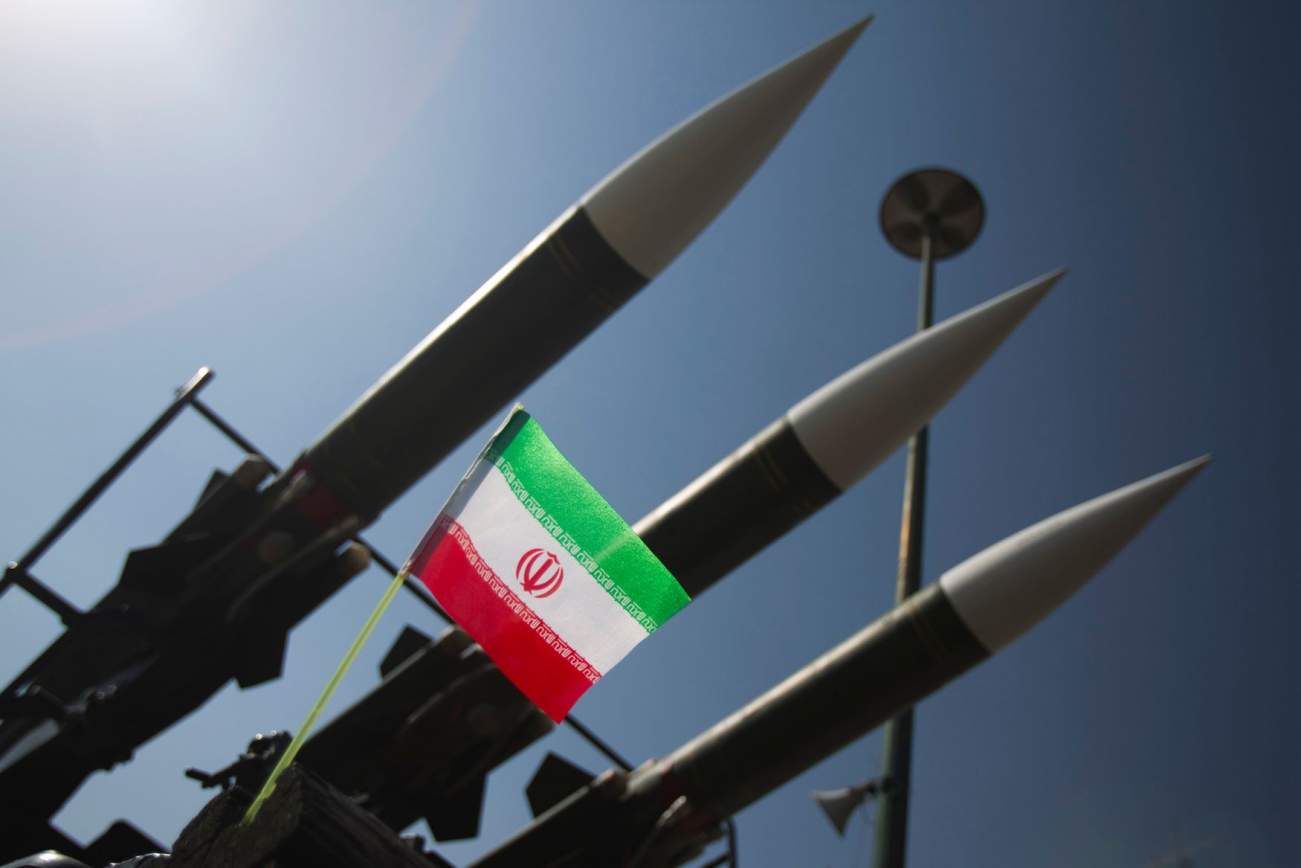
The Iranian Islamic Revolutionary Guard Corps fired seven surface-to-surface missiles at bases of Kurdish opposition groups in Iraq on September 8. The attack, filmed by an IRGC drone, shows that Iran can carry out precision strikes and is a clear signal to Kurdish opposition groups, and also Baghdad’s supporters in Washington, that Iran will continue to carry out operations in Iraq as part of its policy to exercise influence in the region. It also showcases the precision of Iran's ballistic missile program.The Right Way to Achieve Security in Space
Does It Matter That Trump Is a Liar?
According to the Washington Post, as of Aug. 1, U.S. President Donald Trump had made more than 4,000 false or misleading claims since becoming president, an average of roughly 7.6 per day. What’s even more remarkable about Trump is that his lies aren’t even very creative, plausible, or hard to expose: He lies even when the lie is patently absurd and easy to expose. Just consider his latest big whopper: the bizarre claim that nearly 3,000 people didn’t really die as a result of Hurricane Maria in Puerto Rico. According to our self-absorbed and truth-challenged president, the death toll was a fabrication made up by Democrats solely to make him look bad. Poor baby.Food Fight
Humans have always depended on the sea. For as long as there have been fishermen, there have been conflicts over fish. And though it may seem anachronistic, the odds that a squabble over fishing rights could turn into a major armed conflict are rising. The return of great-power competition has actually increased the likelihood of a war over fish. The past 17 years of the fight against terrorism, and Washington’s renewed focus on developing high-end capabilities to prepare for great-power conflict, have led to a lack of preparation for a low-end, seemingly mundane but increasingly likely source of conflict in the world: food.Strategic Superiority for the Modern Era
Can Blockchain Technology Bring Smooth Seas to Global Shipping?
Distributed ledger technology has the potential to substantially increase the efficiency of the global shipping industry by lowering costs and shortening transit times. First movers will compete to set standards and promote the widespread adoption of the technology needed to realize its full potential to change the industry. Because of the size and overwhelming importance of the Chinese market to global trade, Beijing and Chinese companies developing blockchain platforms for the shipping industry will hold the upper hand over many of their Western counterparts.The Sports World Is Keeping an Eye on Drones
After I recently asked my twin sons for ideas for fun activities they might want to do with me independent of one another, one suggested he'd love to build a model airplane or to perhaps try flying a drone aircraft. His suggestion made me recall my own childhood fascination with aviation, and we agreed to visit a hobby store soon. Our conversation also sparked thoughts about how the incredible growth of the drone industry might fit into the wider world of sports.