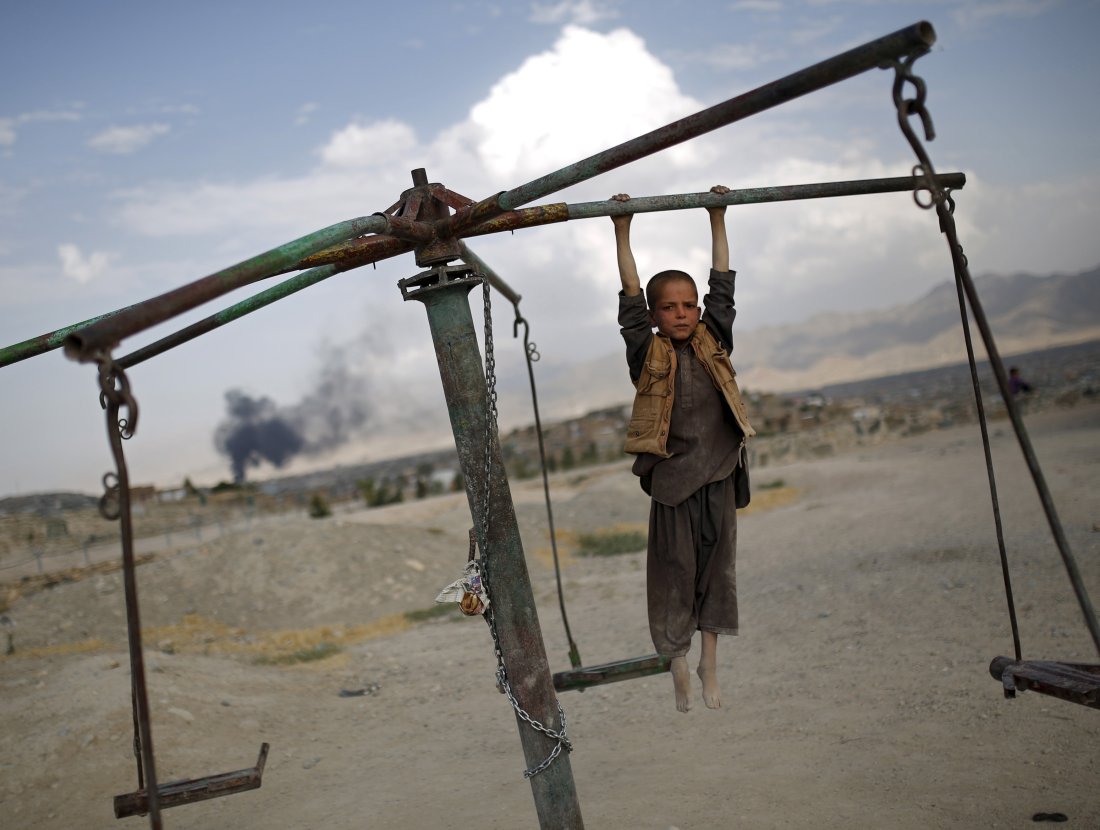
IS claimed responsibility for an attack on a government ministry in Kabul that killed at least seven civilians and three Afghan troops IS claimed responsibility for an attack on a government ministry in Kabul that killed at least seven civilians and three Afghan troops (AFP Photo/STR)The Profession of Arms: A Guide for Young Army Officers
It takes courage, especially for a young officer, to check a man met on the road for not saluting properly or for slovenly appearance, but, every time he does, it adds to his stock of moral courage, and whatever the soldier may say, he has respect for the officer who does pull him up.
Read Document →The Dragon's Teeth: Assessing China's Military Modernization
PLA has focused on modernising its capabilities across all warfare domains to achieve these goals. This includes land, air, and maritime operations, nuclear, space, counter-space, electronic warfare and cyberspace operations, aiming to become a fully integrated joint force.
Read Document →Transforming the PLA: A Decade of reorganisation from SSF to ISF
PRC has engaged in a sustained and broad effort to transform the PLA from an infantry-heavy, low-technology, ground forces-centric military into a high-technology, networked force with an increasing emphasis on joint operations and naval and air power projection.
Read Document →Eyes without Borders: Exploring the World of Open Source Intelligence (OSINT) in the Digital Age
Open Source Intelligence (OSINT) is gaining prominence with the rise of social media, the digital society and the vast growth of publicly and commercially available information (PAI and CAI).
Read Document →
The PLA’s Developing Cyber Warfare Capabilities and India's Options
Informationised warfare blurs the lines between peacetime and wartime. A nation in the information age cannot wait for the hostilities to break out to collect intelligence, carryout influence operations, develop antisatellite systems or design computer software weapons.
Read Document →
Galwan and After
Why did China did this when he is under tremendous pressure in all fronts, is this China's salami slice tactics being progressed rigorously, what will be new Rules of Engagement, what will be escalatory control mechanism, who has taken this decision, will there be some pressure put by China in India's North-East through insurgency.
Read Document →
India’s Joint Doctrine for Cyberspace Operations: A Critical Review
Chief of Defence Staff (CDS) General Anil Chauhan and Secretary, Department of Military Affairs, formally released declassified versions of the Joint Doctrines for Cyberspace Operations during the Chiefs of Staff Committee meeting in New Delhi.
Read Document →
Know your Enemy General(now Field Marshal) Syed Aseem Munir
Gen SA Munir's position in the hierarchy of Pakistan was not very comfortable. The state of economy, insurgency in Pakhtoonistan and Balochistan, attack on the Jaffar Express, constant protests by supporters of Imran Khan's supporters inside and outside of parliament.
Read Document →
Decoding Operation SINDOOR: Key Aspects and Implications
Precision strikes were carried out on nine sites—four in Pakistan and five in PoK—linked to anti-India terrorist groups such as the LeT, JeM and the Hizbul Mujahideen. The targeted sites included Muridke (LeT headquarters) and Bahawalpur (JeM headquarters).
Read Document →
Chinese Cyber Exploitation in India's Power Grid - Is There a linkage to Mumbai Power Outage?
The New York Times (NYT), based on analysis by a U.S. based private intelligence firm Recorded Future, reported that a Chinese entity penetrated India’s power grid at multiple load dispatch points. Chinese malware intruded into the control systems that manage electric supply across India, along with a high-voltage transmission substation and a coal-fired power plant
Read Document →5 May 2019
After 'caliphate' collapse, jihadists head to Afghanistan to plot attacks
IS claimed responsibility for an attack on a government ministry in Kabul that killed at least seven civilians and three Afghan troops IS claimed responsibility for an attack on a government ministry in Kabul that killed at least seven civilians and three Afghan troops (AFP Photo/STR)America Cannot Save Afghanistan
Asia is the new ground zero for Islamist terror | The Strategist
The Easter Sunday bombings in Sri Lanka rank among the deadliest terrorist attacks in modern history, and underscore the metastasising scourge of Islamist violence in Asia. Radical Islamist groups, some affiliated with larger extremist networks, have been quietly gaining influence in an arc of countries extending from the Maldivian to the Philippine archipelagos, and the threat they pose can no longer be ignored.China’s Risky Middle East Bet
Beijing believes it can focus on economic development and avoid any role in political affairs—but that assumption will likely prove naive.Mao Redux: The Enduring Relevance of Self-Reliance in China
Pundits are particularly fond of likening Xi Jinping to Chairman Mao. Xi’s accumulation of personal political power, purging of opponents, and removal of presidential term limits all lend credence to the comparison. Some of the latest evidence that “Xi is the new Mao” is his supposed “revival” of the Maoist concept of “self-reliance” (zili gengsheng).Is China Really Becoming a Current Account Deficit Country? (Part 1 of 2)
For 25 years, China has been running a current account surplus, and the world grew accustomed to “China the exporter” of last resort. So when The Economist recently made the case that China would soon become a current account deficit country, eyebrows were raised. The implications of the end of such an era are significant, piquing market interest and engendering debate.Tear down the 'Great Firewall' to win the war with China
China’s Digital Silk Road: A Game Changer for Asian Economies
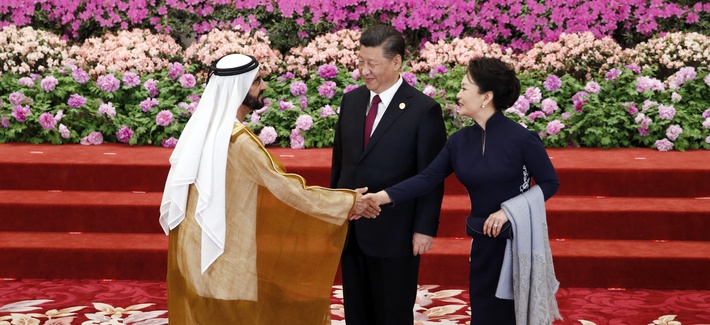
The Second Belt and Road Forum for International Cooperation that took place April 25 to 27 saw 37 world leaders gather in Beijing to discuss more bilateral project opportunities with China. On the sidelines, however, the emerging Digital Silk Road was featured during the “Belt and Road CEO Conference” — a first, which brought representation by global Fortune 500 companies and other Chinese firms as a sign of their interest.The Coming Technological Cold War
China to take over Kenya’s main port over unpaid huge Chinese Loan
Kenyan government risks losing the lucrative Mombasa port to China should the country fail to repay huge loans advanced by Chinese lenders.Is Israel Ready For War?
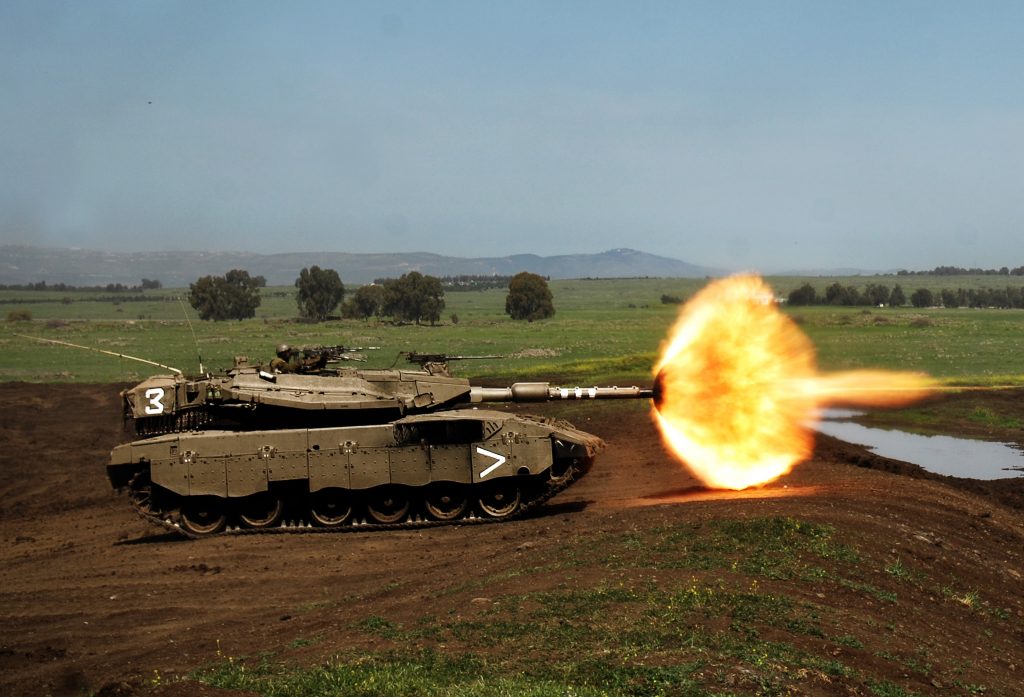
TEL AVIV: Years of fighting Iranian-backed adversaries in Syria, Lebanon, and Gaza has strained the vaunted Israeli Defense Force, even as neighboring nation-states modernize their regular militaries, often with Russian equipment. After months of intensifying debate over military readiness, the new IDF chief of staff, Lt. Gen. Aviv Kohavi, has proposed 10 billion shekels (about $2.76 billion US) in high-priority improvements. And that’s just part of recently reelected Prime Minister Benjamin Netanyahu’s push for long-term increases in defense spending.ISIS Relaunches as a Global Platform
Two days after the bombings in Sri Lanka, the Islamic State came out and said it was behind them. It backed up its claim with video evidence that showed the attackers gathering in front of its flag to pledge allegiance to Abu Bakr al-Baghdadi, the group’s current leader. The attack had been coming for some time, and others like it are almost certainly being planned—and not just in Sri Lanka. That’s because terrorism has long been a crucial promotional tactic for ISIS. This won’t change just because the organization, which tried to build a proto-state on territory it held in Iraq and Syria, was militarily defeated earlier this year.Second-life EV batteries: The newest value pool in energy storageApril 2019 | Article
The Metrics of Daesh and the Ongoing Challenge of Extremism
United States nuclear forces, 2019
Asynchronous Warfare part 3: How Conventional Strategies and Tactics Are Applied to Cyberwarfare
In part 1 of this blog series, we described the roots of the cyberwar that we’re already fighting, which lie in proven, historic conventional warfare tactics that give the advantage to what appears to be an underpowered enemy. In part 2, we described the strategy behind asynchronous warfare usage and the three phases of protracted conflict that lead to ultimate victory.Hypersonics and Modern War
Petroleum Powerhouse: Why America No Longer 'Needs' the Middle East
Energy is vital to America’s security and prosperity. During the Cold War, the United States had strong interests in ensuring the Middle East was not dominated by the Soviet Union—we couldn’t risk a major disruption to the global oil market, which was once dominated by the Persian Gulf. But today, there is no threat to the region from any hegemon. Not only that, but also the world energy balance of power has shifted dramatically. With a vastly different geopolitical reality, U.S. foreign policy should modernize and recalibrate, starting in the Middle East.A New Map for America
Is there such a concept as ‘cyber deterrence?’
As the U.S. Department of Defense increasingly worries about damage that could result from a massive cyberattack, national security leaders are debating the best strategy to prevent such incursions. Should they adopt a philosophy that aims to stop an attack of any kind or should they try to dissuade enemies from specifically pursuing a cyberattack?Killer Apps The Real Dangers of an AI Arms Race
The AI Race Is Wide Open, If America Remains Open
Much ink has been spilled on the artificial intelligence (AI) race between the United States and China, leading to a whole lot of hand-wringing on how America can maintain its edge.Mitigating Security Risks to Emerging 5G Networks
Needed: A Workable and Affordable Defense Strategy
Decision Maneuver: the Next Revolution in Military Affairs
U.S. military leaders expressed alarm during Congressional hearings last month about the erosion of American military superiority against great power rivals China and Russia. To arrest the slide, they proposed an expensive “kitchen sink” of potential solutions, including growing the force, buying new weapons, improving training for operators, increasing maintenance, and fielding more autonomous systems. But the United States cannot simply spend its way to sustained military advantage. The costs for equipment, sustainment, and personnel are rising much faster than inflation and growing deficits will constrain future budgets. Moreover, likely targets of China and Russia like Taiwan and the Baltic nations are so close that simply having a larger, more ready U.S. force won’t be enough to stop them. Instead, the U.S. military will need to pursue a fundamentally different approach to warfare, as it did during the Cold War with nuclear weapons and, later, networks and precision guided munitions.