The US recently announced the termination of its Generalized System of Preferences (GSP) designation for India. Under the GSP, certain designated goods had been permitted to enter the US duty-free. While the US action has made the headlines, its origins and implications are not well understood. What is the larger significance of this spat?The Profession of Arms: A Guide for Young Army Officers
It takes courage, especially for a young officer, to check a man met on the road for not saluting properly or for slovenly appearance, but, every time he does, it adds to his stock of moral courage, and whatever the soldier may say, he has respect for the officer who does pull him up.
Read Document →The Dragon's Teeth: Assessing China's Military Modernization
PLA has focused on modernising its capabilities across all warfare domains to achieve these goals. This includes land, air, and maritime operations, nuclear, space, counter-space, electronic warfare and cyberspace operations, aiming to become a fully integrated joint force.
Read Document →Transforming the PLA: A Decade of reorganisation from SSF to ISF
PRC has engaged in a sustained and broad effort to transform the PLA from an infantry-heavy, low-technology, ground forces-centric military into a high-technology, networked force with an increasing emphasis on joint operations and naval and air power projection.
Read Document →Eyes without Borders: Exploring the World of Open Source Intelligence (OSINT) in the Digital Age
Open Source Intelligence (OSINT) is gaining prominence with the rise of social media, the digital society and the vast growth of publicly and commercially available information (PAI and CAI).
Read Document →
The PLA’s Developing Cyber Warfare Capabilities and India's Options
Informationised warfare blurs the lines between peacetime and wartime. A nation in the information age cannot wait for the hostilities to break out to collect intelligence, carryout influence operations, develop antisatellite systems or design computer software weapons.
Read Document →
Galwan and After
Why did China did this when he is under tremendous pressure in all fronts, is this China's salami slice tactics being progressed rigorously, what will be new Rules of Engagement, what will be escalatory control mechanism, who has taken this decision, will there be some pressure put by China in India's North-East through insurgency.
Read Document →
India’s Joint Doctrine for Cyberspace Operations: A Critical Review
Chief of Defence Staff (CDS) General Anil Chauhan and Secretary, Department of Military Affairs, formally released declassified versions of the Joint Doctrines for Cyberspace Operations during the Chiefs of Staff Committee meeting in New Delhi.
Read Document →
Know your Enemy General(now Field Marshal) Syed Aseem Munir
Gen SA Munir's position in the hierarchy of Pakistan was not very comfortable. The state of economy, insurgency in Pakhtoonistan and Balochistan, attack on the Jaffar Express, constant protests by supporters of Imran Khan's supporters inside and outside of parliament.
Read Document →
Decoding Operation SINDOOR: Key Aspects and Implications
Precision strikes were carried out on nine sites—four in Pakistan and five in PoK—linked to anti-India terrorist groups such as the LeT, JeM and the Hizbul Mujahideen. The targeted sites included Muridke (LeT headquarters) and Bahawalpur (JeM headquarters).
Read Document →
Chinese Cyber Exploitation in India's Power Grid - Is There a linkage to Mumbai Power Outage?
The New York Times (NYT), based on analysis by a U.S. based private intelligence firm Recorded Future, reported that a Chinese entity penetrated India’s power grid at multiple load dispatch points. Chinese malware intruded into the control systems that manage electric supply across India, along with a high-voltage transmission substation and a coal-fired power plant
Read Document →19 June 2019
Trump’s trade tantrums and a delicate balancing act for India
The US recently announced the termination of its Generalized System of Preferences (GSP) designation for India. Under the GSP, certain designated goods had been permitted to enter the US duty-free. While the US action has made the headlines, its origins and implications are not well understood. What is the larger significance of this spat?US’ Recent Decisions To Cloud Pompeo’s Visit To India – Analysis
Glacier Watch: Indus Basin – Analysis
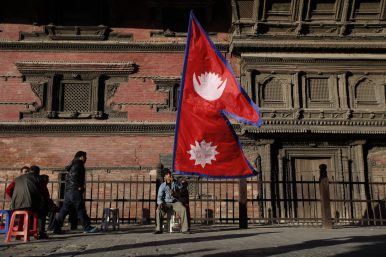
Many of the world’s most iconic river systems – the Mekong, Indus, Yangtze – are fed by glaciers that both supply and modulate their water flow. Now these glaciers are melting due to climate change, threatening irrigation systems, electricity generation, and drinking water reserves in some of the most densely populated areas of the planet.Nepal: “ A Summer of Protests”- Does PM Oli care?
11 Years on, Has Nepal’s Republic Succeeded?
Pessimism about Nepal’s politics is common, despite significant changes since the declaration of the republic in 2008.Hong Kong, Taiwan and the hope for a better China
Rare earths give China leverage in the trade war, at a cost
It looks at first like a classic Chinese painting: water-soaked paddies nestled against endless green hills. But then the brown begins. Abandoned brown pits on the hilltops. Brown gashes down their sides. Brown sludge in the streams. Ganzhou, until a few years ago, was southern China’s mining country. The damage done in the name of economic growth involves an industry that has given China leverage in its trade war with America. The rocks extracted are rich in rare-earth minerals, used in everything from planes to smartphones. It is a dirty business that China dominates.UK to host economic talks with China on June 17
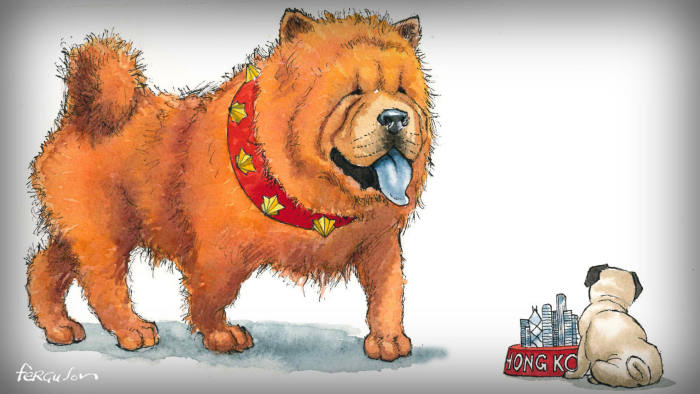
Hong Kong, Taiwan and the hope for a better China
China's Expanding Media Dominance in Africa
Chinese state television is gaining influence in Africa. But while the media outlets involved officially claim their journalism is independent, those who work for the companies tell a different story.Japan must prepare as the U.S. and China dig in
The Senkaku issue as seen from the Falklands War
Widening the Aperture with Saudi Arabia
Why Does The Left Love Islam So Much?
Europe’s Dream: Escaping the Dictatorship of the Dollar
Europe’s quest to find an alternative to U.S. financial dominance and the global rule of the dollar has only intensified since French and German leaders first howled about the need to recover their economic sovereignty last summer. But European governments are finding that coming up with a workable plan is a lot easier said than done—leaving them fuming but still vulnerable to Washington’s strong-arm tactics.Trump Accuses New York Times of ‘Treason’ for Story on U.S. Cyber Offensive Against Russia
U.S. Escalates Online Attacks on Russia’s Power Grid
WASHINGTON — The United States is stepping up digital incursions into Russia’s electric power grid in a warning to President Vladimir V. Putin and a demonstration of how the Trump administration is using new authorities to deploy cybertools more aggressively, current and former government officials said.If Trump Doesn't Want a War With Iran, He Should Stop Pushing Iran Towards War
Four tankers off the Emirati coast were damaged last month by what investigators concluded were explosives attached to the ships' hulls. The Trump administration immediately pointed to Iran or Iranian-directed proxies as the perpetrators of the attacks. Yesterday, two more ships were attacked near the Strait of Hormuz. And for the second time, Trump administration officials blamed Tehran for the incident, citing a grainy, black-and-white video of an Iranian vessel purportedly approaching one of the ships to remove an unexploded mine hours after the attack happened.With Great Demographics Comes Great Power
The Complicated Geopolitics of U.S. Oil Sanctions on Iran
It is often said, perhaps with some hyperbole, that Iran’s nuclear deal with world powers was the best hope for conflict resolution in the Middle East. Its architect John Kerry argues instead that the 2015 deal’s limited parameter of closing Iran’s pathway to a nuclear weapon is sufficient on the merits. The Trump administration is taking a different view, focusing on Iran’s escalating threats to U.S. allies Israel, Saudi Arabia, and the United Arab Emirates. Those threats, which have included missile, drone, and cyberattacks on Saudi oil facilities, are looming large over the global economy because they are squarely influencing the volatility of the price of oil. One could argue that the U.S. decision to withdraw from the Iranian deal, referred to as the Joint Comprehensive Plan of Action (JCPOA), has injected an even higher degree of risk into oil markets, where traders now feel that the chances of Mideast conflict resolution are lower.The World Grows More Dangerous by the Day
My experience at the United Nations Security Council over the last five years has led me to see a harsh truth: The world is growing more dangerous and less predictable by the day. While the tectonic plates of power are shifting under our feet, driven in no small part by the combined effects of a technology revolution and the rise of China, we are also witnessing the return of heightened competition among the major powers.The US and the ‘Two-war’ Defense Strategy
The Old Guard Are Killing the World’s Youngest Country
WAAT, South Sudan—“Jeck,” a voice calls from inside the mud-and-thatch hut. I recognize the pronunciation of my name—it’s close enough—and the voice. “My friend, Jeck,” the man says again. Ducking and then emerging through the door of the hut is a handsome face atop a large angular frame. At 6 feet, 8 inches tall—with broad shoulders and long arms—Koang (pronounced Kong) has a smile so wide it could span the Nile. We slap shoulders and then hands, in the Sudanese way, and then embrace.What a Wonderful World
The Politics of Cybersecurity: Balancing Different Roles of the State
This article by Myriam Dunn Cavelty and Florian J. Egloff investigates the role of the state in cybersecurity. It finds six different roles of the state in cybersecurity: (1) security guarantor, (2) legislator and regulator, (3) supporter and representative of the whole of society, (4) security partner, (5) knowledge generator and distributor, and (6) threat actor. In addition, the article shows that cybersecurity policy is diverse and necessarily includes state, economic, and societal actors.U.S. Interests and Foreign Military Sales
An Analysis of the RBI’s Draft Framework on Regulatory Sandbox for Fintech
Regulations on Protection of Critical Information Infrastructure Security
US Cyber Command is reportedly going on offense against Russia's power grid
A Framework for Protecting Our Critical Infrastructure
There’s no disputing the importance of a reliable and well-functioning critical infrastructure when it comes to our daily lives—in fact, our national and economic security depend on it. Because our critical infrastructure systems are becoming increasingly complex and connected, we need to understand the real risk of cybersecurity threats and how these threats can impact the nation’s economy, security, public safety and overall health. Cybersecurity threats can also impact companies, reputations and the ability to innovate.