The Profession of Arms: A Guide for Young Army Officers
It takes courage, especially for a young officer, to check a man met on the road for not saluting properly or for slovenly appearance, but, every time he does, it adds to his stock of moral courage, and whatever the soldier may say, he has respect for the officer who does pull him up.
Read Document →The Dragon's Teeth: Assessing China's Military Modernization
PLA has focused on modernising its capabilities across all warfare domains to achieve these goals. This includes land, air, and maritime operations, nuclear, space, counter-space, electronic warfare and cyberspace operations, aiming to become a fully integrated joint force.
Read Document →Transforming the PLA: A Decade of reorganisation from SSF to ISF
PRC has engaged in a sustained and broad effort to transform the PLA from an infantry-heavy, low-technology, ground forces-centric military into a high-technology, networked force with an increasing emphasis on joint operations and naval and air power projection.
Read Document →Eyes without Borders: Exploring the World of Open Source Intelligence (OSINT) in the Digital Age
Open Source Intelligence (OSINT) is gaining prominence with the rise of social media, the digital society and the vast growth of publicly and commercially available information (PAI and CAI).
Read Document →
The PLA’s Developing Cyber Warfare Capabilities and India's Options
Informationised warfare blurs the lines between peacetime and wartime. A nation in the information age cannot wait for the hostilities to break out to collect intelligence, carryout influence operations, develop antisatellite systems or design computer software weapons.
Read Document →
Galwan and After
Why did China did this when he is under tremendous pressure in all fronts, is this China's salami slice tactics being progressed rigorously, what will be new Rules of Engagement, what will be escalatory control mechanism, who has taken this decision, will there be some pressure put by China in India's North-East through insurgency.
Read Document →
India’s Joint Doctrine for Cyberspace Operations: A Critical Review
Chief of Defence Staff (CDS) General Anil Chauhan and Secretary, Department of Military Affairs, formally released declassified versions of the Joint Doctrines for Cyberspace Operations during the Chiefs of Staff Committee meeting in New Delhi.
Read Document →
Know your Enemy General(now Field Marshal) Syed Aseem Munir
Gen SA Munir's position in the hierarchy of Pakistan was not very comfortable. The state of economy, insurgency in Pakhtoonistan and Balochistan, attack on the Jaffar Express, constant protests by supporters of Imran Khan's supporters inside and outside of parliament.
Read Document →
Decoding Operation SINDOOR: Key Aspects and Implications
Precision strikes were carried out on nine sites—four in Pakistan and five in PoK—linked to anti-India terrorist groups such as the LeT, JeM and the Hizbul Mujahideen. The targeted sites included Muridke (LeT headquarters) and Bahawalpur (JeM headquarters).
Read Document →
Chinese Cyber Exploitation in India's Power Grid - Is There a linkage to Mumbai Power Outage?
The New York Times (NYT), based on analysis by a U.S. based private intelligence firm Recorded Future, reported that a Chinese entity penetrated India’s power grid at multiple load dispatch points. Chinese malware intruded into the control systems that manage electric supply across India, along with a high-voltage transmission substation and a coal-fired power plant
Read Document →22 July 2019
India’s Africa Policy
The IMF Takeover of Pakistan
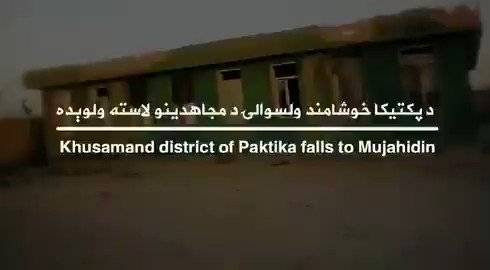
Taliban overruns district in eastern Afghanistan
Creating a Real Peace in Afghanistan
‘What Kind of Peace Talks Are These’: On the Front Lines of a 17-Year War
France Is Looking for New Allies in Asia
French President Emmanuel Macron paid his first official visit to Tokyo last month, reflecting his commitment to step up his country’s bilateral relations with Japan. Although French-Japanese ties are advancing on all fronts, the most promising area of cooperation is in maritime security in the Indo-Pacific. Although France may not be a prominent player in the realm now, that is set to change in the coming years. Its effectiveness will depend on its willingness to coordinate with others, in particular Japan and India.Looking before we leap: Weighing the risks of US-China disengagement
Facing theEconomic Challenge fromChina
The Abyss Is Opening Under China-U.S. Relations
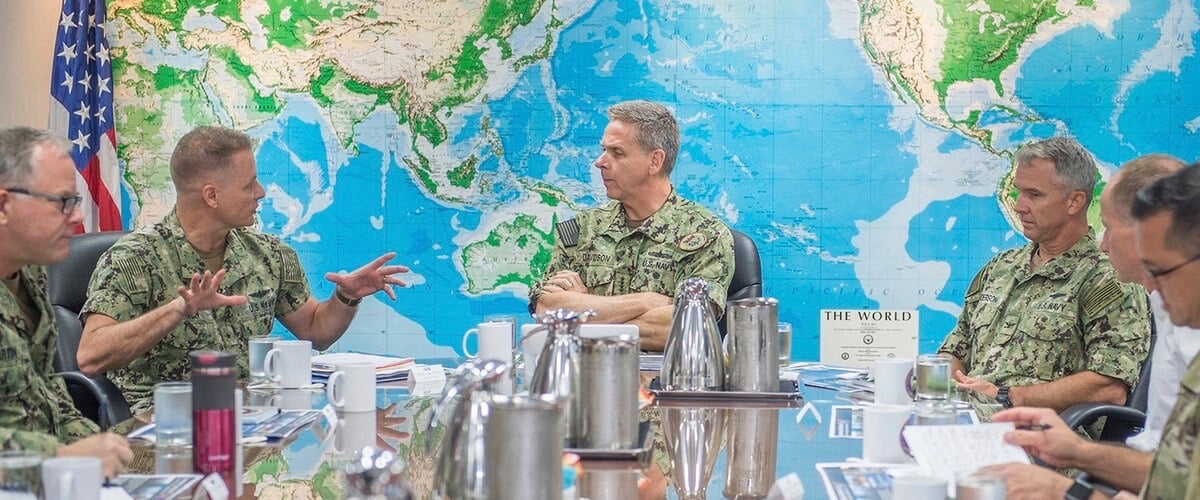
A strange sort of calm has descended over the U.S.-China relationship. Officially, Washington and Beijing have agreed to a truce in their escalating trade war and are searching for the outlines of a possible agreement. But it’s looking increasingly likely that the cease-fire won’t hold—and a conflict far greater than the trade war itself looms. Last week, Beijing announced that it would sanction U.S. companies involved in selling arms to Taiwan. On Monday, meanwhile, the government statistics agency announced that China’s GDP growth in the first half of 2019 was the lowest since 1992.Adm. Davidson: China Assaults International Order
10 expert predictions for the next decade in Chinese AI
Over the past several years, we have witnessed the blossoming of China's artificial intelligence industry. Thanks to generous government policy support, and enthusiastic entrepreneurs and venture investors, China commandeered a position that it has not occupied for centuries: that of a global leader in an emerging critical technological field.From Moon Walk to Space Wars
Why is Turkey betting on Russia?
Iranian Cyber Capabilities: Assessing the Threat to Israeli Financial and Security Interests
The Iranian government continues to develop and field an increasingly sophisticated range of cyber capabilities to support their strategic interests and to enable a variety of computer-based financial crime. These capabilities have directly and adversely impacted Israel, which has been the target of major cyberattacks either affiliated or directly orchestrated by the political leadership in Tehran. To assess this strategic threat, this article outlines the evolving objectives and characteristics of Iran’s cyber activity targeting Israel, including attacks on banks, airlines, the Israel Defense Forces, and critical infrastructure. The article includes a brief overview of Iran’s internet and telecommunications history and a technical assessment of government-linked advanced persistent threat (APT) groups. Ultimately, the article concludes that a deterrence-by-punishment strategy utilizing Israel’s computer network attack and exploitation advantage could provide an impactful—albeit not risk free—approach to offsetting Iran’s rapidly improving cyber posture.Iran: The Case Against War
There is no plausible reason for the United States to go to war with Iran, although the Trump administration appears to be preparing to do so. In mid-May, the Pentagon presented the White House with plans for deploying up to 120,000 troops to the Middle East to respond to Iranian attacks on US forces or the acceleration of Iran’s nuclear weapons program.Five Years After the Downing of MH17, What Do We Know About Russia’s Role?
This week marks five years since Malaysia Airlines Flight 17 was shot down over eastern Ukraine. Since then Russia has seemingly spared no effort or expense in waging an epic disinformation campaign to beat back allegations that Kremlin-backed mercenaries and separatists in the Donbas region fired the Russian-made Buk missile that killed all 298 people on board the passenger jet. Yet as evidence of Russian involvement has continued to mount in recent days, it looks like Moscow may need to retool its strategy.Mapping European Shipping Routes
While researching Scottish-U.K. relations, we recently stumbled on the blog of British geographer James Cheshire. Cheshire had discovered an old European Union-funded research project from 2001-03 that created a climatological database for the world’s oceans from 1750 to 1850. The study gathered information from decades-old, detailed log books of global maritime activities and allowed Cheshire to create a few rough maps of British, Dutch and Spanish trade routes.Is industry cyber(in)security DoD’s Achilles’ heel?
Military leaders like to point out that the nature of warfare is unlikely to change, but the character of war — how they are fought and with what — is rapidly evolving. Physically, the United States benefits from the geographic isolation, separated from adversaries on all sides by large oceans and friendly nations, but the advent of cyber capabilities has created new attack vectors. In turn, agencies are pursuing case studies and exercises to identify best practices in less transparent, highly vulnerable sectors, such as manufacturing.Outsourcing in Intelligence and Defense Agencies: A Risk of an Increase in the Proliferation of Cyber Weapons?
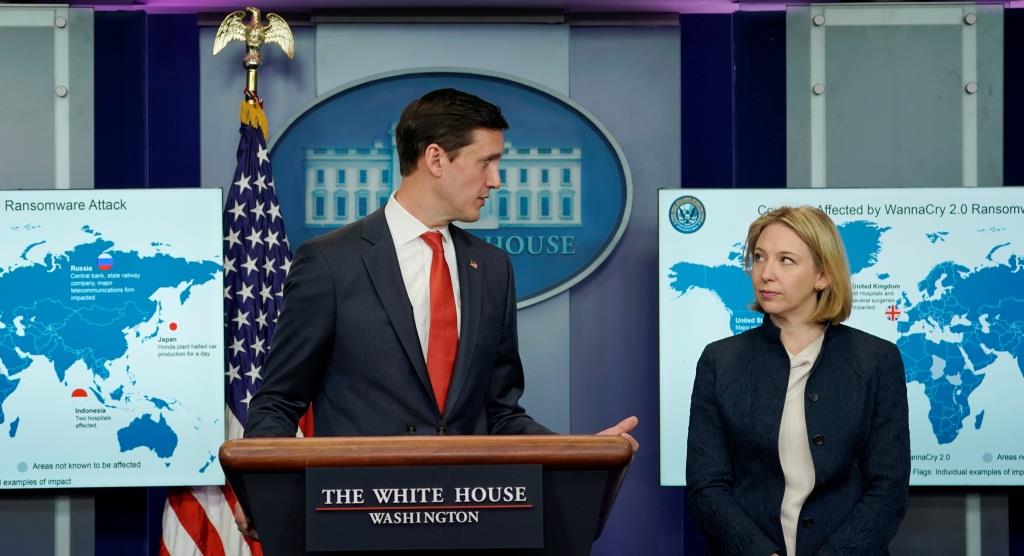
The many cases of the leakage of classified materials belonging to intelligence and defense agencies have led to claims that contract workers are the reason for these incidents, due to either their lack of loyalty or negligence. In addition, these leaks of classified information, including hacking programs and components, have raised the question of whether this internal threat is also the cause of the increased proliferation of sophisticated cyber weapons among players who do not have the ability to develop them. A prominent case study from the past few years is the leak of the National Security Agency (NSA)’s hacking component, EternalBlue, and its use in the global cyberattack WannaCry, which damaged computers in 150 countries and was attributed to North Korea. Understanding the internal threat and its connection to the proliferation of cyber weapons, along with enumerating the advantages and disadvantages of hiring contractors, is critical for minimizing the threat, coping with it, and in preventing harm to national security and further deterioration of stability in cyberspace.Is blockchain overhyped? 5 challenges to getting projects off the ground
Over the past few years, there has been a great deal of excitement around blockchain – some warranted, and some not. As the hype dies down, the dust is settling, and the technology is moving into a “build” phase. That is, organizations – large and small – are looking into viable use cases for the technology and deploying them. (You can find our practical framework for deciding whether blockchain is a good fit for your use case here.)Microsoft is like a Monopoly that Just Won’t Die
Microsoft is the world’s most valuable public company. It is no Amazon or Huawei, but its pivot to the Cloud has been an epic success and Alibaba and Tencent should be taking notes.Security and the 'Holographic Society'
Revealed: This Is Palantir’s Top-Secret User Manual for Cops
World Trade Organization 2.0: Reforming Multilateral Trade Rules for the Digital Age
Limited Wars Are Forever Wars
On Sunday, June 23, CBS Face the Nation reporter Margaret Brennan asked Democratic presidential primary candidate Bernie Sanders what he thought of President Donald Trump’s last-minute reversal of an order to bomb Iran. Brennan pointed out that the action would have been a “limited strike.” In his reply, Sanders sarcastically mocked the concept, saying that any limited strike would, of course, be “an act of warfare.” Sanders also denounced the president for issuing the order in the first place.