Marked by a history of political divisions, economic differences, and geostrategic divergences, the Indian subcontinent remains deeply divided, with exceptionally low levels of integration. No other regional power is as disconnected from its immediate neighbourhood as India. Recognising this disconnect as a challenge to India’s economic and security interests, Prime Minister Narendra Modi made both intra- and inter-regional connectivity a policy priority in 2014. Speaking on the importance of the Indo-Pacific region at the 2018 Shangri-La Dialogue in Singapore, he emphasised the country’s new strategic imperative. Connectivity is vital. It does more than [just] enhance trade and prosperity. It unites a region. India has been at the crossroads for centuries. We understand the benefits of connectivity. There are many connectivity initiatives in the region. If these have to succeed, we must not only build infrastructure, we must also build bridges of trust.[1]The Profession of Arms: A Guide for Young Army Officers
It takes courage, especially for a young officer, to check a man met on the road for not saluting properly or for slovenly appearance, but, every time he does, it adds to his stock of moral courage, and whatever the soldier may say, he has respect for the officer who does pull him up.
Read Document →The Dragon's Teeth: Assessing China's Military Modernization
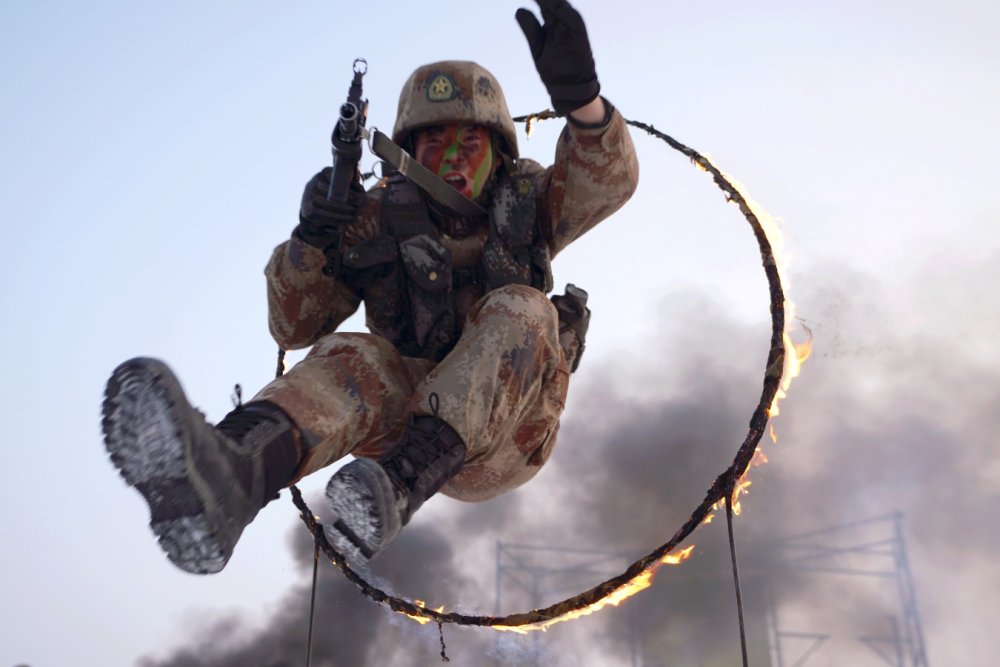
PLA has focused on modernising its capabilities across all warfare domains to achieve these goals. This includes land, air, and maritime operations, nuclear, space, counter-space, electronic warfare and cyberspace operations, aiming to become a fully integrated joint force.
Read Document →Transforming the PLA: A Decade of reorganisation from SSF to ISF
PRC has engaged in a sustained and broad effort to transform the PLA from an infantry-heavy, low-technology, ground forces-centric military into a high-technology, networked force with an increasing emphasis on joint operations and naval and air power projection.
Read Document →Eyes without Borders: Exploring the World of Open Source Intelligence (OSINT) in the Digital Age
Open Source Intelligence (OSINT) is gaining prominence with the rise of social media, the digital society and the vast growth of publicly and commercially available information (PAI and CAI).
Read Document →
The PLA’s Developing Cyber Warfare Capabilities and India's Options
Informationised warfare blurs the lines between peacetime and wartime. A nation in the information age cannot wait for the hostilities to break out to collect intelligence, carryout influence operations, develop antisatellite systems or design computer software weapons.
Read Document →
Galwan and After
Why did China did this when he is under tremendous pressure in all fronts, is this China's salami slice tactics being progressed rigorously, what will be new Rules of Engagement, what will be escalatory control mechanism, who has taken this decision, will there be some pressure put by China in India's North-East through insurgency.
Read Document →
India’s Joint Doctrine for Cyberspace Operations: A Critical Review
Chief of Defence Staff (CDS) General Anil Chauhan and Secretary, Department of Military Affairs, formally released declassified versions of the Joint Doctrines for Cyberspace Operations during the Chiefs of Staff Committee meeting in New Delhi.
Read Document →
Know your Enemy General(now Field Marshal) Syed Aseem Munir
Gen SA Munir's position in the hierarchy of Pakistan was not very comfortable. The state of economy, insurgency in Pakhtoonistan and Balochistan, attack on the Jaffar Express, constant protests by supporters of Imran Khan's supporters inside and outside of parliament.
Read Document →
Decoding Operation SINDOOR: Key Aspects and Implications
Precision strikes were carried out on nine sites—four in Pakistan and five in PoK—linked to anti-India terrorist groups such as the LeT, JeM and the Hizbul Mujahideen. The targeted sites included Muridke (LeT headquarters) and Bahawalpur (JeM headquarters).
Read Document →
Chinese Cyber Exploitation in India's Power Grid - Is There a linkage to Mumbai Power Outage?
The New York Times (NYT), based on analysis by a U.S. based private intelligence firm Recorded Future, reported that a Chinese entity penetrated India’s power grid at multiple load dispatch points. Chinese malware intruded into the control systems that manage electric supply across India, along with a high-voltage transmission substation and a coal-fired power plant
Read Document →4 February 2020
Sambandh as Strategy: India’s new approach to regional connectivity
Marked by a history of political divisions, economic differences, and geostrategic divergences, the Indian subcontinent remains deeply divided, with exceptionally low levels of integration. No other regional power is as disconnected from its immediate neighbourhood as India. Recognising this disconnect as a challenge to India’s economic and security interests, Prime Minister Narendra Modi made both intra- and inter-regional connectivity a policy priority in 2014. Speaking on the importance of the Indo-Pacific region at the 2018 Shangri-La Dialogue in Singapore, he emphasised the country’s new strategic imperative. Connectivity is vital. It does more than [just] enhance trade and prosperity. It unites a region. India has been at the crossroads for centuries. We understand the benefits of connectivity. There are many connectivity initiatives in the region. If these have to succeed, we must not only build infrastructure, we must also build bridges of trust.[1]Top US Commander Sees Increased Iranian Threat in Afghanistan
There has been an increase in Iranian activity in Afghanistan that poses a risk to American and coalition troops there, a senior U.S. commander said, as the threat from Tehran continues to churn across the Middle East.Taliban-U.S. Afghan Peace Talks Stall Again
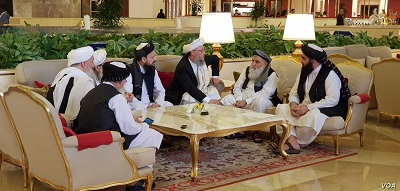
The Afghan Taliban’s turbulent negotiations with the United States on a peace deal have ground to a halt over differences on how to reduce insurgent violence.Opinion – 2020’s Dawn: Coronavirus, Natural Disasters and Political Insecurity
A new year usually is welcomed as a time of joy and opimism, however 2020 seems to have bucked that trend. 2020 began with the United States announcing that Qassem Suleimani, commander of the Iranian Quds Forces, and Abu Mahdi al-Muhandis, a close Suleimani associate, were killed in an attack at Baghdad’s International Airport. The killing of Suleimani, sparked fears of a conflict between the US and Iran. Three days of mourning were declared in Iran, and a vow of retribution was taken against the United States. Several days later Iran ordered an attack on US forces in Iraq. Later that same night, a Ukrainian Airlines Boeing 737 passenger plane was accidentally shot down by Iran shortly after takeoff. There were no survivors. On top of that, the Iranian Government has announced that it will continue to enrich uranium breaking its 2015 nuclear agreement. This event can be seen as the opening act of a month of fear and misery that coincided with the new year. And, when viewing it alongside other events, both natural and manmade, makes for sober reading.Trade Deal or No, China Will Continue Its Cyberattacks
How Other Countries Can Survive the US-China Competition
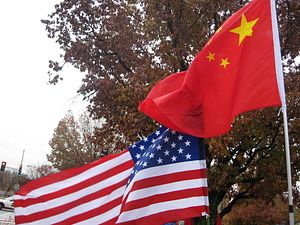
The signing of the Phase One trade agreement in Washington between the United States and China last month was a positive development, but unless it leads to a dramatic change in the bilateral relationship it is unlikely to substantially influence a new global trend that now seems to be in full force.Dead in the Dark: How Good is Chinese Miltiary Grade Night Vision Gear?
Recently, various Chinese military night vision units have been showing up on the Chinese domestic market. This provides an interesting opportunity to evaluate the capability of such units, as manufacturers publish the specifications and characteristics of these units. However, as with most night vision technology, there are caveats. Typically a night vision unit consists of two basic elements, the image intensifier (I2) tube, and the housing. The tube generally is the largest determinant of the quality and resolution of the image, while the housing affects how the unit is mounted, how durable it is, and its other ergonomic properties. While the housings available on the civilian market are fairly representative of Chinese military stock, the I2 tubes in the housings may not be representative of what’s actually issued to the Chinese military.The New China Scare
In February 1947, U.S. President Harry Truman huddled with his most senior foreign policy advisers, George Marshall and Dean Acheson, and a handful of congressional leaders. The topic was the administration’s plan to aid the Greek government in its fight against a communist insurgency. Marshall and Acheson presented their case for the plan. Arthur Vandenberg, chair of the Senate Committee on Foreign Relations, listened closely and then offered his support with a caveat. “The only way you are going to get what you want,” he reportedly told the president, “is to make a speech and scare the hell out of the country.”Risks to the Japan-China 'Tactical Detente'
Will The US-Iran Crisis Raise China’s Mideast Profile? – Analysis
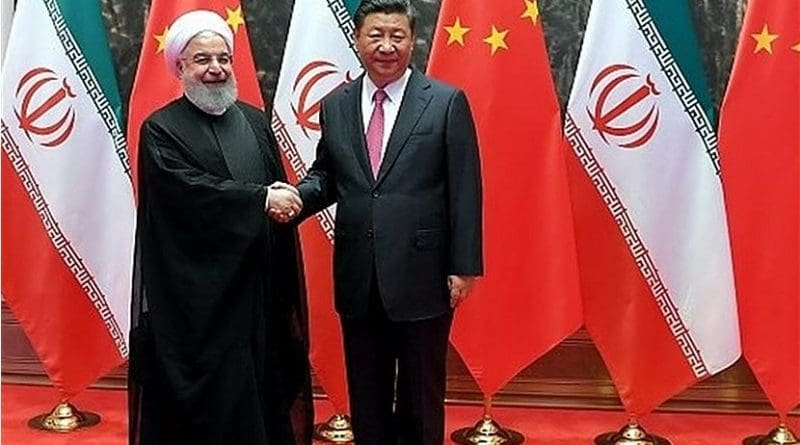
The death of Iranian Quds Forces Major General Qassem Suleimani pushed the Middle East closer to the throes of war. Can and will China act as a broker of peace, or will it simply let the US get bogged down in another Vietnam, Iraq or Afghanistan?Restraint and the Rise of China
A Battle for Supremacy in the Middle East
The struggle between Iran and Saudi Arabia for dominance in the Middle East has insinuated itself into nearly every regional issue, fracturing international alliances and sustaining wars across the region, while raising fears of a direct conflict between the two powers.Drone Strike Spillover: Why the Assassination of Suleimani Could Create a Crisis for Israel
Trump's Nuclear Waivers Irk Washington's Iran Hawks
Report: US Officials Believe they Killed al Qaeda Leader in Yemen Airstrike
Baghdadi's Death and the Future of ISIS
Is Huntington’s “Clash of Civilizations” a Self-fulfilled Prophecy?
The US Is Losing Its Fight Against Huawei
The UK’s decision Tuesday to allow Huawei to provide noncritical components of its 5G network marked another critical win for the embattled Chinese telecom. It also raised a critical question about the multiyear, international campaign by the Trump administration and the US government to box Huawei out of Western cellular networks: Has Trump lost?A Popular Front to Stop Trump
As much as opposing ideologues may hate each other, there is no one they despise more than those who try to make peace between them. The peacemakers may well be blessed in the hereafter, but in the earthly realm they are treated as badly as the poor and the meek. I found this out the hard way when I retired from chess in 2005 to help create a Russian coalition movement against the rising dictatorship of Vladimir Putin.Indonesia’s Submarine Capabilities in the Headlines with New Sea Trials
Earlier this month, Indonesia conducted sea trials with respect to its first indigenously-assembled submarine. The development once again put the focus on a key aspect of Jakarta’s development of its capabilities in this regard.After Brexit? Here's What Trump's Next Deal Should Look Like
Brexit Is Just the Beginning
On the night of January 31, with little fanfare, without even a Big Ben bong, the United Kingdom will officially leave the European Union. After almost 50 years of EU membership and three years of bitter division over the vote to leave, the moment of formal departure is a historic milestone. But to say that the British are finally “getting Brexit done,” as Prime Minister Boris Johnson has claimed ad nauseam, is hopelessly optimistic. Friday marks the beginning of a new and uncertain phase of Brexit, not its end. Kozak to Replace Surkov as Putin’s Top Aide on Ukraine (Part One)
Africa is creating one of the world's largest single markets. What does this mean for entrepreneurs?
The Africa Continental Free Trade Area (AfCFTA) is set to launch on 30th May. If every African country joins, it’s expected to be one of the world’s largest single markets, accounting for $4 trillion in spending and investment across the 54 countries.Explained: The Artificial Intelligence Race is an Arms Race
Graham Allison alerts us to artificial intelligence being the epicenter of today’s superpower arms race.Can Artificial Intelligence Compensate for Strategic Shortcomings?
The Future Of War: Less Fantastic, More Practical – Analysis
Drones and Air Defense
Great Powers Must Talk to Each Other About AI
Even as they compete, major militaries have reason to cooperate: to avoid misunderstanding and to establish best practices and pragmatic parameters.What $600 Million Looks Like: We Caught a Glimpse of the U.S. Air Force’s New Stealth Bomber
The U.S. Air Force on Jan. 31, 2020 released three fresh digital renderings of its new B-21 Raider stealth bomber.