The Regional Comprehensive Economic Partnership was set to become the world’s largest free trade agreement. But India’s withdrawal from it has thrown the negotiated trade bloc into imbalance and has underscored India’s qualms with China’s trade practices.The Profession of Arms: A Guide for Young Army Officers
It takes courage, especially for a young officer, to check a man met on the road for not saluting properly or for slovenly appearance, but, every time he does, it adds to his stock of moral courage, and whatever the soldier may say, he has respect for the officer who does pull him up.
Read Document →The Dragon's Teeth: Assessing China's Military Modernization
PLA has focused on modernising its capabilities across all warfare domains to achieve these goals. This includes land, air, and maritime operations, nuclear, space, counter-space, electronic warfare and cyberspace operations, aiming to become a fully integrated joint force.
Read Document →Transforming the PLA: A Decade of reorganisation from SSF to ISF
PRC has engaged in a sustained and broad effort to transform the PLA from an infantry-heavy, low-technology, ground forces-centric military into a high-technology, networked force with an increasing emphasis on joint operations and naval and air power projection.
Read Document →Eyes without Borders: Exploring the World of Open Source Intelligence (OSINT) in the Digital Age
Open Source Intelligence (OSINT) is gaining prominence with the rise of social media, the digital society and the vast growth of publicly and commercially available information (PAI and CAI).
Read Document →
The PLA’s Developing Cyber Warfare Capabilities and India's Options
Informationised warfare blurs the lines between peacetime and wartime. A nation in the information age cannot wait for the hostilities to break out to collect intelligence, carryout influence operations, develop antisatellite systems or design computer software weapons.
Read Document →
Galwan and After
Why did China did this when he is under tremendous pressure in all fronts, is this China's salami slice tactics being progressed rigorously, what will be new Rules of Engagement, what will be escalatory control mechanism, who has taken this decision, will there be some pressure put by China in India's North-East through insurgency.
Read Document →
India’s Joint Doctrine for Cyberspace Operations: A Critical Review
Chief of Defence Staff (CDS) General Anil Chauhan and Secretary, Department of Military Affairs, formally released declassified versions of the Joint Doctrines for Cyberspace Operations during the Chiefs of Staff Committee meeting in New Delhi.
Read Document →
Know your Enemy General(now Field Marshal) Syed Aseem Munir
Gen SA Munir's position in the hierarchy of Pakistan was not very comfortable. The state of economy, insurgency in Pakhtoonistan and Balochistan, attack on the Jaffar Express, constant protests by supporters of Imran Khan's supporters inside and outside of parliament.
Read Document →
Decoding Operation SINDOOR: Key Aspects and Implications
Precision strikes were carried out on nine sites—four in Pakistan and five in PoK—linked to anti-India terrorist groups such as the LeT, JeM and the Hizbul Mujahideen. The targeted sites included Muridke (LeT headquarters) and Bahawalpur (JeM headquarters).
Read Document →
Chinese Cyber Exploitation in India's Power Grid - Is There a linkage to Mumbai Power Outage?
The New York Times (NYT), based on analysis by a U.S. based private intelligence firm Recorded Future, reported that a Chinese entity penetrated India’s power grid at multiple load dispatch points. Chinese malware intruded into the control systems that manage electric supply across India, along with a high-voltage transmission substation and a coal-fired power plant
Read Document →16 February 2020
The China Factor Behind India’s Pullout from RCEP
The Regional Comprehensive Economic Partnership was set to become the world’s largest free trade agreement. But India’s withdrawal from it has thrown the negotiated trade bloc into imbalance and has underscored India’s qualms with China’s trade practices.What Iran’s Attacks on American Bases Tell Us About China’s Missile Program
Rising to the China Challenge
China wants to put itself back at the centre of the world
On china’s border with Kazakhstan, a new Silk Road city has sprung up with such speed that Google Earth has scarcely begun to record the high-rises that now float on a winter mist above the steppe. What once would have been flattered to be called a hard-scrabble border town is now home to 200,000 people, giant outdoor video screens extolling the glories of a new Silk Road, and restaurants serving sashimi and European wine. Khorgos has become China’s gateway to Central Asia, and all the way to Europe.A virus is crippling China's economy — and threatening the world's
Western governments should have been ready for Huawei
In the late 1990s, I represented Lucent Technologies, a firm focused on delivering telecommunications equipment which had been spun out of AT&T. Europe Needs a China Strategy; Brussels Needs to Shape It
China’s Digital Revolution in Bank Lending
Surging Jihadist Wave In Western Africa: Conflict Spillover – Analysis
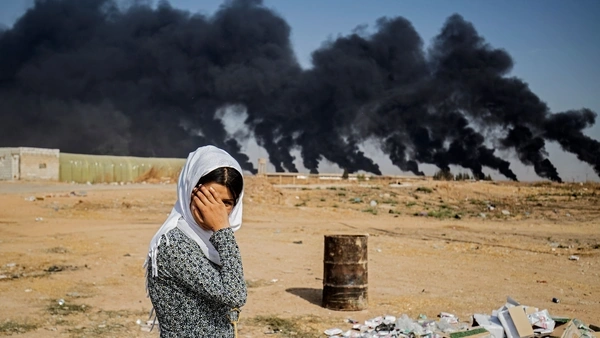
Iran admits worst ‘cyber attack in its history’ before latest failed satellite launch
Just hours before the launch, the country’s deputy information minister, Hamid Fatah confirmed the breach of the network. He tweeted: “Hackers today launched the most widespread attack in Iranian history against the country’s infrastructure.Saving America’s Alliances
The New Spheres of Influence
In the heady aftermath of the Cold War, American policymakers pronounced one of the fundamental concepts of geopolitics obsolete. Secretary of State Condoleezza Rice described a new world “in which great power is defined not by spheres of influence . . . or the strong imposing their will on the weak.” Secretary of State Hillary Clinton declared that “the United States does not recognize spheres of influence.” Secretary of State John Kerry proclaimed that “the era of the Monroe Doctrine is over,” ending almost two centuries of the United States staking claim to its own sphere of influence in the Western Hemisphere.Decade Forecast: 2020-2030
Every five years for the past quarter-century, Stratfor has produced a Decade Forecast, this being our sixth. At times, those forecasts have been right for the wrong reasons and wrong for the right reasons. The Challenging Arithmetic of Climate Action
Conflicts to Watch in 2020
Each year since 2008, the Council on Foreign Relations’ Center for Preventive Action (CPA) asks foreign policy experts to rank thirty ongoing or potential conflicts based on how likely they are to occur or escalate in the next year, and their possible impact on U.S. interests.Facing Few Obstacles and Scant Pushback, Russia Keeps Advancing in Africa
Russia’s Ground Forces Introduce Mobile Counter-UAV Units
Preventing the Death of the World’s Rivers
The world’s rivers are under unprecedented pressure from contamination, damming, and diversion, which are straining water resources, destroying ecosystems, jeopardizing livelihoods, and damaging human health. International cooperation can save riparian systems, but first we must recognize the consequences of doing nothing.From the Tigris to the Indus and the Yangtze to the Nile, rivers were essential to the emergence of human civilization. Millennia later, hundreds of millions of people still depend on rivers to quench their thirst, grow food, and make a living. And yet we are rapidly destroying the planet’s river systems, with serious implications for our economies, societies, and even our survival.
Social Media Suicide
Deterring Attacks Against the Power Grid
Deterrence in the Age of Thinking Machines
What are the implications of adding thinking machines and autonomous systems to the practices that countries have developed to signal one another about the use of force and its potential consequences?The Return of Deterrence: Credibility and Capabilities in a New Era (KCIS 2018)
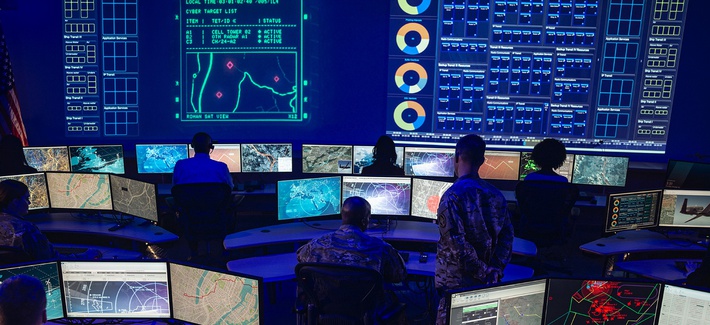
War on Autopilot? It Will Be Harder Than the Pentagon Thinks
MCLEAN, Virginia — Everything is new about Northrop Grumman’s attempt to help the military link everything it can on the battlefield. One day, as planners imagine it, commanders will be able to do things like send autonomous drones into battle, change attack plans midcourse, and find other ways to remove humans and their limitations from decision chains that increasingly seem to require quantum speed. Northrop’s Innovation Center in McLean, Virginia, looks so new it could have sprung up in a simulation. Its Washington metro rail stop doesn’t even appear on many maps yet.