The Profession of Arms: A Guide for Young Army Officers
It takes courage, especially for a young officer, to check a man met on the road for not saluting properly or for slovenly appearance, but, every time he does, it adds to his stock of moral courage, and whatever the soldier may say, he has respect for the officer who does pull him up.
Read Document →The Dragon's Teeth: Assessing China's Military Modernization
PLA has focused on modernising its capabilities across all warfare domains to achieve these goals. This includes land, air, and maritime operations, nuclear, space, counter-space, electronic warfare and cyberspace operations, aiming to become a fully integrated joint force.
Read Document →Transforming the PLA: A Decade of reorganisation from SSF to ISF
PRC has engaged in a sustained and broad effort to transform the PLA from an infantry-heavy, low-technology, ground forces-centric military into a high-technology, networked force with an increasing emphasis on joint operations and naval and air power projection.
Read Document →Eyes without Borders: Exploring the World of Open Source Intelligence (OSINT) in the Digital Age
Open Source Intelligence (OSINT) is gaining prominence with the rise of social media, the digital society and the vast growth of publicly and commercially available information (PAI and CAI).
Read Document →
The PLA’s Developing Cyber Warfare Capabilities and India's Options
Informationised warfare blurs the lines between peacetime and wartime. A nation in the information age cannot wait for the hostilities to break out to collect intelligence, carryout influence operations, develop antisatellite systems or design computer software weapons.
Read Document →
Galwan and After
Why did China did this when he is under tremendous pressure in all fronts, is this China's salami slice tactics being progressed rigorously, what will be new Rules of Engagement, what will be escalatory control mechanism, who has taken this decision, will there be some pressure put by China in India's North-East through insurgency.
Read Document →
India’s Joint Doctrine for Cyberspace Operations: A Critical Review
Chief of Defence Staff (CDS) General Anil Chauhan and Secretary, Department of Military Affairs, formally released declassified versions of the Joint Doctrines for Cyberspace Operations during the Chiefs of Staff Committee meeting in New Delhi.
Read Document →
Know your Enemy General(now Field Marshal) Syed Aseem Munir
Gen SA Munir's position in the hierarchy of Pakistan was not very comfortable. The state of economy, insurgency in Pakhtoonistan and Balochistan, attack on the Jaffar Express, constant protests by supporters of Imran Khan's supporters inside and outside of parliament.
Read Document →
Decoding Operation SINDOOR: Key Aspects and Implications
Precision strikes were carried out on nine sites—four in Pakistan and five in PoK—linked to anti-India terrorist groups such as the LeT, JeM and the Hizbul Mujahideen. The targeted sites included Muridke (LeT headquarters) and Bahawalpur (JeM headquarters).
Read Document →
Chinese Cyber Exploitation in India's Power Grid - Is There a linkage to Mumbai Power Outage?
The New York Times (NYT), based on analysis by a U.S. based private intelligence firm Recorded Future, reported that a Chinese entity penetrated India’s power grid at multiple load dispatch points. Chinese malware intruded into the control systems that manage electric supply across India, along with a high-voltage transmission substation and a coal-fired power plant
Read Document →13 May 2020
Riyaz Naikoo’s Neutralization: Undue Adulation Can Prove Counterproductive – OpEd
Why Indian Economy Needs China Even If It’s a ‘Hostile’ Neighbour
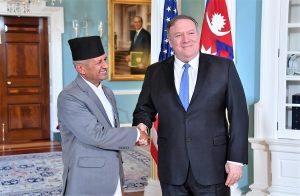
Will COVID-19 Reshape Nepal’s Diplomacy?
Nepal has long faced a great many diplomatic challenges, from striking a balance among major powers to securing international assistance — whether grants, loan, or Foreign Direct Investment (FDI) — to meet its domestic development aspirations. But the country will face an even tougher foreign policy environment after COVID-19.Hard Times Don’t Make Strong Soldiers
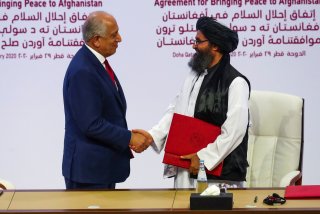
“Hard times create strong men, strong men create good times, good times create weak men, and weak men create hard times.” The quote, from a postapocalyptic novel by the author G. Michael Hopf, sums up a stunningly pervasive cyclical vision of history. The idea, which I have termed elsewhere “the Fremen Mirage” after the science fiction novel Dune’s desert-dwellers, posits that harsh conditions make for morally pure and militarily strong people, while wealth and sophistication make for decadent societies and poor fighters. Dune is just one example of the numerous speculative fiction novels that use the idea, from the Conan stories to dreadful Star Trek episodes. It is so common as a popular theory of history and military power that it has spawned (like most bad ideas) its own genre of internet memes.Taliban Attacks Increased After Peace Agreement: U.S. Government Report
U.S. Special Representative Zalmay Khalilzad will travel to Qatar this week and “meet with Taliban representatives to press for full implementation of the U.S.-Taliban agreement,” the State Department said on Wednesday. The Gathering Storm
Irresponsible Superpowers Must Cooperate
WASHINGTON, DC: In the Covid-19 pandemic, neither China nor the United States has offered a creditable performance, and this puts immense pressure on the multilateral system.If there was no coverup, why is China opposing an inquiry?
China insists it has been fully transparent and hidden nothing on the killer coronavirus, whose international spread from Wuhan has turned into the greatest global disaster of our time. So why is Beijing rancorously opposing an independent international inquiry into the origins and spread of the coronavirus?When Governments Switched Their Story From ‘Flatten The Curve’ To ‘Lockdown Until Vaccine’ – OpEd
Spain-China Relations And COVID-19: The Bright And Dark Sides Of A Necessary Partnership For Spain – Analysis
Don't Be Fooled by China's Mask Diplomacy
COVID-19 Is Accelerating Trends in the US-China Relationship
Some are expecting the COVID-19 pandemic to hasten a more tense era of geopolitical and military competition between Washington and Beijing, akin to the Cold War. But economic experts say that the United States and China are more like a pair of divorced, resentful parents who share custody of a child. There will be opportunities for collaboration and partnership, but fewer each day as the couple drifts apart. Policy makers, they say, would do better to spend their limited time in search of opportunities to work together on shared interests, not quickening a final split with fiery rhetoric.Turkey’s Looming Gordian Knot
US military poised for post-pandemic shift
Planting Trees Is No Panacea For Climate Change
Democracies Have an Edge in Fighting Wars
People have long assumed that autocrats and dictators have an advantage in waging war. Today, as the novel coronavirus sweeps across the globe, there is some speculation that autocracies have an edge in fighting that war, too. Autocrats can potentially enforce shelter-in-place orders more effectively and use their surveillance abilities to better engage in contact tracing.Can we escape from information overload?
The Putin Regime Cracks
Can Dr. Birx and Dr. Fauci Serve President Trump in Good Conscience?
Travails of an Interconnected World: From Pandemics to the Digital Economy
The novel coronavirus poses a grave threat to national economies, human society and our globalized international order that will not go away soon. It’s obviously essential to focus on managing the outbreak and restarting the global economy.U.S. Cyber Command’s Malware Inoculation: Linking Offense and Defense in Cyberspace
How cross-domain technologies can help the military modernize
In modern day military construction projects, IT infrastructure is as essential as plumbing or electrical systems. But that infrastructure is becoming increasingly complex and costly to maintain. Physical footprints have become unwieldy and difficult to manage. Meanwhile, legacy IT systems, often in the form of space-consuming hardware, can be security liabilities.The Paths to Net Zero
Why the Covid-19 Crisis Offers an Opportunity for Lasting Change in Cybersecurity
Millions are now working from home with unfamiliar software, providing massive opportunities for malicious actors. In response, volunteers from the information security sector have formed collaborative initiatives to disseminate urgently needed information to the public. This post examines how the current crisis conditions enabled the formation of the COVID-19 Cyber Threat Coalition (CTC), the largest of these initiatives, based on an interview with the founder. It also identifies an opportunity to institutionalize a similar, need-based threat information platform through government action.