The Profession of Arms: A Guide for Young Army Officers
It takes courage, especially for a young officer, to check a man met on the road for not saluting properly or for slovenly appearance, but, every time he does, it adds to his stock of moral courage, and whatever the soldier may say, he has respect for the officer who does pull him up.
Read Document →The Dragon's Teeth: Assessing China's Military Modernization
PLA has focused on modernising its capabilities across all warfare domains to achieve these goals. This includes land, air, and maritime operations, nuclear, space, counter-space, electronic warfare and cyberspace operations, aiming to become a fully integrated joint force.
Read Document →Transforming the PLA: A Decade of reorganisation from SSF to ISF
PRC has engaged in a sustained and broad effort to transform the PLA from an infantry-heavy, low-technology, ground forces-centric military into a high-technology, networked force with an increasing emphasis on joint operations and naval and air power projection.
Read Document →Eyes without Borders: Exploring the World of Open Source Intelligence (OSINT) in the Digital Age
Open Source Intelligence (OSINT) is gaining prominence with the rise of social media, the digital society and the vast growth of publicly and commercially available information (PAI and CAI).
Read Document →
The PLA’s Developing Cyber Warfare Capabilities and India's Options
Informationised warfare blurs the lines between peacetime and wartime. A nation in the information age cannot wait for the hostilities to break out to collect intelligence, carryout influence operations, develop antisatellite systems or design computer software weapons.
Read Document →
Galwan and After
Why did China did this when he is under tremendous pressure in all fronts, is this China's salami slice tactics being progressed rigorously, what will be new Rules of Engagement, what will be escalatory control mechanism, who has taken this decision, will there be some pressure put by China in India's North-East through insurgency.
Read Document →
India’s Joint Doctrine for Cyberspace Operations: A Critical Review
Chief of Defence Staff (CDS) General Anil Chauhan and Secretary, Department of Military Affairs, formally released declassified versions of the Joint Doctrines for Cyberspace Operations during the Chiefs of Staff Committee meeting in New Delhi.
Read Document →
Know your Enemy General(now Field Marshal) Syed Aseem Munir
Gen SA Munir's position in the hierarchy of Pakistan was not very comfortable. The state of economy, insurgency in Pakhtoonistan and Balochistan, attack on the Jaffar Express, constant protests by supporters of Imran Khan's supporters inside and outside of parliament.
Read Document →
Decoding Operation SINDOOR: Key Aspects and Implications
Precision strikes were carried out on nine sites—four in Pakistan and five in PoK—linked to anti-India terrorist groups such as the LeT, JeM and the Hizbul Mujahideen. The targeted sites included Muridke (LeT headquarters) and Bahawalpur (JeM headquarters).
Read Document →
Chinese Cyber Exploitation in India's Power Grid - Is There a linkage to Mumbai Power Outage?
The New York Times (NYT), based on analysis by a U.S. based private intelligence firm Recorded Future, reported that a Chinese entity penetrated India’s power grid at multiple load dispatch points. Chinese malware intruded into the control systems that manage electric supply across India, along with a high-voltage transmission substation and a coal-fired power plant
Read Document →2 July 2020
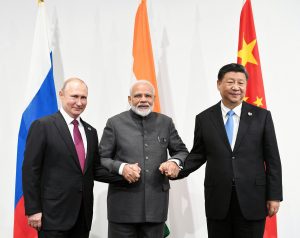
Modi Versus Xi: The Battle Of The Nationalist Strongmen
After Galwan Valley Standoff, Does the Russia-India-China Trilateral Still Matter?
The China-India standoff at the Line of Actual Control (LAC) in the Himalayas emerged as a serious test for Russia’s policy in Asia. Nurturing hopes for stability and prosperity in Eurasia, Russia’s diplomacy found itself in an intricate situation and forced to strike a balance.What Does the China-India Standoff in Ladakh Mean for Pakistan?
Will the Afghan peace process be Pakistan’s road to redemption?
Who Benefits from China’s Cybersecurity Laws?
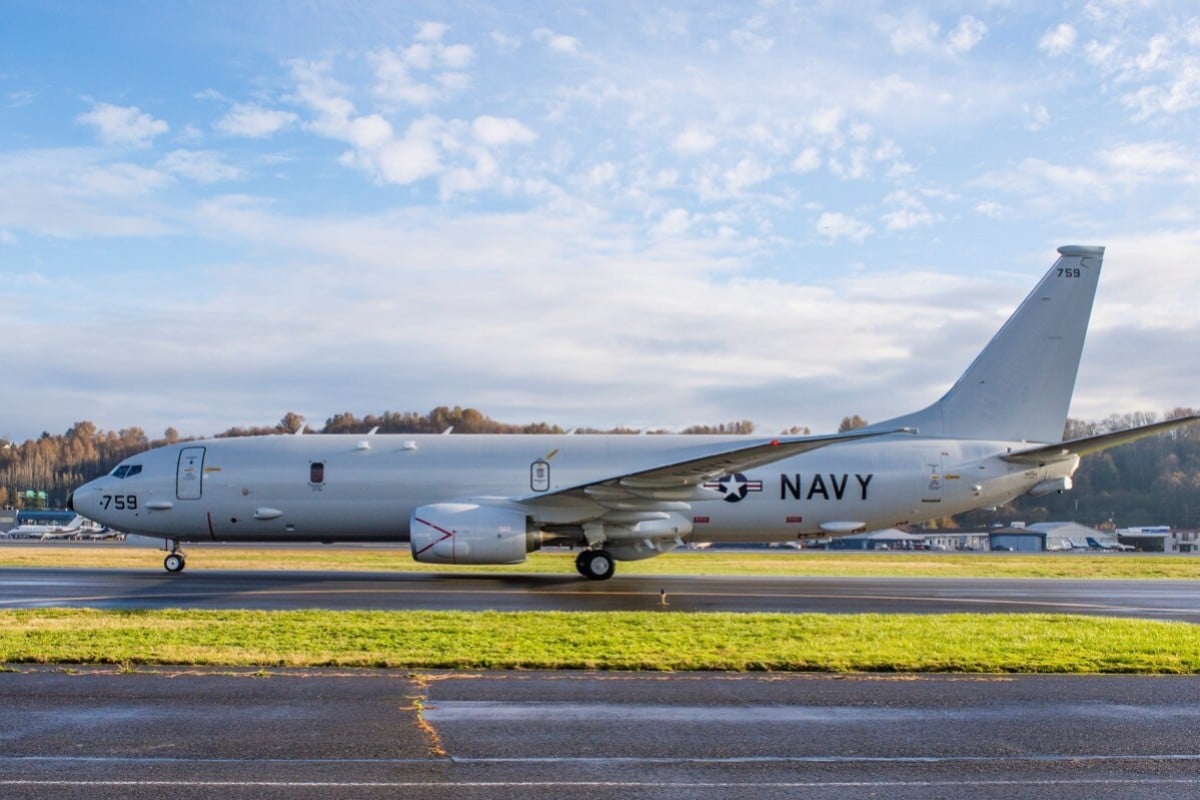
South China Sea: US Air Force ‘heads out again on search for Chinese submarines’
China’s Answer to GPS Is Now Fully Complete
Technological independence and superiority have long been hallmarks of superpowers; China too, in its quest to be a dominant force in the world, has invested heavily in state-of-the-art communication and transmission systems. On June 23, China concluded its decades-long project to build its own global navigation satellite system, a venture that will make it self-sufficient and avoid dependence on foreign rivals when it comes to a network that undergirds modern business, technologies and the military.Hagia Sophia and Erdogan
What do Republicans and Democrats Find Common Ground On These Days? Promoting Democracy In Iran
Just Transition Concepts and Relevance for Climate Action
Is the United States Losing the African Space Race?
Covid-19 and the Global Financial Safety Net
The CSIS Economics Program is tracking commitments, approvals, and disbursements by major international financial institutions (IFIs) to meet the massive financing needs generated by the Covid-19 pandemic and its economic fallout. These IFIs include the International Monetary Fund (IMF), World Bank, and regional development banks. We also include select regional financing arrangements (RFAs), which, together with the IFIs, central bank bilateral swap lines, and individual countries’ foreign reserve holdings, comprise the Global Financial Safety Net (GFSN).Covid-19 and the Global Financial Safety Net
The World Isn’t Ready for Peak Oil
Tomgram: Mandy Smithberger, Prioritizing the Pentagon in a Pandemic
Dispersion of Labor and the Novel Coronavirus
Here’s why Britain is struggling to form a fully effective carrier strike group
LONDON — Britain’s Royal Navy took delivery of two new aircraft carriers, but a government report on the ships achieving operational capability has laid bare some obstacles toward making a fully effective carrier strike group.South Korea’s Digital New Deal
As the world continues to recover from the COVID-19 induced economic recession, the Moon administration has proposed spending 76 trillion won ($62 billion) over the next five years on the Korean New Deal to prepare the South Korean economy for the future.Despite Economic Turmoil, Indonesia-Australia Trade Agreement Pushes Ahead
This year is going to be a tough one for trade. The COVID-19 pandemic has prompted an unprecedented cessation of economic activity. The shock is two-pronged, hitting both supply and demand. Travel restrictions and social distancing measures have disrupted the fundamental tools of international business: travel, face-to-face meetings, and large events. Supply chains are collapsing. Russia Wants to Keep Mongolia in Its Place
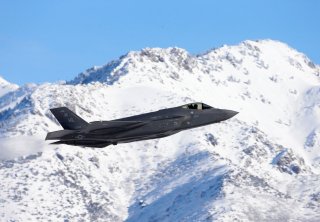
On June 24, Russia held a massive military parade, technically to mark the 75th anniversary of Victory in Europe (V-E) Day—delayed for over a month due to COVID-19—but also to provide a suitably militaristic backdrop for voting in the constitutional referendum that will conclude next week, paving the way for the extension of Vladimir Putin’s presidency until at least 2036.Will the Air Force's New Stealth Fighter Use AI?
Smart Artificial Intelligence Needs An Open (Source) Classroom
THE 100-SHIP NAVY
Naval officers pray at the altar of “more ships.” We demand more of them, fantasize about new ways to use them, and assume that the fleet will only grow. In the navalist faith, the post-Cold War period — which saw the fleet fall to an all-time low of 279 ships in 2007 — was an aberration, but happily the “return to great-power rivalry” has obliterated such shortsightedness.The Aircraft Carrier We Need
On April 24 the U.S. Navy announced that a fifth weapons elevator had been certified for use onboard the USS Gerald R. Ford (CVN-78). (A weapons elevator lifts munitions, such as bombs and missiles, from the storage area to the flight deck.) Six more elevators remain uncertified, requiring additional testing and modifications before the carrier can be deployed. Originally estimated to cost $10.5 billion to build, the ship was officially “delivered” to the Navy in May 2017, some 18 months behind schedule, at an eye-popping cost of $12.9 billion. However, even those cost numbers and dates are misleading, as the ship still does not have all of its essential systems certified, owing to major difficulties with its ship-service turbine generators, electromagnetic aircraft-launch systems, advanced arresting gear (the apparatus that slows down aircraft as they land on deck), and finally its weapons elevators. The upshot of all of these difficulties is that the Navy has been forced to use dollars from its crucial operations-and-maintenance accounts to “repair” a brand-new ship, for which it had already paid $13 billion, that has yet to deploy operationally, despite having officially been in the fleet for nearly three years.