The Profession of Arms: A Guide for Young Army Officers
It takes courage, especially for a young officer, to check a man met on the road for not saluting properly or for slovenly appearance, but, every time he does, it adds to his stock of moral courage, and whatever the soldier may say, he has respect for the officer who does pull him up.
Read Document →The Dragon's Teeth: Assessing China's Military Modernization
PLA has focused on modernising its capabilities across all warfare domains to achieve these goals. This includes land, air, and maritime operations, nuclear, space, counter-space, electronic warfare and cyberspace operations, aiming to become a fully integrated joint force.
Read Document →Transforming the PLA: A Decade of reorganisation from SSF to ISF
PRC has engaged in a sustained and broad effort to transform the PLA from an infantry-heavy, low-technology, ground forces-centric military into a high-technology, networked force with an increasing emphasis on joint operations and naval and air power projection.
Read Document →Eyes without Borders: Exploring the World of Open Source Intelligence (OSINT) in the Digital Age
Open Source Intelligence (OSINT) is gaining prominence with the rise of social media, the digital society and the vast growth of publicly and commercially available information (PAI and CAI).
Read Document →
The PLA’s Developing Cyber Warfare Capabilities and India's Options
Informationised warfare blurs the lines between peacetime and wartime. A nation in the information age cannot wait for the hostilities to break out to collect intelligence, carryout influence operations, develop antisatellite systems or design computer software weapons.
Read Document →
Galwan and After
Why did China did this when he is under tremendous pressure in all fronts, is this China's salami slice tactics being progressed rigorously, what will be new Rules of Engagement, what will be escalatory control mechanism, who has taken this decision, will there be some pressure put by China in India's North-East through insurgency.
Read Document →
India’s Joint Doctrine for Cyberspace Operations: A Critical Review
Chief of Defence Staff (CDS) General Anil Chauhan and Secretary, Department of Military Affairs, formally released declassified versions of the Joint Doctrines for Cyberspace Operations during the Chiefs of Staff Committee meeting in New Delhi.
Read Document →
Know your Enemy General(now Field Marshal) Syed Aseem Munir
Gen SA Munir's position in the hierarchy of Pakistan was not very comfortable. The state of economy, insurgency in Pakhtoonistan and Balochistan, attack on the Jaffar Express, constant protests by supporters of Imran Khan's supporters inside and outside of parliament.
Read Document →
Decoding Operation SINDOOR: Key Aspects and Implications
Precision strikes were carried out on nine sites—four in Pakistan and five in PoK—linked to anti-India terrorist groups such as the LeT, JeM and the Hizbul Mujahideen. The targeted sites included Muridke (LeT headquarters) and Bahawalpur (JeM headquarters).
Read Document →
Chinese Cyber Exploitation in India's Power Grid - Is There a linkage to Mumbai Power Outage?
The New York Times (NYT), based on analysis by a U.S. based private intelligence firm Recorded Future, reported that a Chinese entity penetrated India’s power grid at multiple load dispatch points. Chinese malware intruded into the control systems that manage electric supply across India, along with a high-voltage transmission substation and a coal-fired power plant
Read Document →24 August 2020
Shifting Sands of Time: India’s Approach toward Israel
China’s dangerous Taiwan temptation
When the Japanese invaded Manchuria in 1931, and the United States and the League of Nations began peppering them with public notes and statements calling on them to desist, humorist Will Rogers observed that, “every time they get another note they take another town.” “We had better quit writing notes,” he suggested, or soon they “will have all China.” Six years later, the Japanese did try to take all of China, and more. A major reason was that Japanese leaders believed, and the Manchurian crisis offered the first clear evidence, that the United States was ultimately not prepared to back up its denunciations with force.
China Alone
Let’s end the COVID-19 blame game: Reconsidering China’s role in the pandemic
An Answer to Aggression
The Chinese Communist Party’s initial mismanagement of the COVID-19 pandemic and its subsequent attempts to exploit the crisis have produced enduring problems for the rest of the world. But the CCP’s behavior has also helped clarify the threat that China poses to the security, prosperity, and well-being of other countries. Public opinion polls show that over 60 percent of Americans of both political parties now hold a negative view of Beijing’s leadership and intentions, and similar attitudes can be found across the democratic world. This heightened awareness of a shared danger creates an opportunity for the United States and its allies to formulate a new and more effective strategy for dealing with China.Why Palestinians Need to Reclaim the PLO
Why Israel-UAE deal doesn't merit the hype
Republicans and Democrats have hailed the Israel-UAE normalization agreement, with some observers going so far as to call it a geopolitical earthquake. But does the agreement merit the hype?The West's Role in Belarus
Resetting the way we teach science is vital for all our futures
Nearly half of Germany's electricity has come from wind and solar this year
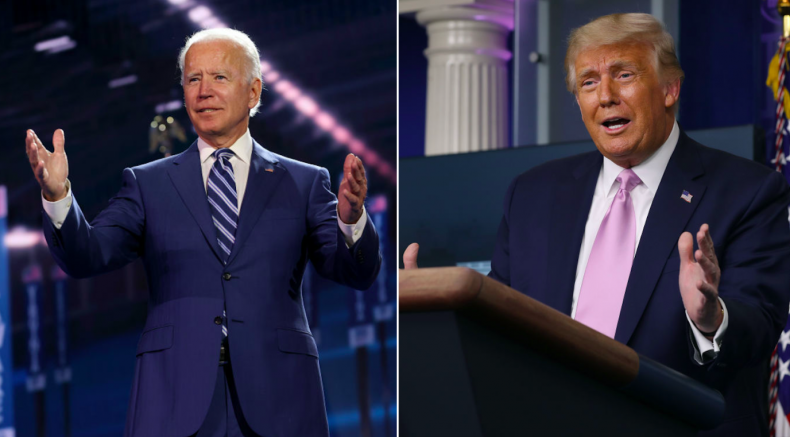
What the Experts Who Predicted Trump's 2016 Win Think Will Happen In 2020
Ahead of the 2016 election, most polls and analysts projected that former Democratic presidential candidate Hillary Clinton would beat President Donald Trump, but there were a few election experts with models that projected the GOP candidate's upset victory.Meghan Markle's Most Political Speech Yet Calls for 'Change We All Need'
Disinformation as a wicked problem: Why we need co-regulatory frameworks
Counterterrorism in a time of COVID
Hard road back to power for Germany’s Social Democrats
US Cyber Command Gets New Operational Tools
America’s Crumbling Strategy Needs (Literally) Machiavellian Answers
Giving Up on God
In the early years of the twenty-first century, religion seemed to be on the rise. The collapse of both communism and the Soviet Union had left an ideological vacuum that was being filled by Orthodox Christianity in Russia and other post-Soviet states. The election in the United States of President George W. Bush, an evangelical Christian who made no secret of his piety, suggested that evangelical Christianity was rising as a political force in the country. And the 9/11 attacks directed international attention to the power of political Islam in the Muslim world. The Pandemic Hurts Countries That Don’t Value Workers
Why America Must Lead Again
Civil Rights International
Raising the Flag
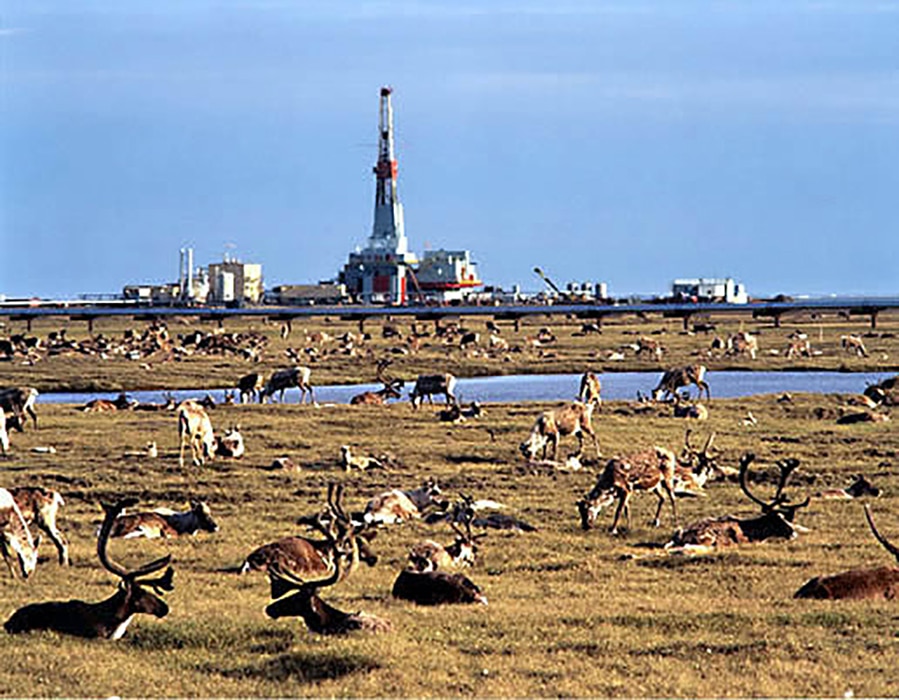
Despite worldwide oil glut, Trump releases plan to open Arctic to drilling
Editor’s note: This story was originally published by The Guardian. It appears here as part of the Climate Desk collaboration.