The Profession of Arms: A Guide for Young Army Officers
It takes courage, especially for a young officer, to check a man met on the road for not saluting properly or for slovenly appearance, but, every time he does, it adds to his stock of moral courage, and whatever the soldier may say, he has respect for the officer who does pull him up.
Read Document →The Dragon's Teeth: Assessing China's Military Modernization
PLA has focused on modernising its capabilities across all warfare domains to achieve these goals. This includes land, air, and maritime operations, nuclear, space, counter-space, electronic warfare and cyberspace operations, aiming to become a fully integrated joint force.
Read Document →Transforming the PLA: A Decade of reorganisation from SSF to ISF
PRC has engaged in a sustained and broad effort to transform the PLA from an infantry-heavy, low-technology, ground forces-centric military into a high-technology, networked force with an increasing emphasis on joint operations and naval and air power projection.
Read Document →Eyes without Borders: Exploring the World of Open Source Intelligence (OSINT) in the Digital Age
Open Source Intelligence (OSINT) is gaining prominence with the rise of social media, the digital society and the vast growth of publicly and commercially available information (PAI and CAI).
Read Document →
The PLA’s Developing Cyber Warfare Capabilities and India's Options
Informationised warfare blurs the lines between peacetime and wartime. A nation in the information age cannot wait for the hostilities to break out to collect intelligence, carryout influence operations, develop antisatellite systems or design computer software weapons.
Read Document →
Galwan and After
Why did China did this when he is under tremendous pressure in all fronts, is this China's salami slice tactics being progressed rigorously, what will be new Rules of Engagement, what will be escalatory control mechanism, who has taken this decision, will there be some pressure put by China in India's North-East through insurgency.
Read Document →
India’s Joint Doctrine for Cyberspace Operations: A Critical Review
Chief of Defence Staff (CDS) General Anil Chauhan and Secretary, Department of Military Affairs, formally released declassified versions of the Joint Doctrines for Cyberspace Operations during the Chiefs of Staff Committee meeting in New Delhi.
Read Document →
Know your Enemy General(now Field Marshal) Syed Aseem Munir
Gen SA Munir's position in the hierarchy of Pakistan was not very comfortable. The state of economy, insurgency in Pakhtoonistan and Balochistan, attack on the Jaffar Express, constant protests by supporters of Imran Khan's supporters inside and outside of parliament.
Read Document →
Decoding Operation SINDOOR: Key Aspects and Implications
Precision strikes were carried out on nine sites—four in Pakistan and five in PoK—linked to anti-India terrorist groups such as the LeT, JeM and the Hizbul Mujahideen. The targeted sites included Muridke (LeT headquarters) and Bahawalpur (JeM headquarters).
Read Document →
Chinese Cyber Exploitation in India's Power Grid - Is There a linkage to Mumbai Power Outage?
The New York Times (NYT), based on analysis by a U.S. based private intelligence firm Recorded Future, reported that a Chinese entity penetrated India’s power grid at multiple load dispatch points. Chinese malware intruded into the control systems that manage electric supply across India, along with a high-voltage transmission substation and a coal-fired power plant
Read Document →10 February 2021
‘Anonymous’ author’s paper on US’ China strategy makes a buzz, has sharp message for India

China still ‘largest source of critical items’ for India
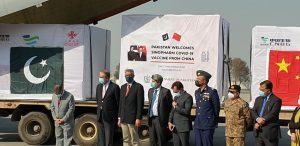
China Gifts Pakistan 1.2 Million COVID-19 Vaccine Doses

Why Joe Biden Should Keep U.S. Troops in Afghanistan
There are five national security reasons why the United States should keep a strong residual force in Afghanistan. There is also an important moral argument for why America should not abandon the Afghan people and leave them in the clutches of the world’s most savage terrorists. In a highly controversial withdrawal deal signed in February 2020 between the Trump administration and the Taliban in Doha, Qatar, U.S. troops are to be fully withdrawn from Afghanistan by May 2021. Such a premature withdrawal will trigger a chain of events that will ultimately expose the U.S. homeland to major terrorist attacks.Myanmar’s Struggle for Democracy Was Never Just About Aung San Suu Kyi

The 3 Pillars of Chinese Foreign Policy: The State, the Party, the People

Israel Rejects US Plan To Inspect Chinese Harbor At Haifa

A Sharper Approach to China’s Military-Civil Fusion Strategy Begins by Dispelling Myths
Treasury Secretary nominee Janet Yellen about China’s military-civil fusion showed how widespread have become concerns about Beijing’s efforts to blur the lines between the country’s military and civilian entities. But the Trump administration’s oft-hyperbolic messaging about MCF has given rise to myths and several misperceptions. To confront the threat appropriately, the Biden administration will need a more sophisticated understanding of this strategy—and that will require separating facts from fictions.The United States and China Need to Cooperate—for the Planet’s Sake

The Legal Aspects of Banning Chinese Drone Technology

Macron: EU shouldn’t gang up on China with US
PARIS — The EU shouldn’t gang up on China with the U.S. even if it stands closer to Washington by virtue of shared values, according to French President Emmanuel Macron.Chinese COVID-19 Misinformation A Year Later
Decade of patience: How China became a power in the Western Balkans

Israel's risky rhetoric on Iran
Can the Minsk Group on the Armenia-Azerbaijan Conflict Reinvent Itself? (Part Two)
Air University Press
The Institutionalization of Crises
The Air Force Should Assure Defenses Against Nuclear EMP Threats As It Seeks Electromagnetic Spectrum Superiority
The people who let Putin get away with persecuting Navalny
Brexit Is Probably the United Kingdom’s Death Knell

The new geopolitics of state fragility
US Army Europe Wants New Hub for Artillery Fire
A “theatre fires command” could help find targets and direct long-range fire, and become a key part of tomorrow’s multi-domain operations in major conflicts, the chief of U.S. Army Europe said Wednesday.Jailing Navalny May Be Putin’s Biggest Mistake

Biden, Asia, and the Politics of Nuclear Arms Control

How Turkey fits in regime-Kurdish showdown in Syria

Draghi and the Defense of Democracy
Morality Poses the Biggest Risk to Military Integration of Artificial Intelligence
Finding an effective balance between humans and artificial intelligence (AI) in defense systems will be the sticking point for any policy promoting the distancing from “humans in the loop.” Within this balance, we must accept some deviations when considering concepts such as the kill chain. How would a progression of policy look within a defense application? Addressing the political, technological, and legal boundaries of AI integration would allow the benefits of AI, notably speed, to be incorporated into the kill chain. Recently, former Secretary of Defense Ash Carter stated “We all accept that bad things can happen with machinery. What we don’t accept is when it happens amorally.” Certainly, humans will retain the override ability and accountability without exception. Leaders will be forever bound by the actions of AI guided weapon systems, perhaps no differently than they would be responsible for the actions of a service member in combat and upholding ethical standards of which the AI has yet to grasp.The Future of Competition: U.S. Adversaries and the Growth of Irregular Warfare
The Crypto Wars Are Over
Prepping the US Military for Climate Change