Maj Gen P K Mallick, VSM (Retd)
The Profession of Arms: A Guide for Young Army Officers
It takes courage, especially for a young officer, to check a man met on the road for not saluting properly or for slovenly appearance, but, every time he does, it adds to his stock of moral courage, and whatever the soldier may say, he has respect for the officer who does pull him up.
Read Document →The Dragon's Teeth: Assessing China's Military Modernization
PLA has focused on modernising its capabilities across all warfare domains to achieve these goals. This includes land, air, and maritime operations, nuclear, space, counter-space, electronic warfare and cyberspace operations, aiming to become a fully integrated joint force.
Read Document →Transforming the PLA: A Decade of reorganisation from SSF to ISF
PRC has engaged in a sustained and broad effort to transform the PLA from an infantry-heavy, low-technology, ground forces-centric military into a high-technology, networked force with an increasing emphasis on joint operations and naval and air power projection.
Read Document →Eyes without Borders: Exploring the World of Open Source Intelligence (OSINT) in the Digital Age
Open Source Intelligence (OSINT) is gaining prominence with the rise of social media, the digital society and the vast growth of publicly and commercially available information (PAI and CAI).
Read Document →
The PLA’s Developing Cyber Warfare Capabilities and India's Options
Informationised warfare blurs the lines between peacetime and wartime. A nation in the information age cannot wait for the hostilities to break out to collect intelligence, carryout influence operations, develop antisatellite systems or design computer software weapons.
Read Document →
Galwan and After
Why did China did this when he is under tremendous pressure in all fronts, is this China's salami slice tactics being progressed rigorously, what will be new Rules of Engagement, what will be escalatory control mechanism, who has taken this decision, will there be some pressure put by China in India's North-East through insurgency.
Read Document →
India’s Joint Doctrine for Cyberspace Operations: A Critical Review
Chief of Defence Staff (CDS) General Anil Chauhan and Secretary, Department of Military Affairs, formally released declassified versions of the Joint Doctrines for Cyberspace Operations during the Chiefs of Staff Committee meeting in New Delhi.
Read Document →
Know your Enemy General(now Field Marshal) Syed Aseem Munir
Gen SA Munir's position in the hierarchy of Pakistan was not very comfortable. The state of economy, insurgency in Pakhtoonistan and Balochistan, attack on the Jaffar Express, constant protests by supporters of Imran Khan's supporters inside and outside of parliament.
Read Document →
Decoding Operation SINDOOR: Key Aspects and Implications
Precision strikes were carried out on nine sites—four in Pakistan and five in PoK—linked to anti-India terrorist groups such as the LeT, JeM and the Hizbul Mujahideen. The targeted sites included Muridke (LeT headquarters) and Bahawalpur (JeM headquarters).
Read Document →
Chinese Cyber Exploitation in India's Power Grid - Is There a linkage to Mumbai Power Outage?
The New York Times (NYT), based on analysis by a U.S. based private intelligence firm Recorded Future, reported that a Chinese entity penetrated India’s power grid at multiple load dispatch points. Chinese malware intruded into the control systems that manage electric supply across India, along with a high-voltage transmission substation and a coal-fired power plant
Read Document →4 December 2021
CYBER, COMMUNICATIONS, EW & TECHNOLOGY (C2ET) DIGEST
Cyber Weapons – A Weapon of War?
Maj Gen PK Mallick, VSM (Retd)
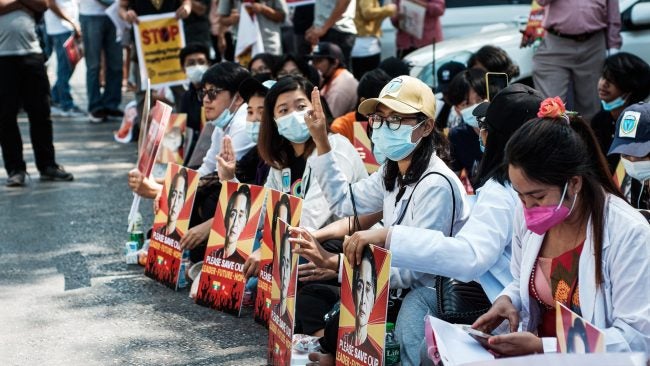
The character of warfare has changed fundamentally over the last decade. In the past, it was essential for an adversary nation or insurgent to physically bring weapons to bear during combat. That requirement is no longer a necessity. In cyber operations, the only weapons that need to be used are bits and bytes. In this new era of warfare, logistics issues that often restrict and limit conventional warfare and weaponry are not impediments. This new weaponry moves at the speed of light, is available to every human on the planet and can be as surgical as a scalpel or as devastating as a nuclear bomb.The Role of Social Media in Myanmar’s CDM: Strengths, Limitations and Perspectives from India

Uganda and Congo Are at War With the Islamic State
The Honor of a Nation
Quantum Computers Getting Connected

The Connectivity War

A World of Challenges for Hypersonic Weapons
What Else Haven’t We Been Told about China’s Hypersonic and Nuclear Capabilities?
THE FUTURE OF WAR AND AMERICA’S STRATEGIC CAPACITY

America Should Bet on Bangladesh
The Lessons of Henry Kissinger’s Diplomacy
How Disinformation Corrodes Democracy
America Is Not Withdrawing from the Middle East
The Most Powerful Data Broker in the World Is Winning the War Against the U.S.
How Disinformation Corrodes Democracy
Russian Thinking on the Role of AI in Future Warfare
DESIGNATING SPACE SYSTEMS AS NEW U.S. CRITICAL INFRASTRUCTURE SECTOR

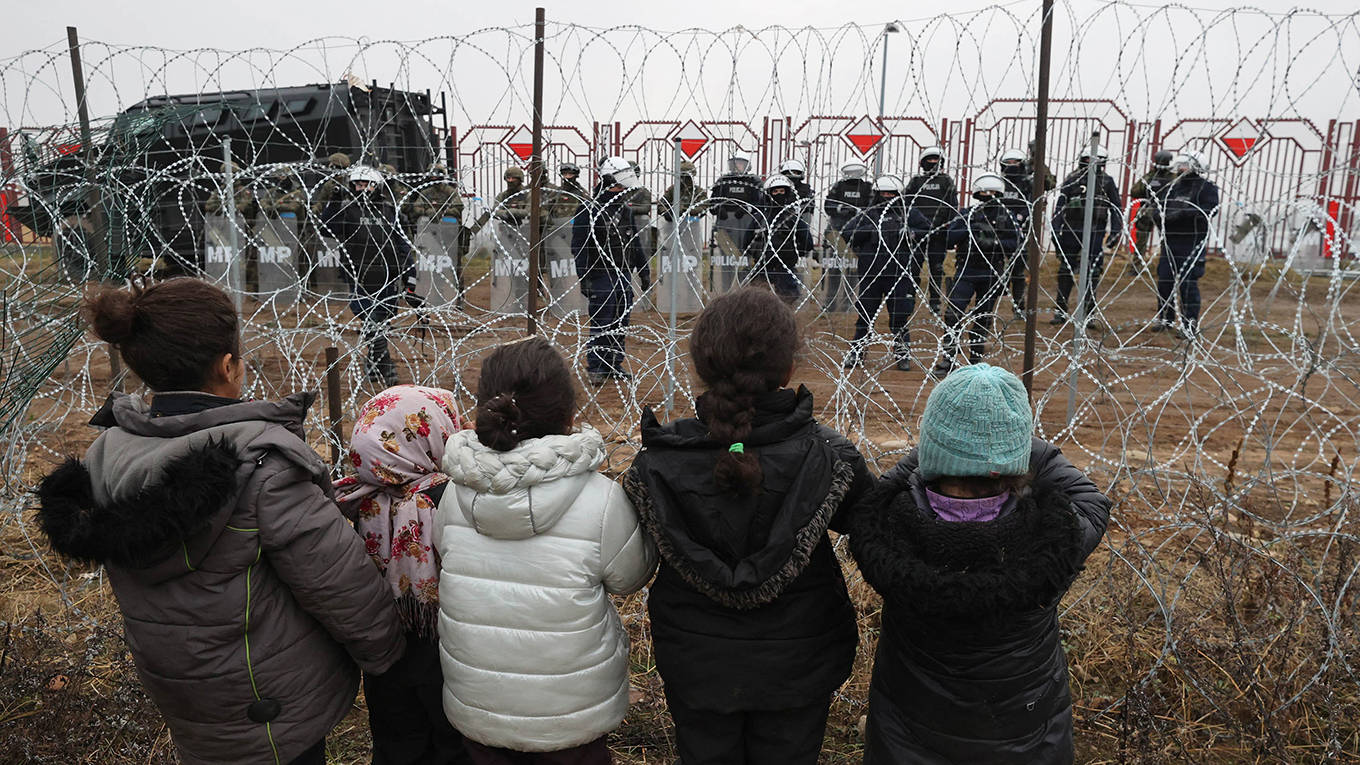
Poland’s Twin Crises Warsaw is challenging Brussels on the rule of law but using an immigration crisis to soften any pushback.
Russia Blocks Brit From U.N. Libya Envoy Role
Hungary’s Strongman Is Running Scared
BUDAPEST, Hungary—For the first time in his 11 years in office, Hungarian Prime Minister Viktor Orban is fighting for his political life.
The government’s frantic tone and a desperate flurry of fresh measures aimed at voters suggest that Orban’s Fidesz party takes the results of independent polling very seriously. Ahead of the upcoming parliamentary elections, which are expected to be held in April 2022, the unified opposition of more than half a dozen parties maintains a solid lead of 4 percentage points over Fidesz, which has ruled Hungary with parliamentary supermajorities since 2010 and fashioned the state according to Orban’s vision of a Christian-oriented “illiberal democracy.”
Gabor Erรถss of Hungary’s Green Party told Foreign Policy: “This is what we need: three and a half or four points more than Fidesz.” In 2018, the five main opposition parties, which ran separately, tallied a combined 47.6 percent of the vote, while Fidesz amassed 49.3 percent, enabling it, according to Fidesz-passed law, to occupy two thirds of parliamentary seats. “Orban is beatable. But the larger our victory, the better, as Fidesz will contest a narrow loss.” Rampant corruption and dwindling wages, Eross says, have incensed many Hungarians and even soured a slice of Fidesz voters, enough to tip the balance definitively in the opposition’s favor.
Since 2010, Orban has ruled Hungary like a fiefdom, bucking European norms as well as channeling European Union funds to his allies and family, observers say. The European Commission has accused Hungary of ineffective prosecution of corruption, deficiencies in public procurement, conflict of interests, and violations of judicial independence, as well as the transfer of public assets to newly created private foundations. On Nov. 19, the commission requested that Hungary respond to these allegations or face financial penalties. EU concerns over the corruption allegations and violations of the rule of law have already delayed the payment of 7.2 billion euros ($8.1 billion) in grants under the bloc’s coronavirus response fund, worth around 5 percent of the country’s GDP.
After years of infighting and turbulence, the United Opposition—comprising the Hungarian Socialist Party (MSZP), Democratic Coalition, Movement for a Better Hungary (known as Jobbik), LMP/Green Party, Dialogue for Hungary, Momentum, and others—will run a joint candidate in every one of the country’s 106 voting districts. Should they prevail, this diverse cast that spans the political spectrum intends to govern together, even though they will remain separate parties with rival positions on major issues. A sign of its unwieldly disposition and the difficulties it will certainly face: The United Opposition, founded late last year, currently has no program.
Nevertheless, predictions of its chances to better Fidesz appear auspicious, even with much of the media tightly in Fidesz’s hands. In the 2018 parliamentary election, though Fidesz trounced opposition parties in the countryside, it failed to win majorities in larger cities, including Budapest. In the 2019 local elections, opposition parties took 10 of 23 mayoral posts—the first major defeat for Fidesz in an election since 2006. The 2019 trouncing of Fidesz followed a 2018 by-election in the Fidesz stronghold of Hodmezovasarhely, where an electrical engineer-turned-historian, Peter Marki-Zay, snatched the small southeastern city on the Great Hungarian Plain away from Fidesz for the first time since 1990. In the hope of repeating this feat on the national level, the opposition chose the conservative Marki-Zay, a clean-cut, church-going father of seven, as their joint candidate for prime minister.
Intensifying EU pressure, spiraling inflation, and the unified opposition obviously have Orban on the ropes. “Orban is reaching deep into his bag of dirty tricks,” said Laszlo Andor, an economist, former EU commissioner, and MSZP member. “And he’s spending like there’s no tomorrow, as well as dealing out state assets.”
The latest Orban maneuver—perhaps a game-changer—is a law that, as of Jan. 1, 2022, will ease the way for Hungarians living abroad to register to vote as residents living in Hungary. All diaspora Hungarians with citizenship can cast ballots for a party on the national slate. This right they already have. But as of 2022, those who claim residency—without having to prove it—can also vote for a directly elected local candidate. This practice, which constituted fraud when the addresses were fake, happened in the 2018 parliamentary election in northeastern Hungary, as documented by independent NGOs. But now, what was once fraud is completely legal, enabling perhaps tens of thousands of ethnic Hungarians in bordering countries to register and then vote for direct local candidates in Hungary.
The Hungarian diaspora has long been a trough for nationalist politicos in Hungary to feed from—but for no one more than Orban. In Ukraine, Serbia, Slovakia, Austria, Croatia, and Romania live about 2.2 million ethnic Hungarians, about 20 percent of Hungary’s total population. (The minorities are the casualties of the post-World War I Treaty of Trianon, which doled out two-thirds of the Kingdom of Hungary’s lands to adjacent states.) And they vote Fidesz in droves—to the tune of 96 percent in 2018. Their votes are gratitude for Orban’s grandiose pronouncements that include them in the greater Hungarian nation—and for pumping some 351 million euros ($397 million) a year into the near abroad under the rubric “aid for national policy purposes.” In western Ukraine, the monies for the 150,000 ethnic Hungarians total 150 percent of the government budget there, according to Radio Free Europe/Radio Liberty.
The electoral tampering is anything but subtle. In contrast to the settled diaspora Hungarians, Hungarian migrants working abroad on a temporary basis tend not to be Fidesz voters—and find voting regulations frustratingly complicated and unfair. They are required to submit ballots at Hungarian embassies and consulates. Thus, a Hungarian living in Dallas (with a residence in Hungary) has to journey to Los Angeles to vote, while a Hungarian in northern Serbia (without a residence in Hungary) can vote by mail.
How the Coronavirus Pandemic Upended Life as We Know It

Four Scenarios for the Iran Nuclear Deal
On Putin’s Red Lines – OpEd

AI Strategic Competition, Norms, and the Ethics of Global Empire

On the Trans-Atlantic Price Gap

Opinion: A shadow war in space is heating up fast
Inside the ‘Misinformation’ Wars