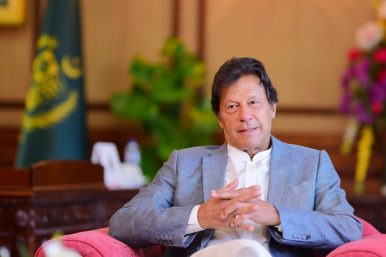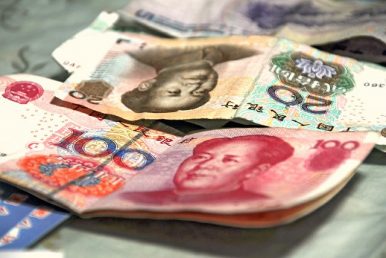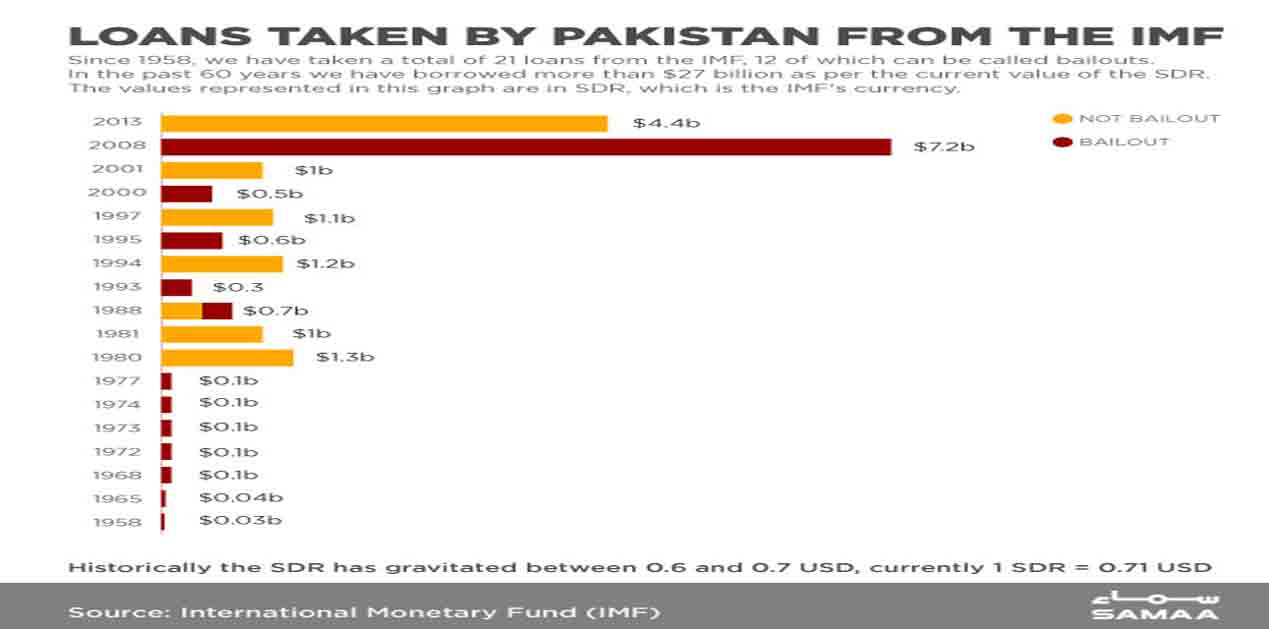
The IMF and the government of Pakistan have agreed on a structural adjustment program of USD 6 billion for three years to stabilise Pakistan’s crisis ridden economy. This will be the 13th such IMF package since 1988. The agreement was reached after months of tough negotiations. The International Monetary Fund (IMF) board is expected to approve the loan agreement in July 2019.The Profession of Arms: A Guide for Young Army Officers
It takes courage, especially for a young officer, to check a man met on the road for not saluting properly or for slovenly appearance, but, every time he does, it adds to his stock of moral courage, and whatever the soldier may say, he has respect for the officer who does pull him up.
Read Document →The Dragon's Teeth: Assessing China's Military Modernization
PLA has focused on modernising its capabilities across all warfare domains to achieve these goals. This includes land, air, and maritime operations, nuclear, space, counter-space, electronic warfare and cyberspace operations, aiming to become a fully integrated joint force.
Read Document →Transforming the PLA: A Decade of reorganisation from SSF to ISF
PRC has engaged in a sustained and broad effort to transform the PLA from an infantry-heavy, low-technology, ground forces-centric military into a high-technology, networked force with an increasing emphasis on joint operations and naval and air power projection.
Read Document →Eyes without Borders: Exploring the World of Open Source Intelligence (OSINT) in the Digital Age
Open Source Intelligence (OSINT) is gaining prominence with the rise of social media, the digital society and the vast growth of publicly and commercially available information (PAI and CAI).
Read Document →
The PLA’s Developing Cyber Warfare Capabilities and India's Options
Informationised warfare blurs the lines between peacetime and wartime. A nation in the information age cannot wait for the hostilities to break out to collect intelligence, carryout influence operations, develop antisatellite systems or design computer software weapons.
Read Document →
Galwan and After
Why did China did this when he is under tremendous pressure in all fronts, is this China's salami slice tactics being progressed rigorously, what will be new Rules of Engagement, what will be escalatory control mechanism, who has taken this decision, will there be some pressure put by China in India's North-East through insurgency.
Read Document →
India’s Joint Doctrine for Cyberspace Operations: A Critical Review
Chief of Defence Staff (CDS) General Anil Chauhan and Secretary, Department of Military Affairs, formally released declassified versions of the Joint Doctrines for Cyberspace Operations during the Chiefs of Staff Committee meeting in New Delhi.
Read Document →
Know your Enemy General(now Field Marshal) Syed Aseem Munir
Gen SA Munir's position in the hierarchy of Pakistan was not very comfortable. The state of economy, insurgency in Pakhtoonistan and Balochistan, attack on the Jaffar Express, constant protests by supporters of Imran Khan's supporters inside and outside of parliament.
Read Document →
Decoding Operation SINDOOR: Key Aspects and Implications
Precision strikes were carried out on nine sites—four in Pakistan and five in PoK—linked to anti-India terrorist groups such as the LeT, JeM and the Hizbul Mujahideen. The targeted sites included Muridke (LeT headquarters) and Bahawalpur (JeM headquarters).
Read Document →
Chinese Cyber Exploitation in India's Power Grid - Is There a linkage to Mumbai Power Outage?
The New York Times (NYT), based on analysis by a U.S. based private intelligence firm Recorded Future, reported that a Chinese entity penetrated India’s power grid at multiple load dispatch points. Chinese malware intruded into the control systems that manage electric supply across India, along with a high-voltage transmission substation and a coal-fired power plant
Read Document →26 May 2019
Pakistan: the IMF Bailout Agreed, the Hard Part Begins Now
The IMF and the government of Pakistan have agreed on a structural adjustment program of USD 6 billion for three years to stabilise Pakistan’s crisis ridden economy. This will be the 13th such IMF package since 1988. The agreement was reached after months of tough negotiations. The International Monetary Fund (IMF) board is expected to approve the loan agreement in July 2019.Pakistani Duplicity Caused the United States to Lose in Afghanistan
“The war in Vietnam was not lost in the field, nor was it lost on the front pages of the New York Times or the college campuses. It was lost in Washington, D.C.”Pakistan’s Economy Remains Imran Khan’s Biggest Challenge
The Great Power Game is On and China is Winning
From across the pond come two geopolitical analyses in two top-quality British publications that lay out in stark terms the looming struggle between the United States and China. It isn’t just a trade war, says The Economist in a major cover package. “Trade is not the half of it,” declares the magazine. “The United States and China are contesting every domain, from semiconductors to submarines and from blockbuster films to lunar exploration.” The days when the two superpowers sought a win-win world are gone.At a Ukrainian aircraft engine factory, China’s military finds a cash-hungry partner
ZAPORIZHIA, Ukraine — The president of a top Ukrainian aerospace company says its new Chinese investors often ask the staff for “little conversations.” The Global Consequences of a Sino-American Cold War
China Deserves Donald Trump
A U.S. businessman friend of mine who works in China remarked to me recently that Donald Trump is not the American president America deserves, but he sure is the American president China deserves.Reforming the Chiang Mai Initiative
In early May, the 22nd ASEAN+3 Finance Ministers’ and Central Bank Governors’ Meeting made a significant decision. The Chiang Mai Initiative (CMI), a mechanism for foreign currency exchange in times of emergency created under ASEAN+3, had previously been regarded as a pool of foreign exchange reserves accessible by the countries concerned as a U.S. dollar loan. At this meeting, however, it was decided to permit local currency swaps.What Does China Want From WTO Reforms?
How Is Iran Worse Than Saudi Arabia?
With ideas like Medicare for All and the Green New Deal, the 2020 Democratic presidential contenders are challenging the ideological parameters that have defined American domestic policy since the Reagan era. If only they were doing so on foreign policy too.Iran and the Problem of Occupation Warfare
There has recently been a lot of talk about a war between the United States and Iran. In my view, it’s unlikely because the risks are too high for both countries. Iran can’t take the chance that its military would be destroyed, and the U.S. can’t accept the costs a real victory would entail. Since Korea, the United States has performed poorly in war, with the exception of Desert Storm, when the destruction of Iraqi forces allowed U.S. entry into Kuwait and no Kuwaiti resistance to American occupation emerged. But in Vietnam, Afghanistan and Iraq, the United States faced the problem of what I would call occupation warfare, a type of combat that carries a substantial price even after the initial war has been won.Iran Bluster Is about Red Lines, Not War
In the past week, American-Iranian tensions flared to heights not seen since the Reagan years, when U.S. and Iranian ships and planes faced off in the Persian Gulf. Not only have Iranian irregular forces apparently sabotaged four ships off the major Emirati port of Fujairah with either magnet bombs or underwater drones, but a subsequent drone attack on a Saudi pipeline amplified tensions to a new level.Iran’s Uranium Stockpile and the Future of the JCPOA
Behrouz Kamalvandi, a spokesperson for Iran’s Atomic Energy Organization, spoke to Tasnim Newson Monday, clarifying the measures recently announced by Iranian President Hassan Rouhani pertaining to the country’s commitments under the 2015 Joint Comprehensive Plan of Action.Trump’s Pardons of U.S. Soldiers Send a Very Dangerous Message, at Home and Abroad
Of all the constitutional powers enjoyed by the U.S. president, perhaps none is so vulnerable to abuse as the presidential pardon. As a check against the potential abuse of power by the judicial branch, it serves an important constitutional function. As a public demonstration of clemency and the power of redemption, it contributes symbolically to the health of the republic. But when used improperly, the pardon becomes a poison to the body politic, rather than an antidote to what is ailing it.THE TOXIC TWENTY REVISITED
The Drums of War
Trump and Abe: The Odd Couple
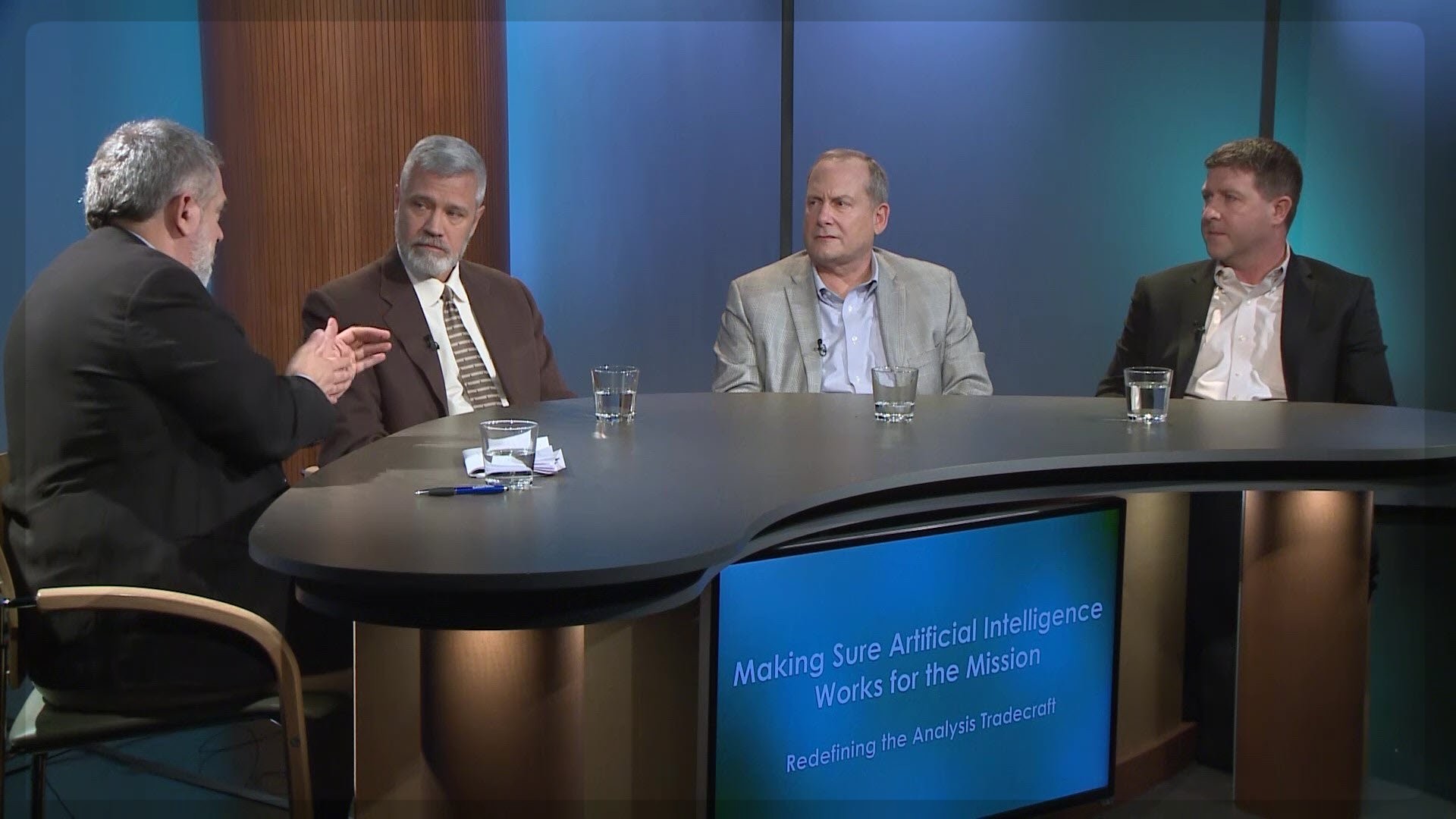
Artificial Intelligence: Ethics, Congress, Data And The Tech
Artificial intelligence sparks images of thinking robots doing things without human intervention. While that is part of its promise, reality is much more complex. Join me as I explore the intricacies of ethics, technology, policy and politics with three experts on this somewhat arcane but strategically crucial subject.The Internet Security Apocalypse You Probably Missed
Instead of my usual monologue, this week I’ve invited my colleague, the editorial writer Sarah Jeong, to have a conversation about the biggest story from last week that you probably missed.Does Cyber Command need more electronic warfare tools?
Within the U.S military services, leaders often discuss the close relationship of cyber warfare and electronic warfare. But what’s less clear is the relationship between these two disciplines at U.S. Cyber Command.Costly Wind Power Menaces Man And Nature – OpEd
Wind energy can never replace fossil fuels, despite claims of environmentalists and advocates of Alexandria Ocasio-Cortez’s Green New Deal (GND). It’s not environment-friendly either. Indeed, wind power is hampered by many limitations, including:Army Will Rent Base Networks, But Never Battlefield
TECHNET 2019: The Army will soon award a contract for a private company to own and operate the headquarters network used by its new Futures Command, the Army CIO told me. If this pilot project for Enterprise IT As A Service works out, Lt. Gen. Bruce Crawford said, the Army will hand over the networks at more of its 288 installations to the private sector — which has proven far more adept at building, managing, and continually upgrading business IT than the government has. Outsourcing the back-office “enterprise” IT this way, Crawford continued, will allow the Army to focus its own efforts on what only it can do: build a battle-ready network for combat units that can survive a major war.Technology alone will not save the military in the Information Age
It is often said that we’re living in the information age. Yet quite what the implications of modern communications technology will be for armed forces in the 21stcentury remains far from clear. Many militaries are focussing their efforts on the acquisition of cutting-edge technology and the development of new concepts structures suitable for various interpretations of the future operating environment. However, these developments often come at the expense of being able to ‘fight tonight’ and are lacking in focus when it comes to policies, permissions and process. More concerningly, the people required to conduct operations in the information age often appear only as a mere afterthought. If we want to have a force capable of fighting in the information age, we need to think about technology, process andpeople, including the potential benefits of new and innovative employment models – which will be the focus of this article.