The Profession of Arms: A Guide for Young Army Officers
It takes courage, especially for a young officer, to check a man met on the road for not saluting properly or for slovenly appearance, but, every time he does, it adds to his stock of moral courage, and whatever the soldier may say, he has respect for the officer who does pull him up.
Read Document →The Dragon's Teeth: Assessing China's Military Modernization
PLA has focused on modernising its capabilities across all warfare domains to achieve these goals. This includes land, air, and maritime operations, nuclear, space, counter-space, electronic warfare and cyberspace operations, aiming to become a fully integrated joint force.
Read Document →Transforming the PLA: A Decade of reorganisation from SSF to ISF
PRC has engaged in a sustained and broad effort to transform the PLA from an infantry-heavy, low-technology, ground forces-centric military into a high-technology, networked force with an increasing emphasis on joint operations and naval and air power projection.
Read Document →Eyes without Borders: Exploring the World of Open Source Intelligence (OSINT) in the Digital Age
Open Source Intelligence (OSINT) is gaining prominence with the rise of social media, the digital society and the vast growth of publicly and commercially available information (PAI and CAI).
Read Document →
The PLA’s Developing Cyber Warfare Capabilities and India's Options
Informationised warfare blurs the lines between peacetime and wartime. A nation in the information age cannot wait for the hostilities to break out to collect intelligence, carryout influence operations, develop antisatellite systems or design computer software weapons.
Read Document →
Galwan and After
Why did China did this when he is under tremendous pressure in all fronts, is this China's salami slice tactics being progressed rigorously, what will be new Rules of Engagement, what will be escalatory control mechanism, who has taken this decision, will there be some pressure put by China in India's North-East through insurgency.
Read Document →
India’s Joint Doctrine for Cyberspace Operations: A Critical Review
Chief of Defence Staff (CDS) General Anil Chauhan and Secretary, Department of Military Affairs, formally released declassified versions of the Joint Doctrines for Cyberspace Operations during the Chiefs of Staff Committee meeting in New Delhi.
Read Document →
Know your Enemy General(now Field Marshal) Syed Aseem Munir
Gen SA Munir's position in the hierarchy of Pakistan was not very comfortable. The state of economy, insurgency in Pakhtoonistan and Balochistan, attack on the Jaffar Express, constant protests by supporters of Imran Khan's supporters inside and outside of parliament.
Read Document →
Decoding Operation SINDOOR: Key Aspects and Implications
Precision strikes were carried out on nine sites—four in Pakistan and five in PoK—linked to anti-India terrorist groups such as the LeT, JeM and the Hizbul Mujahideen. The targeted sites included Muridke (LeT headquarters) and Bahawalpur (JeM headquarters).
Read Document →
Chinese Cyber Exploitation in India's Power Grid - Is There a linkage to Mumbai Power Outage?
The New York Times (NYT), based on analysis by a U.S. based private intelligence firm Recorded Future, reported that a Chinese entity penetrated India’s power grid at multiple load dispatch points. Chinese malware intruded into the control systems that manage electric supply across India, along with a high-voltage transmission substation and a coal-fired power plant
Read Document →29 April 2014
Keeping the Faith
India’s new politics
India: Urgent Defense Reforms Needed
India and Pakistan: The Opportunity Cost of Conflict
BY SHUJA NAWAZ AND MOHAN GURUSWAMY
This report was launched at an April 24, 2014 event
A report released today by the Atlantic Council’s South Asia Center argues that heavy military spending in India and Pakistan has in fact been detrimental to the citizens of both countries in terms of security and economic growth, and calls on leaders to reinvest in trade and confidence building.
In India and Pakistan: The Opportunity Cost of Conflict, Atlantic Council South Asia Center Director Shuja Nawaz and Nonresident Senior Fellow Mohan Guruswamy explain how high defense spending and low economic integration into South Asia’s regional economy have come at the expense of those living in poverty. Although many now favor rapprochement, Nawaz and Guruswamy argue that unless both sides begin a dialogue on economic and military relations, these issues will only worsen.
In addition to military spending, a lack of strong bilateral trade relations between India and Pakistan has also exacerbated South Asia’s socioeconomic challenges. From GDP to job losses to investment, the non-fulfillment of trading potential is a cost that “neither of the two countries can afford to ignore.”
Nawaz and Guruswamy provide a set of actions both countries can take to decrease military spending and promote confidence building:
- Increase the distance between land forces by withdrawing from border areas
- Engage in direct communications between militaries, including exchange visits
- Invest jointly in energy, water, and export industries
- Open borders for trade and eventually tourism
Such measures will have a lasting impact beyond India and Pakistan, as the authors note: “economically intertwined and mutually beneficial economic systems in both countries will create a huge peace constituency that will not only be good for the two nations, but also for the region and the entire world.”
At last, a ray of hope for Afghanistan
The India-Bangladesh Power Trap
Washington’s Flawed Myanmar Policy
The Limits of Pacific Maritime Law
The Indian Navy’s ‘China’ dilemma
China Goes Ballistic
CHINA DENIES REPORTS OF NEW STIMULUS PLAN – ANALYSIS
Putin's Grand Strategy for Ukraine
The Un-United States of Ukraine
Who Will Influence Whom?
Boko Haram: The Terror Group That Kidnapped 200 Schoolgirls
http://www.realclearworld.com/articles/2014/04/27/boko_haram_the_terror_group_that_kidnapped_200_schoolgirls.html
By Mathieu Guidere
As terrorist attacks go, it was as shocking for its scale and its choice of target: on April 14, at least 200 people were kidnapped from the Government Girls Secondary School in the Nigerian town of Chibok.
More than a week later, the whereabouts of hundreds of young women remain a mystery. Within local communities of Borno province there is much sympathy for parents, but not a huge degree of shock. For this is just the latest in a series of attacks blamed on one outfit: Boko Haram.
To understand the kidnapping, we have to look at the terror group’s history, how it was formed, and how its ideology developed.
Boko Haram has made itself notorious with a long campaign of bombings and mass murders across Nigeria, often in concert with other Islamist groups. But to properly understand the group, we have to look at the terrorist group’s history, how the group was formed, and how its ideology developed.
In the aftermath of September 11 2001, a 30-year-old man called Muhammad Yusuf founded a new religious preaching group in Maiduguri, capital of Nigeria’s Borno State, and gave it the Arabic name “Jamaat ahl as-Sunnah li ad-Dawah wa al-Jihad” (literally, “The Group of the People of Tradition and Call for Jihad”). This group would later become known in Hausa as “Boko Haram”, meaning “Western education is sinful”.
Yusuf had studied theology in Saudi Arabia and converted to Salafism. He was convinced that the Western education model which prevailed in Nigeria, a legacy of British rule, was to blame for the country’s problems; he pledged to fight against it, and to introduce a model inspired by the Taliban’s Afghan education system.
The group began as a gathering of Muslim followers at a mosque and at a Koranic school. These gatherings were for poor families to send their children to study a different but parallel curriculum to the existing one: they were taught Islamic sciences, prophetic traditions, Koranic commentary, rejection of Darwinian evolution and the like. The number of these “schools” increased, attracting young adult students who failed in the government universities. They then began calling themselves “the Nigerian Taliban” (Taliban literally means “student of theology”).
The Arab World’s Options
When the Arab awakening began in 2011, its primary goal should have been to advance pluralism and democracy – causes that were neglected in the Arab world’s first, anti-colonial awakening in the twentieth century. But, after three years of struggle, the process has only just begun. Will the second Arab awakening finally achieve its goals?
The answer depends on which of three models Arab countries use to guide their transition: an inclusive, far-sighted model that aims to build consensus; a winner-take-all approach that excludes large segments of the population; or a stop-at-nothing approach focused on regime survival. These models reflect the vast differences among Arab countries’ current circumstances and prospects for the future.The strongest example of the inclusive model is Tunisia, where former opponents have formed a coalition government, without military interference. Of course, the process was not easy. But, after a tense struggle, Tunisians recognized that cooperation was the only way forward.
In February, Tunisia adopted the Arab world’s most progressive constitution, which establishes equality between men and women, provides for peaceful alternation of government, and recognizes the right of citizens to be without religious belief – an unprecedented move in the region, supported by both Islamist and secular forces. Tunisia’s experience embodies the commitment to pluralism and democracy for which the second Arab awakening stands.
Fortunately, Tunisia is not alone in following this path. Both Yemen and Morocco have undertaken a relatively inclusive political process, with Yemen pursuing a national dialogue and Morocco forming a coalition government.
But this model had failed to take hold in several other countries. Consider Egypt, which has been pursuing the second, exclusionary approach, with all parties believing that they have a monopoly on the truth and thus can ignore or suppress their opponents. Egypt’s Islamists, led by the Muslim Brotherhood, adopted this philosophy while they were in power; the secular forces that ousted them in last July’s military coup are now taking the same approach.
Japan Gains Significant Strategic Pledge from United States: An Analysis
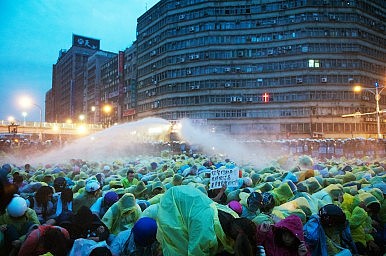
Taiwan Rocked by Anti-Nuclear Protests
Europe’s Dependence on Russian Energy: Deeper Than You Think
Ukraine Crisis Shows Eastern Europe at Risk Not Only for Gas, But Also Nuclear Power
BY KATHRYN SPARKS
Steam rises from two of the cooling towers of the Temelรญn nuclear power plant, one of two in the Czech Republic. The country relies on the plants for a third of its electricity and recently renewed a contract with Russia’s state-owned TVEL to supply nuclear fuel for Temelรญn.
As European nations decide how staunchly to oppose Russia’s attacks on Ukraine, they have been pondering uneasily the prospect that Moscow could cut off the Russian natural gas supplies upon which many of them depend. Foreign policy specialists across the transatlantic community have scurried to promote ideas, such as a US promise to export gas to Europe, to reduce Russia’s leverage.
Some bad news for this effort is that, across much of Eastern Europe, from Bohemia to the Black Sea, Russia holds a second ace in the energy politics game: nuclear fuel. Five countries – Bulgaria, the Czech Republic, Hungary, Slovakia and Ukraine – rely almost entirely on Russian state-owned companies to fuel their nuclear power plants. For these 80 million Europeans, the Russian state provides services essential to some 42 percent of electricity production.
This dependence on nuclear power, and hence Russian cooperation, is greatest in Slovakia (which gets more than 50 percent of its electricity from nuclear generation) and Ukraine (about 50 percent). Hungary generates 46 percent of its electricity through nuclear; Bulgaria 35 percent and the Czech Republic about one-third.
Europe’s dependence on Russian gas is deepest in the same zone. Four of the five nuclear-dependent states are among at least nine countries that rely on Russian gas pumped through Ukrainian pipelines for about three-quarters of their total gas supply, Atlantic Council Senior Fellow John Roberts wrote last week. They, along with the fifth country, Ukraine itself, are especially vulnerable to any break in Russian gas supplies, whether accidental or intentional, that could occur amid the spreading conflict over eastern Ukraine.
The Europeans’ nuclear dependence on Russia varies in small ways. Ukraine and the Czech Republic do some of the work of making their nuclear fuel, notably mining and milling the raw uranium. But they rely on Russia’s national nuclear-fuel manufacturer, TVEL, for high-tech parts of the process, including enrichment of the uranium and its fabrication into fuel rods for use in Russian-designed reactors. TVEL is a wholly-owned subsidiary of Rosatom, Russia’s state-owned nuclear power conglomerate.
Ukraine Crisis: Who Will Blink First?
Russia's seizure of Crimea last month may have unfolded with a lightning quickness, but Vladimir Putin and the West are now engaged in a much slower match of wits on a chessboard stretching across most of eastern Ukraine.
Rather than going for checkmate, both sides now seem content to wait for the other to make a mistake. Putin made a strong first move by placing 40,000 troops on the border -- and separatists, who are not officially linked to Russia, on the ground in Ukraine.
Ulrich Speck
Now Moscow is waiting for the pro-Western government in Kiev to try to retake the parts of the east it has seemingly lost. In Russia's eyes, any such move from the capital would legitimize an overwhelming counterattack -- a re-run of the Georgia crisis in 2008, when President Mikheil Saakashvili lost his nerve, shot first, and prompted a Russian invasion.
Putin's problem is time; he cannot wait forever to strike. Troops cannot remain ready for combat for many months at a time. Separatists in eastern Ukraine are lost without outside support, and may become nervous as time drags on without any glimpse of a light at the end of the tunnel.
On the other side of the board are U.S. President Barack Obama, German Chancellor Angela Merkel and Ukraine's fledgling government. The biggest challenge for Obama and his German counterpart is to keep a united Western front. They need to uphold a credible threat of massive economic sanctions that could undercut the Kremlin's funding if it doesn't toe the line.
But cracks in Western unity are visible everywhere. Europe may be concerned about Russian aggression in Ukraine, but the continent is dragging its collective feet on taking a more confrontational stance towards Putin.