The Profession of Arms: A Guide for Young Army Officers
It takes courage, especially for a young officer, to check a man met on the road for not saluting properly or for slovenly appearance, but, every time he does, it adds to his stock of moral courage, and whatever the soldier may say, he has respect for the officer who does pull him up.
Read Document →The Dragon's Teeth: Assessing China's Military Modernization
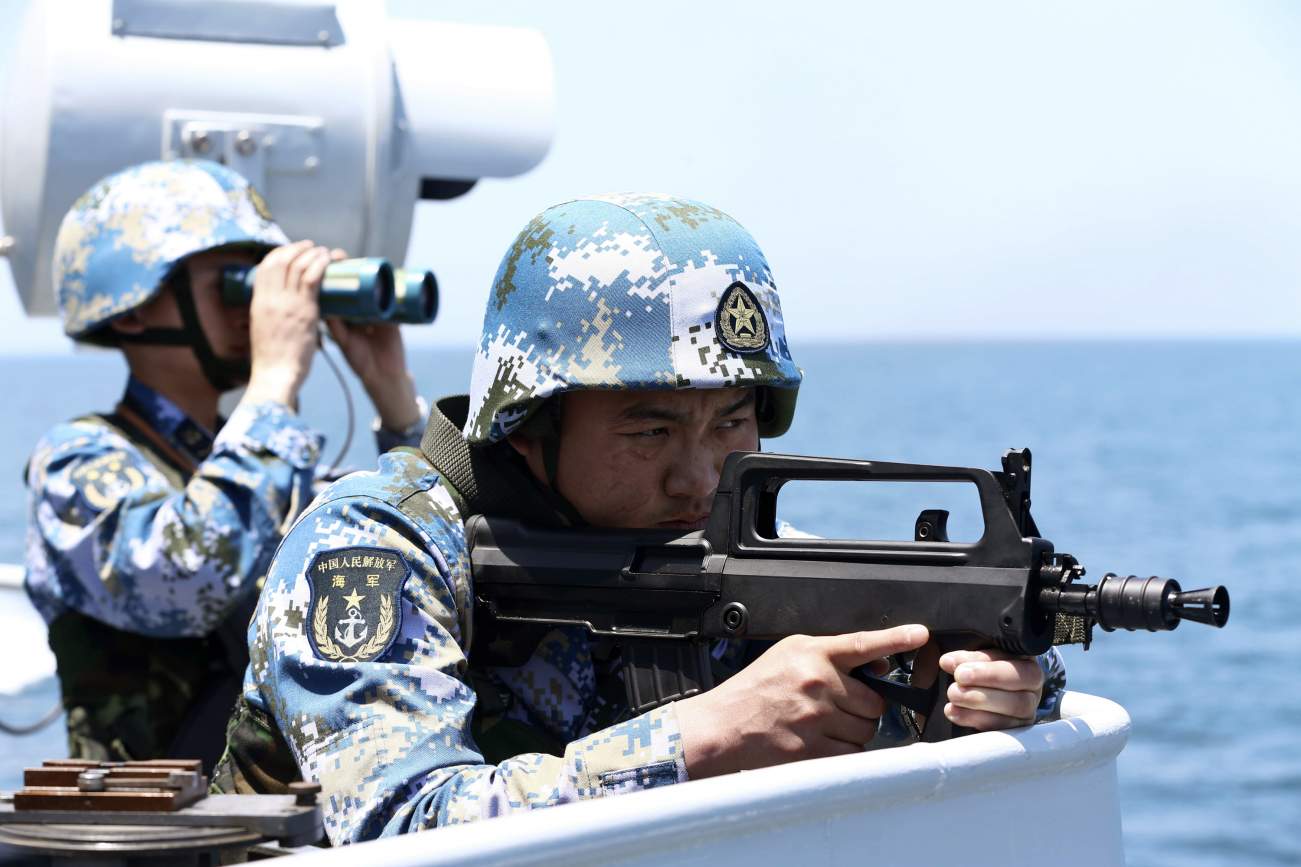
PLA has focused on modernising its capabilities across all warfare domains to achieve these goals. This includes land, air, and maritime operations, nuclear, space, counter-space, electronic warfare and cyberspace operations, aiming to become a fully integrated joint force.
Read Document →Transforming the PLA: A Decade of reorganisation from SSF to ISF
PRC has engaged in a sustained and broad effort to transform the PLA from an infantry-heavy, low-technology, ground forces-centric military into a high-technology, networked force with an increasing emphasis on joint operations and naval and air power projection.
Read Document →Eyes without Borders: Exploring the World of Open Source Intelligence (OSINT) in the Digital Age
Open Source Intelligence (OSINT) is gaining prominence with the rise of social media, the digital society and the vast growth of publicly and commercially available information (PAI and CAI).
Read Document →
The PLA’s Developing Cyber Warfare Capabilities and India's Options
Informationised warfare blurs the lines between peacetime and wartime. A nation in the information age cannot wait for the hostilities to break out to collect intelligence, carryout influence operations, develop antisatellite systems or design computer software weapons.
Read Document →
Galwan and After
Why did China did this when he is under tremendous pressure in all fronts, is this China's salami slice tactics being progressed rigorously, what will be new Rules of Engagement, what will be escalatory control mechanism, who has taken this decision, will there be some pressure put by China in India's North-East through insurgency.
Read Document →
India’s Joint Doctrine for Cyberspace Operations: A Critical Review
Chief of Defence Staff (CDS) General Anil Chauhan and Secretary, Department of Military Affairs, formally released declassified versions of the Joint Doctrines for Cyberspace Operations during the Chiefs of Staff Committee meeting in New Delhi.
Read Document →
Know your Enemy General(now Field Marshal) Syed Aseem Munir
Gen SA Munir's position in the hierarchy of Pakistan was not very comfortable. The state of economy, insurgency in Pakhtoonistan and Balochistan, attack on the Jaffar Express, constant protests by supporters of Imran Khan's supporters inside and outside of parliament.
Read Document →
Decoding Operation SINDOOR: Key Aspects and Implications
Precision strikes were carried out on nine sites—four in Pakistan and five in PoK—linked to anti-India terrorist groups such as the LeT, JeM and the Hizbul Mujahideen. The targeted sites included Muridke (LeT headquarters) and Bahawalpur (JeM headquarters).
Read Document →
Chinese Cyber Exploitation in India's Power Grid - Is There a linkage to Mumbai Power Outage?
The New York Times (NYT), based on analysis by a U.S. based private intelligence firm Recorded Future, reported that a Chinese entity penetrated India’s power grid at multiple load dispatch points. Chinese malware intruded into the control systems that manage electric supply across India, along with a high-voltage transmission substation and a coal-fired power plant
Read Document →25 March 2019
*INDIAN AIR STRIKES ON PAKISTAN....WHAT'S NEXT?*
Masood Azhar Is China’s Favorite Terrorist
On March 13, China placed a “technical hold” on a resolution calling on the United Nations Security Council to designate Masood Azhar, the leader of the Pakistani militant group Jaish-e-Mohammed (JeM), as a terrorist. Beijing’s intervention effectively torpedoed the measure. This marked the fourth time that China has prevented Azhar, who enjoys long-standing ties to the Pakistani security establishment, from being officially designated a terrorist by the United Nations.The Old Silk Road to Rome Gets New Life
President Xi Jinping arrived in Italy today for a state visit, the first by a Chinese president in a decade.Inside China’s Plan for Global Supremacy
Racing Against China, U.S. Reveals Details of $500 Million Supercompute
SAN FRANCISCO — The Department of Energy disclosed details on Monday of one of the most expensive computers being built: a $500 million machine based on Intel and Cray technology that may become crucial in a high-stakes technology race between the United States and China.Schieffer Series: China's Rise
The Charm Offensive: Peacekeeping And Policy In China – Analysis
In the aftermath of the Second World War, the nations of the world made a pledge to prevent the recurrence of such a global tragedy, and although this pledge had been made before, the United Nations (UN) promised to be something stronger than its predecessor, the League of Nations. Founded in 1945, the United Nations was an international forum meant to maintain the international order, and the powers vested in its Charter gave it a unique international character that assisted it in maintaining and protecting international peace and security. It is the UN Security Council (UNSC) that holds this responsibility. Comprised of 15 members, including 5 permanent members: the United States, United Kingdom, France, Russia, and China, the UNSC may take collective action in order to maintain international peace and security, as authorized in Chapters VI and VII of the UN Charter. These actions are manifested in the form of peacekeeping operations, which are staffed by troops of UN member states under UN operational control. Peacekeeping operations emerged in the early-1950s as a response to a growing number of border disputes that were sparked by decolonization processes and the need for a mediating body to assist in the implementation of cease-fire agreements or political settlements to these international conflicts.1Trump Wants NATO’s Eyes on China
The Trump administration is pushing NATO to address potential threats from China in its day-to-day work in Brussels and at an upcoming meeting of foreign ministers in Washington next month, U.S. and European officials say. The move is part of a shift in American priorities away from fighting Islamist terrorists and toward a so-called era of great power competition.Evasive Action: Why America Needs to Avoid a Cold War with China
Are the United States and China on the brink of a new Cold War? If the question is whether U.S.-China relations are destined to closely replicate the U.S.-Soviet rivalry, then the answer is surely “no.” As Joshua Shifrinson has recently (and rightly) argued, today’s superpowers coexist in an international setting much different from—and more forgiving than—that which existed between 1947 and 1989.The State of War
A Syrian force’s artillery observer looks through a scope as smoke plumes rise on the horizon, near Hama, on April 1, 2017. (Stringer/AFP/Getty Images)Syrian government forces and allies regained most of the territory they lost earlier during an assault by rebels and jihadists launched on March 21, 2017 in the country's centre, reported the Britain-based Syrian Observatory for Human Rights monitor on March 31, 2017. Hama province is of strategic importance to President Bashar al-Assad, as it separates opposition forces in the northwestern province of Idlib from Damascus to the south and from the regime's coastal heartlands to the west. / AFP PHOTO / STRINGER (Photo credit should read STRINGER/AFP/Getty Images) For Somaliland and Djibouti, Will New Friends Bring Benefits
BERBERA, Somalia—On any given day in Berbera, the deep-water port on Somaliland’s Red Sea coast, ramshackle ships dock next to small boats known as dhows. Most of them are waiting to set off for the Persian Gulf, laden with spices, scrap metal, and often more lively cargo—goats raised for the global market on the country’s scorched landscape.The Christchurch Massacre Was Another Internet-Enabled Atrocity
Back to the Nuclear Precipice
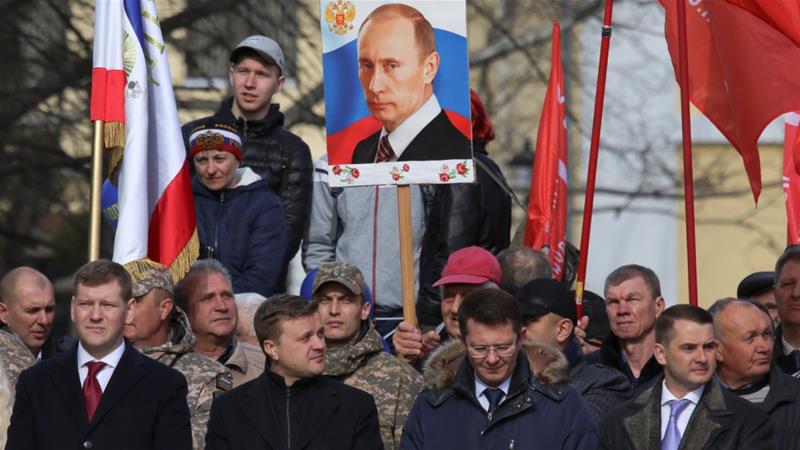
Annexation of Crimea: A masterclass in political manipulation
The annexation of Crimea was a triumph of political manipulation over national interests and common sense. This is why old-school geopolitics alone cannot explain what really happened between Russia and Ukraine in March 2014.Is There a Future For American Universities in the Middle East?
A Case For Area Studies – Analysis
Scholars of history and literature, anyone who appreciates culture, share a keen interest in memory and, in countries with volatile politics, a fear for the fate of priceless documents and precarious archives. This takes place amid a broader crisis with dismissal of the humanities. Language and literature departments may be among the most vulnerable, especially teaching and research in the less commonly taught languages, such as Portuguese, which constantly struggle to prove their relevance.Falling World Oil Prices In Fact Benefit Russia – OpEd
It has long been common ground in the West that declining oil prices, either as the result of government policy or technological innovation, helped to bring down the Soviet Union and undermine Putin’s Russia because lower prices mean that Moscow doesn’t get the income that it had when the prices were higher.Trump’s Space Force Gets the Final Frontier All Wrong
Just before Valentine’s Day last month, NASA made one final call to Opportunity, the little Mars rover that had been trekking across the red planet since it arrived in 2004. The space agency lost contact with the robotic explorer in June 2018 during a massive planetary dust storm and had been attempting to reconnect with it ever since. To no avail: “With a sense of deep appreciation and gratitude,” NASA officials declared on February 13 that Opportunity was dead and its mission was over.Trump Is Right About Huawei
A New Age of Warfare: How Internet Mercenaries Do Battle for Authoritarian Governments
Intel offers AI breakthrough in quantum computing
HOLD THE PHONE! THE THREATS LURKING BEHIND A MISSED CALL AND OTHER FORMS OF TELECOM FRAUD
As our society evolves, so does our reliance on telecommunications technology. Cybercriminals prey on our daily use of electronic devices and continuously seek out new ways to exploit vulnerabilities and access information. Cooperation and information-sharing between law enforcement and the private sector has therefore become essential in the fight against these types of crime. One example of this collaboration is the joint Cyber-Telecom Crime Report 2019, published by Europol and Trend Micro today. The report gives an overview of how telecom fraud works and serves as a technical guide for stakeholders in the telecoms industry.Five Tech Trends Driving Cybersecurity In 2019
The Promise and Perils of AI: Q&A with Douglas Yeung
Douglas Yeung is a social psychologist at RAND whose research has covered topics as diverse as social well-being, workforce diversity, and public opinion in Iran. He specializes in analyzing large volumes of social media posts for insights into human behavior. Before coming to RAND, he helped develop an app called Wertago (“the ultimate nightlife app for the ultimate night owl”) that was a grand prize winner in Google's first Android Developer Challenge.Defense Alone Won't Stop Cyber Threat To U.S. Finance
Can Amazon Reinvent the Traditional Supermarket?
Are security concerns over Huawei a boon for its European rivals?
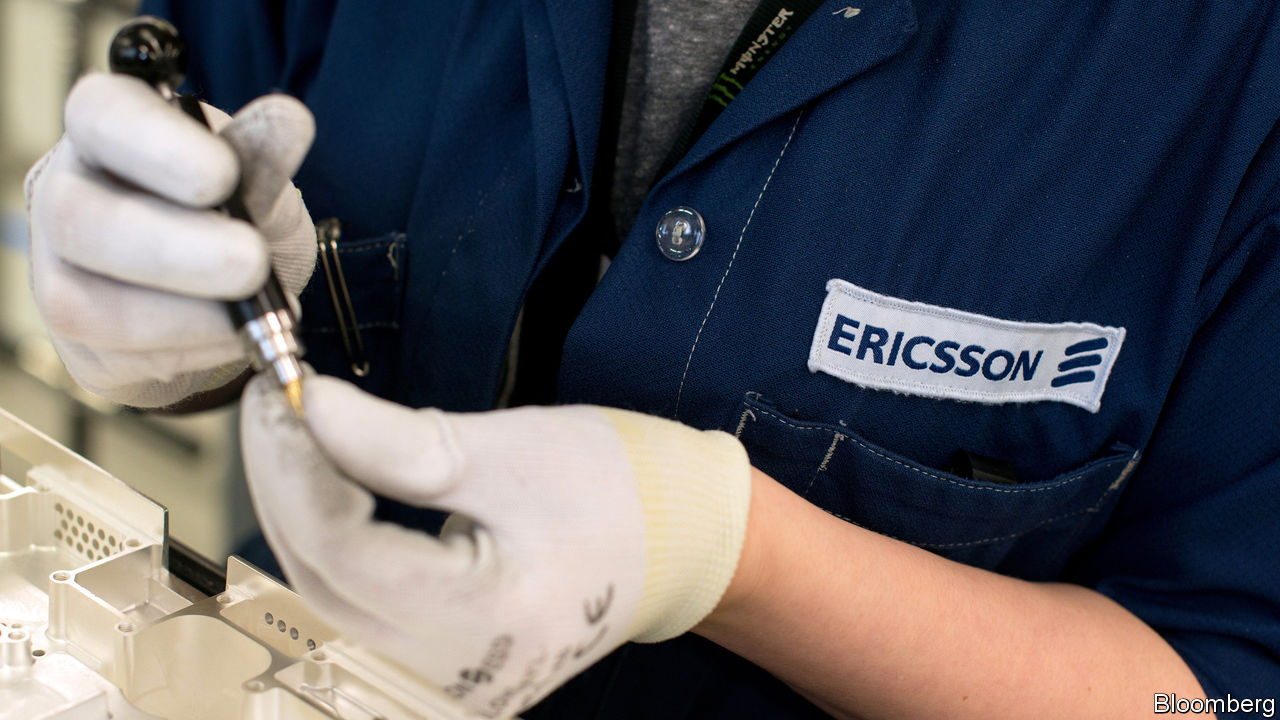
In the days of pre-internet capitalism the troubles of one dominant company in an industry tended to be good news for its rivals. In today’s hyperconnected world a threatened ban by Western governments of Huawei, the Chinese market leader in telecoms gear, is also a worry for its competitors. Both Ericsson, a Swedish company, and Nokia, a Finnish one, would prefer the geopolitical saga to end, the better to focus on competing for contracts related to the launch of super-speedy “fifth generation” (5g) mobile-phone networks.America's Constant State of Hybrid War
Hybrid warfare has been in the limelight for more than a decade within the Western strategic discourse. During the last five years, this slippery concept has mostly been attached to the malign actions of Russia towards the West. First, it has been claimed that Russia’s hybrid warfare towards the West—containing information warfare, cyber warfare and political warfare—has succeeded in attaining favorable outcomes for Russia. Thus, Russia has been able to achieve concrete security-related goals with its hybrid tools, according to this narrative.