The Profession of Arms: A Guide for Young Army Officers
It takes courage, especially for a young officer, to check a man met on the road for not saluting properly or for slovenly appearance, but, every time he does, it adds to his stock of moral courage, and whatever the soldier may say, he has respect for the officer who does pull him up.
Read Document →The Dragon's Teeth: Assessing China's Military Modernization
PLA has focused on modernising its capabilities across all warfare domains to achieve these goals. This includes land, air, and maritime operations, nuclear, space, counter-space, electronic warfare and cyberspace operations, aiming to become a fully integrated joint force.
Read Document →Transforming the PLA: A Decade of reorganisation from SSF to ISF
PRC has engaged in a sustained and broad effort to transform the PLA from an infantry-heavy, low-technology, ground forces-centric military into a high-technology, networked force with an increasing emphasis on joint operations and naval and air power projection.
Read Document →Eyes without Borders: Exploring the World of Open Source Intelligence (OSINT) in the Digital Age
Open Source Intelligence (OSINT) is gaining prominence with the rise of social media, the digital society and the vast growth of publicly and commercially available information (PAI and CAI).
Read Document →
The PLA’s Developing Cyber Warfare Capabilities and India's Options
Informationised warfare blurs the lines between peacetime and wartime. A nation in the information age cannot wait for the hostilities to break out to collect intelligence, carryout influence operations, develop antisatellite systems or design computer software weapons.
Read Document →
Galwan and After
Why did China did this when he is under tremendous pressure in all fronts, is this China's salami slice tactics being progressed rigorously, what will be new Rules of Engagement, what will be escalatory control mechanism, who has taken this decision, will there be some pressure put by China in India's North-East through insurgency.
Read Document →
India’s Joint Doctrine for Cyberspace Operations: A Critical Review
Chief of Defence Staff (CDS) General Anil Chauhan and Secretary, Department of Military Affairs, formally released declassified versions of the Joint Doctrines for Cyberspace Operations during the Chiefs of Staff Committee meeting in New Delhi.
Read Document →
Know your Enemy General(now Field Marshal) Syed Aseem Munir
Gen SA Munir's position in the hierarchy of Pakistan was not very comfortable. The state of economy, insurgency in Pakhtoonistan and Balochistan, attack on the Jaffar Express, constant protests by supporters of Imran Khan's supporters inside and outside of parliament.
Read Document →
Decoding Operation SINDOOR: Key Aspects and Implications
Precision strikes were carried out on nine sites—four in Pakistan and five in PoK—linked to anti-India terrorist groups such as the LeT, JeM and the Hizbul Mujahideen. The targeted sites included Muridke (LeT headquarters) and Bahawalpur (JeM headquarters).
Read Document →
Chinese Cyber Exploitation in India's Power Grid - Is There a linkage to Mumbai Power Outage?
The New York Times (NYT), based on analysis by a U.S. based private intelligence firm Recorded Future, reported that a Chinese entity penetrated India’s power grid at multiple load dispatch points. Chinese malware intruded into the control systems that manage electric supply across India, along with a high-voltage transmission substation and a coal-fired power plant
Read Document →7 September 2018
TWO + TWO DIALOGUE BETWEEN INDIA AND USA – CRITICAL ISSUES
India On Quest For Undersea Dominance To Counter Chinese Navy’s Growing Presence – Analysis
India, China face mounting pressure from US; Trump says stop buying oil from Iran or face sanctions
China, India need to coordinate in face of US pressure
Don’t Buy the Panic About the Rupee’s Fall
Since January, the Indian rupee has tumbled more than 9 percent, hitting a new all-time lowof about 70 to the dollar in mid-August. The fall has caused much hand-wringing in the media and in policy circles, where observers lament the currency’s status as Asia’s worst performing, charge Prime Minister Narendra Modi with economic mismanagement, and fret about India’s ability to pay its debts. Calls for the government to do something—anything—to stop the rupee’s slide abound. But should India’s central bank, which has responsibility for managing the exchange rate, reverse the fall? My short answer is: no.The US-China Cold War Is Now Playing Out in Pakistan
On Sept. 1, days before U.S. Secretary of State Mike Pompeo and Chairman of the Joint Chiefs of Staff, Gen. Joseph Dunford, were due to arrive in Islamabad, a Pentagon spokesman announced that the department of defense intended to permanently cut $300 million from funds allocated to support Pakistan in the fight against America’s enemies in Afghanistan. So does this mean America and Pakistan are finally breaking up? The short answer is no. As much as both states are fed up with each other, they remain far too co-dependent to simply walk away. What we are seeing instead is a tough and protracted re-negotiation over the terms of the relationship. The question of Pakistan’s role in Afghanistan is not necessarily the hardest issue; there might even be convergence given the greater realism in Washington, Rawalpindi, and Islamabad.Former U.S. ally turned implacable foe dies in Afghanistan, Taliban announces
Why China Is Wooing Eastern and Central Europe
When Donald Trump entered office last year there was speculation that his “America First” foreign policy would corrode Transatlantic relations, and drive Europe and China towards closer cooperation. The 2017 Davos World Economic Forum, which occurred in the days leading up to Trump’s inauguration, was perhaps the high watermark of this sentiment. Xi Jinping, the first Chinese leader to address the annual gathering of global elites, delivered a keynote speech strongly defending free trade, economic globalization and an open international economic system (despite China’s own long record of quasi-mercantilist policies). European elites expressed hope that closer EU-China ties would prop up existing international institutions as they anticipated U.S. foreign policy taking a nationalistic turn. For example, in a January 2017 China Daily op-ed, Fraser Cameron, director of the EU-Asia Centre and a former European Union (EU) diplomat, argued that Europe and China should “make common cause to save the multilateral system from opposing forces in the US.”Ecuador’s All-Seeing Eye Is Made in China
On his second and last day in Quito nearly two years ago, President Xi Jinping, the highest-ranked Chinese official to ever head to Ecuador, made a largely overlooked visit to a boxy government facility. Xi was driven up a small hill to the headquarters of one of Ecuador’s proudest public safety achievements: a national emergency response and video surveillance system built entirely by Chinese companies and financed by Chinese state loans. Inside the main building’s cavernous command center, a ticker atop a giant screen made up of dozens of monitors read “Welcome Mr. President Xi Jinping to ECU 911” in Spanish and Chinese.Beijing's global 5G ambitions threaten to disrupt telecoms
Beijing's central planners are aiming to use China's Belt and Road Initiative to dominate the next wave of wireless technology by becoming the global leader in the development of 5G networks. The 5G standard represents a quantum leap over today's wireless technology by providing lightning-fast connectivity and better bandwidth. It is the essential infrastructure for the internet of things, which will drive the next phase of the digital economy. Beijing is pouring billions of dollars into 5G, which is also part of the "Made in China 2025" technology master plan that has raised concerns about China's ambitions in U.S. President Donald Trump's administration.France's Determined Struggle Against Salafi-Jihadism
The Toll of Putin’s Wars
By intervening in Syria, annexing Crimea, and sustaining military presence in Eastern Ukraine, Russian President Vladimir Putin seems to have overextended himself. With an annual growth rate of just 1.5%, Russia is now expending 5.3% of its GDP on its military budget, while losing another 3-4% to legal, civilian, and other costs. STOCKHOLM – Wars are expensive, as the Russian people are now learning. The Kremlin is pursuing military adventures in Eastern Ukraine and Syria, and though these conflicts are limited in scope, one wonders if the country can really afford them. As the word’s 11th largest economy, Russia can manage in the short term. But the long term is quite another matter. From 2008 to 2016, Russia increased its military expenditures from 3.3% of GDP – which roughly corresponds to the current US level – to 5.3%, according to the authoritative Stockholm International Peace Research Institute.American Political Economy, Disrupted
China has spent billions in Africa, but some critics at home question why
All of Africa is now competing for Chinese money. Except for one country.
As more than 40 African heads of state arrived at the China-Africa Cooperation summit Monday, one figure stood out: $60 billion. That's how much additional funding Chinese President Xi Jinping promised the continent as the two-day summit got underway. And all of Africa is competing for it — except for one country: Swaziland, an absolute monarchy that has in recent months renamed itself eSwatini. The tiny kingdom was absent from this week's Africa summit and appears to have no plans of attending anytime soon. It's the last African nation that still recognizes Taiwan as an independent country, much to the dismay of the Chinese leadership in Beijing, which considers Taiwan to be a wayward province. Conference Report: 2018 Vienna Conference on Strategy
RESOLVE Network 2018 Global Forum Innovative Approaches to Understanding Violent Extremism
The threat of violent extremism is evolving. However, significant knowledge gaps continue to pose obstacles to those seeking to prevent and address it. Join the U.S. Institute of Peace and the RESOLVE Network for the Third Annual RESOLVE Network Global Forum on September 20 to explore new research angles and approaches for prevention and intervention of violent extremism in policy and practice.Members of a peace march walking to Wardak, Afghanistan, from Ghazni. (Jim Huylebroek/The New York Times) As the territorial hold by violent extremist organizations diminishes, new problems are emerging as these groups evolve and others seek to manipulate governance and security vacuums to spread their warped mission to new populations and locations. To effectively address dynamic global trends, policymakers and practitioners require a holistic understanding of the nature of violent extremism at both the global and local level.Solving the United Kingdom’s productivity puzzle in a digital age
Clash of Civilizations—or Clash Within Civilizations?
Tenth Anniversary Of Financial Collapse, Preparing For The Next Crash – OpEd
Ten years ago, there was panic in Washington, DC, New York City and financial centers around the world as the United States was in the midst of an economic collapse. The crash became the focus of the presidential campaign between Barack Obama and John McCain and was followed by protests that created a popular movement, which continues to this day. On the campaign trail, in March 2008, Obama blamed mismanagement of the economy on both Democrats and Republicans for rewarding financial manipulation rather than economic productivity. He called for funds to protect homeowners from foreclosure and to stabilize local governments and urged a 21st Century regulation of the financial system. John McCain opposed federal intervention, saying the country should not bail out banks or homeowners who knowingly took financial risks.Japan's Auto Sector Is Poised to Weather a U.S. Tariff Storm
Washington may unveil tariffs on vehicles and automotive parts in the next few months that could have broad repercussions for Japan's massive automotive sector. The United States has long been pushing Japan to enter bilateral talks toward a trade agreement, while Japan has been pushing for the United States to reconsider the Comprehensive and Progressive Trans-Pacific Partnership (CPTPP). The tariff threat may change Japan's opposition. However, Japan does have some insulation from the tariff pressure given that much of its manufacturing for the U.S. market takes place in the United States itself and Tokyo has had recent success breaking down barriers to the EU, Chinese and CPTPP markets.Setting the Record Straight on Secular Stagnation
Echoing conservatives like John Taylor, the Nobel laureate economist Joseph Stiglitz recently suggested that the concept of secular stagnation was a fatalistic doctrine invented to provide an excuse for poor economic performance during the Obama years. This is simply not right. Joseph Stiglitz recently dismissed the relevance of secular stagnation to the American economy, and in the process attacked (without naming me) my work in the administrations of Presidents Bill Clinton and Barack Obama. I am not a disinterested observer, but this is not the first time that I find Stiglitz’s policy commentary as weak as his academic theoretical work is strong.Russia Opens a New Front in Its War Against Ukraine: the Sea of Azov
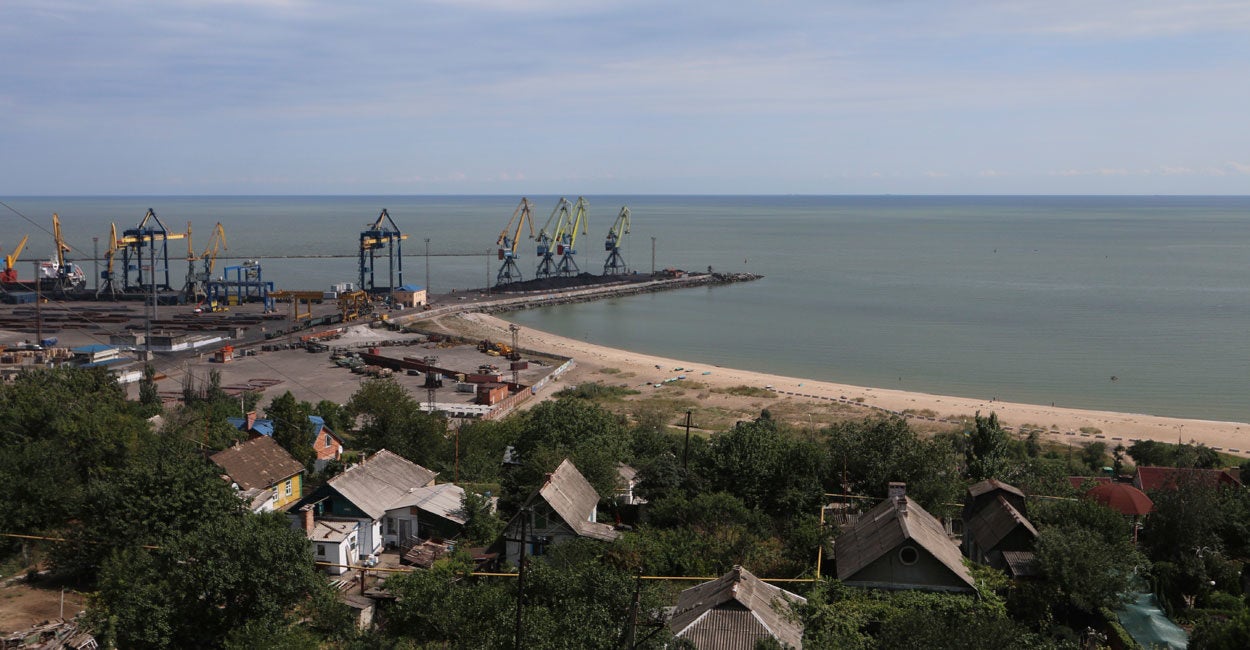
After more than four years of constant combat, the artillery still thunders daily in Ukraine’s eastern Donbas region along the 250-mile-long, entrenched front lines of Europe’s only ongoing land war. There, Ukraine’s military remains locked in combat against a combined force of pro-Russian separatists, foreign mercenaries, and Russian regulars. For years, the physical effects of the war have remained more or less geographically quarantined to the Donbas battlefield. This summer, however, Russian naval forces have stepped up their harassment of Ukrainian merchant vessels in the Sea of Azov, effectively blockading the body of water through which roughly 80 percent of Ukraine’s exports pass.German far right fuels Muslim ‘takeover’ fears
That question is once again at the center of the country’s public discourse amid the violent protests that followed last week’s brutal killing of a German man, allegedly at the hands of two Muslim refugees, and the publication of a new book titled “Hostile Takeover, how Islam halts progress and threatens society.” On Saturday, about 11,000 people (8,000 right-wing and far-right protesters and about 3,000 anti-Nazis, according to police estimates) took to the streets of the eastern German city of Chemnitz, where the killing occurred. Eighteen people were injured, including a TV reporter who was thrown down a flight of stairs.Why Technology Favors Tyranny
There is nothing inevitable about democracy. For all the success that democracies have had over the past century or more, they are blips in history. Monarchies, oligarchies, and other forms of authoritarian rule have been far more common modes of human governance. The emergence of liberal democracies is associated with ideals of liberty and equality that may seem self-evident and irreversible. But these ideals are far more fragile than we believe. Their success in the 20th century depended on unique technological conditions that may prove ephemeral.Fighting Terrorism on the Dark Web: New Tech to Fight Advanced Enemy Tactics
What Does Google Know About You: A Complete Guide
Thanks to the data the tech giant collects in order to sell ads, Google has a wealth of information on you — from what you look like to where you live and where you’ve traveled. The corporation may even be able to guess your favorite food. Just how does Google know all of this? Jump to our infographic for a quick overview of everything Google knows about you, or check out our full guide by clicking on the icons below. Although “Google it” has officially entered the cultural lexicon, the mega-corporation is much more than a search engine. It’s through its apps, internet-related services, acquired companies and more that the technology company collects data on you. Below, we’ve broken down the most common app, product or service Google uses to track data, as well as an overview of the specific data collected.Amazon becomes world's second company to be valued at $1tn
Amazon’s $1tn valuation marks the latest chapter in an astonishing story of growth for Jeff Bezos, the world’s richest man. Amazon has become the second company to be valued by Wall Street at $1tn, a matter of weeks after Apple reached the milestone first. On Tuesday, a rise in the share price of Amazon, which is listed on the Nasdaq stock exchange in the US, briefly took it above the trillion-dollar watermark for the first time. Crossing the $1tn threshold marks the latest chapter in an astonishing story of growth for the company, founded by businessman Jeff Bezos in Seattle in 1994. Less than 25 years later, Amazon has garnered a major presence in everything from retail, to groceries, to video streaming, helping it rack up revenues of $178bn (£139bn) last year.Six Leadership Fallacies
Air Force Secretary: The Law of War and the Power of Computing
On July 20, 1969, a Purdue graduate from Wapakoneta, Ohio, stepped onto the surface of the moon. I watched it on a black-and-white Zenith television sitting on the floor in the den of our New England farmhouse with my two brothers. That den was not a big room, and the television was wedged between the fireplace and the family bookshelf. In the next room, under windows that looked out on a hedge of lilacs, was a stereo—a solid wooden cabinet the size of a dining-room sideboard. On its turntable we set a fragile arm with its embedded needle into grooves on black vinyl disks and listened to Broadway show tunes. On the wall in the kitchen in the next room was an avocado green telephone with a rotary dial and an extra long cord so that my mother could talk on the phone while doing dishes.A 12 Step Program To Fix Army Generalship
I question whether the Army even values strategic thinkers. I did not participate in the whiteboard exercise because I was not aware of it, but if had, I would give the US Army a “D-”. The military leadership we need is one that can deal with the strategic issues of the First World and the asymmetric challenges of the Third World. Our future success in large wars and in small wars will be dependent on leadership and their ability to think strategically, adjust and change the institution, improve interoperability among services and Special Operations, and discontinue petty differences for the greater good. The second reading I did that influences this paper is the article informing us that Congress is poised to pass the most sweeping reforms to the military’s officer promotion system in almost four decades. The bill aims to make military promotion boards place more emphasis on merit and job performance which is needed, but the recommended changes will not change education, develop senior leader strategic thinkers, improve talent management, improve senior leader selection, and address the mediocrity problem. There is change needed and it will have to be legislated because the services will not change without it.