The Profession of Arms: A Guide for Young Army Officers
It takes courage, especially for a young officer, to check a man met on the road for not saluting properly or for slovenly appearance, but, every time he does, it adds to his stock of moral courage, and whatever the soldier may say, he has respect for the officer who does pull him up.
Read Document →The Dragon's Teeth: Assessing China's Military Modernization
PLA has focused on modernising its capabilities across all warfare domains to achieve these goals. This includes land, air, and maritime operations, nuclear, space, counter-space, electronic warfare and cyberspace operations, aiming to become a fully integrated joint force.
Read Document →Transforming the PLA: A Decade of reorganisation from SSF to ISF
PRC has engaged in a sustained and broad effort to transform the PLA from an infantry-heavy, low-technology, ground forces-centric military into a high-technology, networked force with an increasing emphasis on joint operations and naval and air power projection.
Read Document →Eyes without Borders: Exploring the World of Open Source Intelligence (OSINT) in the Digital Age
Open Source Intelligence (OSINT) is gaining prominence with the rise of social media, the digital society and the vast growth of publicly and commercially available information (PAI and CAI).
Read Document →
The PLA’s Developing Cyber Warfare Capabilities and India's Options
Informationised warfare blurs the lines between peacetime and wartime. A nation in the information age cannot wait for the hostilities to break out to collect intelligence, carryout influence operations, develop antisatellite systems or design computer software weapons.
Read Document →
Galwan and After
Why did China did this when he is under tremendous pressure in all fronts, is this China's salami slice tactics being progressed rigorously, what will be new Rules of Engagement, what will be escalatory control mechanism, who has taken this decision, will there be some pressure put by China in India's North-East through insurgency.
Read Document →
India’s Joint Doctrine for Cyberspace Operations: A Critical Review
Chief of Defence Staff (CDS) General Anil Chauhan and Secretary, Department of Military Affairs, formally released declassified versions of the Joint Doctrines for Cyberspace Operations during the Chiefs of Staff Committee meeting in New Delhi.
Read Document →
Know your Enemy General(now Field Marshal) Syed Aseem Munir
Gen SA Munir's position in the hierarchy of Pakistan was not very comfortable. The state of economy, insurgency in Pakhtoonistan and Balochistan, attack on the Jaffar Express, constant protests by supporters of Imran Khan's supporters inside and outside of parliament.
Read Document →
Decoding Operation SINDOOR: Key Aspects and Implications
Precision strikes were carried out on nine sites—four in Pakistan and five in PoK—linked to anti-India terrorist groups such as the LeT, JeM and the Hizbul Mujahideen. The targeted sites included Muridke (LeT headquarters) and Bahawalpur (JeM headquarters).
Read Document →
Chinese Cyber Exploitation in India's Power Grid - Is There a linkage to Mumbai Power Outage?
The New York Times (NYT), based on analysis by a U.S. based private intelligence firm Recorded Future, reported that a Chinese entity penetrated India’s power grid at multiple load dispatch points. Chinese malware intruded into the control systems that manage electric supply across India, along with a high-voltage transmission substation and a coal-fired power plant
Read Document →4 March 2017
India’s High Stakes in Kazakhstan’s Leadership Transition
Sell India F-16s — and Build Them Abroad
Despite Demonetization Doldrums, India Keeps up GDP Growth Rate
Would India Support a Post-ISIS Independence Push by the Kurds?
Indian Lawmakers Take Key Steps Toward Recognizing the Importance of Consent
3 Areas of Opportunity for the US-India Relationship
Pakistan, Afghanistan to Hold Counterterror Talks
FILE - Afghan Foreign Minister Salahuddin Rabbani (R) talks with Pakistan's National Security Adviser Sartaj Aziz (L) during a meeting in Islamabad, Pakistan, August 13, 2015. The sides have expressed readiness to meet on the sidelines of a regional summit opening in Islamabad Sunday.Will Afghanistan’s Air Force Soon be Without Vertical Airlift?
Pakistan’s Pashtun Profiling
Russia’s Policy Shift towards Taliban and Pakistan
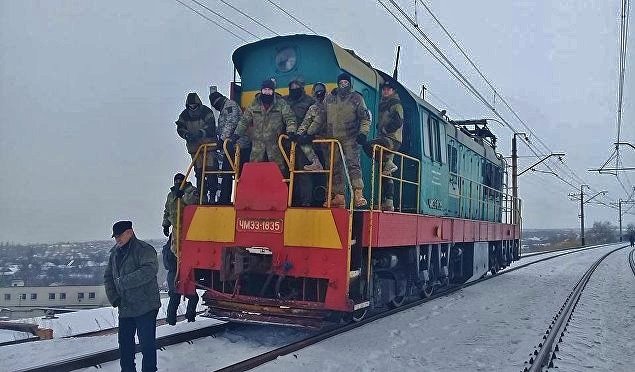
Donbas Blockade Exposes Political Fault Lines in Ukraine
Russia's Big 'Guns' are Firing a Very Different Type of 'Bullet' These Days
NATO's Enormous Arms Clutter
Not Wanted: A Permanent U.S. Presence in Iraq
How Donald Trump Can Rebuild America’s Nuclear Arsenal
DID HITLER HAVE A NUCLEAR BOMB? NEWLY DECLASSIFIED U.S DOCUMENTS SUGGEST SUGGEST THE NAZI’S SUCCESSFULLY TESTED A NUKE BEFORE THE END OF WWII; WHAT IF HITLER HAD SUCCESSFULLY DEVELOPED THE ATOMIC BOMB?
“SHOULDER-TO-SHOULDER” NO MORE IN AFGHANISTAN?
The slogans and pageantry following the rollout of the Trump Doctrine has left U.S. partners and allies in South Asia with much to be anxious about. What does an “America First” foreign policy look like for them? How will this change the currents of a 15-year state building project in Afghanistan? What does a war on “radical Islamic terrorism” really mean? While allies are in an anxious wait and see mode as the new administration generates its foreign policy, we wondered what Afghan professionals thought of the challenges ahead. To that end, we conducted phone and email interviews with a dozen current and former officials residing in Afghanistan and working at various levels of military, intelligence, and political affairs in the Afghan government. Not surprisingly, they paint a gloomy picture of security conditions in the country. They also express hope and optimism the United States will remain an “all weather” partner. At the same time, they are offended by the rhetoric and rumored policy changes coming out of the Trump administration. Like a bull in a china shop, Trump is shattering years of patient diplomacy and costly security assistance as Afghanistan enters yet another year of uncertain outcomes.21ST-CENTURY FORWARD AIR CONTROL: THE ROOTS TO REBUILD
A downed pilot or dislocated friendly servicemember is sighted and being closed on by an overwhelming enemy force. Suddenly, coordinated airstrikes rain down to avert the enemy and protect the friendly position. This is the result of one of the most misunderstood and under-used military instruments of airpower — the airborne forward air controller. Distinguished from his ground-based brethren by an appended “(A)” for airborne, the FAC(A) is the airborne equivalent of a joint terminal air controller (JTAC). Both the JTAC and FAC(A) can nominate and mark targets, de-conflict airspace, relay critical ground schemes of maneuver, and authorize airstrikes — all for the purpose of synergizing the ground and air attack team. One does it from the ground, while the other performs it from the air.