The Profession of Arms: A Guide for Young Army Officers
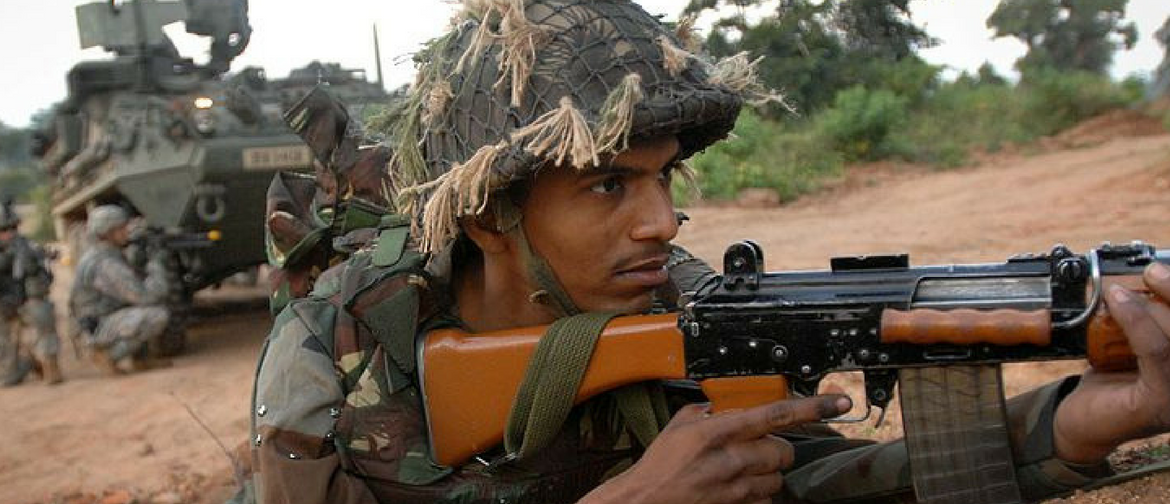
It takes courage, especially for a young officer, to check a man met on the road for not saluting properly or for slovenly appearance, but, every time he does, it adds to his stock of moral courage, and whatever the soldier may say, he has respect for the officer who does pull him up.
Read Document →The Dragon's Teeth: Assessing China's Military Modernization
PLA has focused on modernising its capabilities across all warfare domains to achieve these goals. This includes land, air, and maritime operations, nuclear, space, counter-space, electronic warfare and cyberspace operations, aiming to become a fully integrated joint force.
Read Document →Transforming the PLA: A Decade of reorganisation from SSF to ISF
PRC has engaged in a sustained and broad effort to transform the PLA from an infantry-heavy, low-technology, ground forces-centric military into a high-technology, networked force with an increasing emphasis on joint operations and naval and air power projection.
Read Document →Eyes without Borders: Exploring the World of Open Source Intelligence (OSINT) in the Digital Age
Open Source Intelligence (OSINT) is gaining prominence with the rise of social media, the digital society and the vast growth of publicly and commercially available information (PAI and CAI).
Read Document →
The PLA’s Developing Cyber Warfare Capabilities and India's Options
Informationised warfare blurs the lines between peacetime and wartime. A nation in the information age cannot wait for the hostilities to break out to collect intelligence, carryout influence operations, develop antisatellite systems or design computer software weapons.
Read Document →
Galwan and After
Why did China did this when he is under tremendous pressure in all fronts, is this China's salami slice tactics being progressed rigorously, what will be new Rules of Engagement, what will be escalatory control mechanism, who has taken this decision, will there be some pressure put by China in India's North-East through insurgency.
Read Document →
India’s Joint Doctrine for Cyberspace Operations: A Critical Review
Chief of Defence Staff (CDS) General Anil Chauhan and Secretary, Department of Military Affairs, formally released declassified versions of the Joint Doctrines for Cyberspace Operations during the Chiefs of Staff Committee meeting in New Delhi.
Read Document →
Know your Enemy General(now Field Marshal) Syed Aseem Munir
Gen SA Munir's position in the hierarchy of Pakistan was not very comfortable. The state of economy, insurgency in Pakhtoonistan and Balochistan, attack on the Jaffar Express, constant protests by supporters of Imran Khan's supporters inside and outside of parliament.
Read Document →
Decoding Operation SINDOOR: Key Aspects and Implications
Precision strikes were carried out on nine sites—four in Pakistan and five in PoK—linked to anti-India terrorist groups such as the LeT, JeM and the Hizbul Mujahideen. The targeted sites included Muridke (LeT headquarters) and Bahawalpur (JeM headquarters).
Read Document →
Chinese Cyber Exploitation in India's Power Grid - Is There a linkage to Mumbai Power Outage?
The New York Times (NYT), based on analysis by a U.S. based private intelligence firm Recorded Future, reported that a Chinese entity penetrated India’s power grid at multiple load dispatch points. Chinese malware intruded into the control systems that manage electric supply across India, along with a high-voltage transmission substation and a coal-fired power plant
Read Document →2 July 2018
Behind The Spikes In Islamic Terror During Ramzan
Managing the turbulence in India-US relations
This is a tricky time for the India-US strategic partnership. On Tuesday, a senior state department official in the US asked all countries, including India, to reduce oil imports from Iran to zero by 4 November. If India fails to do this, its companies will face the same sanctions as any other violator of this American diktat. On Wednesday, the US ambassador to the UN, Nikki Haley, conveyed essentially the same message to Indian officials in New Delhi. This comes against the backdrop of more potential friction building up between the two countries. India is in the process of purchasing S400 surface-to-air missile systems from Russia—a decision that could mean more sanctions for New Delhi, thanks to a US law called “Countering America’s Adversaries Through Sanctions Act” (CAATSA).Will Trump free these 52 Indians?
Indian monetary policy in the time of inflation targeting and demonetisation
Pakistani Intelligence Trying to Silence Critics at Home and Overseas
False Dawn in Afghanistan?
The Afghan government and the Taliban declared separate brief cease-fires to mark the Eid al-Fitr holiday. Over a remarkable three-day period, smiling soldiers, civilians, and Taliban fighters mingled together in the cities, including the capital Kabul, and shared hugs and sweets. Though the Taliban leadership declined Kabul’s request to extend the cease-fire, new truces have reportedly been struck between local officials and insurgents in parts of three different provinces.Should Pakistan be partitioned like Yugoslavia?
Myanmar’s Brutal Military Is Convicting Its Own Soldiers of Atrocities
On a bright afternoon this January, a group of Kachin villagers in Myanmar’s mountainous north perched on plastic chairs at a courtroom inside a military compound. Standing a few feet away were six soldiers, who were convicted of kidnapping, torturing, and murdering three of the villagers’ relatives near a camp for displaced people in war-torn Kachin state months earlier. A panel of uniform-clad judges read closing statements and handed down the sentences: 10 years with hard labor for each man.Breaking the Impasse: Direct Talks between Army Chiefs
Editor’s note: This essay is part of an initiative launched by the Stimson Center’s South Asia Program, which we call the Off Ramps Project. The nuclear competition among China, India, and Pakistan is accelerating with the introduction of new ballistic and cruise missiles. Counterforce capabilities are growing. China has begun to place multiple warheads on some of its ballistic missiles, Pakistan has advertised its ability to do so, and India has demonstrated this capacity in its space program. Diplomacy is dormant as these and other nuclear capabilities expand. What to do? Stimson has asked rising talent in this field, as well as a few veterans, to offer creative ideas that can help ameliorate and decelerate this dangerous triangular nuclear competition.Avoiding Incidents at Sea between India and China
Editor’s note: This essay is part of an initiative launched by the Stimson Center’s South Asia Program which we call the Off Ramps Initiative. The nuclear competition among China, India, and Pakistan is accelerating with the introduction of new ballistic and cruise missiles. Counterforce capabilities are growing. China has begun to place multiple warheads on some of its ballistic missiles, Pakistan has advertised its ability to do so, and India has demonstrated this capacity in its space program. Diplomacy is dormant as these and other nuclear capabilities expand. What to do? Stimson has asked rising talent in this field, as well as a few veterans, to offer creative ideas that can help ameliorate and decelerate this dangerous triangular nuclear competition.No Surprise: The Bomb Has Made a Bad Situation Worse in South Asia
CHINA’S RISE AND INDIAN OCEAN AMBITIONS
What Would Happen if China Started Selling Off Its Treasury Portfolio?
Who Pays for Uncle Sam’s Deficits?
WHITEBOARD: HOW WELL DOES THE ARMY DEVELOP STRATEGIC LEADERS?
Russian Ground Battlefield Robots: A Candid Evaluation and Ways Forward
Russia, like many other nations, is investing in the development of various unmanned military systems. The Russian defense establishment sees such systems as mission multipliers, highlighting two major advantages: saving soldiers’ lives and making military missions more effective. In this context, Russian developments are similar to those taking place around the world. Various militaries are fielding unmanned systems for surveillance, intelligence, logistics, or attack missions to make their forces or campaigns more effective. In fact, the Russian military has been successfully using Unmanned Aerial Vehicles (UAVs) in training and combat since 2013. It has used them with great effect in Syria, where these UAVs flew more mission hours than manned aircraft in various Intelligence, Surveillance, and Reconnaissance (ISR) roles. What is a Big Enough Win on the Korean Peninsula?
Russian Election Interference: Europe’s Counter to Fake News and Cyber Attacks
Security Spillover: Regional Implications of Evolving Deterrence on the Korean Peninsula
How Turkey is Helping Stem EU Migration
End The Palestinian Diplomatic Offensive Against Israel
The Bear’s Side of the Story: Russian Political and Information Warfare
As the military's cyber units change guard, a battle over control rages on
OPINION: It's Time to Move Past Outdated Notions of Cyberspace and Cybersecurity
Traditionally, Australia and other like-minded states have thought of the internet as a politically open platform supported by segregated corporate networks. We believed that over time the internet would lead to more information sharing, more openness and greater political freedom. Cybersecurity practitioners would work to harden their corporate networks which would facilitate greater openness of the broader internet.Pentagon’s AI Surge On Track, Despite Google Protest
Google made headlines earlier this month when it pulled out of the U.S. Defense Department’s flagship artificial intelligence program known as Project Maven, which leverages sophisticated algorithms to analyze drone footage.Tech Firms Sign ‘Digital Geneva Accord’ Not to Aid Governments in Cyberwar
WASHINGTON — More than 30 high-tech companies, led by Microsoft and Facebook, announced a set of principles on Tuesday that included a declaration that they would not help any government — including that of the United States — mount cyberattacks against “innocent civilians and enterprises from anywhere,” reflecting Silicon Valley’s effort to separate itself from government cyberwarfare. The principles, which have been circulating among senior executives in the tech industry for weeks, also commit the companies to come to the aid of any nation on the receiving end of such attacks, whether the motive for the attack is “criminal or geopolitical.” Although the list of firms agreeing to the accord is lengthy, several companies have declined to sign on at least for now, including Google, Apple and Amazon.Google Helps Chinese Military, Why Not US? Bob Work
WASHINGTON: Google’s withdrawal from Project Maven, which applied artificial intelligence to military intelligence, was dangerous and naรฏve, the former deputy secretary of defense said. While using AI to analyze surveillance video might help the US find terrorists and kill them, Bob Work acknowledged, it could also save lives by preventing terrorist attacks or errant strikes by US forces. What’s more, Work told the DefenseOne technology conference at the Newseum here, despite its ethnical objections to helping the Pentagon, Google indirectly and inadvertently assists the Chinese military, which has tentacles into the tech giant’s ventures in China.Focus on Offensive Cyberspace Operations
The Department of Defense (DOD) has failed to embrace the cyberspace domain fully. Ground force commanders use cyberspace as a supporting establishment —a supplemental signals intelligence (SigInt) platform—rather than a domain of warfare that requires support. The use of combat mission teams (CMTs) in this manner has limited development of cyberspace doctrine, cyberspace tactics, and offensive cyberspace exploitation.