Pakistan has turned into the Mecca of international terrorism even as its new prime minister, Imran “Taliban” Khan, has promised to make his country a Medina-like welfare state. Pakistan, however, is battling a deepening financial crisis, largely exacerbated by its “all-weather” ally, China. Beijing has imposed unfair deals on, and stepped up capital-goods exports to, Pakistan under its so-called Belt and Road Initiative.The Profession of Arms: A Guide for Young Army Officers
It takes courage, especially for a young officer, to check a man met on the road for not saluting properly or for slovenly appearance, but, every time he does, it adds to his stock of moral courage, and whatever the soldier may say, he has respect for the officer who does pull him up.
Read Document →The Dragon's Teeth: Assessing China's Military Modernization
PLA has focused on modernising its capabilities across all warfare domains to achieve these goals. This includes land, air, and maritime operations, nuclear, space, counter-space, electronic warfare and cyberspace operations, aiming to become a fully integrated joint force.
Read Document →Transforming the PLA: A Decade of reorganisation from SSF to ISF
PRC has engaged in a sustained and broad effort to transform the PLA from an infantry-heavy, low-technology, ground forces-centric military into a high-technology, networked force with an increasing emphasis on joint operations and naval and air power projection.
Read Document →Eyes without Borders: Exploring the World of Open Source Intelligence (OSINT) in the Digital Age
Open Source Intelligence (OSINT) is gaining prominence with the rise of social media, the digital society and the vast growth of publicly and commercially available information (PAI and CAI).
Read Document →
The PLA’s Developing Cyber Warfare Capabilities and India's Options
Informationised warfare blurs the lines between peacetime and wartime. A nation in the information age cannot wait for the hostilities to break out to collect intelligence, carryout influence operations, develop antisatellite systems or design computer software weapons.
Read Document →
Galwan and After
Why did China did this when he is under tremendous pressure in all fronts, is this China's salami slice tactics being progressed rigorously, what will be new Rules of Engagement, what will be escalatory control mechanism, who has taken this decision, will there be some pressure put by China in India's North-East through insurgency.
Read Document →
India’s Joint Doctrine for Cyberspace Operations: A Critical Review
Chief of Defence Staff (CDS) General Anil Chauhan and Secretary, Department of Military Affairs, formally released declassified versions of the Joint Doctrines for Cyberspace Operations during the Chiefs of Staff Committee meeting in New Delhi.
Read Document →
Know your Enemy General(now Field Marshal) Syed Aseem Munir
Gen SA Munir's position in the hierarchy of Pakistan was not very comfortable. The state of economy, insurgency in Pakhtoonistan and Balochistan, attack on the Jaffar Express, constant protests by supporters of Imran Khan's supporters inside and outside of parliament.
Read Document →
Decoding Operation SINDOOR: Key Aspects and Implications
Precision strikes were carried out on nine sites—four in Pakistan and five in PoK—linked to anti-India terrorist groups such as the LeT, JeM and the Hizbul Mujahideen. The targeted sites included Muridke (LeT headquarters) and Bahawalpur (JeM headquarters).
Read Document →
Chinese Cyber Exploitation in India's Power Grid - Is There a linkage to Mumbai Power Outage?
The New York Times (NYT), based on analysis by a U.S. based private intelligence firm Recorded Future, reported that a Chinese entity penetrated India’s power grid at multiple load dispatch points. Chinese malware intruded into the control systems that manage electric supply across India, along with a high-voltage transmission substation and a coal-fired power plant
Read Document →1 October 2018
India fumbles against a rogue neighbour
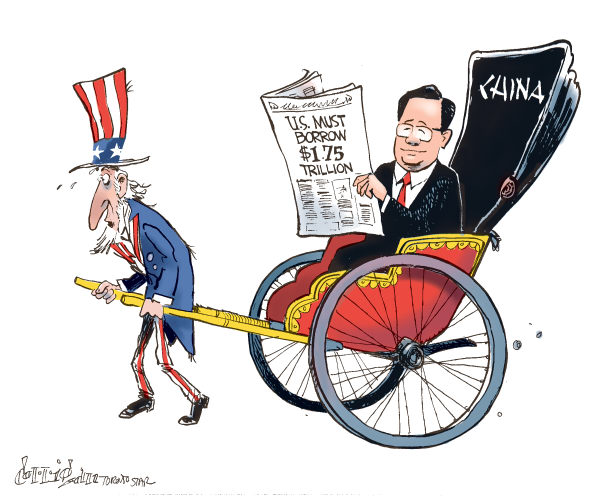
Pakistan has turned into the Mecca of international terrorism even as its new prime minister, Imran “Taliban” Khan, has promised to make his country a Medina-like welfare state. Pakistan, however, is battling a deepening financial crisis, largely exacerbated by its “all-weather” ally, China. Beijing has imposed unfair deals on, and stepped up capital-goods exports to, Pakistan under its so-called Belt and Road Initiative.Beijing loses a battle in the Maldives — but the fight for influence goes on
China steps up spying on U.S. military
Is the Beijing Exception Finally Crumbling?
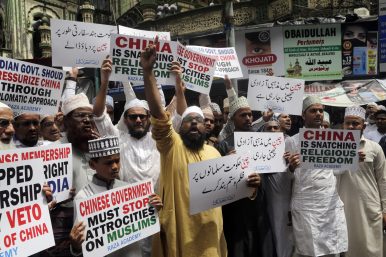
China’s oppression of Muslims is cracking its de facto immunity from international criticism on human rights issues.Post-Brexit UK-China Relations: Impact on the US
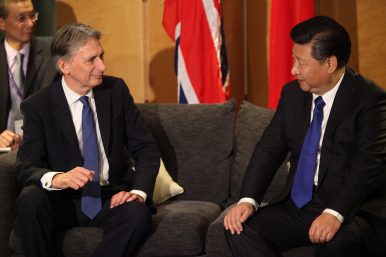
Trans-Pacific View author Mercy Kuo regularly engages subject-matter experts, policy practitioners, and strategic thinkers across the globe for their diverse insights into the U.S. Asia policy. This conversation with Dr. Yu Jie – head of China Foresight at LSE IDEAS, who teaches at the London School of Economics – is the 157th in “The Trans-Pacific View Insight Series.”Chinese Tourists Are Beijing’s Newest Economic Weapon
In early 2017, South Korea decided to deploy the U.S.-made THAAD missile defense system, designed to protect against possible attacks from its northern neighbor. That didn’t make a much larger—and usually friendlier—neighbor happy. China saw THAAD as a potential threat to its own security and reacted swiftly and strongly. Alongside the expected reactions—restrictions on South Korean businesses and trade and the cancellation of K-pop shows—came a new response: restricting tourists. In the months after the THAAD launch, South Korea saw a sudden 40 percent plunge in Chinese tourists—who, previously, accounted for nearly 50 percent of all arrivals into the country, severely impacting the tourism industry.A sleeping dragon rises: China’s military buildup
How Jack Ma Changed the Chinese View of Entrepreneurs
How to make Russia back off in the Middle East
For the first time in decades, Israel finds itself on the receiving end of Russian threats. The tensions follow the downing last week of a Russian Ilyushin IL-20 military aircraft, and the deaths of its 15 crew members, by Syrian air-defense batteries responding to Israeli airstrikes on Iranian weapons shipments in Syria.Reforming Southern Europe: What's Next?
Italy will likely respect the European Union's deficit limits in its new budget, but the change of direction from deficit reduction to deficit increase could frighten financial markets about the sustainability of the country's debt.Resetting the Terms of North Korea Talks
Europe Finally Has an Excuse to Challenge the Dollar
With more and more European companies fleeing Iran following the re-imposition of U.S. sanctions, it may be tempting for Americans to write off Europe’s efforts to save the Iran nuclear deal. It would be wiser to resist the temptation. A new plan by Germany, France, Britain, China and Russia to create special financial infrastructure to work with Iran could be a credible challenge to the U.S. dollar’s long global dominance. US Sanctions reach a Turning Point
The US cyberspace commission is taking shape ... slowly
The Global Trade System Could Break Down
Because the World Trade Organization tends to operate beneath the surface of the global rules-based trading system, it is easy for people to forget the indispensable role that it plays. But now that the Trump administration is waging a quiet war on the institution, the international community must stop taking it for granted.The United States’ Divide and the Future of the World Order
China And US Perceptions Of Each Other’s Intentions In South China Sea – Analysis
The visit by US Secretary of State Mike Pompeo last month to Malaysia, Singapore and Indonesia signals a new era of competition between the United States and China in Southeast Asia and the South China Sea. China critics in the U.S. frequently warn of what they assume are China’s dangerous intentions regarding the South China Sea – and what it may do to achieve its goals. They say it wants to dominate the sea militarily as part of its ambitious and aggressive expansionism and that therefore it will continue to militarize the features it occupies and undertake major naval exercises there. They say China may interfere with freedom of commercial navigation and essentially control all activities there including fishing and oil and gas exploration and development. To accomplish this, it will continue to intimidate its rival claimants, coerce them via economic aid and ‘debt traps’, and defy – and change – the existing applicable intentional rules.$100 Oil Is A Distinct Possibility – Analysis
An oil price spike is starting to look increasingly possible, with a rerun of 2008 not entirely out of the question, according to a new report.The Paris Accord Won’t Stop Global Warming on Its Own
The 2015 United Nations Paris climate agreement was an important political accomplishment, but confronting climate change will ultimately require an economic breakthrough.How to Fix the U.N.—and Why We Should
This week, leaders from all over the world are gathering at the United Nations in New York to exchange their views on mankind’s most pressing problems. The main theme of this year’s meeting—“Making the United Nations relevant to all people”—is telling. It encapsulates the real challenges the organization is facing: Namely, despite the hard work of U.N. staff across many different agencies, the body is suffering from an unprecedented crisis of credibility.Get ready to ditch miles of cables ― this will give Marines a secure LTE network in the field
Google Maps Is a Better Spy Than James Bond
The Five Eyes Statement on Encryption: Things Are Seldom What They Seem
Fighting and Winning in the Information Age
The Marines want to test all recruits for cyber skills
Social engineering attacks skyrocket more than 500 percent
Social engineering attacks ― which includes spear phishing and social media emulation ― spiked in the second quarter of 2018 thanks to new hacking methods and the World Cup, according to new research from the cybersecurity firm Proofpoint.A Military Crackdown in Tajikistan Could Draw in Bigger Powers
Tajikistan's security forces could soon launch a military operation in the eastern Gorno-Badakhshan region, raising the possibility of a wider conflict.Combat robots and cheap drones obscure the hidden triumph of Russia’s wargame
While Russia is engaged in irregular wars in Ukraine and Syria, the nation also gathered roughly 50,000 troops to practice a conventional war in the country’s eastern military district. Some of that wargame includes new and novel uses of robots, drones, and electronic warfare. Underpinning it all is a nation practicing the logistics of modern war, in a way it hasn’t done before.Show Me The Money: What’s Missing From The National Defense Strategy
The Trump Administration’s 2018 National Defense Strategy was remarkable for its candor in identifying China and Russia as America’s chief “strategic competitors.” But unlike earlier, relatively anodyne strategy documents from the Obama Administration, the 2018 strategy didn’t specify the forces required, let alone how much they might cost — at least, not in the unclassified summary released to the public. In this commentary, part of our continuing collaboration with the Center for Strategic & International Studies and its FY 2018 Endgame Series, CSIS scholar Seamus Daniels looks at what questions the strategy leaves unanswered.ARTILLERY IN TOMORROW’S WARS: MAXIMIZING THE POWER OF THE KING OF BATTLE
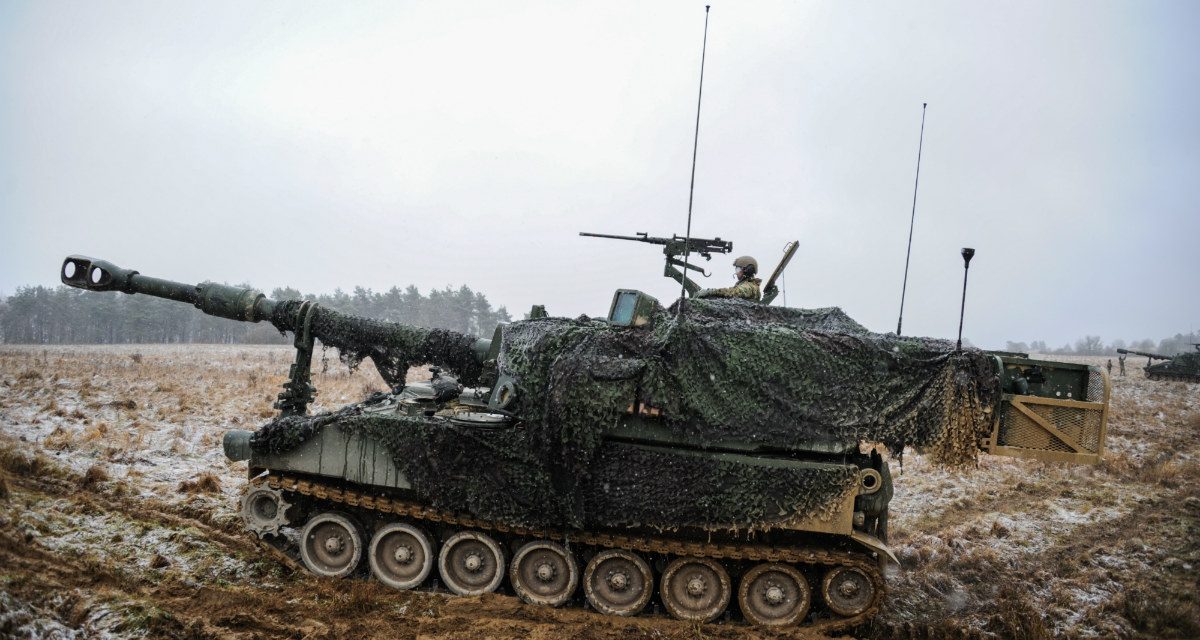
It’s an early summer morning. All is quiet on the battlefield just before the battalion will rise for the next day’s preparation and movements. Soldiers on guard, sleepy-eyed and nearly dozing off hear a faint buzzing sound, and suddenly, their eyes spring wide open, their ears are perked, and adrenaline pumps with full force throughout their bodies. “Drones!” one guard shouts, as they all dive for the nearest cover. It’s too late. Within moments, dozens of rockets come screaming down from the heavens, raining a hailstorm of hell on the battalion’s positions. Cluster munitions burst, steel shredding man and machine below. Thermobaric warheads erupt with terrible concussion, the overpressure instantly killing those who sought comfort in their enclosed shelter. In just three minutes, the entire battalion lies crushed in a smoldering flame, destroyed by a concentrated barrage of rockets and missiles fired thirty kilometers away.
/arc-anglerfish-arc2-prod-mco.s3.amazonaws.com/public/KNF5KUMG6VFJXLCM4GISPFFO7Y.jpg)
/arc-anglerfish-arc2-prod-mco.s3.amazonaws.com/public/MMYFN3YSPJARDGSO5MAQMAR54E.jpg)