“Where is Mama?” screams Ahmed’s 10-year-old daughter in a WeChat message he can hardly bear to replay. Like many traders in Pakistan’s northernmost region of Gilgit-Baltistan, Ahmed fell in love with a Chinese woman on a work trip across the border. And like dozens of others, he has now been forcibly separated from the woman he married – and the child they had together – for months.Last week lawmakers in Gilgit-Baltistan demanded that authorities in China’s Xinjiang province immediately release from detention at least 50 Chinese women married to Pakistani men, some of whom have been held for a year on vague charges of extremism.The Profession of Arms: A Guide for Young Army Officers
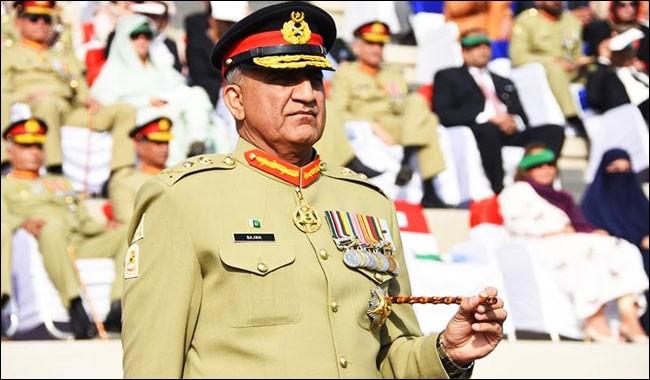
It takes courage, especially for a young officer, to check a man met on the road for not saluting properly or for slovenly appearance, but, every time he does, it adds to his stock of moral courage, and whatever the soldier may say, he has respect for the officer who does pull him up.
Read Document →The Dragon's Teeth: Assessing China's Military Modernization
PLA has focused on modernising its capabilities across all warfare domains to achieve these goals. This includes land, air, and maritime operations, nuclear, space, counter-space, electronic warfare and cyberspace operations, aiming to become a fully integrated joint force.
Read Document →Transforming the PLA: A Decade of reorganisation from SSF to ISF
PRC has engaged in a sustained and broad effort to transform the PLA from an infantry-heavy, low-technology, ground forces-centric military into a high-technology, networked force with an increasing emphasis on joint operations and naval and air power projection.
Read Document →Eyes without Borders: Exploring the World of Open Source Intelligence (OSINT) in the Digital Age
Open Source Intelligence (OSINT) is gaining prominence with the rise of social media, the digital society and the vast growth of publicly and commercially available information (PAI and CAI).
Read Document →
The PLA’s Developing Cyber Warfare Capabilities and India's Options
Informationised warfare blurs the lines between peacetime and wartime. A nation in the information age cannot wait for the hostilities to break out to collect intelligence, carryout influence operations, develop antisatellite systems or design computer software weapons.
Read Document →
Galwan and After
Why did China did this when he is under tremendous pressure in all fronts, is this China's salami slice tactics being progressed rigorously, what will be new Rules of Engagement, what will be escalatory control mechanism, who has taken this decision, will there be some pressure put by China in India's North-East through insurgency.
Read Document →
India’s Joint Doctrine for Cyberspace Operations: A Critical Review
Chief of Defence Staff (CDS) General Anil Chauhan and Secretary, Department of Military Affairs, formally released declassified versions of the Joint Doctrines for Cyberspace Operations during the Chiefs of Staff Committee meeting in New Delhi.
Read Document →
Know your Enemy General(now Field Marshal) Syed Aseem Munir
Gen SA Munir's position in the hierarchy of Pakistan was not very comfortable. The state of economy, insurgency in Pakhtoonistan and Balochistan, attack on the Jaffar Express, constant protests by supporters of Imran Khan's supporters inside and outside of parliament.
Read Document →
Decoding Operation SINDOOR: Key Aspects and Implications
Precision strikes were carried out on nine sites—four in Pakistan and five in PoK—linked to anti-India terrorist groups such as the LeT, JeM and the Hizbul Mujahideen. The targeted sites included Muridke (LeT headquarters) and Bahawalpur (JeM headquarters).
Read Document →
Chinese Cyber Exploitation in India's Power Grid - Is There a linkage to Mumbai Power Outage?
The New York Times (NYT), based on analysis by a U.S. based private intelligence firm Recorded Future, reported that a Chinese entity penetrated India’s power grid at multiple load dispatch points. Chinese malware intruded into the control systems that manage electric supply across India, along with a high-voltage transmission substation and a coal-fired power plant
Read Document →22 March 2018
Chinese crackdown separates Pakistani husbands from Uighur wives
“Where is Mama?” screams Ahmed’s 10-year-old daughter in a WeChat message he can hardly bear to replay. Like many traders in Pakistan’s northernmost region of Gilgit-Baltistan, Ahmed fell in love with a Chinese woman on a work trip across the border. And like dozens of others, he has now been forcibly separated from the woman he married – and the child they had together – for months.Last week lawmakers in Gilgit-Baltistan demanded that authorities in China’s Xinjiang province immediately release from detention at least 50 Chinese women married to Pakistani men, some of whom have been held for a year on vague charges of extremism.The Bajwa Doctrine: from chauvinism to realism
After 70 years of extreme chauvinism, we are finally into the doctrine of realism which focuses on the peaceful coexistence with the neighbouring countries. The Bajwa Doctrine, initiated by the rationalistic and logical Gen Qamar Bajwa and his equally able team of the top military command, is all about realising the changes taking place around the country and reshaping policies according to the needs of the modern times.Water Wars: Conflict in the Maldives Between Major Powers
India and China have become entangled in a constitutional crisis in the Maldives, with both countries brandishing their navies while attempting to come to a diplomatic solution. The crisis began on Feb. 1 when the Maldives Supreme Court ordered the release of all political prisoners, citing violations of due process in their trials. The released prisoners included multiple members of the opposition Maldivian Democratic Party (MDP), and the order also covered former president Mohamad Nasheed, who was sentenced to 13 years in prison in 2015 but is now living in exile in London. In response to this ruling, President Abdulla Yameen declared a state of emergency, arresting members of the Supreme Court, dispatching police to keep order, and suspending parts of the constitution. However, the Maldives government has stated it does not intend to extent the state of emergency past March 22. The Maldives are scheduled to hold presidential elections this summer.Ex-chief of strategic missile force named China’s defence minister
How to Beat Russia and China on the Battlefield: Military Robots
15 Years After Invading Iraq: Winning the War, But Still Fighting for Peace
Monday marks 15 years since President George W. Bush announced the start of the Iraq war, followed by a ‘decapitation’ air strike on Baghdad meant to target Saddam Hussein. After a 48-hour deadline for Saddam to leave Iraq expired, ground troops from the U.S., UK, Australia and Poland invaded Iraq from Kuwait, launching a war that lasted from 2003 to 2011. The Cipher Brief asked its experts in the intelligence, diplomatic and military to assess the war’s impact. Their conversations are adapted for print below.Erdogan the Magnificent, Turkey's Neo-Ottoman Revival
15 Years After Invading Iraq: Winning the War, But Still Fighting for Peace
Monday marks 15 years since President George W. Bush announced the start of the Iraq war, followed by a ‘decapitation’ air strike on Baghdad meant to target Saddam Hussein. After a 48-hour deadline for Saddam to leave Iraq expired, ground troops from the U.S., UK, Australia and Poland invaded Iraq from Kuwait, launching a war that lasted from 2003 to 2011. The Cipher Brief asked its experts in the intelligence, diplomatic and military to assess the war’s impact. Their conversations are adapted for print below.How Will America Respond To Cold War II?
In the past month, we’ve learned from special counsel Robert Mueller that 13 Russian officials and three Kremlin-linked agencies were involved in 2016 election trolling and hacking to a sufficient degree to indict them; that the Kremlin was almost certainly behind the assassination attempt on a former double agent living in Britain; and that Russian cyberwar agencies penetrated vital U.S. electrical and other infrastructure systems, and could have shut them down. That latest finding, reported last week by the FBI and the Department of Homeland Security, was sufficiently alarming that even the White House bleated a mild protest, for the very first time. And the Trump administration joined Britain and other allies in condemning the attempted hit job. Putin Plans for a Russia Without Him
Though Russian President Vladimir Putin is assured an election win on March 18, his fourth term will usher in a period of deep challenges for Russia and his continued rule. Putin's pledge to maintain stability is facing economic and demographic shifts that will ripple throughout society and test compliance with Putin's government. Thinking of the longer term, the Kremlin is considering a spate of reforms and has allowed political discourse to return to Russia, though each maneuver is not without its risks. Putin, his cultlike government and the Russian people are starting to consider what life in Russia will look like after he leaves the political stage.Why Israel Is Stuck with Hamas
NUCLEAR WEAPONS’ NEW PURPOSE: DETERRING CYBER ATTACKS?
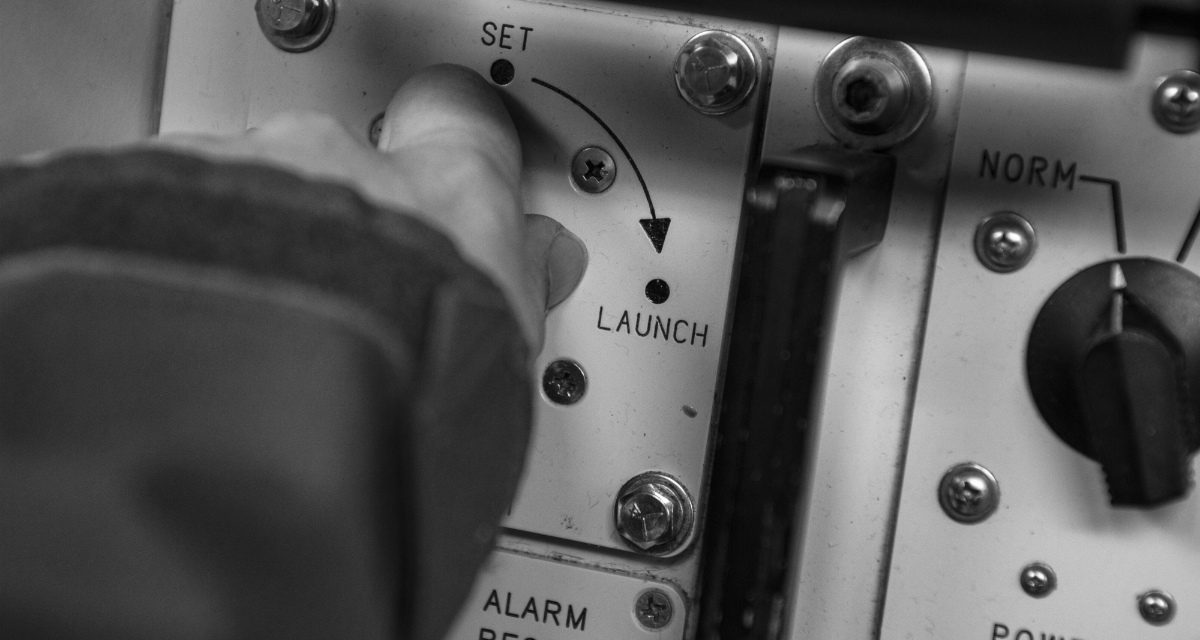
Last month, the Trump administration officially unveiled the results of a year-long review of the United States’ nuclear posture and its strategic vision for how to incorporate nuclear capabilities into an overarching security strategy. In the official White House press release announcing the publication of the 2018 Nuclear Posture Review (NPR), President Trump states that this strategy “enhances deterrence of strategic attacks against our Nation, and our allies and partners, that may not come in the form of nuclear weapons.” The NPR makes clear that the American nuclear arsenal serves a deterrent purpose not only against nuclear threats, but also against “non-nuclear aggression,” including cyber threats. It also emphasizes that the United States’ non-nuclear forces, though an important component of its overall deterrent strategy, “do not provide comparable deterrence effects—as is reflected by past, periodic, and catastrophic failures of conventional deterrence to prevent Great Power war before the advent of nuclear deterrence.” Thus, it seems that while the Trump administration’s nuclear strategy considers non-nuclear actions as legitimate causes for retaliation, it sees a nuclear response as the most effective threat against those actions.How Russia Meddled in its Own Elections
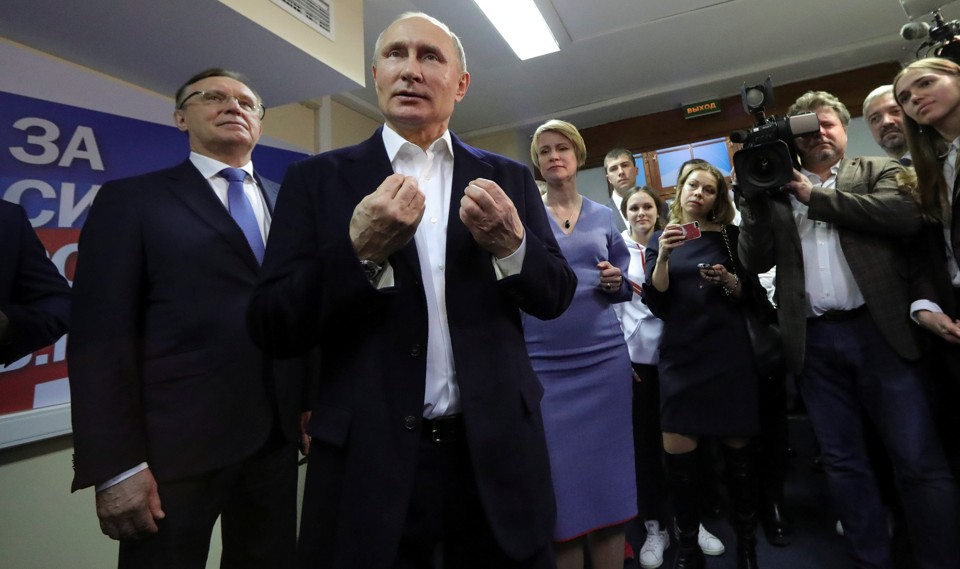
Vladimir Putin, Russia’s longest-serving ruler since Joseph Stalin, surprised no one with his landslide re-election on Sunday. While his victory, in which he claimed 73.9 percent of the vote according to state-run exit polls, was a foregone conclusion, the Kremlin was reportedly anxious about turnout, and conducted an elaborate, well-financed get-out-the-vote campaign. For an authoritarian regime in which election results and turnout are pre-ordained, such concerns may seem odd. But even in Russia’s “managed democracy,” appearances still matter, and the Kremlin needed to present believably high levels of support to ensure Putin’s mandate. Shortly after polling centers closed on Sunday night, Putin appeared to be on target to achieve the desired 65 percent turnout. But even more important for Putin is that this election marked the culmination of his nearly two-decades-long project to control information in Russia and manipulate Russian society. Now, Putin has proven beyond any doubt that the Russia he has built is his and his alone.Infographic Of The Day: Craft Oil - The Lesser Known Side Of America's Energy Industry
Russia Sends A Chilling Message With Its Latest Chemical Attack
Cryptocurrencies Challenge The Status Quo – Analysis
NSA Pick Will Develop Cyber Retaliation Plans But Don’t Expect Government to Use Them
Lawmakers pressed President Donald Trump’s pick to lead the National Security Agency over the government’s failure to deter Russian cyber aggression Thursday at the same time the Treasury Department imposed the broadest sanctions to date against Russian government hackers. The timing underscored two points made frequently by government cyber officials and by their critics outside government. First, the best response to a cyber strike often isn’t a cyber counterstrike. Second, those non-cyber responses, though they keep piling up, still aren’t doing the trick. Thursday’s sanctions target five Russian entities, including intelligence services and social troll creator, the Internet Research Agency, as well as 19 individuals, many of whom were previously indicted by Special Counsel Robert Mueller.The Pentagon Wants AI To Reveal Adversaries’ True Intentions
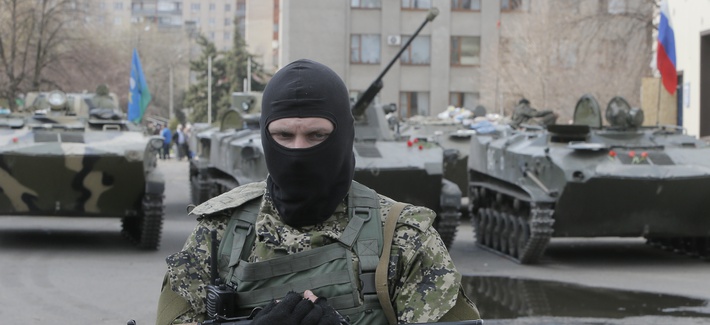
The U.S. military is looking to enlist game theory and artificial intelligence to fight tomorrow’s unconventional warfare tactics. From eastern Europe to southern Iraq, the U.S. military faces a difficult problem: Adversaries pretending to be something they’re not — think Russia’s “little green men” in Ukraine. But a new program from the Defense Advanced Research Projects Agency seeks to apply artificial intelligence to detect and understand how adversaries are using sneaky tactics to create chaos, undermine governments, spread foreign influence and sow discord.4 predictions for the future of work
I contemplate the future of work on a daily basis in both my professional and personal life. As a father of four children from four to 14 years old, and as a citizen of the world, I care about our future. As CEO of freelancing website Upwork, I am witnessing firsthand not only the immense changes within our industry, but also the speed at which they are occurring. At the World Economic Forum, where I co-chair the Council on the Future of Work, Gender and Education, we have heated discussions on the future impact of artificial intelligence on work and our responsibilities to help manage the change. We see that as the workforce evolves, we must finally break free from the industrial-era habits of the past to ensure a more productive and equitable future.Power Grid Cyber Attacks Keep the Pentagon Up at Night
It’s very hard to overstate how important the US power grid is to American society and its economy. Every critical infrastructure, from communications to water, is built on it and every important business function from banking to milking cows is completely dependent on it. And the dependence on the grid continues to grow as more machines, including equipment on the power grid, get connected to the Internet. A report last year prepared for the President and Congress emphasized the vulnerability of the grid to a long-term power outage, saying “For those who would seek to do our Nation significant physical, economic, and psychological harm, the electrical grid is an obvious target.”Battlefield Singularity
ISRO computer had malware, could’ve been hacked, say researchers
Dismantling Contemporary Military Thinking and Reconstructing Patterns of Information: Thinking Deeper About Future War and Warfighting
Army, Struggling to Get Technology in Soldiers’ Hands, Tries the Unconventional
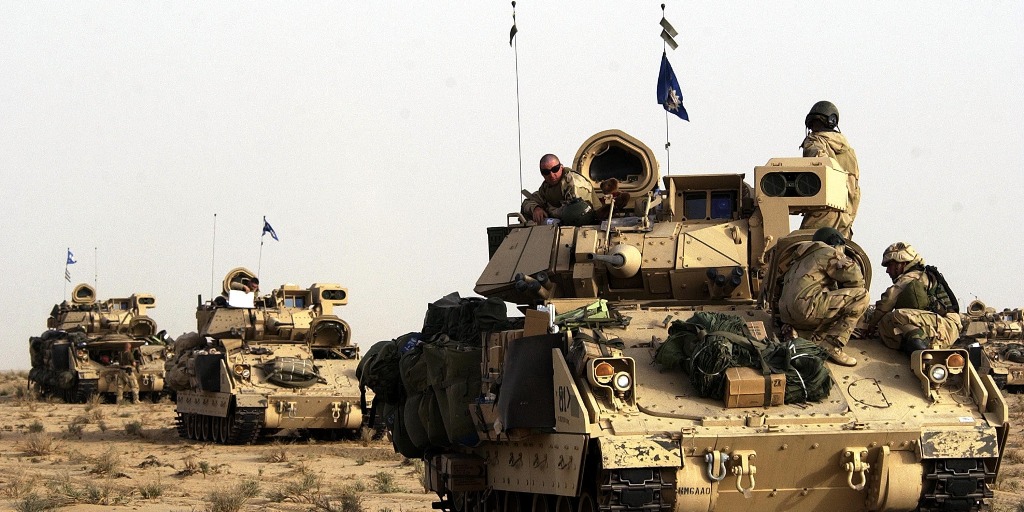
Soldiers training at Fort Sill, Okla., last month. The Army’s planned Futures Command will consult directly with troops there about how to update artillery pieces to improve speed and range.CreditTamir Kalifa for The New York Times. The platoon of Army Special Operations soldiers was on a routine night patrol in eastern Afghanistan when one of them suddenly opened fire on what looked to the others to be a bush. The bush, it turned out, had been obscuring a militant fighter. He was detectable only to the one platoon member wearing prototype night vision goggles that could detect heat signatures — a happenstance that Army officials say probably saved many lives.Does Success Come Mostly from Talent, Hard Work—or Luck?
At a campaign rally in Roanoke, Va., before the 2012 election, President Barack Obama opined: “If you were successful, somebody along the line gave you some help. There was a great teacher somewhere in your life.... Somebody invested in roads and bridges. If you've got a business—you didn't build that. Somebody else made that happen.” Although Obama was making a larger point about the power of collective action, such as building dams, power grids and the Internet, conservative heads exploded at the final sentiment. “I did build that!” is an understandable rejoinder to which I can relate. I research my books, edit my magazine, teach my courses and write these columns (this one is my 200th in a row for Scientific American). If I don't make them happen, nobody else will. But then I started thinking as a social scientist on the role of circumstance and luck in how lives turn out. It's a sobering experience to realize just how many variables are out of our control: