In recent days, both U.S. special envoy Zalmay Khalilzad and Secretary of State Mike Pompeo have made comments that, at the very least, appear to temper expectations for an Afghan peace deal after weeks of unfulfilled rumors that a ceasefire was looming. This comes as recent report found that violence is at a high in Afghanistan despite the ongoing negotiations. Meanwhile, Afghanistan’s September presidential election results remain unfinalized and its top leaders at odds.The Profession of Arms: A Guide for Young Army Officers
It takes courage, especially for a young officer, to check a man met on the road for not saluting properly or for slovenly appearance, but, every time he does, it adds to his stock of moral courage, and whatever the soldier may say, he has respect for the officer who does pull him up.
Read Document →The Dragon's Teeth: Assessing China's Military Modernization
PLA has focused on modernising its capabilities across all warfare domains to achieve these goals. This includes land, air, and maritime operations, nuclear, space, counter-space, electronic warfare and cyberspace operations, aiming to become a fully integrated joint force.
Read Document →Transforming the PLA: A Decade of reorganisation from SSF to ISF
PRC has engaged in a sustained and broad effort to transform the PLA from an infantry-heavy, low-technology, ground forces-centric military into a high-technology, networked force with an increasing emphasis on joint operations and naval and air power projection.
Read Document →Eyes without Borders: Exploring the World of Open Source Intelligence (OSINT) in the Digital Age
Open Source Intelligence (OSINT) is gaining prominence with the rise of social media, the digital society and the vast growth of publicly and commercially available information (PAI and CAI).
Read Document →
The PLA’s Developing Cyber Warfare Capabilities and India's Options
Informationised warfare blurs the lines between peacetime and wartime. A nation in the information age cannot wait for the hostilities to break out to collect intelligence, carryout influence operations, develop antisatellite systems or design computer software weapons.
Read Document →
Galwan and After
Why did China did this when he is under tremendous pressure in all fronts, is this China's salami slice tactics being progressed rigorously, what will be new Rules of Engagement, what will be escalatory control mechanism, who has taken this decision, will there be some pressure put by China in India's North-East through insurgency.
Read Document →
India’s Joint Doctrine for Cyberspace Operations: A Critical Review
Chief of Defence Staff (CDS) General Anil Chauhan and Secretary, Department of Military Affairs, formally released declassified versions of the Joint Doctrines for Cyberspace Operations during the Chiefs of Staff Committee meeting in New Delhi.
Read Document →
Know your Enemy General(now Field Marshal) Syed Aseem Munir
Gen SA Munir's position in the hierarchy of Pakistan was not very comfortable. The state of economy, insurgency in Pakhtoonistan and Balochistan, attack on the Jaffar Express, constant protests by supporters of Imran Khan's supporters inside and outside of parliament.
Read Document →
Decoding Operation SINDOOR: Key Aspects and Implications
Precision strikes were carried out on nine sites—four in Pakistan and five in PoK—linked to anti-India terrorist groups such as the LeT, JeM and the Hizbul Mujahideen. The targeted sites included Muridke (LeT headquarters) and Bahawalpur (JeM headquarters).
Read Document →
Chinese Cyber Exploitation in India's Power Grid - Is There a linkage to Mumbai Power Outage?
The New York Times (NYT), based on analysis by a U.S. based private intelligence firm Recorded Future, reported that a Chinese entity penetrated India’s power grid at multiple load dispatch points. Chinese malware intruded into the control systems that manage electric supply across India, along with a high-voltage transmission substation and a coal-fired power plant
Read Document →6 February 2020
Where Is the Afghan Peace Deal Now?
In recent days, both U.S. special envoy Zalmay Khalilzad and Secretary of State Mike Pompeo have made comments that, at the very least, appear to temper expectations for an Afghan peace deal after weeks of unfulfilled rumors that a ceasefire was looming. This comes as recent report found that violence is at a high in Afghanistan despite the ongoing negotiations. Meanwhile, Afghanistan’s September presidential election results remain unfinalized and its top leaders at odds.What Kind of Government Do Afghans Want?
Afghan Casualties and Attrition are Outpacing Recruitment and Retention
How China can win a trade war in 1 move
Coronavirus Grown In Lab Outside China For First Time, Aiding The Search For Vaccine
Expanding Influence: China’s Evolving Trade Agreements in the Asia-Pacific
Competitive Climate: America Must Counter China by Investing in Economic Intelligence
The B-21 Raider Will Be Everything (And Hell for China and Russia)
Key point: In the nuclear mission, the Air Force will arm the B-21 with the Long-Range Stand-Off (LRSO) missile, the next-generation stealthy nuclear cruise missile.Stuck in the middle: Iraq and the enduring conflict between United States and Iran
QASSEM SULEIMANI AND HOW NATIONS DECIDE TO KILL
Lessons from the 2005 Iranian Nuclear Crisis
DIA Says ISIS Took Advantage of Turkish Invasion of Northern Syria, Baghdadi Death Did Not Degrade Jihadi Group
The More Things Change, the More They Stay the Same: The Failure of Regime‐Change Operations
There are fewer wars when you take power away from men in big castles
Goodbye Europe, Hello America?
‘The previous administration took the view that if the United Kingdom made this decision they’d be at the back of the line,” said Mike Pompeo, on a recent trip to London. “We intend to put the United Kingdom at the front of the line.” The secretary of state was referring to Obama’s remarks in 2016, when, threatening to make a post-Brexit trade deal difficult, he attempted to dissuade Brits from voting to leave the European Union. Pompeo said that he expects a U.K.–U.S. trade deal to commence by November. Which is quite the contrast with the feet-dragging Ursula von der Leyen, the European Commission’s president, who said it would be “impossible” for Britain to get a trade deal by the end of 2020.Who Needs the Russians?
You may be wondering if the Iowa caucus chaos is a hit job by election-meddling Russians. The morning after caucus-goers filed into high-school gyms across Iowa, the state’s Democratic Party is still unable to produce results. The app it developed for precisely this purpose seems to have crashed. The party was questioned before by experts about the wisdom of using a secretive app that would be deployed at a crucial juncture, but the concerns were brushed away. Troy Price, the state party’s chairman, claimed that if anything went wrong with the app, staffers would be ready “with a backup and a backup to that backup and a backup to the backup to the backup.” And yet, more than 12 hours after the end of the caucus, they are unable to produce results. Last night, some precinct officials even waited on hold for an hour to report the results—and got hung up on.The Wuhan Coronavirus Poses Three Tests for Global Public Health
WILL BIG BUSINESS FINALLY RECKON WITH THE CLIMATE CRISIS?
Brexit Still Hasn’t Solved the Problem of Northern Ireland
BELFAST, Northern Ireland—The two main political parties in Northern Ireland announced a deal last month to restore the region’s power-sharing government, which had ceased to function three years ago. Within 24 hours of the announcement of the deal on Jan. 10, which was brokered by the British and Irish governments, Northern Ireland’s institutions of devolved government were back up and running. Yet while many in Belfast are breathing a sigh of relief, British Prime Minister Boris Johnson’s recent Brexit deal has created a host of new problems for the region that the reopened Northern Ireland Assembly will need to confront.US Confirms Fielding of New Low-Yield Nuclear Warhead on Submarine-Launched Ballistic Missiles
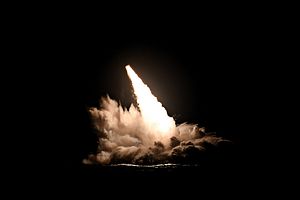
On Tuesday, John Rood, the U.S. under secretary of defense for policy, confirmed that a new low-yield nuclear warhead had been fielded by the U.S. Navy on board certain Ohio-class ballistic missile submarines.US-Malaysia Security Cooperation in the Headlines with Aircraft Mission Systems Transfer
Russia Losing Information War to the West, Moscow Experts Say
You're So Dead: The Marines and Army Now Have Anti-Ship Missiles
The Geopolitics of the Novel Coronavirus
Myanmar’s Contested Civil-Military Relations in the Spotlight With New Spat
On Monday, reports surfaced that a Myanmar military spokesman had hit out at comments made by a minister in the country about civil-military control. While the incident may appear minor relative to wider developments in Myanmar and Naypyidaw’s broader challenges, it nonetheless served as a reminder of the complex dynamics underlying civil-military relations in Myanmar and the sensitivities in navigating them.