The Profession of Arms: A Guide for Young Army Officers
It takes courage, especially for a young officer, to check a man met on the road for not saluting properly or for slovenly appearance, but, every time he does, it adds to his stock of moral courage, and whatever the soldier may say, he has respect for the officer who does pull him up.
Read Document →The Dragon's Teeth: Assessing China's Military Modernization
PLA has focused on modernising its capabilities across all warfare domains to achieve these goals. This includes land, air, and maritime operations, nuclear, space, counter-space, electronic warfare and cyberspace operations, aiming to become a fully integrated joint force.
Read Document →Transforming the PLA: A Decade of reorganisation from SSF to ISF
PRC has engaged in a sustained and broad effort to transform the PLA from an infantry-heavy, low-technology, ground forces-centric military into a high-technology, networked force with an increasing emphasis on joint operations and naval and air power projection.
Read Document →Eyes without Borders: Exploring the World of Open Source Intelligence (OSINT) in the Digital Age
Open Source Intelligence (OSINT) is gaining prominence with the rise of social media, the digital society and the vast growth of publicly and commercially available information (PAI and CAI).
Read Document →
The PLA’s Developing Cyber Warfare Capabilities and India's Options
Informationised warfare blurs the lines between peacetime and wartime. A nation in the information age cannot wait for the hostilities to break out to collect intelligence, carryout influence operations, develop antisatellite systems or design computer software weapons.
Read Document →
Galwan and After
Why did China did this when he is under tremendous pressure in all fronts, is this China's salami slice tactics being progressed rigorously, what will be new Rules of Engagement, what will be escalatory control mechanism, who has taken this decision, will there be some pressure put by China in India's North-East through insurgency.
Read Document →
India’s Joint Doctrine for Cyberspace Operations: A Critical Review
Chief of Defence Staff (CDS) General Anil Chauhan and Secretary, Department of Military Affairs, formally released declassified versions of the Joint Doctrines for Cyberspace Operations during the Chiefs of Staff Committee meeting in New Delhi.
Read Document →
Know your Enemy General(now Field Marshal) Syed Aseem Munir
Gen SA Munir's position in the hierarchy of Pakistan was not very comfortable. The state of economy, insurgency in Pakhtoonistan and Balochistan, attack on the Jaffar Express, constant protests by supporters of Imran Khan's supporters inside and outside of parliament.
Read Document →
Decoding Operation SINDOOR: Key Aspects and Implications
Precision strikes were carried out on nine sites—four in Pakistan and five in PoK—linked to anti-India terrorist groups such as the LeT, JeM and the Hizbul Mujahideen. The targeted sites included Muridke (LeT headquarters) and Bahawalpur (JeM headquarters).
Read Document →
Chinese Cyber Exploitation in India's Power Grid - Is There a linkage to Mumbai Power Outage?
The New York Times (NYT), based on analysis by a U.S. based private intelligence firm Recorded Future, reported that a Chinese entity penetrated India’s power grid at multiple load dispatch points. Chinese malware intruded into the control systems that manage electric supply across India, along with a high-voltage transmission substation and a coal-fired power plant
Read Document →13 September 2018
India playing wily game with US, Russia and China
India: The Next Big Aircraft Carrier Power (or Paper Tiger)?
As IHS Jane’s pointed out, INS Vikramaditya was supposed to be supplemented this year or next by India’s first indigenously built aircraft carrier. Not surprisingly, this has been pushed back considerably. India’s aircraft carrier ambitions just passed a major milestone. On August 2, India’s domestically built Tejas Light Combat Aircraft (LCA) conducted an arrested landing for the very first time. The naval variant of the LCA is India’s first indigenous carrier-based aircraft. The Teja didn’t land on a carrier deck. In fact, it didn’t land at all. The aircraft was simply practicing grabbing a tailhook of an arresting wire from the ground.UIDAI’s Aadhaar Software Hacked, ID Database Compromised, Experts Confirm
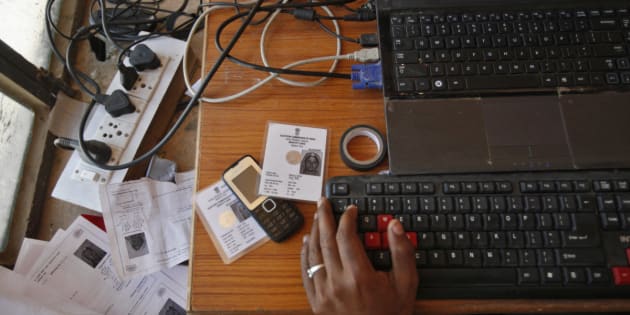
NEW DELHI—The authenticity of the data stored in India's controversial Aadhaaridentity database, which contains the biometrics and personal information of over 1 billion Indians, has been compromised by a software patch that disables critical security features of the software used to enrol new Aadhaar users, a three month-long investigation by HuffPost India reveals. The patch—freely available for as little as Rs 2,500 (around $35)— allows unauthorised persons, based anywhere in the world, to generate Aadhaar numbers at will, and is still in widespread use. This has significant implications for national security at a time when the Indian government has sought to make Aadhaar numbers the gold standard for citizen identification, and mandatory for everything from using a mobile phone to accessing a bank account.9/11 and the Islamic Civil War
Stuck Fighting the Last War
Seventeen years after 9/11, the outcome of the War on Terror that followed seems indisputable. Al-Qaeda operates in many more countries and has a larger number of followers than it did before 2001. Other threats have emerged, as well. The Islamic State overshadowed its former patron in al-Qaeda in 2014, when it controlled vast areas in multiple countries, and has left behind misery, devastation, and hatred that could fuel conflicts for another generation. The war against extremism is not working. The problem lies in the persistent tendency to view the threat of jihadism through the post-2001 prism. The attacks in New York and Washington, D.C., still shape the way both policy makers and experts on jihad approach the subject. But the threat of extremism today is better understood through events that took place after 2011, when the Arab Spring and its aftermath overturned the established order in the Middle East and North Africa, and with it the world of extremism.Al Qaeda Won
Our Troops Are Still Dying in Afghanistan. For What?
Twenty-seven years ago, I was in Afghanistan to watch the Russians cut and run from a military quagmire and failed occupation that helped bring down the Soviet Union. In 2018, America is ready to walk away from a similarly failed military adventure. As Lt. Col. John W. Nicholson Jr., the exiting American and NATO forces’ commander in Afghanistan put it, “It is time for this war in Afghanistan to end.”A Winning Strategy for Afghanistan
Weighing the Impact of Russian LNG in Pakistan
Pakistan’s new prime minister, Imran Khan, announced, on September 5, the formation of a Cabinet Committee on Energy to address Pakistan’s growing energy demands (Dawn, September 5). Although Khan looks to distance himself from his predecessor, Shahid Khaqan Abbasi, one policy he will likely continue is improving bilateral relations with Moscow. Exporting liquefied natural gas (LNG) may prove to be another way for Russia to signal its expanding cooperation with Pakistan and for Khan to demonstrate his reformist energy agenda.No Hindus will be left in Bangladesh after 30 years: professor
Nobody Knows Anything About China
As a foreigner in China, you get used to hearing the retort “You don’t know China!” spat at you by locals. It’s usually a knee-jerk reaction to some uncomfortable modern issue or in defense of one of the many historical myths children in the mainland are taught as unshakeable facts about the world. But it’s also true. We don’t know China. Nor, however, do the Chinese — not even the government. We don’t know China because, in ways that have generally not been acknowledged, virtually every piece of information issued from or about the country is unreliable, partial, or distorted. The sheer scale of the country, mixed with a regime of ever-growing censorship and a pervasive paranoia about sharing information, has crippled our ability to know China. Official data is repeatedly smoothed for both propaganda purposes and individual career ambitions. That goes as much for Chinese as it does for foreigners; access may sometimes be easier for Chinese citizens, but the costs of going after information can be even higher.China’s Gig Economy is Driving Close to the Edge
In the 1980s, free-marketeers, wielding pagers and zipping around the streets of China’s biggest cities in minibuses, boldly navigated the emergent gray zones of a novel economic frontier of “reform and opening.” In the 1990s and into the new millennium, a flood of migrant workers, braving semi-legal status and the contempt of city dwellers, left their provincial homes and poured into urban factories, becoming the human engine driving China’s continued growth. Now, in 2018, it is the millions of truck drivers, food delivery couriers, livestreamers, and freelancers—many still migrants—piecing together their livelihoods in China’s booming gig economy who are on the cutting edge of the country’s economic growth. Like their predecessors, these new economic pioneers highlight the tensions between engineering and sustaining growth in the world’s second-largest economy and maintaining ideological and political control over 1.4 billion people. Those tensions are manifesting in strikes and protests across the country, led by workers fed up with being at the bottom of the pile.Google Is Handing the Future of the Internet to China
In May, Google quietly removed “Don’t be evil” from the text of its corporate code of conduct, deleting a catchphrase that had been associated with the company since 2000. Amid startling revelations of how social media and internet platforms can enable political interference and new forms of stealthy cyberwarfare, avoiding evil in Silicon Valley has turned out to be harder than it looks. In a world where Twitter’s terrorist may be Facebook’s freedom fighter, decisions over what content to algorithmically uplift or suppress can involve agonizing questions of interpretation, intent, and cultural context.China and Russia in Global Governance: Long-Term Obstacles to Cooperation
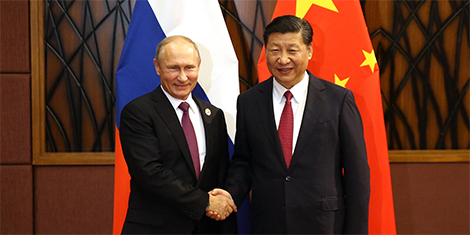
Russia and China play dissimilar roles in global governance and define their interests in this sphere in divergent ways. While the two states agree on certain international principles and norms, their engagement with global governance differs significantly. These differences pose the most serious long-term obstacle to closer cooperation between Moscow and Beijing. China’s growing participation in global governance is tightly linked to the increasing scope of its interests. China supports economic globalization and market openness and is interested in political and economic stability on a global scale. Beijing also aspires to have a greater say in international institutions. In comparison to China, Russia’s participation in global governance is significantly lower due to narrower interests on a global scale, fewer financial resources, and less advanced integration into the global economy. As a result, global political and economic stability is not crucially important for the current Russian leadership. On the contrary, uncertainty and volatility help Moscow broaden its influence.What Do the Trump Administration’s Changes to PPD-20 Mean for U.S. Offensive Cyber Operations?
Erica D. Borghard is an assistant professor and Shawn W. Lonergan is a research fellow at the Army Cyber Institute at West Point. Lonergan is also a U.S. Army Reserve cyber officer assigned to 75th Innovation Command. You can follow them @eborghard and @Shawn_Lonergan. The Wall Street Journal recently reported that the Donald J. Trump administration removed some of the restrictions governing the approval process for offensive cyberattacks conducted against U.S. adversaries under Presidential Policy Directive 20 (PPD-20). With the elevation of U.S. Cyber Command to a unified combatant command in May 2018—on par with the Pentagon’s other combatant commands—the logic behind the reported revisions was that the commander of Cyber Command should have authority to take action comparable to that of other combatant command commanders.Security Brief: Pentagon Draws Up ‘Options’ for Striking Assad; Trump Expands CIA’s Drone Mission in Africa
The possibility of another U.S. military strike on Syria, where Assad has used chemical weapons against rebels, is looking more and more likely, as the military draws up options for the president. Meanwhile, Jared and Ivanka take the lead on the investigation into who wrote that anonymous New York Times op-ed, and use the crisis to go after an old foe, Chief of Staff John Kelly. Also, the CIA is expanding its drone war in Africa, Trump hails North Korea’s decision to pull missiles from this weekend’s parade, Russian spy intrigue, and more. Good Monday morning, and welcome to Security Brief. Please send your tips, questions, and feedback to lara.seligman@foreignpolicy.com.The Failures of Globalism
For many years, the world hummed a sweet, optimistic tune about the benefits of globalization. Pundits like the Pulitzer Prize-winning New York Times columnist Thomas Friedman noted the cascading advantages of an increasingly interconnected world with little appreciation for its uneven benefits. Only recently have a few prominent politicians and scholars in the West flagrantly voiced their opposition to the siren song of globalism. Despite living in a world evermore interwoven, the growing divides between globalization’s winners and losers are expanding. These so-called losers are becoming more vocal, especially now that it significantly impacts the developed world. Now everyone is beginning to sound the refrain from P!nk’s recent release “What About Us?” They’re asking, “What about us? What about all the plans that ended in disaster?”Putin Pivots From Western Pressure, but Finds Scant Solace in the East
The Global Economy Ten Years After
In the decade since the collapse of Lehman Brothers and the start of the global financial crisis, the world economy has registered stronger growth than many realize, owing in large part to China. But in the years ahead, global economic imbalances and troubling trends in the business world will continue to pose economic as well as political risks. LONDON – Much will be said about the tenth anniversary of the 2008 financial crisis, so I will focus on the global economy, which has not been nearly as weak as many seem to think.Russian Propaganda’s Western Enablers
The Finnish author Sofi Oksanen once observed that Russia’s information warfare works because its targets are often willing participants. As noxious as the Kremlin’s information warfare may seem to democratic voters, Western governments often exhibit little interest in or ability to affect the status quo. Every day seems to bring a new revelation about Russia’s political meddling in Western countries. From Twitter trolls sowing discord among voters, to the Kremlin’s alleged support for extremist groups, Russian propaganda is undermining trust in democratic governance. And although Western politicians may talk tough in response to the Kremlin’s efforts to upend the status quo, their actions often betray a weaker hand. Russia’s ability to influence journalism and literature is a case in point.Security Brief: Pentagon Draws Up ‘Options’ for Striking Assad; Trump Expands CIA’s Drone Mission in Africa
The possibility of another U.S. military strike on Syria, where Assad has used chemical weapons against rebels, is looking more and more likely, as the military draws up options for the president. Meanwhile, Jared and Ivanka take the lead on the investigation into who wrote that anonymous New York Times op-ed, and use the crisis to go after an old foe, Chief of Staff John Kelly. Also, the CIA is expanding its drone war in Africa, Trump hails North Korea’s decision to pull missiles from this weekend’s parade, Russian spy intrigue, and more.This Is Where Iran Defeats the United States
In foreign policy, as in life, it is always a good idea to be nice to your friends, because you never know when you might need them. Last month, U.S. Secretary of State Mike Pompeo called Masoud Barzani, the leader of the largest Kurdish party in the Iraqi parliament, to ask for his support on an urgent foreign-policy goal: securing a second term for Iraqi Prime Minister Haider al-Abadi, therefore blocking an Iran-backed alternative. Once upon a time, the answer would have been an automatic yes. But last October, the Trump administration allowed a Shiite militia leader (and convicted terrorist) to use U.S.-supplied tanks in an anti-Kurdish operation directed by Qassem Suleimani, the general who heads Iran’s Quds Force. Not surprisingly, the Kurds are today less inclined to accommodate what they see as a faithless ally.DARPA, Army & Team Platypus: Big Boosts For Artificial Intelligence
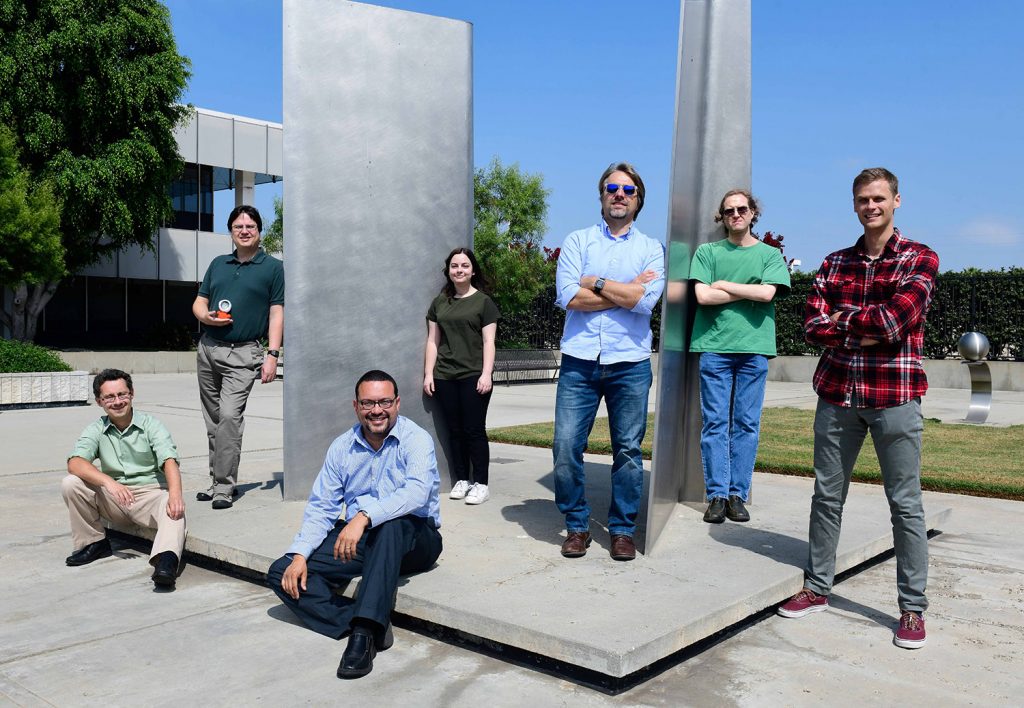
Aerospace Corporation’s “Team Platypus” won $100,000 grand prize in an Army competition to apply artificial intelligence and machine learning to electronic warfare. WASHINGTON: This afternoon, DARPA announced a five-year, $2 billion “AI Next” program to invest in artificial intelligence, with 2019 AI spending alone jumping 25 percent to $400 million. It’s all part of a big Pentagon push to compete with China. The vision is for future weapons and sensors, robots and satellites, to work together in a global “mosaic,” DARPA director Steven Walker told reporters. Rather than rely on slow-moving humans to coordinate the myriad systems, he said, you’re “building enough AI into the machines so that they can actually communicate and network (with each other) at machine speed in real time.”Why DHS needs better mobile security than other agencies
As hackers become more sophisticated, the top IT officer at the Department of Homeland Security says he needs better mobile security features compared to other U.S. government agencies. The Department of Homeland Security “really operates differently than [the Department of Defense]. We are a very mobile organization, so my attack vectors are out there,” said John Zangardi during the Billington Cybersecurity summit Sept. 7. “We are out there on our mobile devices all day long, and that’s not the case with DoD.” Zangardi would know. He previously served as the Pentagon’s acting chief information officer from October 2016 to November 2017.Refining the Defense Department’s cyberwarrior ‘carrier’
The Department of Defense cyber community knows it has a critical need for a centralized platform for cyberwarriors, so the joint community is collaborating to ensure the final system has everything everyone needs. The Unified Platform, as it’s known, will serve as the aircraft carrier, airplane or tank, so to speak, from which cyberwarriors plan and launch attacks. A proposal for the next generation cyber operations platform went out to industry recently, however, details are scarce. “We’re working with Cyber Command to make sure we’ve got the requirement right for Unified Platform,” Lt. Gen. Stephen Fogarty, commander of Army Cyber Command, said during a keynote presentation at TechNet Augusta in August.Confidentiality, Integrity, Authenticity
Journalism, International Affairs and the New Information Order
The Promise and Pitfalls of AI
The AI revolution will bring short-term pain before long-term gains. If that pain occurs against a backdrop of frustration with the unequal distribution of AI's benefits, it may trigger a backlash against technologies that could otherwise produce a virtuous cycle of higher productivity, income growth, and employment-boosting demand. Like any transformative trend, the rise of artificial intelligence (AI) poses both major opportunities and significant challenges. But the gravest risks may not be the ones most often discussed.