Anyone who has ever been to a meeting knows that meetings are often confounding, frustrating affairs. Most of them are designed simply to be held. The people who attend them are unlikely to agree on anything except maybe the date the next one will convene, and the possibility that they accomplish something gets smaller as the meeting itself gets larger. The G-20 summit, which will be held July 7, is no exception. But that’s only because the people who attend it, the leaders of the countries with the world’s 20 largest economies, think of themselves as decision-makers when really they are hostages to history.The Profession of Arms: A Guide for Young Army Officers
It takes courage, especially for a young officer, to check a man met on the road for not saluting properly or for slovenly appearance, but, every time he does, it adds to his stock of moral courage, and whatever the soldier may say, he has respect for the officer who does pull him up.
Read Document →The Dragon's Teeth: Assessing China's Military Modernization
PLA has focused on modernising its capabilities across all warfare domains to achieve these goals. This includes land, air, and maritime operations, nuclear, space, counter-space, electronic warfare and cyberspace operations, aiming to become a fully integrated joint force.
Read Document →Transforming the PLA: A Decade of reorganisation from SSF to ISF
PRC has engaged in a sustained and broad effort to transform the PLA from an infantry-heavy, low-technology, ground forces-centric military into a high-technology, networked force with an increasing emphasis on joint operations and naval and air power projection.
Read Document →Eyes without Borders: Exploring the World of Open Source Intelligence (OSINT) in the Digital Age
Open Source Intelligence (OSINT) is gaining prominence with the rise of social media, the digital society and the vast growth of publicly and commercially available information (PAI and CAI).
Read Document →
The PLA’s Developing Cyber Warfare Capabilities and India's Options
Informationised warfare blurs the lines between peacetime and wartime. A nation in the information age cannot wait for the hostilities to break out to collect intelligence, carryout influence operations, develop antisatellite systems or design computer software weapons.
Read Document →
Galwan and After
Why did China did this when he is under tremendous pressure in all fronts, is this China's salami slice tactics being progressed rigorously, what will be new Rules of Engagement, what will be escalatory control mechanism, who has taken this decision, will there be some pressure put by China in India's North-East through insurgency.
Read Document →
India’s Joint Doctrine for Cyberspace Operations: A Critical Review
Chief of Defence Staff (CDS) General Anil Chauhan and Secretary, Department of Military Affairs, formally released declassified versions of the Joint Doctrines for Cyberspace Operations during the Chiefs of Staff Committee meeting in New Delhi.
Read Document →
Know your Enemy General(now Field Marshal) Syed Aseem Munir
Gen SA Munir's position in the hierarchy of Pakistan was not very comfortable. The state of economy, insurgency in Pakhtoonistan and Balochistan, attack on the Jaffar Express, constant protests by supporters of Imran Khan's supporters inside and outside of parliament.
Read Document →
Decoding Operation SINDOOR: Key Aspects and Implications
Precision strikes were carried out on nine sites—four in Pakistan and five in PoK—linked to anti-India terrorist groups such as the LeT, JeM and the Hizbul Mujahideen. The targeted sites included Muridke (LeT headquarters) and Bahawalpur (JeM headquarters).
Read Document →
Chinese Cyber Exploitation in India's Power Grid - Is There a linkage to Mumbai Power Outage?
The New York Times (NYT), based on analysis by a U.S. based private intelligence firm Recorded Future, reported that a Chinese entity penetrated India’s power grid at multiple load dispatch points. Chinese malware intruded into the control systems that manage electric supply across India, along with a high-voltage transmission substation and a coal-fired power plant
Read Document →9 July 2017
*** Hostages to History at the G-20
Anyone who has ever been to a meeting knows that meetings are often confounding, frustrating affairs. Most of them are designed simply to be held. The people who attend them are unlikely to agree on anything except maybe the date the next one will convene, and the possibility that they accomplish something gets smaller as the meeting itself gets larger. The G-20 summit, which will be held July 7, is no exception. But that’s only because the people who attend it, the leaders of the countries with the world’s 20 largest economies, think of themselves as decision-makers when really they are hostages to history.** Towards Unity of Effort
** China putting cart before horse
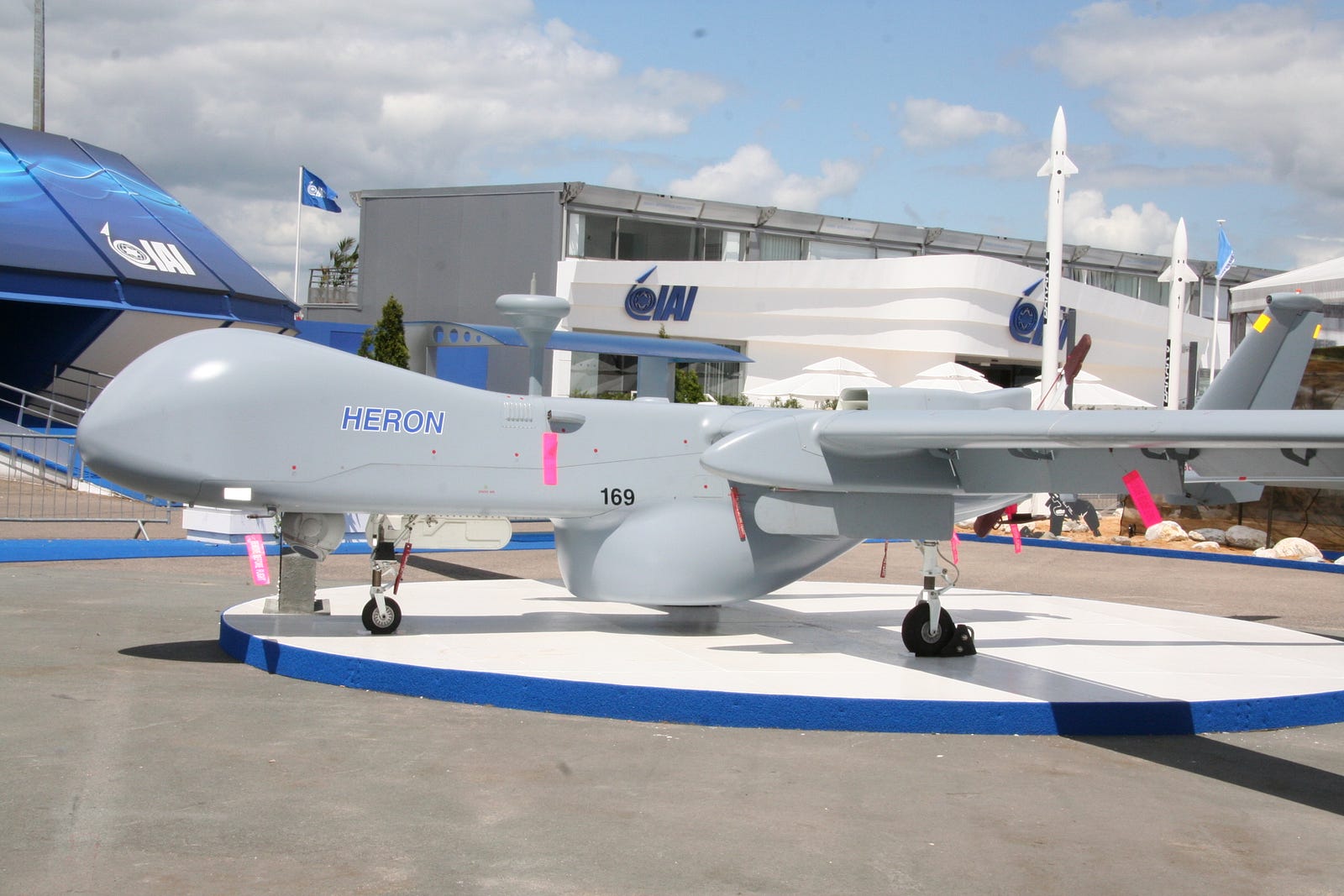
On India—Israel defence ties
The National’s 5th July 2017 edition has a piece on the geopolitical implications of India — Israel defence ties. It carries my views on India — Israel bilateral relations. Reposting my opinion here.A Tangled Web in the Himalayas
Cross-border Philanthropy
Doklam Stand-Off: India Has Displayed Force Responsibly, Now It’s Time For Diplomacy
By standing firm with Bhutan and helping it militarily, India has displayed its resolve. Now it’s time to get down to some deft diplomacy.India’s Regional Diplomacy Reaches Outer Space
Summary: India is poised to help provide satellite-based services to neighboring countries in an effort to improve connectivity and cooperation in a region marked by security tensions.Afghanistan and Turkmenistan: A Model for Regional Economic Cooperation
The Mapping of ‘Sectarian Debate’ in Pakistan
Explained: Why The Chinese Are Kicking Up Trouble On The Sikkim Border
A road that China is trying to build till the Sikkim-Bhutan-China tri-junction will give it easy access to the critical Siliguri Corridor, and therein lies the root of the recent conflict at the Sikkim border.
Location of Doka La, the region were Chinese troops reportedly entered India.Qatar Stands Up to the Neighborhood Bullies
A fence at the border between Qatar and Saudi Arabia. CreditValeriy Melnikov/Sputnik, via Associated PressThe Muslim Brotherhood Is the Root of the Qatar Crisis
North Korea's ICBM: A New Missile and a New Era
Russian Railpolitick and China’s Belt and Road
Tosi-North Korean Cyber Support
Army soldiers encounter simulated Russian cyberattacks
Army soldiers tried to detect and fend off simulated Russian cyberattacks in a recent Cyber Quest exercise aimed at preparing the service for fast-evolving current and future cyber threats.Is America Headed Toward World War III?
5 Things Commanders Should Know About Communications
Let’s face it, even the most humble and open-minded person hates to be wrong or seem ignorant in public. While it will always be fun for leaders to scream “SIGO!” when anything with electrons running through it fails, a deeper understanding of the S6 shop’s capabilities will improve decision-making and calm tempers. Below are five tips to help frame an improved perspective of the S6 shop.Army C-RAM Forward Operating Base Defense Will Destroy Drones
Primed and Ready: I MEF First to Organize Information Warfare Group

Active Cyber Defense Will Help Deter Future Threats
U.S. Diplomacy Options for Security & Adaptability in Cyberspace
STRUGGLING WITH CYBER: A CRITICAL LOOK AT WAGING WAR ONLINE
If media coverage is to be believed, we are in the midst of a cyberwar with daily attacks occurring across several theaters. Between dropping “cyber-bombs” on the Islamic State, Chinese intruders pilfering precious technology, and Russian information operations shaping the U.S. political process, it seems that the continuous power struggle between nations is now most commonly waged on the internet. While there might be some truth to that narrative, the reality is — of course — more nuanced. It’s difficult to define and explain attacks that are entirely virtual. To understand this, one must understand a few points about offensive network operations. First, cyber operations are not as novel as they appear. Rather, they draw heavily from the integration of electronic warfare into joint operations. Second, different nations have largely different perspectives on how to employ network capabilities to achieve political objectives. Third, most incidents we label as “cyberattacks” or “cyber warfare” do not in fact merit being called such.Meeting Demand: Making Maneuver Relevant to the 21st Century
Cyber Flag exclusive: What goes into validating a cyber team?
STRUGGLING WITH CYBER: A CRITICAL LOOK AT WAGING WAR ONLINE
If media coverage is to be believed, we are in the midst of a cyberwar with daily attacks occurring across several theaters. Between dropping “cyber-bombs” on the Islamic State, Chinese intruders pilfering precious technology, and Russian information operations shaping the U.S. political process, it seems that the continuous power struggle between nations is now most commonly waged on the internet. While there might be some truth to that narrative, the reality is — of course — more nuanced. It’s difficult to define and explain attacks that are entirely virtual. To understand this, one must understand a few points about offensive network operations. First, cyber operations are not as novel as they appear. Rather, they draw heavily from the integration of electronic warfare into joint operations. Second, different nations have largely different perspectives on how to employ network capabilities to achieve political objectives. Third, most incidents we label as “cyberattacks” or “cyber warfare” do not in fact merit being called such.