Now a days at the end of the year list of top books read/recommended by eminent people are published specially during the year end.
Have you read any of the above mentioned books?
It takes courage, especially for a young officer, to check a man met on the road for not saluting properly or for slovenly appearance, but, every time he does, it adds to his stock of moral courage, and whatever the soldier may say, he has respect for the officer who does pull him up.
Read Document →PLA has focused on modernising its capabilities across all warfare domains to achieve these goals. This includes land, air, and maritime operations, nuclear, space, counter-space, electronic warfare and cyberspace operations, aiming to become a fully integrated joint force.
Read Document →PRC has engaged in a sustained and broad effort to transform the PLA from an infantry-heavy, low-technology, ground forces-centric military into a high-technology, networked force with an increasing emphasis on joint operations and naval and air power projection.
Read Document →Open Source Intelligence (OSINT) is gaining prominence with the rise of social media, the digital society and the vast growth of publicly and commercially available information (PAI and CAI).
Read Document →
Informationised warfare blurs the lines between peacetime and wartime. A nation in the information age cannot wait for the hostilities to break out to collect intelligence, carryout influence operations, develop antisatellite systems or design computer software weapons.
Read Document →
Why did China did this when he is under tremendous pressure in all fronts, is this China's salami slice tactics being progressed rigorously, what will be new Rules of Engagement, what will be escalatory control mechanism, who has taken this decision, will there be some pressure put by China in India's North-East through insurgency.
Read Document →
Chief of Defence Staff (CDS) General Anil Chauhan and Secretary, Department of Military Affairs, formally released declassified versions of the Joint Doctrines for Cyberspace Operations during the Chiefs of Staff Committee meeting in New Delhi.
Read Document →
Gen SA Munir's position in the hierarchy of Pakistan was not very comfortable. The state of economy, insurgency in Pakhtoonistan and Balochistan, attack on the Jaffar Express, constant protests by supporters of Imran Khan's supporters inside and outside of parliament.
Read Document →
Precision strikes were carried out on nine sites—four in Pakistan and five in PoK—linked to anti-India terrorist groups such as the LeT, JeM and the Hizbul Mujahideen. The targeted sites included Muridke (LeT headquarters) and Bahawalpur (JeM headquarters).
Read Document →
The New York Times (NYT), based on analysis by a U.S. based private intelligence firm Recorded Future, reported that a Chinese entity penetrated India’s power grid at multiple load dispatch points. Chinese malware intruded into the control systems that manage electric supply across India, along with a high-voltage transmission substation and a coal-fired power plant
Read Document →
The BJP could win one of the four northeastern states on offer (Meghalaya, Mizoram, Nagaland and Tripura) but could well lose at least one of the three big states (Rajasthan, Madhya Pradesh and Chhattisgarh) going to the polls later this year. Karnataka, in April 2018, is a toss-up.But the real worry for the BJP is 2019. In 2014, along with its NDA allies, it won 191 out of 208 Lok Sabha seats in five key states – Uttar Pradesh, Rajasthan, Gujarat, Madhya Pradesh and Maharashtra. That tally will not be repeated.The problem is the BJP’s wobbly economic, foreign and social policies as it enters the last year of its term. The government is in office, but not in power.
Afghan officials have pleaded with three American presidents to reconsider their support for Pakistan, which was both receiving billions of dollars in American aid and harboring the leaders of a Taliban insurgency that the United States has struggled to defeat. But when President Trump suspended nearly all American security aid to Pakistan on Thursday for what he called the country’s “lies and deceit,” any jubilation in the halls of power in Afghanistan — and there was some — was leavened with worry over how the move might affect a complex war that has pushed the Afghan government to the brink.
In the late 1950s the deterioration of Sino-Russian relations paved the way for the historic meeting between U.S. President Richard Nixon and Mao Zedong in 1972. The offspring of that meeting was the Shanghai Communiquรฉ, and the onset of the Sino-American dรฉtente on one side and that Soviet containment in the Asia-Pacific on the other, a divide that would define the relations between the two communist countries for decades to come.
Chinese air force fighters have begun escorting bombers around Taiwan in “encirclement drills” and spokesmen for the Communist government have warned Taiwan to get used to it . On Wednesday, China’s president Xi Jinping, dressed in military fatigues, convened a military mobilization meeting— the first ever for the entire Chinese armed forces and commanded China’s military to become “battle ready.” Chinese officials are threatening that relations with Taiwan will turn “grave” because Taiwan’s government refuses to acknowledge that the island is part of China. A leading Chinese analyst predicts that China has accelerated its timetable to 2020 for taking over the island by military means.
IT MIGHT SEEM like a nightmare scenario. A terrorist organization or nefarious nation state decides to derail the global internet by faulting the undersea fiber optic cables that connect the world. These cables, which run along the ocean floor, carry almost all transoceanic digital communication, allowing you to send a Facebook message to a friend in Dubai, or receive an email from your cousin in Australia. US Navy officials have warned for years that it would be devastating if Russia, which has been repeatedly caughtsnooping near the cables, were to attack them. The UK’s most senior military officer said in December that it would “immediately and potentially catastrophically” impact the economy were Russia to fault the lines. NATO is now planning to resurrect a Cold War-era command post in part to monitor Russian cable activity in the North Atlantic.
Abstract: The concept of controlling territorial space informs Western conventions of counterinsurgency and counterterrorism. The Islamic State surprised the West when it recently captured dozens of cities across Iraq and Syria. Eradicating failed states and ungoverned territories vis-ร -vis more robust state-building also forms the backbone of U.S. efforts to reduce violence, provide order, and build stronger societies. I argue that clearing territory, while important, should be selectively employed. Greater stateness does not always correlate with reductions in violence, and conversely not all “ungoverned spaces” are terrorist safe havens. A number of these areas are natural, if non-integrated, parts of the international system. Second, I posit that state-building can have its own negative externalities, such as pushing nonstate actors across state borders and thereby externalizing internal conflicts. The policy implications of my theory are twofold: First, territory is often a poor metric to capture military progress in the fight against violent nonstate actors; second, fixing failed or fragile states does not always reduce the threat of violence but often just relocates it, as nonstate actors get squeezed out of areas of increasing stateness and move toward areas of weak stateness.
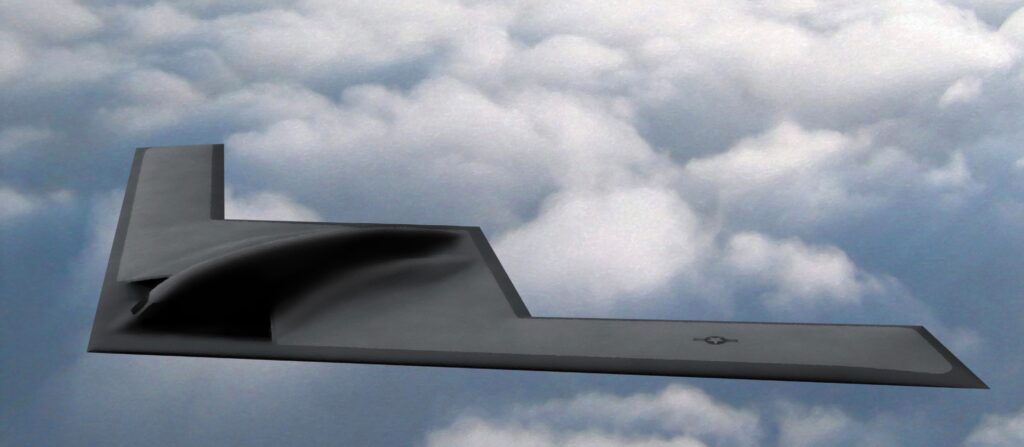
CAPITOL HILL: The Air Force is finalizing a high-tech “flight plan” for Intelligence, Surveillance, and Reconnaissance investments, the deputy chief of staff for ISR said here. The service can’t keep buying more and more drones to collect more and more data and then hiring more and more human analysts to plow through it, Lt. Gen. Veralinn “Dash” Jamieson told a small group. So the new strategy will make better use of satellites, cyberspace, advanced aircraft like the F-35 and B-21, and even publicly available information on the Internet, as well as artificial intelligence to help analyze the vast amounts of incoming data.
There’s a new acronym that has taken hold across the Department of Defense over the last two years or so: TMM. It stands for trans-regional, multi-functional, and multi-domain; and, chairman of the Joint Chiefs of Staff Gen. Joe Dunford, has made it a core element of the Joint Staff’s work. According to Dunford, the department’s “current planning and organizational construct” is flawed, impeding the secretary of defense’s ability to make decisions. To fight and win 21st century wars, the department should find a way to globally integrate below the secretary of defense. But to do so, the chairman’s role needs to evolve considerably. As Dunford explained to the Senate Armed Service Committee a few months ago, the chairman needs “limited authority for the worldwide reallocation of a limited number of military assets … on a short-term basis.” This authority builds on the 2017 National Defense Authorization Act that allows the chairman to advise the secretary on the allocation and transfer of forces for transregional, multi-functional and multi-domain operations. So, are these arcane developments of interest to a few pentagon staffers, or are they indicative of something more fundamental happening?