When Modi took over as PM, everyone expected that he would strengthen relations with Israel but no one thought that he will take relations with Islamic countries to new heights.The Profession of Arms: A Guide for Young Army Officers
It takes courage, especially for a young officer, to check a man met on the road for not saluting properly or for slovenly appearance, but, every time he does, it adds to his stock of moral courage, and whatever the soldier may say, he has respect for the officer who does pull him up.
Read Document →The Dragon's Teeth: Assessing China's Military Modernization
PLA has focused on modernising its capabilities across all warfare domains to achieve these goals. This includes land, air, and maritime operations, nuclear, space, counter-space, electronic warfare and cyberspace operations, aiming to become a fully integrated joint force.
Read Document →Transforming the PLA: A Decade of reorganisation from SSF to ISF
PRC has engaged in a sustained and broad effort to transform the PLA from an infantry-heavy, low-technology, ground forces-centric military into a high-technology, networked force with an increasing emphasis on joint operations and naval and air power projection.
Read Document →Eyes without Borders: Exploring the World of Open Source Intelligence (OSINT) in the Digital Age
Open Source Intelligence (OSINT) is gaining prominence with the rise of social media, the digital society and the vast growth of publicly and commercially available information (PAI and CAI).
Read Document →
The PLA’s Developing Cyber Warfare Capabilities and India's Options
Informationised warfare blurs the lines between peacetime and wartime. A nation in the information age cannot wait for the hostilities to break out to collect intelligence, carryout influence operations, develop antisatellite systems or design computer software weapons.
Read Document →
Galwan and After
Why did China did this when he is under tremendous pressure in all fronts, is this China's salami slice tactics being progressed rigorously, what will be new Rules of Engagement, what will be escalatory control mechanism, who has taken this decision, will there be some pressure put by China in India's North-East through insurgency.
Read Document →
India’s Joint Doctrine for Cyberspace Operations: A Critical Review
Chief of Defence Staff (CDS) General Anil Chauhan and Secretary, Department of Military Affairs, formally released declassified versions of the Joint Doctrines for Cyberspace Operations during the Chiefs of Staff Committee meeting in New Delhi.
Read Document →
Know your Enemy General(now Field Marshal) Syed Aseem Munir
Gen SA Munir's position in the hierarchy of Pakistan was not very comfortable. The state of economy, insurgency in Pakhtoonistan and Balochistan, attack on the Jaffar Express, constant protests by supporters of Imran Khan's supporters inside and outside of parliament.
Read Document →
Decoding Operation SINDOOR: Key Aspects and Implications
Precision strikes were carried out on nine sites—four in Pakistan and five in PoK—linked to anti-India terrorist groups such as the LeT, JeM and the Hizbul Mujahideen. The targeted sites included Muridke (LeT headquarters) and Bahawalpur (JeM headquarters).
Read Document →
Chinese Cyber Exploitation in India's Power Grid - Is There a linkage to Mumbai Power Outage?
The New York Times (NYT), based on analysis by a U.S. based private intelligence firm Recorded Future, reported that a Chinese entity penetrated India’s power grid at multiple load dispatch points. Chinese malware intruded into the control systems that manage electric supply across India, along with a high-voltage transmission substation and a coal-fired power plant
Read Document →23 April 2019
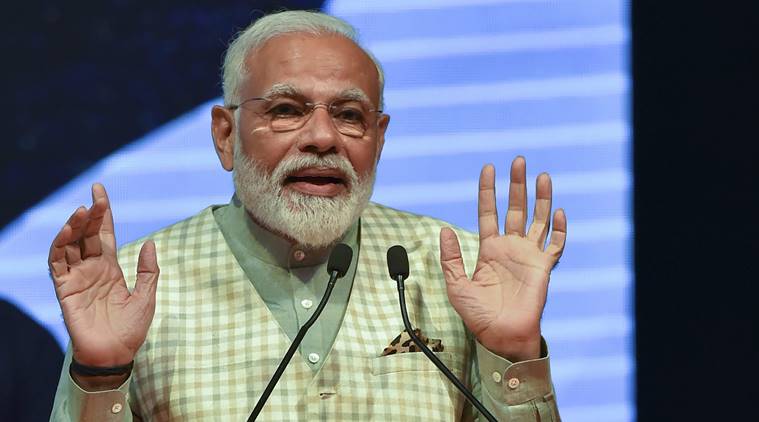
Honours bestowed upon Modi by countries signal success of his foreign policy initiatives
When Modi took over as PM, everyone expected that he would strengthen relations with Israel but no one thought that he will take relations with Islamic countries to new heights.The India opportunity for Taiwan
India And Pakistan: Making the Stability/Instability Paradox Go One Way
Doha Talks Postponed After Taliban Objects to Presence of Afghan Officials
The U.S. Should Base Its China Strategy on Competitive Cooperation, Not Containment
U.S. foreign policy has often been likened to an oil tanker. It can shift course, but major changes in direction happen slowly, if ever. This is understandable, after all. America’s global partnerships have in most cases developed over generations, representing institutional investments and deep-rooted national interests.How China weaponizes overseas arms sale
Strength in Numbers
The World China Wants
European Union leaders sat down this week in Brussels for a summit with a China it recently branded a “systemic rival,” and the United States is nearing the end game of trade talks with a China that national security documents refer to as a “strategic adversary.”The US Is Pushing Back Against China. What Happens If We Succeed?
This October will mark the 70th anniversary of the founding of the People’s Republic of China. This is an anniversary many Western observers doubted the PRC would ever reach – or, at least not in its present form with unchallenged authoritarian one-party rule.A Risk Analysis of Huawei 5G
CHINA’S NEXT NAVAL TARGET IS THE INTERNET’S UNDERWATER CABLES; AND, WHAT WE SHOULD DO TO ADDRESS THE ISSUE
ISIS Isn’t Defeated, and Trump Doesn’t Have a Plan for What’s to Come
During his presidential bid, Donald Trump hammered on about the threat posed to America by the self-styled Islamic State, and how he would defeat it. As an issue, it was perfect for him, since the Islamic State’s sociopathic brutality fueled fear and anger among his core supporters—emotions that candidate Trump was able to harness and use to his benefit. Although the Islamic State emerged from the insurgency in Iraq that was unleashed by the American invasion in 2003, the extremist group grew more powerful during President Barack Obama’s administration, so Trump could wield it as a political weapon against Obama and Hillary Clinton. Trump went so far as to label Obama “the founder of ISIS” and Clinton “the co-founder.” However absurd the claim, it drew cheers.Deterring Russian Aggression in the Baltic States Through Resilience and Resistance
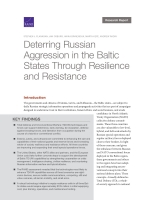
Which unconventional methods are the Baltic states considering to deter and defend against potential Russian attacks? Which are they already using? What are some of the differences between the existing strategies of the three Baltic states? What are promising options for total and comprehensive defense and unconventional warfare in the Baltics? What are some of the possible scenarios for Russian aggression and NATO response? Which technologies would be most useful for resistance organizations? How can the United States, other NATO allies and partners, and the European Union assist in developing and funding these unconventional efforts?Trump's Latest Proposal to Deter Migrants Risks Doing the Opposite
In an effort to curb rising illegal immigration from Central America, U.S. President Donald Trump is considering limiting transfers of money from migrants working in the United States to Honduras, Guatemala and El Salvador. But even relatively mild measures — such as denying or delaying more transfers through increased scrutiny by the U.S. Treasury Department — threaten the already tenuous economic and political situations in these Central American countries. Reducing remittances would also likely accelerate Central American efforts to seek additional foreign aid and trade links with China, though the United States wields significant economic influence to hamper this trend. In the end, the Trump administration's efforts could actually drive more migrants to the border by exacerbating the factors they often seek to escape, such as high crime, poverty and food shortages.EU proposes tariffs on £15bn of US products in Boeing row
The EU has proposed tariffs on $20bn (£15bn) of US goods in a long-running dispute over Boeing aircraft subsidies.Questioning the Reasons For U.S. Involvement in the Middle East
US-Japan Trade Agreement Negotiations: Why Now?
In a two-day meeting that started on April 15, trade delegates from Japan and the United States held the first round of trade agreement negotiations. The meeting is expected to set the ground for a series of upcoming summits between Prime Minister Shinzo Abe and President Donald Trump. While the kick-off of the official trade talks could have started much earlier, as the Trump administration already gave Congress its 90-day advance notification on October 16, 2018, the timing of the initial negotiation between Japanese Economic Revitalization Minister Toshimitsu Motegi and United States Trade Representative (USTR) Robert Lighthizer seems to have been carefully arranged by the Japanese side. Given the wish on both sides for a quick deal, the outcome will be a “skinny” deal at best, yet the achievement could be a win-win for both leaders if it’s materialized efficiently.Why Turkey Won’t Align With Russia
Great Power Competition Feeds the Threat Posed by Anti-Satellite Technology
As demonstrated by India's latest anti-satellite (ASAT) test, the number of countries willing to pursue ASAT weapons and capabilities in space is growing. The rising great power competition among Russia, China and the United States is driving ASAT use and development. ASAT technology produces dangerous space debris that can disable important satellites and challenge the long-term sustainable use of space. Unfortunately, adequate norms and treaties do not exist to regulate the ASAT risk, and the tense dynamics among global powers suggest they are unlikely to be formed in the near future.When malware hits an F-16, call these new Air Force cyber teams
Digital identification: A key to inclusive growthApril 2019 | Report
Read William Barr’s full remarks on the Robert Mueller report
How automation could affect employment for women and minorities April 2019 | Article
Invisible, Essential: Open Architecture For Army Aircraft
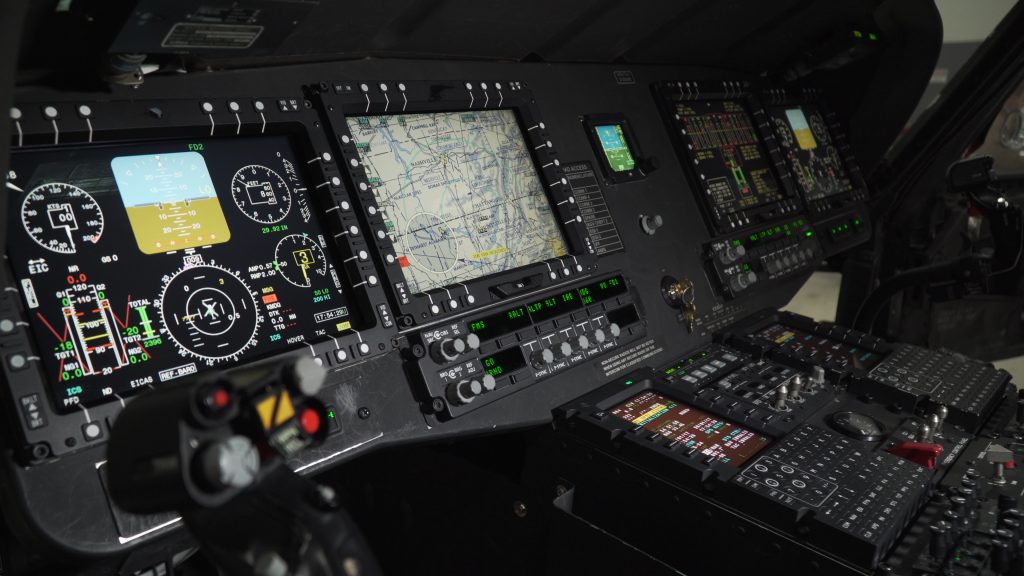
NASHVILLE: While sexy photos of revolutionary aircraft naturally get the most attention, one of the most important pieces of the Army’s Future Vertical Lift effort is actually invisible. Called the Modular Open Systems Architecture (MOSA), it’s a complex set of software and hardware protocols, to be used by all FVL aircraft, both manned — the FARA scout and the FLRAA transport — and unmanned — the FTUASand AUAS drones. It should allow the Army to upgrade its future aircraft easily — mixing and matching the best offerings from different vendors — as technologies, threats, and missions change.An Escalation in Tripoli Pushes Libya to the Brink of Open War
By launching a military offensive on Tripoli, Khalifa Hifter has made it clear that he views himself as the sole solution to Libya's political crisis, and that any negotiations to weaken his control of the Libyan National Army (LNA) are unacceptable. Hifter's staunch commitment to these tenets will continue to prove problematic for outside efforts to unify Libya's competing governments, and will make it difficult for him to agree to a cease-fire. France, the United Arab Emirates, Egypt and Russia will continue to support Hifter militarily and politically — not wanting to lose their investments in him as a leader over the past five years. The offensive has also likely ended the possibility of any political negotiations between the LNA and the Government of National Accord for the time being by hardening Western opposition to Hifter. /arc-anglerfish-arc2-prod-mco.s3.amazonaws.com/public/TVMHVYISWNDU3DBTOSGJLO7VPY.jpg)