Editor’s Note: The following is a preview of the latest edition of the APAC Risk Newsletter, presented by Diplomat Risk Intelligence. To read the full newsletter, click here to subscribe for free.The Profession of Arms: A Guide for Young Army Officers
It takes courage, especially for a young officer, to check a man met on the road for not saluting properly or for slovenly appearance, but, every time he does, it adds to his stock of moral courage, and whatever the soldier may say, he has respect for the officer who does pull him up.
Read Document →The Dragon's Teeth: Assessing China's Military Modernization
PLA has focused on modernising its capabilities across all warfare domains to achieve these goals. This includes land, air, and maritime operations, nuclear, space, counter-space, electronic warfare and cyberspace operations, aiming to become a fully integrated joint force.
Read Document →Transforming the PLA: A Decade of reorganisation from SSF to ISF
PRC has engaged in a sustained and broad effort to transform the PLA from an infantry-heavy, low-technology, ground forces-centric military into a high-technology, networked force with an increasing emphasis on joint operations and naval and air power projection.
Read Document →Eyes without Borders: Exploring the World of Open Source Intelligence (OSINT) in the Digital Age
Open Source Intelligence (OSINT) is gaining prominence with the rise of social media, the digital society and the vast growth of publicly and commercially available information (PAI and CAI).
Read Document →
The PLA’s Developing Cyber Warfare Capabilities and India's Options
Informationised warfare blurs the lines between peacetime and wartime. A nation in the information age cannot wait for the hostilities to break out to collect intelligence, carryout influence operations, develop antisatellite systems or design computer software weapons.
Read Document →
Galwan and After
Why did China did this when he is under tremendous pressure in all fronts, is this China's salami slice tactics being progressed rigorously, what will be new Rules of Engagement, what will be escalatory control mechanism, who has taken this decision, will there be some pressure put by China in India's North-East through insurgency.
Read Document →
India’s Joint Doctrine for Cyberspace Operations: A Critical Review
Chief of Defence Staff (CDS) General Anil Chauhan and Secretary, Department of Military Affairs, formally released declassified versions of the Joint Doctrines for Cyberspace Operations during the Chiefs of Staff Committee meeting in New Delhi.
Read Document →
Know your Enemy General(now Field Marshal) Syed Aseem Munir
Gen SA Munir's position in the hierarchy of Pakistan was not very comfortable. The state of economy, insurgency in Pakhtoonistan and Balochistan, attack on the Jaffar Express, constant protests by supporters of Imran Khan's supporters inside and outside of parliament.
Read Document →
Decoding Operation SINDOOR: Key Aspects and Implications
Precision strikes were carried out on nine sites—four in Pakistan and five in PoK—linked to anti-India terrorist groups such as the LeT, JeM and the Hizbul Mujahideen. The targeted sites included Muridke (LeT headquarters) and Bahawalpur (JeM headquarters).
Read Document →
Chinese Cyber Exploitation in India's Power Grid - Is There a linkage to Mumbai Power Outage?
The New York Times (NYT), based on analysis by a U.S. based private intelligence firm Recorded Future, reported that a Chinese entity penetrated India’s power grid at multiple load dispatch points. Chinese malware intruded into the control systems that manage electric supply across India, along with a high-voltage transmission substation and a coal-fired power plant
Read Document →21 May 2020
India’s Turn Toward Economic ‘Self-Reliance’
Editor’s Note: The following is a preview of the latest edition of the APAC Risk Newsletter, presented by Diplomat Risk Intelligence. To read the full newsletter, click here to subscribe for free.Some Traffic Returns to Roads as India Eases Virus Lockdown
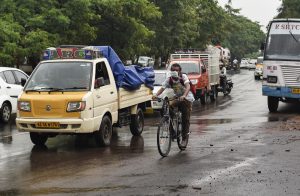
People trickled outdoors and thin traffic returned to roads in some Indian states on Monday, a day after the federal government extended the nationwide coronavirus lockdown to May 31 but eased many restrictions to restore economic activity.In era of social distancing, India’s Ministry of External Affairs must reimagine diplomacy
India’s Unheeded Coronavirus Warning
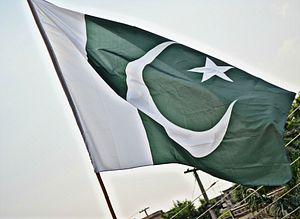
Pakistan Discovers the High Cost of Chinese Investment
Pakistan’s desire to maintain strategic relations with China has resulted in the $62 billion China-Pakistan Economic Corridor (CPEC), a set of infrastructure projects, being mired in insufficient transparency.The Next Pandemic Crisis Is Mental Health
Assessing China’s Assertiveness at Commodore Reef
Senator Marsha Blackburn: ‘President Xi Knew’ About the Danger Of Coronavirus
Here's What the Coronavirus Means for the Future of Geopolitics and Trade
Coronavirus Is Not a Bioweapon—but Bioterrorism Is a Real Future Threat
How COVID-19 Challenges Taiwan’s New Southbound Policy
Taiwan’s New Southbound Policy, the country’s “regional strategy for Asia” inaugurated by incumbent President Tsai Ing-wen in 2016, has been impacted by the global COVID-19 crisis, though not all in a disappointing direction. The NSP’s short-term stagnation is inevitable given the global economic downturn, but calls for supply-chain diversification from China have also never been that widely supported. It is, however, still up to Tsai’s government to rise up to the challenge and settle priorities moving into her second term. This will ultimately determine the final effects of COVID-19 on her signature foreign policy.Vietnam Halted Its COVID-19 Outbreak. Now Comes the Economic Fallout
HO CHI MINH CITY, Vietnam—As countries around the world debate how quickly they should reopen their economies amid the coronavirus pandemic, Vietnam is largely ahead of the curve.Emotions Can't Be Allowed to Guide US-China Policy
The Miner’s Canary: COVID-19 and the Rise of Non-Traditional Security Threats
Writing About Displaced People in the Time of Coronavirus
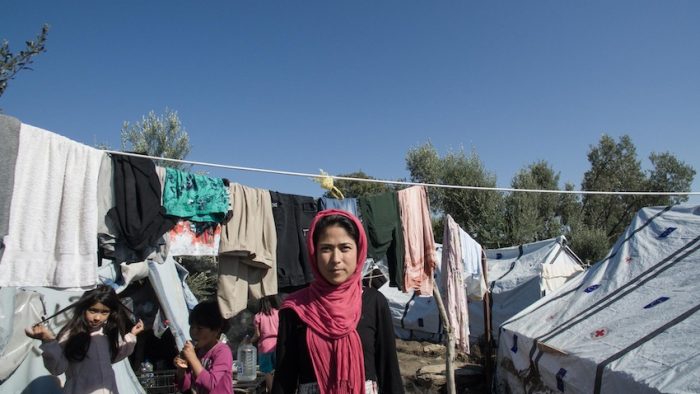
As I sit and write this article, large parts of the world are living under lockdown amidst the Coronavirus pandemic. In Wales (UK), where I currently live, we are allowed out twice a day to exercise, something which must begin and end at our homes. This is a change from the previous week when we were allowed outdoors only once a day. This is expected to continue for the next few weeks, after which there will be a phased relaxation of the rules, but there will still be limits lasting for a considerable period of time. No one is sure when things will be ‘normal’ again, if ever. Amidst all this, I am writing an academic book, supported by a research fellowship from the British Academy, about people who are forcibly displaced from their homes or places of habitual residence – refugees, asylum seekers, internally displaced people, those fleeing extreme poverty or disasters or climate events. While I am locked in my home, sheltering from what is out there in the world, we know that record numbers of people have been displaced from theirs. According to the latest available UNHCR figures, there are 70.8 million forcibly displaced people throughout the world. But what is it like to be displaced during these times?The Global South in Times of Crisis: A China–Africa Relations View
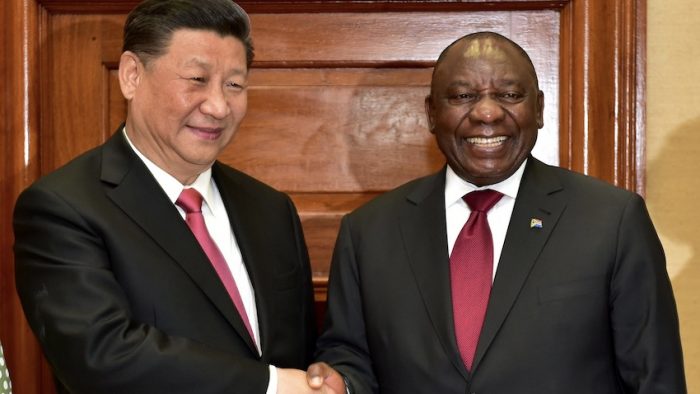
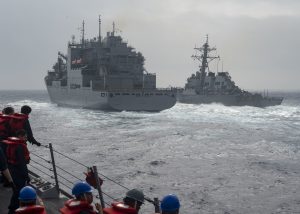
The human tragedy of Covid-19 and the predicted effects of the outbreak on the global economy are putting a strain on the very fabric of our societies. Other looming issues, such as climate change, contribute to a picture that is all but bleak, and which will require brave choices and strong international leadership. In the current crisis, developing countries are faced with additional challenges, including shortages of healthcare workers, lack of fiscal and monetary capacity, income losses, poor urban planning, and overpopulation. As people in most Global South countries are likely to suffer the impact of such crisis more than in the developed world, solidarity beyond borders is being invoked and South-South solidarity is increasingly called upon as a necessary means to achieve global development, even by leaders of multilateral organisations such as the World Bank. In the past, the idea of a Global South has proved a successful source of identity for developing countries, incapsulating the common experience of colonialism and imperialism, and it has been used as a mobilising strategy based upon a critique of the inequalities of the current international system. China’s leadership often draws on this rhetoric to strengthen its own official discourse of a ‘shared community with a common destiny’.Iran's Navy Is Dying a Slow Death
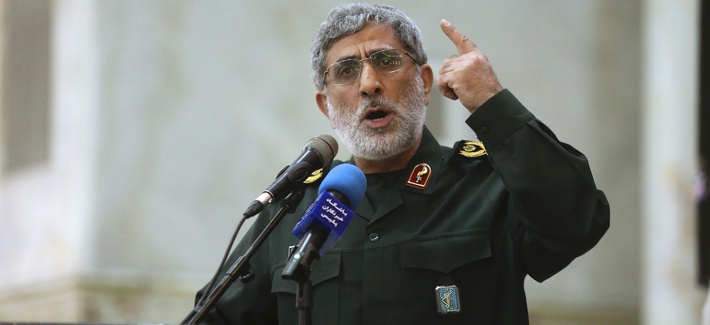
Iran Is Increasing Its Military and Cyber Activity, Report Says
Oil and gas after COVID-19: The day of reckoning or a new age of opportunity?
US Navy, Marines Conduct Integrated Operations in Pacific
Coronavirus Is Increasing the Toll on America's Caregivers
Trump sets goal of hundreds of millions of coronavirus vaccine doses by January, but scientists doubt it
New Warfare Domains and the Deterrence Theory Crisis
Currently, we witness a volatile, polarized and destabilizing international security environment that has exposed us to the grey zones of war and peace. Security challenges arising from both hybrid threats and hybrid warfare (both multiple and synchronized threats that aim to target states’ vulnerabilities at different levels covering domains other than military) seem to have held front seat on the global security agenda thereby altering the relevance of nuclear deterrence. Deterrence is generally understood as an ability to dissuade a state from embarking upon a course of action prejudicial to one’s vital security interests, based on demonstrative capability. The nuclear deterrence theory, as propounded by Brodie (Brodie 1946, p. 76), which is grounded in political realism, enriches our thought process to comprehend the potential character of nuclear weapons. The focus of nuclear deterrence was on averting wars through the psychological manipulation of an adversary’s mind. Thus, it is argued that renewed warfare domains and non-military threats seems to have marginalized the relevance of deterrence theory. Therefore, new mechanisms are required to defend societies and build a correlation between deterrence and evolving wide-raging threats that are non-military in nature. It is further argued that a long-term holistic approach to deterrence as an instrument is needed that focuses on both current military and renewed non-military threats which cover political, economic, social and digital landscape.