The Profession of Arms: A Guide for Young Army Officers
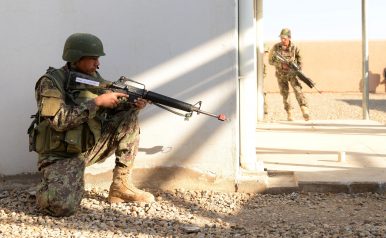
It takes courage, especially for a young officer, to check a man met on the road for not saluting properly or for slovenly appearance, but, every time he does, it adds to his stock of moral courage, and whatever the soldier may say, he has respect for the officer who does pull him up.
Read Document →The Dragon's Teeth: Assessing China's Military Modernization
PLA has focused on modernising its capabilities across all warfare domains to achieve these goals. This includes land, air, and maritime operations, nuclear, space, counter-space, electronic warfare and cyberspace operations, aiming to become a fully integrated joint force.
Read Document →Transforming the PLA: A Decade of reorganisation from SSF to ISF
PRC has engaged in a sustained and broad effort to transform the PLA from an infantry-heavy, low-technology, ground forces-centric military into a high-technology, networked force with an increasing emphasis on joint operations and naval and air power projection.
Read Document →Eyes without Borders: Exploring the World of Open Source Intelligence (OSINT) in the Digital Age
Open Source Intelligence (OSINT) is gaining prominence with the rise of social media, the digital society and the vast growth of publicly and commercially available information (PAI and CAI).
Read Document →
The PLA’s Developing Cyber Warfare Capabilities and India's Options
Informationised warfare blurs the lines between peacetime and wartime. A nation in the information age cannot wait for the hostilities to break out to collect intelligence, carryout influence operations, develop antisatellite systems or design computer software weapons.
Read Document →
Galwan and After
Why did China did this when he is under tremendous pressure in all fronts, is this China's salami slice tactics being progressed rigorously, what will be new Rules of Engagement, what will be escalatory control mechanism, who has taken this decision, will there be some pressure put by China in India's North-East through insurgency.
Read Document →
India’s Joint Doctrine for Cyberspace Operations: A Critical Review
Chief of Defence Staff (CDS) General Anil Chauhan and Secretary, Department of Military Affairs, formally released declassified versions of the Joint Doctrines for Cyberspace Operations during the Chiefs of Staff Committee meeting in New Delhi.
Read Document →
Know your Enemy General(now Field Marshal) Syed Aseem Munir
Gen SA Munir's position in the hierarchy of Pakistan was not very comfortable. The state of economy, insurgency in Pakhtoonistan and Balochistan, attack on the Jaffar Express, constant protests by supporters of Imran Khan's supporters inside and outside of parliament.
Read Document →
Decoding Operation SINDOOR: Key Aspects and Implications
Precision strikes were carried out on nine sites—four in Pakistan and five in PoK—linked to anti-India terrorist groups such as the LeT, JeM and the Hizbul Mujahideen. The targeted sites included Muridke (LeT headquarters) and Bahawalpur (JeM headquarters).
Read Document →
Chinese Cyber Exploitation in India's Power Grid - Is There a linkage to Mumbai Power Outage?
The New York Times (NYT), based on analysis by a U.S. based private intelligence firm Recorded Future, reported that a Chinese entity penetrated India’s power grid at multiple load dispatch points. Chinese malware intruded into the control systems that manage electric supply across India, along with a high-voltage transmission substation and a coal-fired power plant
Read Document →17 June 2018
India's Banks Need Reform Now
Flexibility by Design: The Shanghai Cooperation Organisation and the Future of Eurasian Cooperation
Mapping the Road to Pakistan's Next General Election
With Pakistan’s next general election only a month away, political parties in the country are scrambling to announce their candidates across the country. At the moment, one cannot logically predict which party is likely to form the next government due to a number of factors that are at play concerning the country’s domestic politics. Currently, the Pakistan Muslim League-Nawaz (PML-N), which just concluded its term in office, appears to be a strong contender when it comes to forming the next government at the federal level. However, the party’s internal divisions, which may not have become public, are likely to cost it a large number of seats on election day. The party has not only lost major political heavyweights to other parties, but is also facing an internal succession crisis, which is only going to widen when the election period is over. The party’s former interior minister has decided to contest the next general election as an independent candidate, offering validation to already rampant fears that groupings in the party have developed to serious levels.How the US Is Indirectly Arming the Taliban
While empowering allied militaries to confront insurgents on their own has become the cornerstone of the American approach to counterterrorism, that strategy comes with a drawback: those militaries often lose Western-supplied equipment to American-labeled terrorist organizations. In 2014, the Islamic State captured weapons from Syrian rebels armed by the United States. In 2015, the Iranian-backed Iraqi militia Kataib Hezbollah acquired several M1 Abrams tanks sold to the Iraqi Security Forces by the U.S. This problem has spread as far as Afghanistan, where much of the Taliban’s armory comes from American equipment given to the Afghan military and police.China Smells Opportunity in the Middle East’s Crisis
As the Middle East becomes ever more unstable, a surprising victor may be emerging: China. Under President Xi Jinping, China has accelerated its engagement with the Middle East — a region Beijing once treated as peripheral to its interests. Increased trade and investment, invigorated diplomatic exchanges, and expanded military ties are gradually transforming China’s position in the Middle East. Unless Washington can free its focus from the crises of the moment, Beijing may realize its ambitions: a Middle East more squarely within its own economic and diplomatic orbit, where the United States remains responsible for addressing the region’s most intractable challenges.This Is How China Is Feeding Itself How a superpower secures its future
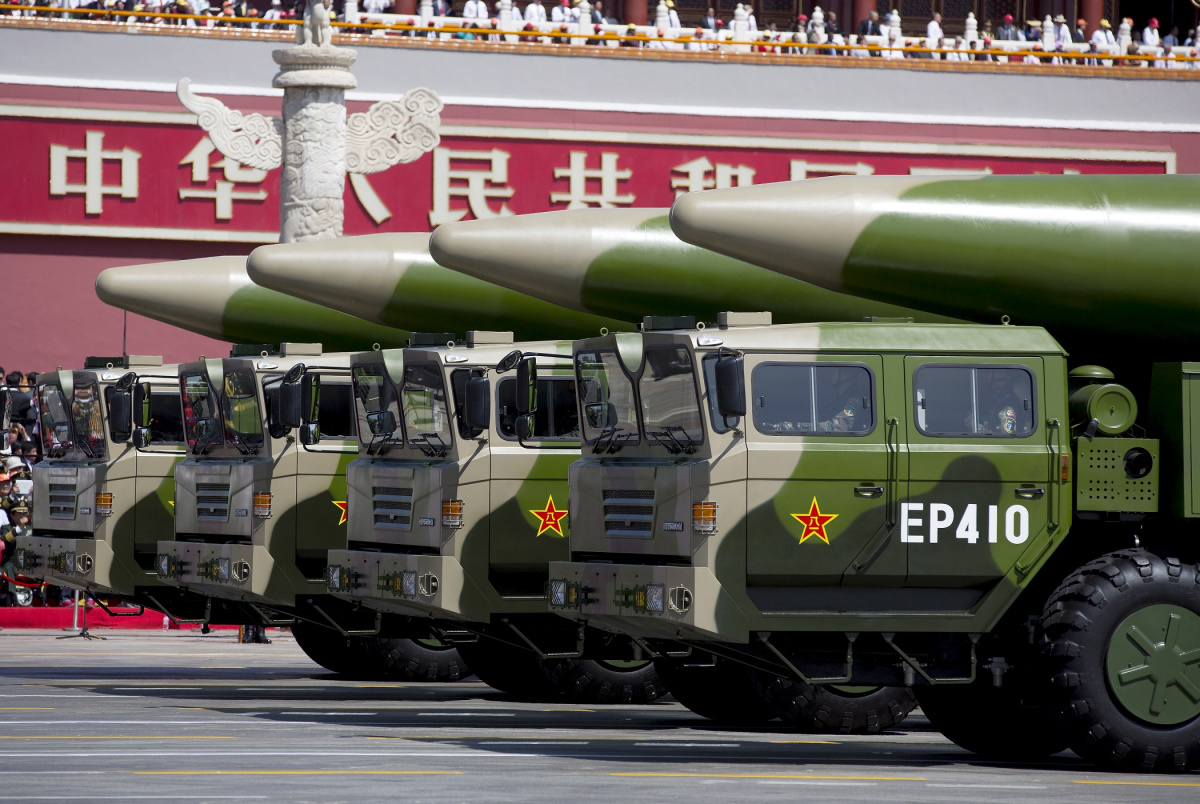
While there is much ado about China’s not-so-subtle efforts in the South China Sea to expand its borders, and to attain a level of influence that extends far beyond its own shores, the emerging superpower’s international strategy goes well beyond military objectives. China’s population may not be growing at a huge clip, but its rising middle class is responsible for an uptick in consumption habits as protein gobbles up a larger share of the country’s diet. While this may not seem so ominous, there are reasons for seeing it as a medium-term existential crisis for China’s governing class. This is a country, remember, in which ravaging famines are a not-so-distant memory and only 15 percent of the land is arable.China's DF-26 Missile: It Can Sink an Aircraft Carrier and Nuke an Army Base
China Smells Opportunity in the Middle East’s Crisis
As the Middle East becomes ever more unstable, a surprising victor may be emerging: China. Under President Xi Jinping, China has accelerated its engagement with the Middle East — a region Beijing once treated as peripheral to its interests. Increased trade and investment, invigorated diplomatic exchanges, and expanded military ties are gradually transforming China’s position in the Middle East. Unless Washington can free its focus from the crises of the moment, Beijing may realize its ambitions: a Middle East more squarely within its own economic and diplomatic orbit, where the United States remains responsible for addressing the region’s most intractable challenges.What Chinese Companies Can Learn From ZTE’s Mistakes
Starting in 2010, Chinese telecommunications equipment company ZTE violated the U.S. embargo against Iran in order to sell export-controlled technology to Iranian entities. During the course of the U.S. government investigation, ZTE engaged in evasive conduct designed to prevent investigators from detecting their violations. This unprecedented scheme led to a record-high penalty of $1.19 billion. At the time ZTE fully admitted its wrongdoing and promised to bring the company’s practice in compliance with U.S. law. However, only a year later, ZTE was found issuing misleading statements and again violating U.S. sanctions during the probationary period under the 2017 Settlement Agreement.Kuwait and Oman Are Stuck in Arab No Man’s Land
Saudi King Salman bin Abdulaziz (C), Bahrain's King Hamad bin Issa al-Khalifa (R) and Emir of Kuwait Sheikh Sabah al-Ahmad al-Jaber al-Sabah attend a Gulf Cooperation Council (GCC) informal summit in the Saudi Red Sea city of Jeddah on May 31, 2016. Just over a year ago, four of America’s Arab allies — Saudi Arabia, the United Arab Emirates, Bahrain, and Egypt — severed relations with Qatar, another key U.S. ally. They enacted a land, sea, and air blockade to punish the tiny emirate for what they claimed was Doha’s “embrace of various terrorist” entities. Observers widely thought the diplomatic spat would be patched up within a few months. After all, this was hardly the first time Qatar and its Gulf neighbors had squabbled.In the face of Hodeidah assault, Yemen is on the brink
The Broader Implications of What’s Happening in Yemen
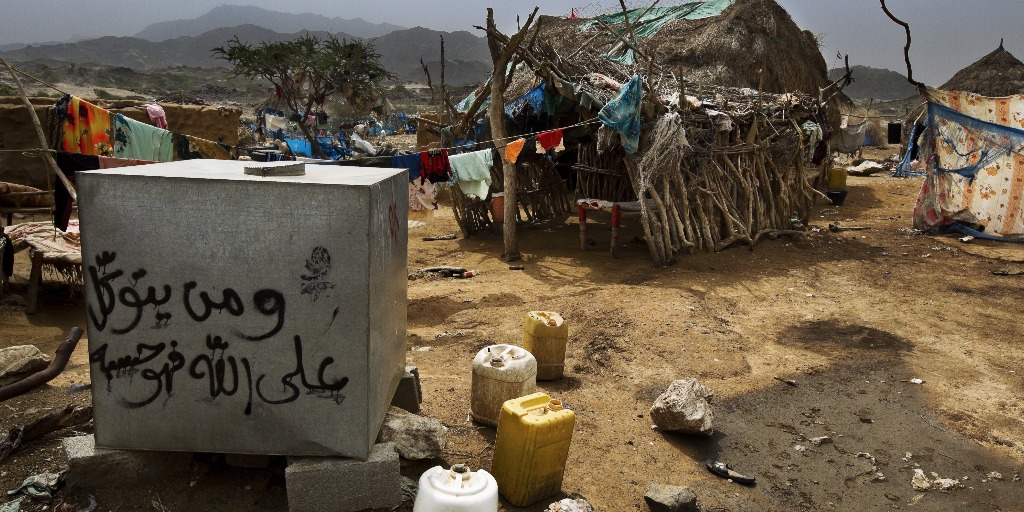
Pro-government forces backed by Saudi Arabia and the UAE, have launched an assault on rebels holding Yemen’s port city of Hodeidah. Potential humanitarian casualties are high, since the port serves as one of the only avenues for foreign aid to move into the country, where Yemenis are already facing dire conditions with as many as eight million people at risk of starvation. U.S. Secretary of State Mike Pompeo said the U.S. is ‘monitoring the situation’, but stopped short of saying that the U.S. is leveraging its influence in the region to stop the assault. Besides the humanitarian crisis, there is a national security component to the overall lack of stability in Yemen. In analysis that The Cipher Brief’s Bennett Seftel produced in late February, the risk of terrorist groups exploiting uncertainty in Yemen is high.Op-Ed: An Assessment of the Islamic State in 2018
Joseph V. Micallef is a best-selling military history and world affairs author, and keynote speaker. Follow him on Twitter @JosephVMicallef. By all accounts, the war against the Islamic State in Iraq and Syria (ISIS) is virtually over -- save for a few mopping-up operations. In December 2017, the Iraqi government declared that, after almost four years of fighting, ISIS had been defeated and no longer controlled any Iraqi towns. Russian President Vladimir Putin has made the same declaration and announced that some Russian troops will soon be withdrawn from Syria, although it does not appear that any withdrawal has yet occurred.WORLD CUP 2018: THE BIGGEST RIVALRIES
How North Korean hackers became the world’s greatest bank robbers
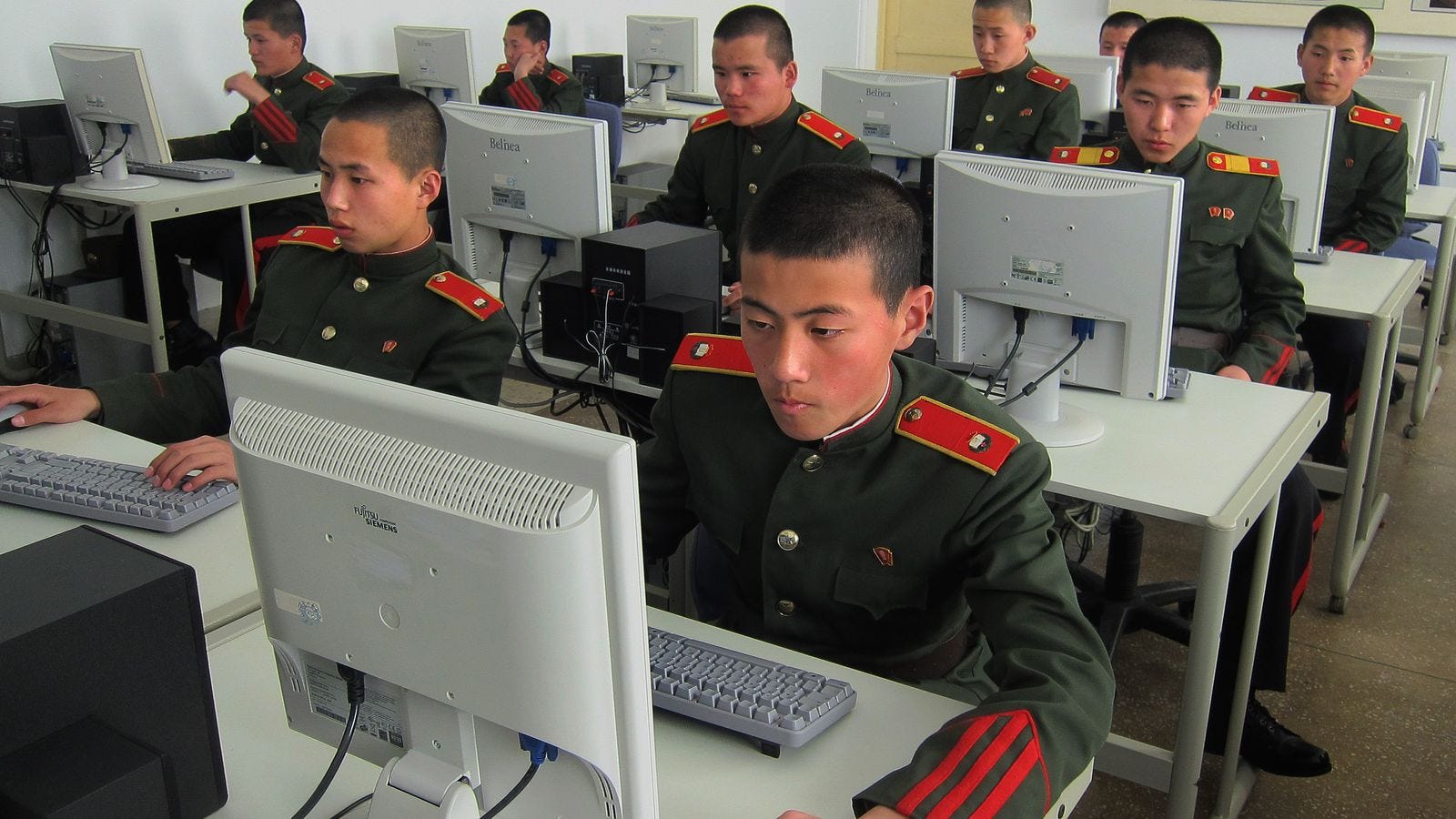
The Reconnaissance General Bureau, North Korea’s equivalent to the CIA, has trained up the world’s greatest bank-robbing crews. In just the past few years, RGB hackers have struck more than 100 banks and cryptocurrency exchanges around the world, pilfering more than $650 million. That we know of. Students at Mangyongdae Revolutionary School, a prestigious academy in Pyongyang. North Korea’s elite hackers are often deployed to countries with faster internet speeds to target banks around the world. In the US, they’ve gone after Wells Fargo, Citibank and the New York Federal Reserve. Global Metro Monitor 2018
Microsoft’s most vulnerable monopoly
The unprecedented opportunity to leverage the decline of one of the most profitable monopolies in history: Microsoft Office. Under Satya’s leadership, Microsoft’s strategy has shifted away from “Windows everywhere” to an infrastructure and software play of “Microsoft everywhere”. More than anything, this shift is acknowledgement that the days of milking old monopolies are gone and the company must expand beyond Windows and Office to re-frame their offering and innovate again. The reasons Microsoft’s dominant position was so heavily disrupted can be summed up by two simple words: Mobile and Internet. The dynamics of that disruption are well documented, and I could write about that at length, but the focus of this post is to bring attention to the very specific opportunity surrounding the Office products and services.Smartphones Are Doing to Websites What Amazon Did to the Mall
It took 20 years for e-commerce to bring on the shopping mall apocalypse. The next transformation will happen much faster.There's A New Cold War Brewing In Cyberspace
Amid mounting criticism that the Trump administration is doing too little to punish Russia, the U.S. Treasury has imposed new sanctions on individuals and companies alleged to have worked aided and abetted Moscow’s intelligence services in conducting cyberattacks on the U.S. Specifically, three Russian individuals and five companies have been sanctioned for using submarines to undermine U.S. cybersecurity, according to Treasury Secretary Steven Mnuchin. “The United States is engaged in an ongoing effort to counter malicious actors working at the behest of the Russian Federation and its military and intelligence units to increase Russia’s offensive cyber capabilities. The entities designated today have directly contributed to improving Russia’s cyber and underwater capabilities through their work with the FSB and therefore jeopardize the safety and security of the United States and our allies,” Mnuchin said. SASC NDAA Tasks Top Scientists To Suss Out Electronic Warfare Fixes
WASHINGTON: A little known group of top America scientists known as JASON will, if the Senate Armed Services Committee has its way, perform a major analysis of US and allied Electronic Warfare capabilities and recommend how the US can improve this crucial element of warfare. Why is the SASC doing this: “The committee recognizes that the United States has a significant comparative military disadvantage (emphasis added) against our peer competitors in aspects of the electronic warfare mission and in the conduct of joint electromagnetic spectrum operations.” Breaking D readers, of course, have long known about America’s weaknesses in EW and across the spectrum.
Network effects unlocked by common standards and new engineering.