 Manufacturing is fundamental to a country’s economic success. Industrialization has driven the growth of many developed economies, boosting innovation and creating jobs. Workers migrating from farms to factories fuelled the economic miracles of Taiwan, Korea, China, Thailand and Singapore, reducing poverty and raising living standards. According to a research report by the World Economic Forum, over 70% of the income variations between 128 nations can be attributed to differentiated manufactured product export data alone. However, despite its past success, the traditional industrial model that propelled many economies into prosperity is now being challenged.
24 September 2018
Here's how India can soar in the Fourth Industrial Revolution
Manufacturing is fundamental to a country’s economic success. Industrialization has driven the growth of many developed economies, boosting innovation and creating jobs. Workers migrating from farms to factories fuelled the economic miracles of Taiwan, Korea, China, Thailand and Singapore, reducing poverty and raising living standards. According to a research report by the World Economic Forum, over 70% of the income variations between 128 nations can be attributed to differentiated manufactured product export data alone. However, despite its past success, the traditional industrial model that propelled many economies into prosperity is now being challenged.Pakistan continues to harbor Taliban, including al Qaeda-linked Haqqanis
BY THOMAS JOSCELYN
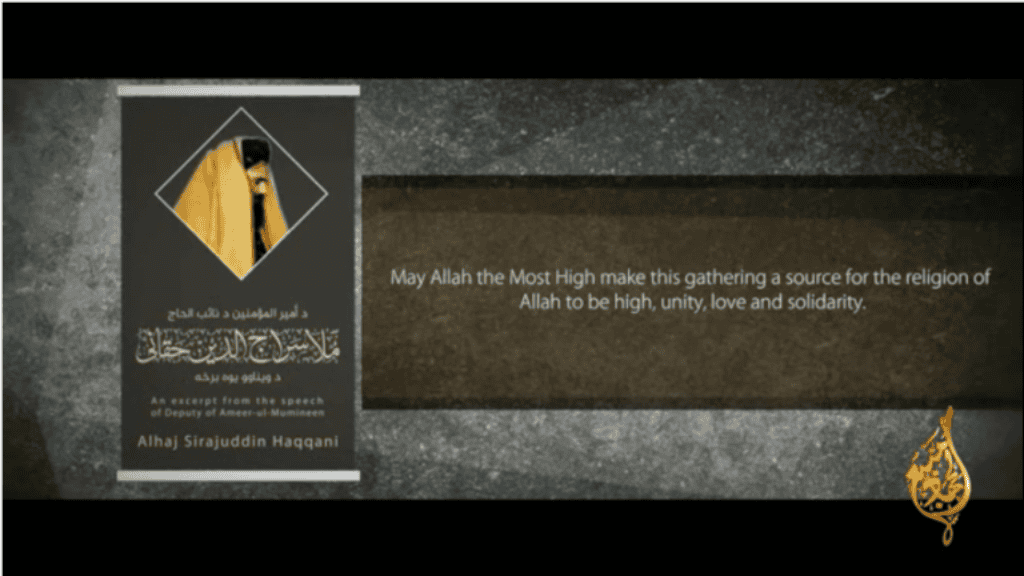 Pakistan continues to allow the Taliban, including the al Qaeda-linked Haqqani Network, to operate on its soil, despite pressure from the US government. That is one of the conclusions drawn in the State Department’s newly released Country Reports on Terrorism 2017.
“The Pakistani government pledged support to political reconciliation between the Afghan government and the Afghan Taliban but did not restrict the Afghan Taliban and HQN [Haqqani Network] from operating in Pakistan-based safe havens and threatening U.S. and Afghan forces in Afghanistan,” the report reads.
What’s Next for the Haqqani Network?
 Earlier this month, the Taliban announced that Jalaluddin Haqqani, the founder, and leader of the feared Haqqani Network terror group, had died.
The Haqqani Network is a militant outfit fighting against the Afghan state and the U.S.-led forces that support it. It is a particularly potent faction of the Afghan Taliban.
Jalaluddin Haqqani was once a leader of the mujahideen fighters targeting the Soviets in Afghanistan in the 1980s, before eventually turning his attention to the U.S.-led NATO forces that entered the country in 2001. Today, Washington regards the Haqqani Network as one of the greatest militant threats in the country where it has fought a 17-year war.
My holiday with the Afghan mujahideen
 In the late 1970s, John England, from High Wycombe, was befriended by his neighbour Rahmatullah Safi, originally from Afghanistan. In 1988, Rahmatullah invited John to visit a war zone in his home country and they embarked on an unconventional trip.
John kept a diary and took photos of his three-week trip with Rahmatullah, self-publishing them in an e-book called Going Inside, for posterity and for his family and friends. The photos show a unique glimpse into life in Afghanistan 30 years ago.
The two neighbours met when Rahmatullah moved into John's street in 1978.
John was deputy head teacher of a primary school. And Rahmatullah worked in a plastics factory in High Wycombe.
Rahmatullah had been a colonel in the Afghan army special forces and his wife had been a lawyer.
Trade war of words breaks out at China conference as US congressmen call out Beijing
Wendy Wu
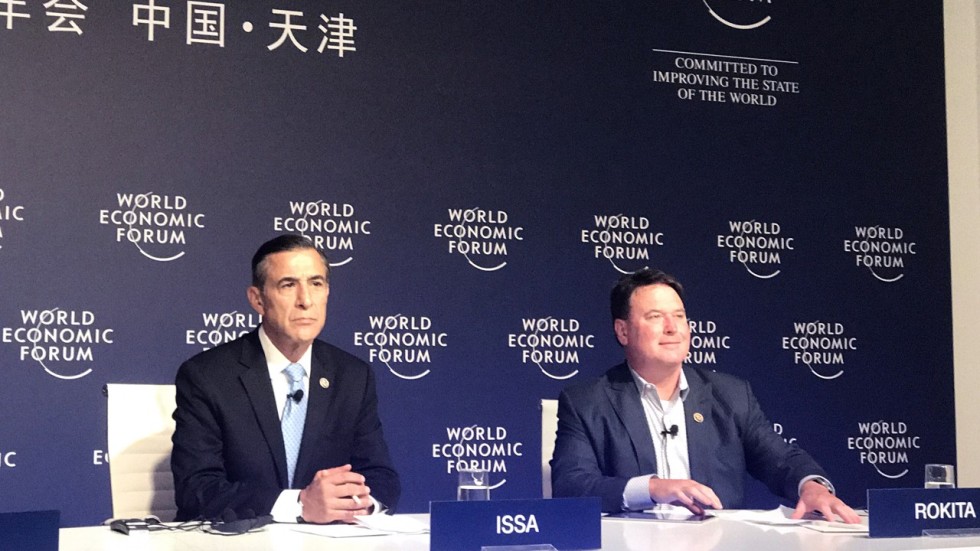 Darrell Issa, from California, and Todd Rokita, of Indiana, called on China to stop “stealing and cheating” and urged the government to take timely actions that would allow a ceasefire in the trade war with the United States.
Their ad hoc press conference on the sidelines of the forum was not on the official schedule and attendees received an email during Li’s speech to say it would occur less than 30 minutes after the premier’s address.
The two congressmen voiced strong support for the Trump administration’s trade confrontation with China.
“Every action the US has done is measured and reasonable” and was based on “sound evidence”, Rokita said.
Is China’s infrastructure boom past its peak?
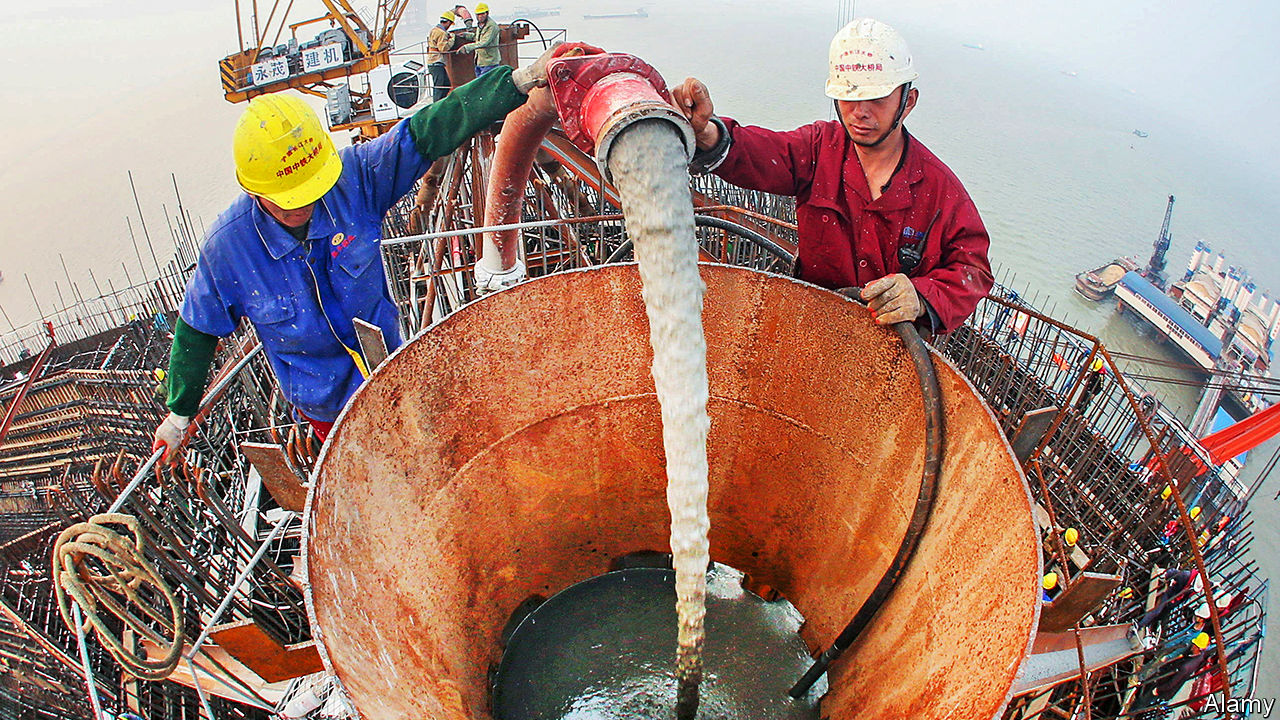 Life in a slower laneIs China’s infrastructure boom past its peak?
A sharp slowdown in investment this year points to a more subdued future
CHINA does not do infrastructure by half measures. It has the world’s longest networks of motorway and high-speed rail (which Hong Kong joins on September 23rd, see article). It has the tallest bridge as well as the longest. It is building nearly ten airports a year, more than any other country. It has the most powerful hydroelectric dam, the biggest wind farm and as much coal power as the rest of the world combined.
China’s Global Times plays a peculiar role
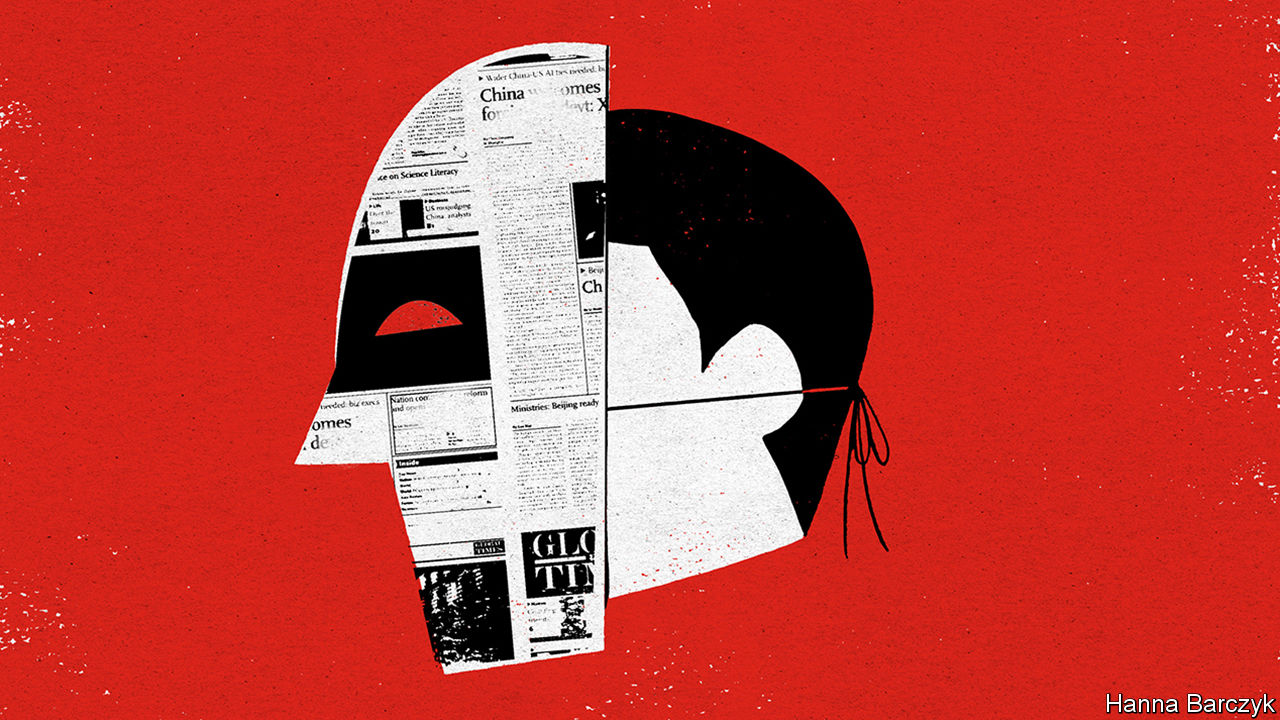 It is unfashionable in China to take the fiery tabloid seriously
FEW countries have invested more man-hours in suppressing awkward facts than China. Internet censors employ more foot-soldiers than some armies. Propaganda officials are so strict that, lest instructions faxed to newsrooms leak, they issue some orders to squelch stories by telephone, to be recorded by hand.
Yet the rules do not bind all equally. The Global Times is a jingoistic tabloid that tackles topics shunned by rivals, even though it is a subsidiary of the Communist Party mouthpiece, the important-but-turgid People’s Daily. In July it reported that Liu Xia, the widow of the Nobel-winning dissident Liu Xiaobo, had left for Germany. Recently it has ignored orders to downplay tensions with America and has offered defiant candour about Xinjiang, a restive western region turned police state. There is mounting evidence that hundreds of thousands of Muslims from Xinjiang’s Uighur minority have been sent to re-education camps for such acts as public prayer or reading history books. Even as Chinese spokesmen denied the camps’ existence, the Global Times, in its English-language edition, acknowledged “counter-terrorism education” among Xinjiang residents and work to “rectify” the thinking of imprisoned extremists. Whether the way Xinjiang is run violates human rights “must be judged by whether its results safeguard the interests of the majority in the region”, said the Global Times in August. Its editor, Hu Xijin, tweeted that Xinjiang had been saved from becoming “another Chechnya, Syria or Libya”.
A Reappraisal of China-Iran Ties After US JCPOA Withdrawal
By: Roie Yellinek
On May 8, after weeks of negotiations with European leaders, US President Donald Trump withdrew the US from the Joint Comprehensive Plan of Action (JCPOA), the nuclear deal signed between Iran and several other world powers, citing concerns that the JCPOA had failed to constrain Iran’s progress in nuclear weapons development.
Not all world leaders shared Trump’s approach. Apart from Iran’s leaders, who, naturally, objected to the imposition of renewed sanctions on their country, European and Chinese leaders both expressed discontent, and have since worked with Iran to preserve elements of the existing deal (Anadolu Agency, May 16). While Britain, Germany and France might find themselves adversely affected by US withdrawal, China and, to a certain extent, Russia, might gain. The reactions of each of the world powers following Trump’s announcement reflect this understanding.
Xi Reasserts Control Over PRC Politics As Trade War Deepens
By: Willy Wo-Lap Lam
President Xi Jinping seems to have resumed his status as “leadership core” and primary decision-maker after a two-month period of adopting a low profile within the party. The leader was blamed for self-aggrandizement by abrogating term limits to the state presidency, and more importantly, a failure to avert the trade war with the US and to counter President Trump’s efforts to rein in China’s rise (China Brief, August 1). Since returning to Beijing on August 16 after two weeks of informal meetings at the seaside Beidaihe resort, however, Xi has restored enough authority to reassert his ultra-conservative line on socialist-style economic policy, imposing ideological conformity within the Chinese Communist Party (CCP) and challenging America’s position as the pre-eminent world leader. That Xi, also CCP General Secretary and Chairman of its Central Military Commission, still faces opposition, however, is evidenced by the dearth of top civilian and military cadres willing to offer ritualistic public praise of the wisdom of the “highest commander” and “pathfinder for the Chinese people.”
The Iranian Land Bridge in the Levant: The Return of Territory in Geopolitics
By Fabrice Balanche
With the re-establishment of Bashar al-Assad’s power in Syria, the strengthening of Hezbollah in Lebanon, and finally the political and military victory of pro-Iranian forces in Iraq, it is clear that an Iranian axis now prevails in the Levant. The strength of this geopolitical axis is reinforced by the territorial continuity between Tehran and Beirut via Damascus and Baghdad: “the Iranian land bridge” or “Iranian corridor,” controlled by Iranian troops directly and by proxies. Since the Shia militias joined the Syrian-Iraqi border in May 2017, the Iranian land bridge[1] has continued to expand, despite the U.S. troop presence on both sides, in the al-Tanef pocket and in northeastern Syria. Until spring 2017, the West seemed incredulous about this reality. However, at that time, it was already too late to block the Shiite militias in eastern Syria, and the Iranian land bridge became a reality.
China-Myanmar Economic Corridor Ambitions Meet Hard Reality
By: Sudha Ramachandran
China and Myanmar have been widely expected to sign a 15-point Memorandum of Understanding on the China-Myanmar Economic Corridor by the end of this year (Global Times, June 26). However, this mega project, a key component of China’s Belt and Road Initiative (BRI), may have hit a rough patch. Apprehensive over being saddled with massive debt that it may not be able to pay, the Myanmar government is considering scaling down one of the project’s central elements over concern it will land the country in the sort of ‘debt trap’ that has ensnared other sovereign borrowers from the PRC (Myanmar Times, July 12). A recent study warns of “potential local resistance” to Chinese projects if “investment strategies do not consider the local context carefully” (The Irrawaddy, June 22). The CMEC may also exacerbate ethnic conflict in a country already riven by serious inter-ethnic strife.
A Deal Between Turkey and Russia Won't Stop the Crisis in Idlib
 A deal over Syria's Idlib province will prevent Russian-backed loyalist forces from launching an offensive there and will defuse the growing crisis between Turkey and Russia.
The Syrian government, Iran and the jihadist factions among the rebels will try to undermine the agreement.
As a result, Idlib will remain unstable and the threat of military operations around the province will continue.
Russia and Turkey have come to an agreement over Syria's last rebel stronghold, Idlib. Following their latest round of talks in Sochi, Russia, on Sept. 17, Russian President Vladimir Putin and Turkish President Recep Tayyip Erdogan announced their deal to set up a 15- to 20-kilometer (9.3- to 12.4-mile) jointly patrolled demilitarized zone around the province by mid-October. The agreement, which will prevent Russian-backed loyalist forces from launching a major offensive to reclaim Idlib from the rebels, stands to ease tensions between Russia and Turkey. Nevertheless, the standoff over Idlib is far from resolved, and numerous obstacles remain that could undermine the deal.
Trump's Tariffs Could Double America's Trade Losses
 Over a week ago, President Trump threatened to impose tariffs on $267 billion in Chinese goods, on top of the additional $200 billion that he said would likely be hit with import taxes in a matter of days. That has started this week.
If the tariff stakes will increase up to $500 billion, it could penalize Chinese GDP by 1%, but the US GDP, which is relatively more vulnerable, would suffer a net impact of 2% of GDP. In dollar terms, the consequent tariff damage could prove even higher than the current U.S. trade deficit with China and thus double the damage.
Trump’s tariffs are a misguided solution to a wrong problem.
Here’s the real reason the US must talk to Russia
 Future historians may well identify Russian President Vladimir Putin’s landmark March 1 speech as the ultimate game-changer in the 21st-century New Great Game in Eurasia. The reason is minutely detailed in Losing Military Supremacy: The Myopia of American Strategic Planning, a new book by Russian military/naval analyst Andrei Martyanov.
Martyanov is uniquely equipped for the task. Born in Baku in the early 1960s, he was a naval officer in the USSR era up to 1990. He moved to the US in the mid-1990s and is now a lab director in an aerospace firm. He belongs to an extremely rarified group: top military/naval analysts specializing in US-Russia.
The US and China Dig in on Trade
By Phillip Orchard
The trade war will only get bloodier from here.
The U.S.-China trade war isn’t going away. Last week, U.S. Treasury Secretary Steven Mnuchin reportedly invited China to Washing to give talks another go, ostensibly to avoid another escalation. Sure, political calculations may lead to symbolic concessions or a temporary truce. Yet both sides have basically given up on trying to strike a comprehensive deal anytime soon and appear to be digging in for the long haul, Mnuchin's outreach notwithstanding. The U.S. thinks it’s in prime position to strike on trade issues and strategic matters alike. To China, the U.S. is demanding nothing less than an abandonment of the state-led economic model underpinning its rise – and the Communist Party’s hold on power. It believes the costs are not yet high enough for a dramatic overhaul. Put differently, the trade war is will only get bloodier from here. How it plays out, though, will depend on which of the two different types of trade wars the U.S. decides to fight.
Russia’s Vostok Exercises Were Both Serious Planning and a Show
Source Link
 Russia’s massive drills were two things at once: a military drill where troops tested their combat preparedness, and a diplomatic exercise highlighting relations with China and aimed at the West.
Mathieu Boulègue
Russia’s massive drills were two things at once: a military drill where troops tested their combat preparedness, and a diplomatic exercise highlighting relations with China and aimed at the West.
From 11 to 17 September, the Russian armed forces conducted the active phase of the Vostok-2018 strategic military exercise. Throughout the week, Russia’s far east hosted a coordinated ballet of troops rehearsing across multiple strategic directions. In a twist, the Chinese People’s Liberation Army participated for the first time.
It was an impressive show, but it also offers serious lessons as to Russia’s military planning and preparedness and its diplomatic footing towards both China and the West.
The military dimension
America can no longer carry the world on its shoulders
JANAN GANESH
To become a “normal country” is the dream of more than one republic. The world is familiar enough with the German case. Having atoned for the war and put Europe first, its next step as a common-or-garden nation is to pursue its narrow interests without embarrassment.
Because he is so peculiar, we cannot credit that Donald Trump’s project is the normalisation of his own country. For all their shock value, that is what his foreign policies amount to: the restoration of the US as a selfish state among selfish states, not an over-worked governess with the entire free world as her mewling wards.
This realpolitik can be self-defeating. It misses the national interests that are served through such nominally high-minded works as the Paris climate accord. But it is still more coherent than its critics. Liberals chafed at American power until its threatened retreat, at which point Nato and the Washington Consensus on trade became sacraments to be saved from populist menaces. As for mainstream Republicans, at least Mr Trump does not go in for mystical hokum about the US as a special nation ordained to uphold freedom.
The Nobel Prize in Literature Takes This Year Off. Our Critics Don’t.
By Dwight Garner, Parul Sehgal, Jennifer Szalai and John Williams

Right about this time of year is when the literary world would normally be praising, bemoaning or just scratching its collective head over the latest winner of the Nobel Prize in Literature. Alas, this year’s prize has been “postponed” (two will be awarded in 2019) because of a sex abuse scandal in the august halls of the Swedish Academy, which hands out the award. That scandal is being covered elsewhere in this newspaper. But to help fill the void of conversation around the prize itself, I recently spoke with The New York Times’s staff book critics — Dwight Garner, Parul Sehgal and Jennifer Szalai — about what the prize has meant (or not meant) to their own reading habits; their opinions of past winners (and past snubs); and whom they would bestow the honor upon this year if they could. — John Williams
Will you miss the awarding of the prize this year? Has it meant anything to you in the past? Have you ever discovered a writer’s work because of it?
2018 India Internet Security Threat Report
 From the sudden spread of WannaCry and Petya/NotPetya, to the swift growth in coinminers, 2017 provided us with another reminder that digital security threats can come from new and unexpected sources. With each passing year, not only has the sheer volume of threats increased, but the threat landscape has become more diverse, with attackers working harder to discover new avenues of attack and cover their tracks while doing so.
6 Most Important Things in Business Today
By Douglas A. McIntyre
Europe’s justice chief gave U.S. social media giant Facebook until the end of the year to comply with EU consumer rules or face sanctions.
The head of Alibaba Group Holding Ltd. (NYSE: BABA) said he no longer plans to create one million jobs in the United States. According to The Wall Street Journal:
Chinese technology tycoon Jack Ma is recanting his promise to create one million jobs in the U.S., citing the trade spat between the world’s two biggest economies.
The executive chairman of Alibaba Group Holding Ltd. made the pledge when he met with then-President-elect Trump in January 2017, saying the jobs would be created by supporting more sales by U.S. small businesses on Alibaba’s e-commerce platforms.
Russian Hackers Aren’t the Only Ones to Worry About
Eli Lake
 Eli Lake is a Bloomberg Opinion columnist covering national security and foreign policy. He was the senior national security correspondent for the Daily Beast and covered national security and intelligence for the Washington Times, the New York Sun and UPI.
On the surface, John Podesta and Elliott Broidy are not at all alike. Podesta chaired Hillary Clinton’s presidential campaign, whereas Broidy was a major fundraiser for Donald Trump. Broidy is a businessman who has long been on the outskirts of national politics. Podesta, a former White House chief of staff, is the consummate Washington insider.
Hackers Are Targeting Bitcoin With a Leaked NSA Software Tip, Report Says
Alyza Sebenius
Detected cases of illicit cryptocurrency mining -- the digital equivalent of minting money -- have surged 459 percent in 2018 compared to last year, Cyber Threat Alliance said in a report released Wednesday.
The spike is tied to the 2017 leak of Eternal Blue, a tool to exploit vulnerabilities in outdated Microsoft Systems software. When the tool became known, it tipped hackers to a previously unknown flaw in the software, now the basis of some hackers’ efforts to commandeer computing power of others to generate digital currency.
Why We Fight: It’s Not Always Because We Face An Enemy
MIKE MARTIN
 When looking at interstate wars, conflict between groups may actually be more about internal group dynamics than about the actions of the other side. Thus, much as groups will fight back when threatened by others, if war is motived by a threat to individuals’ sense of belonging to a cohesive group, then they will fight to reestablish their own group’s cohesion. The same goes for leaders seeking to reinforce their internal status in their groups. If the group problems are not being adequately solved in a particular group, then war is about re-establishing coherence, or ‘order’, around the solutions—re-establishing the group’s internal cognitive clarity. In this argument, the enemy is, in fact, tangential to the motivating force of the war. I would like to highlight two current trends that further illustrate this argument.
NATO to strike Russia through Suwalki Corridor
US President Donald Trump gave his permission to build an American army base in Poland. Poland attached great importance to the event. Polish President Andrzej Duda even suggested naming the new army base in honor of Donald Trump. However, the construction of the "Fort Trump" army base will be of great importance not only for Poland, but also for the whole world.
Poland has been a transit territory to armies of many nations for centuries. Today, Poland is on the fault line again. Warsaw is surrounded by the powerful and "aggressive" Russian Federation, always displeased Baltic States, the unstable and rapidly degrading Ukraine, and refugee-stricken Europe. With a US military base on its territory, Poland will feel calmer.
Counterinsurgency is a bloody, costly business
By Paul Staniland
 The current conventional wisdom on counterinsurgency (COIN) focuses on simultaneously building a strong state and creating mass legitimacy for the government. Gen. Stanley McChrystal has explicitly argued that the U.S. can only win in Afghanistan by winning “hearts and minds” while improving the reach and effectiveness of the Afghan government. Stephen Biddle ...
The current conventional wisdom on counterinsurgency (COIN) focuses on simultaneously building a strong state and creating mass legitimacy for the government. Gen. Stanley McChrystal has explicitly argued that the U.S. can only win in Afghanistan by winning “hearts and minds” while improving the reach and effectiveness of the Afghan government. Stephen Biddle advocates a massive, holistic state-building enterprise in Afghanistan, a perspective that echoes the Army/Marine Corps Counterinsurgency Field Manual. There is a fundamental assumption that strong states and hearts-and-minds are two sides of the same coin, and that they naturally reinforce one another. As the Obama administration considers whether to embrace this strategy, it is worth asking whether the conventional wisdom embodied in these plans has actual empirical support.
USAF Wants Units To Rapidly Build And Fly From New Bases In The Middle Of A Future War
BY JOSEPH TREVITHICK
As the U.S. military’s primary focus shifts to potential high-end conflicts with adversaries such as Russia and China, senior U.S. Air Force leaders are warning that the service must be prepared to deploy to a region and quickly set up new bases. Otherwise, the service risks seeing its operations hampered, if not brought to a halt entirely for at least some amount of time, if an enemy has destroyed or otherwise render established facilities unusable in the opening stages of a major war.
At the Air Force Association’s annual Air, Space, and Cyber conference on Sept. 18, 2018, U.S. Air Force Chief of Staff General David Goldfein announced plansto have many of the service’s major regional and functional commands work together to update and expand doctrine and concepts of operation for these possible expeditionary missions. The service had debuted a set of expeditionary concepts in 1998, building on lessons learned from previous rapidly deployment concepts, but has not significantly updated them in the decades that followed.