The Research & Analysis Wing, the department I served in for 37 years, is 50. It came into being on September 21, 1968, following a realisation that intelligence had been inadequate during the 1962 Indo-China conflict. This year is also the 100th year of the birth of its first chief, the legendary R N Kao. It was one of the first such post-Independence structures created for a specific need, much like the nuclear establishment and ISRO. It owes much to the vision of Prime Minister Indira Gandhi who recognised that a modern state needed an agency for external intelligence.The Profession of Arms: A Guide for Young Army Officers
It takes courage, especially for a young officer, to check a man met on the road for not saluting properly or for slovenly appearance, but, every time he does, it adds to his stock of moral courage, and whatever the soldier may say, he has respect for the officer who does pull him up.
Read Document →The Dragon's Teeth: Assessing China's Military Modernization
PLA has focused on modernising its capabilities across all warfare domains to achieve these goals. This includes land, air, and maritime operations, nuclear, space, counter-space, electronic warfare and cyberspace operations, aiming to become a fully integrated joint force.
Read Document →Transforming the PLA: A Decade of reorganisation from SSF to ISF
PRC has engaged in a sustained and broad effort to transform the PLA from an infantry-heavy, low-technology, ground forces-centric military into a high-technology, networked force with an increasing emphasis on joint operations and naval and air power projection.
Read Document →Eyes without Borders: Exploring the World of Open Source Intelligence (OSINT) in the Digital Age
Open Source Intelligence (OSINT) is gaining prominence with the rise of social media, the digital society and the vast growth of publicly and commercially available information (PAI and CAI).
Read Document →
The PLA’s Developing Cyber Warfare Capabilities and India's Options
Informationised warfare blurs the lines between peacetime and wartime. A nation in the information age cannot wait for the hostilities to break out to collect intelligence, carryout influence operations, develop antisatellite systems or design computer software weapons.
Read Document →
Galwan and After
Why did China did this when he is under tremendous pressure in all fronts, is this China's salami slice tactics being progressed rigorously, what will be new Rules of Engagement, what will be escalatory control mechanism, who has taken this decision, will there be some pressure put by China in India's North-East through insurgency.
Read Document →
India’s Joint Doctrine for Cyberspace Operations: A Critical Review
Chief of Defence Staff (CDS) General Anil Chauhan and Secretary, Department of Military Affairs, formally released declassified versions of the Joint Doctrines for Cyberspace Operations during the Chiefs of Staff Committee meeting in New Delhi.
Read Document →
Know your Enemy General(now Field Marshal) Syed Aseem Munir
Gen SA Munir's position in the hierarchy of Pakistan was not very comfortable. The state of economy, insurgency in Pakhtoonistan and Balochistan, attack on the Jaffar Express, constant protests by supporters of Imran Khan's supporters inside and outside of parliament.
Read Document →
Decoding Operation SINDOOR: Key Aspects and Implications
Precision strikes were carried out on nine sites—four in Pakistan and five in PoK—linked to anti-India terrorist groups such as the LeT, JeM and the Hizbul Mujahideen. The targeted sites included Muridke (LeT headquarters) and Bahawalpur (JeM headquarters).
Read Document →
Chinese Cyber Exploitation in India's Power Grid - Is There a linkage to Mumbai Power Outage?
The New York Times (NYT), based on analysis by a U.S. based private intelligence firm Recorded Future, reported that a Chinese entity penetrated India’s power grid at multiple load dispatch points. Chinese malware intruded into the control systems that manage electric supply across India, along with a high-voltage transmission substation and a coal-fired power plant
Read Document →22 October 2018
In its sixth decade, R&AW needs to look at the world outside terrorism
The Research & Analysis Wing, the department I served in for 37 years, is 50. It came into being on September 21, 1968, following a realisation that intelligence had been inadequate during the 1962 Indo-China conflict. This year is also the 100th year of the birth of its first chief, the legendary R N Kao. It was one of the first such post-Independence structures created for a specific need, much like the nuclear establishment and ISRO. It owes much to the vision of Prime Minister Indira Gandhi who recognised that a modern state needed an agency for external intelligence.Opinion | Time to renew India’s plan to combat climate change
The recently released report by the Intergovernmental Panel on Climate Change (IPCC) mandated by the 2015 Paris Agreement says that “by 2100, global sea-level rise would be 10 cm lower with global warming of 1.5 degrees Celsius compared with 2 degrees Celsius. The likelihood of an Arctic Ocean free of sea ice in summer would be once per century with global warming of 1.5 degrees Celsius, compared with at least once per decade with 2 degrees Celsius. Coral reefs may survive with 10-30% probability in the 1.5 degrees Celsius case while being virtually eliminated in the other scenario”. The report contrasts the difference in impact between a 1.5°C and 2°C rise in temperature above pre-industrial levels with the ultimate objective of convincing countries to limit the temperature rise through concerted action on greenhouse gas emissions (GHG)-mitigation, climate change adaptation and financing mechanisms for climate change resilience.For Afghanistan, Parliamentary Elections Are Another Step on the Rocky Road to Democracy
The disagreements arising from this year's parliamentary elections will complicate Afghanistan's presidential election in 2019 and hinder the deepening of democracy in the country. The Taliban will reject the elections and their outcomes as part of their strategy of painting the government as a foreign-backed entity. The halting progress on electoral reforms in the short term means the "ethnicization" of Afghan politics will endure and lead to the same kind of gridlock characterizing the National Unity Government. Success in Afghan elections will be incremental and can best be gauged by a decline in fraud from one election to the next.Are the United States and China Really Entering a ‘New Cold War’?
The Diplomat‘s Ankit Panda (@nktpnd) and Prashanth Parameswaran (@TheAsianist) are joined by Shannon Tiezzi, The Diplomat’s editor in chief, to discuss meaning of a recent speech on U.S.-China competition by U.S. Vice President Mike Pence.SinoTech: Pence Calls Out China’s Intellectual Property Practices and Bloomberg Report on Spy Chips Draws Backlash
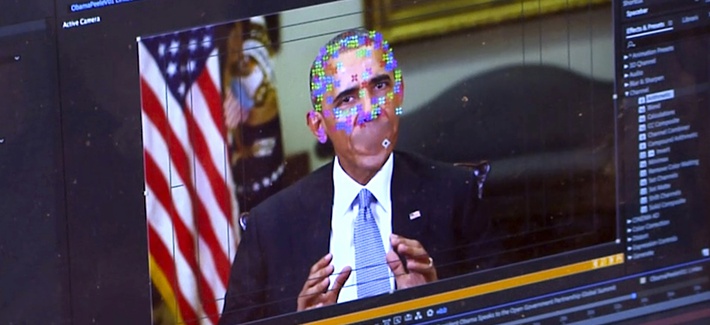
How Realistic Fake Video Threatens Democracies
I Mastered Xi Jinping Thought, and I Have the Certificate to Prove It
Chinese Anti-Submarine Warfare: Aviation Platforms, Strategy, and Doctrine
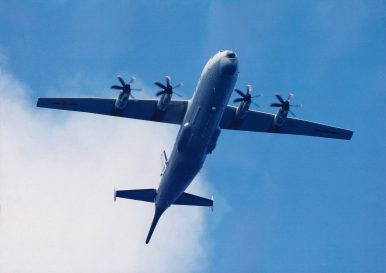
This is the second piece in a two part article evaluating the anti-submarine warfare (ASW) capabilities of the Chinese People’s Liberation Army Navy (PLAN). The first piece documented the PLAN’s significant recent growth in capable ASW surface combatants, with many of those warships equipped with capable organic ASW sensor suites including variable depth sonar (VDS) and towed array sonar systems (TASS). Frigates (FFGs) and destroyers (DDGs) also have organic ASW weapons, such as vertically launched missile/rocket launched torpedo systems. This piece will consider the rotary and fixed wing ASW capabilities the PLAN currently has and their trajectory, as well as briefly describing some of the other specialized ASW assets that the PLAN is developing. Finally, all of the aforementioned systems and platforms will be brought together to consider what an overall PLAN ASW strategy may look like.China’s new diplomacy in Europe has a name: broken porcelain
Two days after Sweden’s election in September, a bizarre statement appeared in English on the website of the Chinese embassy in Stockholm. A “small handful of Swedish forces, media and individuals”, it said, had made “unwarranted claims” of Chinese interference in the Swedish vote. These were “groundless accusations”, and a “malicious attack and smear against China”. The strangest thing of all: no one in Sweden had the slightest inkling what the statement referred to.China’s Great Leap Backward
Confronting Iran The Trump Administration’s Strategy
MEF Reveals Islamic Relief under Investigation; Congress Demands Answers
The Khashoggi Affair: Back to the Future
For Most Americans, US Defense And Foreign Affairs Take Place In Parallel Universe – OpEd
Americans have a unique advantage (or disadvantage, depending on how one looks at it) in experiencing their nation’s defense and foreign affairs, namely, that for the great majority such affairs take place “over there” somewhere, often in a place they can’t locate on a map and about which they know approximately nothing. They don’t have to smell the smoke and the decomposing bodies. They don’t have to hide in holes while their homes are demolished by bombs, rockets, and artillery. Because they have so little first-hand experience, they are vulnerable to being bamboozled by what their leaders tell them about what’s going on halfway around the world.The Russia Problem: What Businesses Can Learn From Cyberwarfare
Trump Faces the Khashoggi Affair
The disappearance and probable death of Jamal Khashoggi at the hands of the Saudi regime is forcing itself onto Donald Trump’s decision plate in ways that not much else has during the presidency of Trump, who is a master in the art of deflecting national attention. As he contemplates his choices, his urges are pushing him in a direction contrary to what would be the most appropriate U.S. policy response. If one steps outside the Trump administration’s way of depicting the Middle East and looks beyond the sword-dancing and orb-gazing of Trump’s unforgiving relationship with the flattery-bestowing Saudis, then the Khashoggi matter, though certainly outrageous, can be seen as part of a larger pattern of the rule of Saudi Crown Prince Mohammed bin Salman (MbS). That pattern has included numerous excesses both foreign and domestic. MbS’s message of domestic reform is badly marred by his harsh intolerance of any dissent or potential challenges to his power. The regime’s pattern of breaking the standards of legitimate international behavior has included kidnapping the prime minister of Lebanon and, above all, an indiscriminate air war in Yemen that is more responsible than anything else for turning that country into a humanitarian disaster. The Trump administration’s determination to overlook this pattern was recently highlighted by its profoundly dishonest certification that Saudi Arabia is taking care in its Yemeni war to minimize harm to civilians.America's Electric Grid Is a Matter of National Security
You are not alone when you experience that sinking feeling when your smartphone battery is low; “ Nomofobia” is actually a new field of medical research. However, the far more serious problem that consumers like you face is assuring the reliability of the grid that ultimately supplies electricity to your charger—along with power for more and more of the daily products you use as everything is digitized and electrified. In fact, it is a matter of national security. It will take a new generation of advanced energy solutions to reduce the magnitude and duration of disruptive events—whether malicious attacks or natural disasters. The vulnerabilities of our electric grid are well documented. In 2017, the Council on Foreign Relations released a report on the vulnerability of the U.S. power grid, noting the electrical system’s central role to the economy and in the smooth functioning of society.A US-UK trade deal built on trust would set an example to the world
Well, we’re technically third if you take it in order of the letters released today by Robert E. Lighthizer, the US Trade Representative, to the House of Representatives and the Senate informing them of the President’s intention to start trade talks. The UK joins the EU and Japan as the countries and trade blocs of highest priority. The UK explicitly from when we leave the European Union and regain our powers to negotiate trade currently pooled in the Common Commercial Policy. This is a big moment. Our largest single country trade partner (the EU as a bloc obviously has the larger share) is telling us that they want to reduce the barriers to trade our producers face, and that they want us to reduce the barriers we have put up with our European counterparts for consumers to import what they want.Why the Developing World Started Gaining on the West
Basic growth theory says that developing countries should grow faster than rich ones. One reason is that capital has diminishing returns -- as you build more offices, more houses, more cars and machine tools and computers -- the economic benefit of building yet more of those things goes down, even as the cost of maintaining them goes up. Second, poor countries can grow fast by copying technology and business practices from rich countries, which is almost always cheaper and easier than inventing new technologies and business practices from scratch.Britain Isn’t Just Losing Brexit. Europe Is Winning It
Only a few days after Airbus announced it may be leaving Britain, the country’s top diplomat delivered one of his more undiplomatic remarks: “Fuck business,” Foreign Secretary Boris Johnson said. That was four months ago, in the heat of Brexit’s uncertain summer—a day before Amazon’s U.K. chief warned of “civil unrest,” two weeks before Johnson resigned in protest, and a month before the European Union rejected Prime Minister Theresa May’s preliminary proposal. In the four months since, even as public opinion has grown more split and as prodding from hard-linershas continued, some of this uncertainty has gone away. Just last week, the EU’s top Brexit negotiator, Michel Barnier, declared a deal “within reach,” and it appears that 30 Labour Party members of Parliament will now throw their support behind May to pass some final proposal. Nevertheless, with the recent announcement that BlackRock and JPMorgan Chase will join Bank of America and Citigroup in redirecting thousands of employees to the continent, it is clear that the bleeding of business from Britain goes on.MoD Secrets Exposed In Multiple Data Breaches – Report
IBM Takes Cybersecurity Training on the Road
Two years ago, IBM opened one of the nation’s first commercial cybersecurity ranges in Cambridge, Mass., to let companies practice responding to simulated cyberattacks. It describes the experience as “a game of Clue mixed with a Disney roller-coaster ride.” In a windowless bunker packed with a data center, wall-to-wall monitors, atmospheric controls, dozens of work stations and a functional TV studio, participants have about four hours to investigate and respond to a fictional data breach. It’s like an escape room for security nerds. The experience proved so popular — about 2,000 people, including chief executives and entire corporate boards, have played IBM’s game, which has an eight-month waiting list — that IBM decided to build a second range.What’s driving NATO’s boost in cyber operations
A soldier of the Polish Army sits in a tank as a NATO flag flies behind during the NATO Noble Jump military exercises of the VJTF forces on June 18, 2015 in Zagan, Poland. The VJTF, the Very High Readiness Joint Task Force, is NATO's response to Russia's annexation of Crimea and the conflict in eastern Ukraine. Troops from Germany, Norway, Belgium, Poland, Czech Republic, Lithuania and Belgium were among those taking part today. During the NATO summit in July, when President Donald Trump chastised world leaders and called into question the American commitment to other members, fears swirled that the transatlantic partnership might become an afterthought for U.S. officials. Instead, the 29-member alliance - including the United States - has begun implementing an agreement from that summit to deter state-sponsored cyberattacks.The Pentagon’s $2 billion gamble on artificial intelligence
It’s the chilling plot line to every science fiction movie about robots in the future: Once they start thinking for themselves, humanity is doomed. Think of the HAL 9000 in "2001: A Space Odyssey," or the replicants in "Blade Runner," or the hosts in "Westworld." These days the Pentagon is doing a lot of thinking about the nascent scientific field of artificial intelligence, also known as “machine learning,” developing computer algorithms that will allow cars to drive themselves, robots to perform surgery, and even weapons to kill autonomously.The End of Scandinavian Non-Alignment
Massive NATO exercises in Norway this fall will include forces from two key non-NATO countries: Sweden and Finland. With no time to waste, Scandinavia is finally breaking fully with the Cold-War era doctrine of neutrality, and embracing a more prudent and proactive defense policy. STOCKHOLM – Having debarked from ports in western Sweden, military convoys from various NATO countries are crowding Swedish streets and prompting the police to issue traffic warnings. They are on their way to Norway, where some 50,000 soldiers, airmen, and seamen will come together for NATO’s largest military exercise in years. The operation – “Trident Juncture” – has a clear goal: to demonstrate the alliance’s ability to defend Norway against a foreign aggressor.Pentagon Criticized for ‘Spray and Pray’ Approach to Innovation
A prominent tech leader with strong ties to the U.S. Department of Defense says the Pentagon needs to overhaul its investment strategy if it hopes to keep pace with China in integrating artificial intelligence and other cutting-edge technologies into its defense systems. Trae Stephens, a partner at the venture capital firm Founders Fund and the chairman of the tech company Anduril Industries, said the Pentagon tends to make small investments in a large number of commercial tech projects, a strategy he calls “spray and pray.” “Let’s say you have a $100 million innovation fund. Right now the basic U.S. strategy is: We will write 400 $250,000 checks because we don’t want to be in the business of picking winners,” Stephens said in a recent interview with Foreign Policy.AI will impact 100% of jobs, professions, and industries, says IBM's Ginni Rometty
We’re almost out of time: The alarming IPCC climate report and what to do next
NATO cyber command to be fully operational in 2023
Why is Germany beefing up its military?
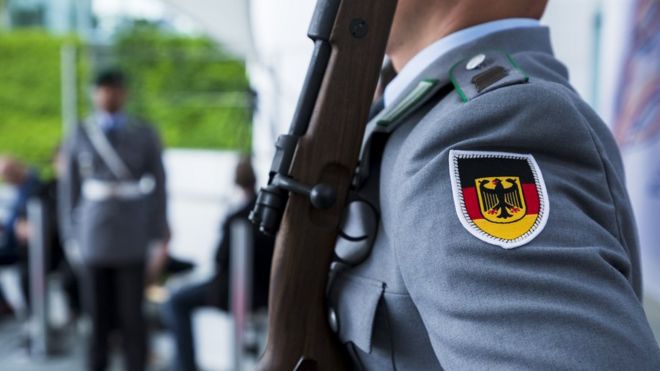
In the face of new challenges, Germany is recommitting itself to the Nato alliance. But what will playing a more central military role mean to a country that has often been accused of reluctance about its armed forces? It was an unseasonably mild morning as the Sun rose slowly over the training range at Pabrade in Lithuania. This is effectively Nato's eastern front. Belarus is just a few kilometres away, with Russia beyond. Lurking just outside the perimeter wire loom several Leopard battle tanks of a German armoured battalion. So what are the Germans doing here and what is the significance of this deployment for Berlin and for the Atlantic alliance as a whole?