The Profession of Arms: A Guide for Young Army Officers
It takes courage, especially for a young officer, to check a man met on the road for not saluting properly or for slovenly appearance, but, every time he does, it adds to his stock of moral courage, and whatever the soldier may say, he has respect for the officer who does pull him up.
Read Document →The Dragon's Teeth: Assessing China's Military Modernization
PLA has focused on modernising its capabilities across all warfare domains to achieve these goals. This includes land, air, and maritime operations, nuclear, space, counter-space, electronic warfare and cyberspace operations, aiming to become a fully integrated joint force.
Read Document →Transforming the PLA: A Decade of reorganisation from SSF to ISF
PRC has engaged in a sustained and broad effort to transform the PLA from an infantry-heavy, low-technology, ground forces-centric military into a high-technology, networked force with an increasing emphasis on joint operations and naval and air power projection.
Read Document →Eyes without Borders: Exploring the World of Open Source Intelligence (OSINT) in the Digital Age
Open Source Intelligence (OSINT) is gaining prominence with the rise of social media, the digital society and the vast growth of publicly and commercially available information (PAI and CAI).
Read Document →
The PLA’s Developing Cyber Warfare Capabilities and India's Options
Informationised warfare blurs the lines between peacetime and wartime. A nation in the information age cannot wait for the hostilities to break out to collect intelligence, carryout influence operations, develop antisatellite systems or design computer software weapons.
Read Document →
Galwan and After
Why did China did this when he is under tremendous pressure in all fronts, is this China's salami slice tactics being progressed rigorously, what will be new Rules of Engagement, what will be escalatory control mechanism, who has taken this decision, will there be some pressure put by China in India's North-East through insurgency.
Read Document →
India’s Joint Doctrine for Cyberspace Operations: A Critical Review
Chief of Defence Staff (CDS) General Anil Chauhan and Secretary, Department of Military Affairs, formally released declassified versions of the Joint Doctrines for Cyberspace Operations during the Chiefs of Staff Committee meeting in New Delhi.
Read Document →
Know your Enemy General(now Field Marshal) Syed Aseem Munir
Gen SA Munir's position in the hierarchy of Pakistan was not very comfortable. The state of economy, insurgency in Pakhtoonistan and Balochistan, attack on the Jaffar Express, constant protests by supporters of Imran Khan's supporters inside and outside of parliament.
Read Document →
Decoding Operation SINDOOR: Key Aspects and Implications
Precision strikes were carried out on nine sites—four in Pakistan and five in PoK—linked to anti-India terrorist groups such as the LeT, JeM and the Hizbul Mujahideen. The targeted sites included Muridke (LeT headquarters) and Bahawalpur (JeM headquarters).
Read Document →
Chinese Cyber Exploitation in India's Power Grid - Is There a linkage to Mumbai Power Outage?
The New York Times (NYT), based on analysis by a U.S. based private intelligence firm Recorded Future, reported that a Chinese entity penetrated India’s power grid at multiple load dispatch points. Chinese malware intruded into the control systems that manage electric supply across India, along with a high-voltage transmission substation and a coal-fired power plant
Read Document →7 January 2017
*** Secure cyberspace for Digital India
*** Evolution Of Pakistan’s Nuclear Doctrine – Analysis
Largely spurred by the loss of East Pakistan1, and a perception of a hostile, bigger and better-armed India, Pakistan had achieved a capability “to rapidly assemble a nuclear device if necessary” around the late-1980s2. During this period, the Cold War was at its peak and Pakistan imbibed an important lesson: that from 1945 onwards, the two nuclear-weapons armed adversaries, USSR/Warsaw Pact and NATO, have confronted each other through proxies in distant parts of the world – but never fought each other directly.*** Is it a risk for America that China holds over $1 trillion in U.S. debt?
* A HETERODOX CONCLUSION ON INTELLIGENCE FAILURES IN THE AGE OF CYBERWARFARE
Former CIA acting director Michael Morell defined the Russian hacking attack of the Democratic National Committee as “the political equivalent of 9/11.” The event constitutes a classic example of a warning failure. Such failures, as attested to by the rich literature on Pearl Harbor, Barbarossa, the Korean War, the 1973 Arab-Israeli War, and the 9/11 terrorist attacks, are not the product of insufficient information about the looming threat. Rather, they are the result of mistaken interpretation of available information. The New York Times investigation of the Russian intervention concluded that the American response to the attack was shaped by “a series of missed signals, slow responses and a continuing underestimation of the seriousness of the cyberattack.” This conclusion fits very well with the classic causes of major warning failures of the past. While the means of surprise attacks has shifted from airplanes and tanks to email accounts and computer networks, the dynamics between the initiator of the attack and its victim have remained very much the same.Can India Go Cashless?
India: Seeking Its Place In The Sun – Analysis
India initiated an economic evolution in the 1990s, which gathered sufficient momentum to become a revolution that propelled India into the thick of international power play. The geo-politics and circumstances of international power balance are ever-changing and have their own ways of creating ups and downs that in turn revamp the equilibrium of global order. India’s move towards becoming an important entity on the world stage has been cynically defined by some analysts as having been achieved ‘despite’ the Government. However, in the past few years, the Indian government has also made efforts at being pro-active to the growing stature of the nation.Kabul: A City With 2 Faces
Legalizing Opium Won't Work for Afghanistan
Chinese Information Warfare: The Panda That Eats, Shoots, and Leaves
China's Belt and Road Initiative: Should India be Concerned?
Baghdad Doesn’t Want You to Know How Many of Its Soldiers Are Dying
On Dec. 1, 2016, the United Nations Assistance Mission to Iraq reported that 1,959 Iraqi Security Forces troops had died in combat during the month of November, including army, police on combat operations, Kurdish Peshmerga and other allied militias.IPCS-Stimson Center Roundtable on South Asia
THE STRATEGIC LOGIC OF THE NEW YEAR’S EVE ATTACK IN ISTANBUL
On New Year’s Eve, the self-proclaimed Islamic State (ISIL) struck in Turkey once again, killing almost 40 people and wounding many others celebrating in an upscale nightclub in Istanbul. Unfortunately, this attack was neither the first of its kind, nor will it be the last.What Everyone Wants to Know About Russia’s New MiG-35 Fighter
The Key to Putin’s Cyber Power
Limits of Practising Nuclear Brinksmanship
How Trump Should Dismantle the Iran Nuclear Deal
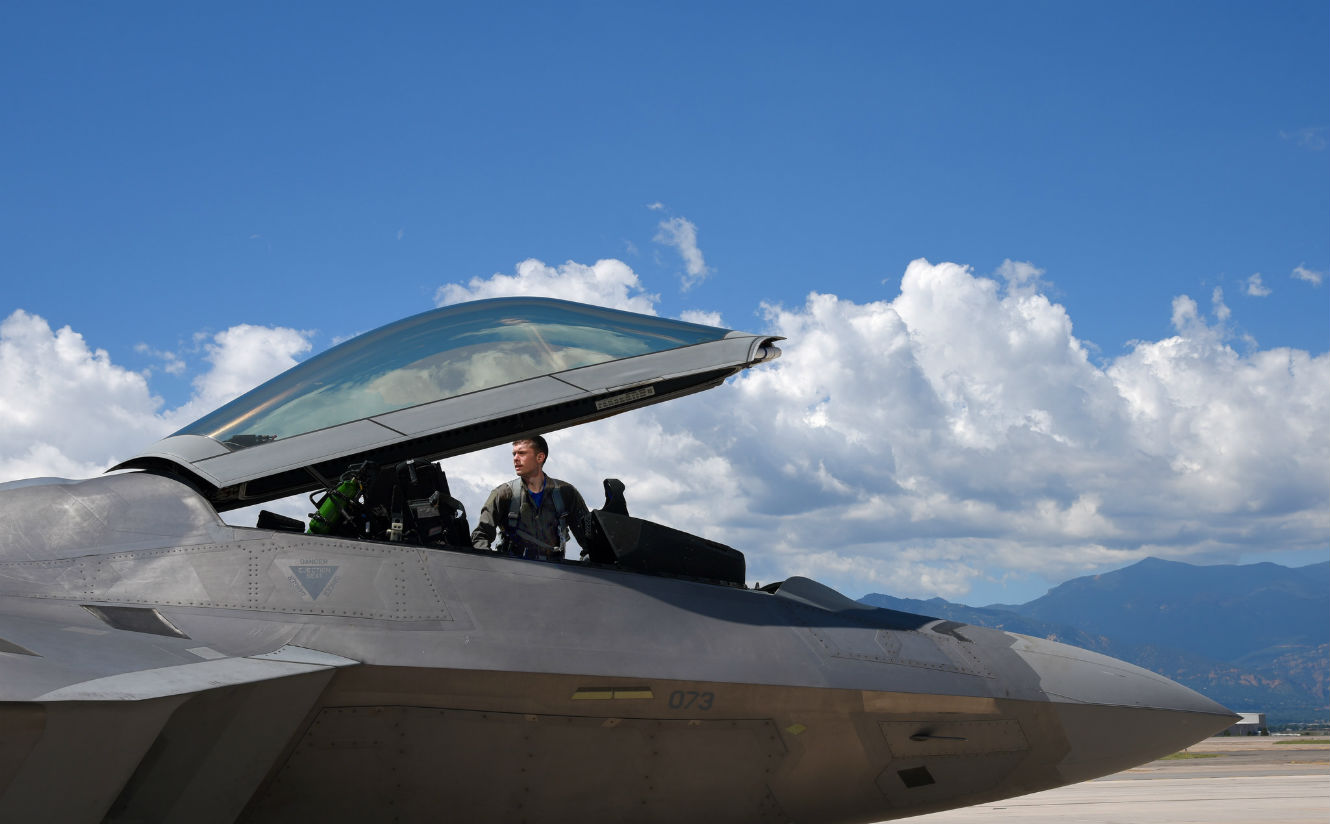
THE FUTURE OF AIR SUPERIORITY, PART I: THE IMPERATIVE
While the American ability to control the air is often taken for granted, the United States risks losing this advantage over the next decade and a half. Budget pressures have delayed key investments, while others continue to develop advanced technologies that will surpass U.S. capabilities if we fail to move forward. Sensing this challenge, from mid-2015 to mid-2016, the Air Force afforded me the privilege of leading a team of experts studying how the Air Force would provide air superiority for the U.S. military in 2030 and beyond. Air superiority, often thought of as a mission, is more correctly conceived of as a condition. At its most basic, that condition is achieved when a force possesses the degree of control of the air required for joint operations succeed. Air superiority not only allows the joint force to exploit the air domain, but also grants it freedom from attack on the surface. Without air superiority, results can be devastating — witness the rout of the Republican Guard as it tried to escape from Kuwait along the “Highway of Death,” or the devastating losses suffered by the Taliban in 2001 on the Shomali plain. With this in mind, the team I led — composed of air, space, cyber, logistics, and support experts— challenged every assumption and conducted an exhaustive review of options to gain and maintain continued control of the air.ART, CRAFT, OR SCIENCE: HOW WE THINK ABOUT MILITARY LEADERSHIP
Military Review
Global Conflicts to Watch in 2017
2016 presidential election and a national cybersecurity investigation
Who's hacking your network?
Cosmic Source Found For Mysterious ‘Fast Radio Burst’
Cornell University researchers and a global team of astronomers have uncovered the cosmological source of a sporadically repeating milliseconds-long “fast radio burst.”