A quick look at the key stories that dominated the domestic headlines in China. Of course, it took a long time for the trade war rumblings to hit China’s state media. We’ll get to that later, however. Here’s what’s been happening inside the country in the meantime.The Profession of Arms: A Guide for Young Army Officers
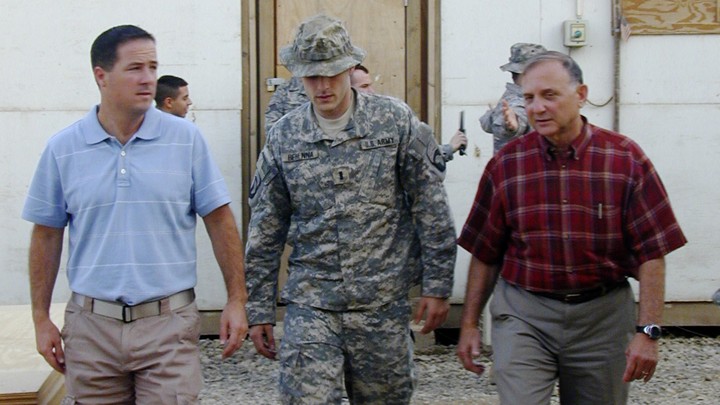
It takes courage, especially for a young officer, to check a man met on the road for not saluting properly or for slovenly appearance, but, every time he does, it adds to his stock of moral courage, and whatever the soldier may say, he has respect for the officer who does pull him up.
Read Document →The Dragon's Teeth: Assessing China's Military Modernization
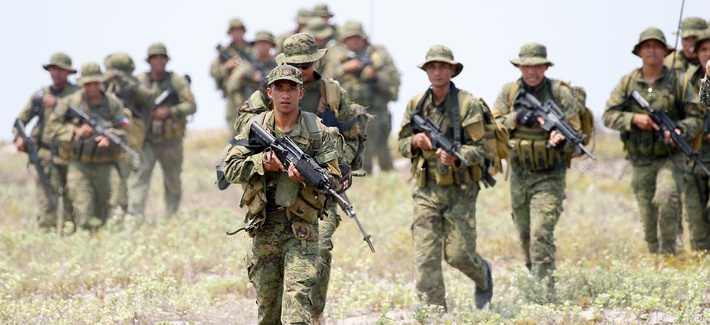
PLA has focused on modernising its capabilities across all warfare domains to achieve these goals. This includes land, air, and maritime operations, nuclear, space, counter-space, electronic warfare and cyberspace operations, aiming to become a fully integrated joint force.
Read Document →Transforming the PLA: A Decade of reorganisation from SSF to ISF
PRC has engaged in a sustained and broad effort to transform the PLA from an infantry-heavy, low-technology, ground forces-centric military into a high-technology, networked force with an increasing emphasis on joint operations and naval and air power projection.
Read Document →Eyes without Borders: Exploring the World of Open Source Intelligence (OSINT) in the Digital Age
Open Source Intelligence (OSINT) is gaining prominence with the rise of social media, the digital society and the vast growth of publicly and commercially available information (PAI and CAI).
Read Document →
The PLA’s Developing Cyber Warfare Capabilities and India's Options
Informationised warfare blurs the lines between peacetime and wartime. A nation in the information age cannot wait for the hostilities to break out to collect intelligence, carryout influence operations, develop antisatellite systems or design computer software weapons.
Read Document →
Galwan and After
Why did China did this when he is under tremendous pressure in all fronts, is this China's salami slice tactics being progressed rigorously, what will be new Rules of Engagement, what will be escalatory control mechanism, who has taken this decision, will there be some pressure put by China in India's North-East through insurgency.
Read Document →
India’s Joint Doctrine for Cyberspace Operations: A Critical Review
Chief of Defence Staff (CDS) General Anil Chauhan and Secretary, Department of Military Affairs, formally released declassified versions of the Joint Doctrines for Cyberspace Operations during the Chiefs of Staff Committee meeting in New Delhi.
Read Document →
Know your Enemy General(now Field Marshal) Syed Aseem Munir
Gen SA Munir's position in the hierarchy of Pakistan was not very comfortable. The state of economy, insurgency in Pakhtoonistan and Balochistan, attack on the Jaffar Express, constant protests by supporters of Imran Khan's supporters inside and outside of parliament.
Read Document →
Decoding Operation SINDOOR: Key Aspects and Implications
Precision strikes were carried out on nine sites—four in Pakistan and five in PoK—linked to anti-India terrorist groups such as the LeT, JeM and the Hizbul Mujahideen. The targeted sites included Muridke (LeT headquarters) and Bahawalpur (JeM headquarters).
Read Document →
Chinese Cyber Exploitation in India's Power Grid - Is There a linkage to Mumbai Power Outage?
The New York Times (NYT), based on analysis by a U.S. based private intelligence firm Recorded Future, reported that a Chinese entity penetrated India’s power grid at multiple load dispatch points. Chinese malware intruded into the control systems that manage electric supply across India, along with a high-voltage transmission substation and a coal-fired power plant
Read Document →19 May 2019
Eye on China: Trade War Flux – India’s BRI Tryst – Xi’s Policing Vision – Pompeo Talks Tough
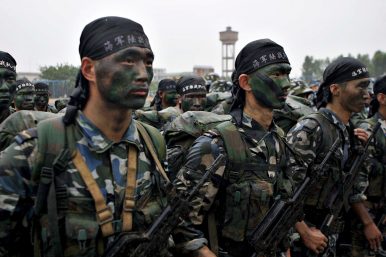
A quick look at the key stories that dominated the domestic headlines in China. Of course, it took a long time for the trade war rumblings to hit China’s state media. We’ll get to that later, however. Here’s what’s been happening inside the country in the meantime.Can our water, power woes hit data localisation plans? New BJP or Congress govt must answer
One of the key challenges the new government will have to face after the Lok Sabha elections, be it a BJP or a Congress-led alliance or a federal front coalition, is data localisation and assuring foreign investors and states about the disruption associated with it.The Peculiar Presence of the Islamic State in Kunar
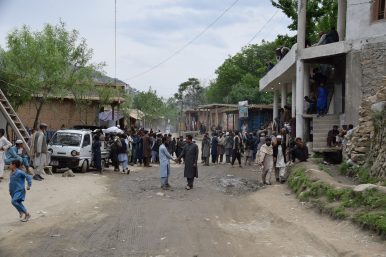
CHAPA DARA, KUNAR, AFGHANISTAN – In late March, a local chapter of the self-declared Islamic State attacked and took over two valleys in Chapa Dara district in Afghanistan’s eastern province of Kunar. The violence forced thousands of families to flee their homes. However, even the refugees don’t know much, if anything, about the group that displaced them. Accordingly, its exact affiliation to the Islamic State is less clear than reports suggest.5G, Xi and Huawei: Looking Beyond Trump and the ‘China Price’
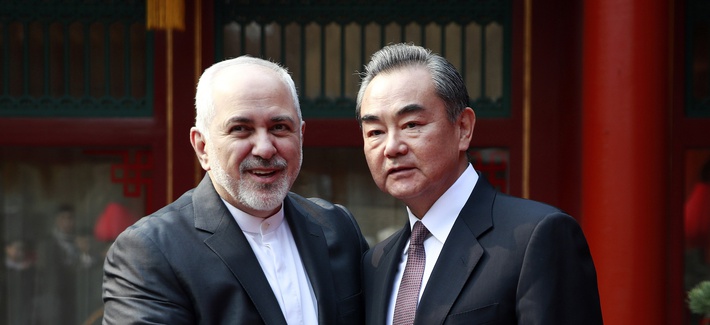
Who Wins When U.S.-Iran Tensions Rise? China
The Sino-Iranian relationship advances Chinese interests — and particularly when Washington tries to turn the screws on Tehran.The China challenge and critical next steps for the United States
The worry about 5G: ‘They control whether or not we communicate’
Chinese company Huawei’s efforts to sell its 5G network equipment to U.S. allies worried members of the Senate Judiciary Committee May 14 about disruptions in global communications, intelligence sharing and military operations if the Chinese-backed company is allowed to take the lead in this technology internationally.China Cracks Down on Foreign Firms Over Cyber Security
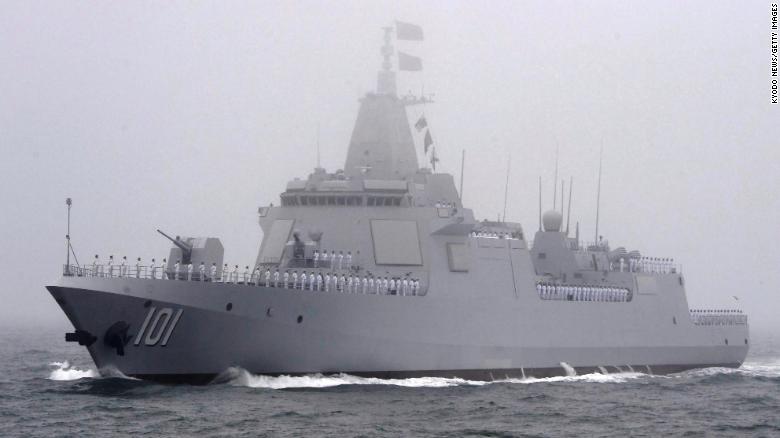
What are China's naval goals? The West can't wait to find out
Carl Schuster is a retired US Navy captain, a former director of operations at the US Pacific Command's Joint Intelligence Center, a current Hawaii Pacific University instructor and a part-time defense consultant. he opinions expressed in this commentary are solely his own.US-China Trade Talks and American Strategy
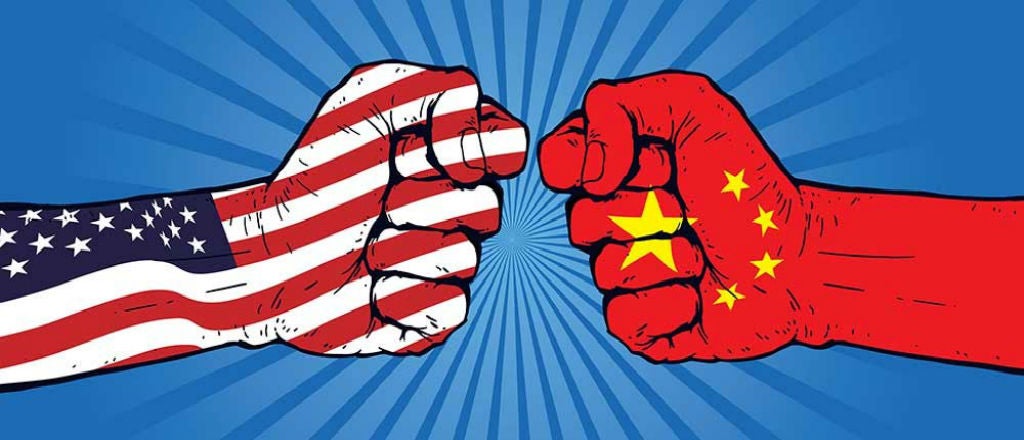
U.S.-China Tariffs: Is There an End in Sight?
The sudden escalation of the trade war between the U.S. and China in recent days could lead to longer-term shifts in not just China’s import programs but also in global manufacturing arrangements, according to experts at Wharton and the University of Pennsylvania. U.S. trade policies that are not rooted in economic considerations but are driven by political postures could prove costly for U.S. businesses and consumers, in addition to eroding the country’s leverage in global trade, they warned.The worry about 5G: ‘They control whether or not we communicate’
Chinese company Huawei’s efforts to sell its 5G network equipment to U.S. allies worried members of the Senate Judiciary Committee May 14 about disruptions in global communications, intelligence sharing and military operations if the Chinese-backed company is allowed to take the lead in this technology internationally.Vietnam Is the Chinese Military’s Preferred Warm-Up Fight
In mid-April, China conducted a series of fresh military flights through the Bashi Channel and Miyako Strait, on the south and north ends of Taiwan, respectively. As has been the case many times in the past, these new activities were clearly meant to signal Beijing’s resolve to resort to force against the island and its U.S. and allied defenders if necessary. But there is another, less often discussed reason for these drills. Repeated transits through the Bashi Channel and Miyako Strait offer the People’s Liberation Army (PLA) the opportunity to train over future potential battlefields.Terrorist Use of Cryptocurrencies
Using Proxies, Iran Appears to Be Hitting Back in the Fight Over Oil
With two suspicious attacks in three days on Saudi oil installations, Iran appears to be signalling that the U.S. maximum pressure campaign to choke off its oil exports and strangle its economy will come at a price.Iran's coming response: Increased terrorism and cyber attacks?
Trump’s Counter-Iran Moves Are Provocative, But They’re Not War
Truly bad messaging is undermining trust among allies and the American public — and increasing the chance of accidental escalation.Two Great American Intellects: Gore Vidal and Noam Chomsky
America Must Not Stumble into a Third Gulf War
Secretary of State Mike Pompeo claims that Washington is not interested in war with Iran. However, America has ordered all U.S. nonemergency staff and families out of neighboring Iraq. In addition, a recent report by the New York Times said that the Pentagon was given plans to deploy 120,000 troops to the Middle East in the event of a crisis. Given that America previously sent 125,000 soldiers to invade Iraq in 2003, it seems unlikely that a similar number of troops today could be used for anything other than regime change.How to Really Honor the Troops
The email to me, inviting me to dinner, began with two seemingly random letters, followed by two numbers. My assistant was the first one who read the email and was confused.What Does Israel’s Missile Strike on Hamas Hackers Mean for Military Cyber Response?
To date, nation-states have been extremely hesitant about responding to cyber attacks with physical military force. That’s what makes Israel’s early May attack on Hamas so unusual. While it’s not uncommon for the Israel Defense Force (IDF) to respond to rocket attacks from Gaza with targeted strikes, this is the first time they have done so in response to hacking. The move has left many wondering how common an armed cyber response will be going forward.One day they may part, but for now Cyber Command loves working with the NSA
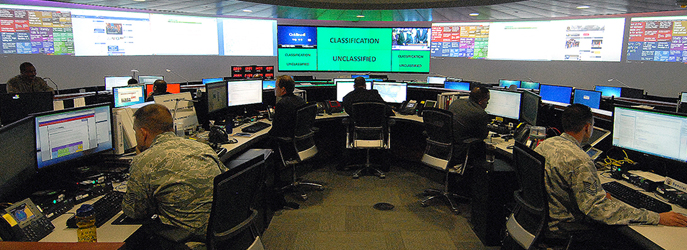
How To Wage Global Cyber War: Nakasone, Norton, & Deasy
TECHNET 2019: America’s four-star combatant commanders need a global network to coordinate different services, agencies, and allies against threats — especially in cyberspace — that metastasize beyond a single theater. Making full use of that technology will also require new planning processes, new training, and — hardest of all — cultural change.How do you retaliate against a WhatsApp attack?
We don’t yet know for sure who used Israeli company NSO’s software to hack WhatsApp users – the messaging service’s parent company Facebook has said only that the culprit is an “advanced cyber actor” – but all signs point to it being a government. According to one analysis, NSO has 45 governments as clients including, amazingly, Saudi Arabia and the United Arab Emirates, even though officially these states don’t recognise Israel.HOW HACKERS BROKE WHATSAPP WITH JUST A PHONE CALL
YOU'VE HEARD THE advice a million times. Don't click links in suspicious emails or texts. Don't download shady apps. But a new Financial Times report alleges that the notorious Israeli spy firm NSO Group developed a WhatsApp exploit that could inject malware onto targeted phones—and steal data from them—simply by calling them. The targets didn't need to pick up to be infected, and the calls often left no trace on the phone's log. But how would a hack like that even work in the first place?WhatsApp flaw let attackers install spyware with a phone call
A vulnerability in messaging app WhatsApp allowed attackers to install spyware onto phones, the Financial Times reported Monday.Cyber Solarium sets ambitious goals for U.S. digital strength
In 1953, President Dwight D. Eisenhower convened Project Solarium, a group of senior national security officials who met in the top floor of the White House to come to a consensus on how to deal with Soviet expansion.Leaks, Drones, Mystery Attacks: US-Iran Tensions Boil Hot, But…
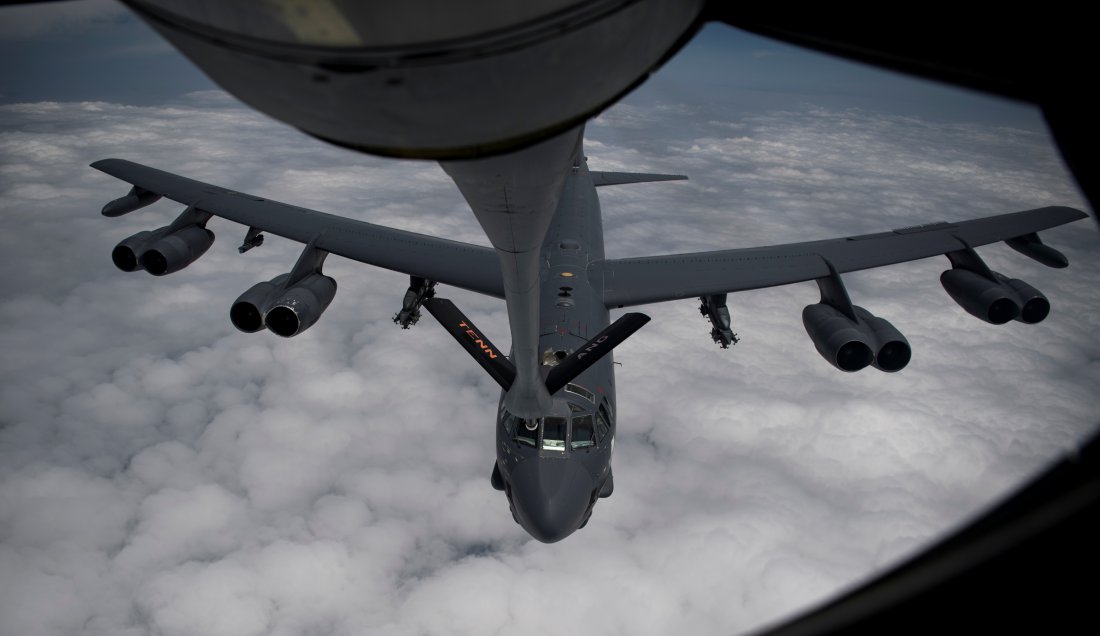
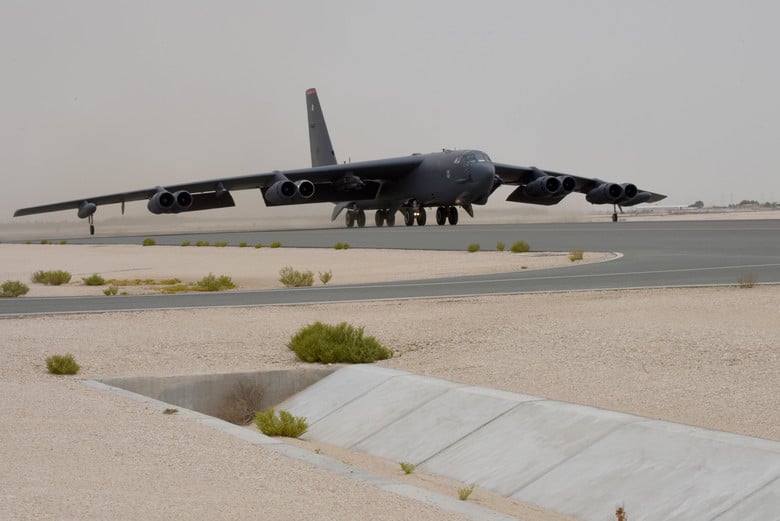
TEL AVIV: In a rapid-fire series of events, Iran has reportedly rolled large numbers of missiles into the open, potentially signaling to American forces they can overwhelm them if necessary. Elsewhere, its drones have reportedly attacked Saudi Arabian oil facilities, and American B-52s were shown yesterday taking off from a base in the Persian Gulf. Back in Washington, plans for moving up to 120,000 troops to the region are leaked by seven Trump administration officials to the New York Times.People are key to securing the defense-industrial supply chain
What’s Great Power Competition? No One Really Knows
More than a year since the new National Defense Strategy refocused the U.S. military away from counterinsurgency and back towards the country’s greatest strategic competitors, some policy and strategy experts say the Pentagon hasn’t yet figured out how to “compete” with Russia and China.
/arc-anglerfish-arc2-prod-mco.s3.amazonaws.com/public/TNQQWMOM7JGLJAPOT5T2VSPFDU.jpg)