The Profession of Arms: A Guide for Young Army Officers
It takes courage, especially for a young officer, to check a man met on the road for not saluting properly or for slovenly appearance, but, every time he does, it adds to his stock of moral courage, and whatever the soldier may say, he has respect for the officer who does pull him up.
Read Document →The Dragon's Teeth: Assessing China's Military Modernization
PLA has focused on modernising its capabilities across all warfare domains to achieve these goals. This includes land, air, and maritime operations, nuclear, space, counter-space, electronic warfare and cyberspace operations, aiming to become a fully integrated joint force.
Read Document →Transforming the PLA: A Decade of reorganisation from SSF to ISF
PRC has engaged in a sustained and broad effort to transform the PLA from an infantry-heavy, low-technology, ground forces-centric military into a high-technology, networked force with an increasing emphasis on joint operations and naval and air power projection.
Read Document →Eyes without Borders: Exploring the World of Open Source Intelligence (OSINT) in the Digital Age
Open Source Intelligence (OSINT) is gaining prominence with the rise of social media, the digital society and the vast growth of publicly and commercially available information (PAI and CAI).
Read Document →
The PLA’s Developing Cyber Warfare Capabilities and India's Options
Informationised warfare blurs the lines between peacetime and wartime. A nation in the information age cannot wait for the hostilities to break out to collect intelligence, carryout influence operations, develop antisatellite systems or design computer software weapons.
Read Document →
Galwan and After
Why did China did this when he is under tremendous pressure in all fronts, is this China's salami slice tactics being progressed rigorously, what will be new Rules of Engagement, what will be escalatory control mechanism, who has taken this decision, will there be some pressure put by China in India's North-East through insurgency.
Read Document →
India’s Joint Doctrine for Cyberspace Operations: A Critical Review
Chief of Defence Staff (CDS) General Anil Chauhan and Secretary, Department of Military Affairs, formally released declassified versions of the Joint Doctrines for Cyberspace Operations during the Chiefs of Staff Committee meeting in New Delhi.
Read Document →
Know your Enemy General(now Field Marshal) Syed Aseem Munir
Gen SA Munir's position in the hierarchy of Pakistan was not very comfortable. The state of economy, insurgency in Pakhtoonistan and Balochistan, attack on the Jaffar Express, constant protests by supporters of Imran Khan's supporters inside and outside of parliament.
Read Document →
Decoding Operation SINDOOR: Key Aspects and Implications
Precision strikes were carried out on nine sites—four in Pakistan and five in PoK—linked to anti-India terrorist groups such as the LeT, JeM and the Hizbul Mujahideen. The targeted sites included Muridke (LeT headquarters) and Bahawalpur (JeM headquarters).
Read Document →
Chinese Cyber Exploitation in India's Power Grid - Is There a linkage to Mumbai Power Outage?
The New York Times (NYT), based on analysis by a U.S. based private intelligence firm Recorded Future, reported that a Chinese entity penetrated India’s power grid at multiple load dispatch points. Chinese malware intruded into the control systems that manage electric supply across India, along with a high-voltage transmission substation and a coal-fired power plant
Read Document →7 November 2017
RUSSIAN INFLUENCE OPERATIONS IN US ELECTIONS
*** The Next Space Race Is Artificial Intelligence
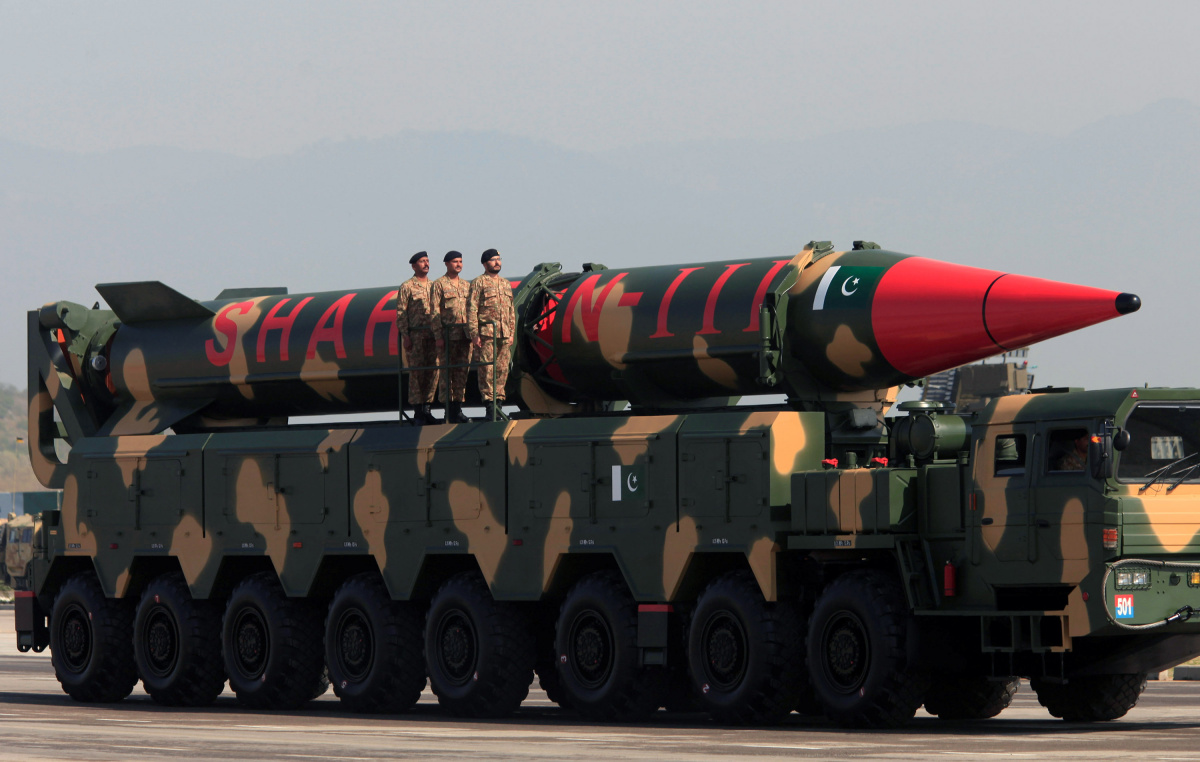
Nearly 60 years ago, then-Senate Majority Leader Lyndon B. Johnson seized his colleagues with a stark Cold War warning: Whoever wins the space race, he predicted, would gain “control, total control, over the Earth for purposes of tyranny or for the service of freedom.”Pakistan Says It's Ready to Use Nuclear Weapons—Should India Worry?
The upper Han
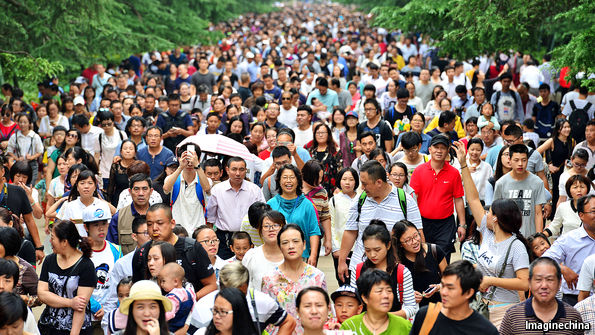
FIVE men who ran a bookshop in Hong Kong disappeared in mysterious circumstances in late 2015. One was apparently spirited away from the territory by agents from the mainland; another was abducted from Thailand. All later turned up in Chinese jails, accused of selling salacious works about the country’s leaders. One bookseller had a British passport and another a Swedish one but the two suffered the same disregard for legal process as Chinese citizens who anger the regime. Their embassies were denied access for weeks. The government considered both these men as intrinsically “Chinese”. This is indicative of a far broader attitude. China lays claim not just to booksellers in Hong Kong but, to a degree, an entire diaspora.The Fall of a Jihadist Bastion: A History of the Battle of Mosul (October 2016 – July 2017)
Islamic State’s (IS) greatest conquest was its bold June 2014 seizure of Mosul, Iraq’s second largest city and home to approximately two million predominately Sunni inhabitants. For almost three years, IS dug in to defend this strategic stronghold and the site of the declaration of the IS khilafah (caliphate) by Abu Bakr al-Baghdadi, the self-styled “Caliph Ibrahim” (al-Jazeera, July 6, 2014). When a U.S.-backed coalition of jostling Kurdish Peshmerga, Iranian-backed Shia militias and Iraqi Security Forces made up of 114,000 troops launched “Operation We are Coming Nineveh” on October 16, 2016, they knew they were in for a bloody slog to dislodge IS fighters who had “worm-holed” the city, creating tunnels through buildings and building extensive defensive barricades. [1] They were not mistaken in this assumption, and for nine months the allies battled their way first through modern east Mosul, then through the warrens of older west Mosul on the opposite side of the Tigris.The Promise of a Bridge in Bangladesh
Ukraine Has Gas for Upcoming Winter, but Time for Reforms Is Running Out

Ukraine has entered a new heating season with almost 17 billion cubic meters (bcm) of natural gas stored in its underground reservoirs, according to Ukrtransgaz, the gas transportation and storage subsidiary of the state-owned oil and gas company Naftogaz Ukrainy (Utg.ua, accessed October 30). This is more than Ukraine stored up in anticipation of winter both last year as well as two years ago. As such, winter 2017–2018 will be the third heating season in a row that Ukraine will have enough stored gas to make it through the cold months since natural gas purchases from Russia’s Gazprom were stopped in November 2015. Having built the foundations for stable gas deliveries from the European Union via Slovakia, Poland and Hungary, Ukraine has proved that it can survive without Gazprom, which used to account for 100 percent of its imports of the “blue fuel.” Although, it bears pointing out that much of the gas that Ukraine is buying from the EU is actually Russian gas pumped in the reverse direction.A small country fights a big war against Russian hybrid warfare
Russia’s Hybrid Attacks Should, At Long Last, Force the EU and NATO to Team Up
Preparing for What Comes Next in North Korea
The Russian War on Terror
The Changing Geopolitics of Energy
Beware: this Russian cyber warfare threatens every democracy
The Trump Campaign Indictments Matter, but Not for the Reasons You Think
It's easy to look at a string of recent indictments against members of U.S. President Donald Trump's former campaign staff and get sidetracked by the partisan rhetoric flying back and forth. But calls for impeachment from the left and claims of a state-sponsored set-up from the right ignore the deeper intrigue beneath the surface.Nuclear Triad: Pentagon Taking Steps to Modernize Global Strike Weapons
Machine Intelligence and Human Ingenuity Can Achieve the Impossible
Four takeaways from the Senate Intelligence hearing with Facebook, Twitter and Google
Under pressure, social media giants acknowledge their platforms were used by Russia to meddle in 2016 elections
Is Big Data Up to the Military Challenge?
In today’s big data environments, it is not that “we don’t know what we don’t know.” It is actually “we don’t know what we do know,” according to Col. Pete Don, USA, deputy senior intelligence officer for intelligence operations, U.S. Army Pacific. “We are being dazzled with so much data that it is hard to focus and find the needle in the haystack." The net seizes our attention only to scatter it, he contends. Col. Don joined three other colleagues as part of a panel on cybersecurity intelligence at TechNet Asia-Pacific. The Future of EU Defence: A European Space, Data and Cyber Agency?
According to Jean-Pierre Darnis, converging technological and political trends in the space, data and cyber domains are providing opportunities for the EU to establish supra-national defense policy responses. Indeed, Darnis argues that the EU can find justification for the creation of such EU-level responses in 1) the globally pervasive nature of technological advances in these arenas and their potential for dual-use applications; 2) the inability of member states to fund defensive cyber and space capabilities on their own, and more.