The Profession of Arms: A Guide for Young Army Officers
It takes courage, especially for a young officer, to check a man met on the road for not saluting properly or for slovenly appearance, but, every time he does, it adds to his stock of moral courage, and whatever the soldier may say, he has respect for the officer who does pull him up.
Read Document →The Dragon's Teeth: Assessing China's Military Modernization
PLA has focused on modernising its capabilities across all warfare domains to achieve these goals. This includes land, air, and maritime operations, nuclear, space, counter-space, electronic warfare and cyberspace operations, aiming to become a fully integrated joint force.
Read Document →Transforming the PLA: A Decade of reorganisation from SSF to ISF
PRC has engaged in a sustained and broad effort to transform the PLA from an infantry-heavy, low-technology, ground forces-centric military into a high-technology, networked force with an increasing emphasis on joint operations and naval and air power projection.
Read Document →Eyes without Borders: Exploring the World of Open Source Intelligence (OSINT) in the Digital Age
Open Source Intelligence (OSINT) is gaining prominence with the rise of social media, the digital society and the vast growth of publicly and commercially available information (PAI and CAI).
Read Document →
The PLA’s Developing Cyber Warfare Capabilities and India's Options
Informationised warfare blurs the lines between peacetime and wartime. A nation in the information age cannot wait for the hostilities to break out to collect intelligence, carryout influence operations, develop antisatellite systems or design computer software weapons.
Read Document →
Galwan and After
Why did China did this when he is under tremendous pressure in all fronts, is this China's salami slice tactics being progressed rigorously, what will be new Rules of Engagement, what will be escalatory control mechanism, who has taken this decision, will there be some pressure put by China in India's North-East through insurgency.
Read Document →
India’s Joint Doctrine for Cyberspace Operations: A Critical Review
Chief of Defence Staff (CDS) General Anil Chauhan and Secretary, Department of Military Affairs, formally released declassified versions of the Joint Doctrines for Cyberspace Operations during the Chiefs of Staff Committee meeting in New Delhi.
Read Document →
Know your Enemy General(now Field Marshal) Syed Aseem Munir
Gen SA Munir's position in the hierarchy of Pakistan was not very comfortable. The state of economy, insurgency in Pakhtoonistan and Balochistan, attack on the Jaffar Express, constant protests by supporters of Imran Khan's supporters inside and outside of parliament.
Read Document →
Decoding Operation SINDOOR: Key Aspects and Implications
Precision strikes were carried out on nine sites—four in Pakistan and five in PoK—linked to anti-India terrorist groups such as the LeT, JeM and the Hizbul Mujahideen. The targeted sites included Muridke (LeT headquarters) and Bahawalpur (JeM headquarters).
Read Document →
Chinese Cyber Exploitation in India's Power Grid - Is There a linkage to Mumbai Power Outage?
The New York Times (NYT), based on analysis by a U.S. based private intelligence firm Recorded Future, reported that a Chinese entity penetrated India’s power grid at multiple load dispatch points. Chinese malware intruded into the control systems that manage electric supply across India, along with a high-voltage transmission substation and a coal-fired power plant
Read Document →19 September 2019
Saudi oil refinery attack unites China with India, other Asia rivals worried about war
Afghan Govt Firmly Focuses On Election For Now: Sediqqi
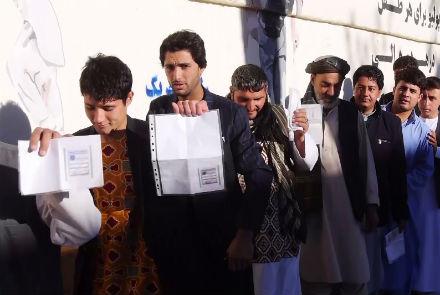
Presidential spokesman Sediq Sediqqi said on Saturday that the Afghan government has suspended the peace efforts and has prioritized the election to make it happen on 28 September.Afghans Want Peace, but Not Like This
KABUL—Sakhi Murad Sadar, his wife, and their two children were asleep in the family’s living room on Sept. 2 when a car bomb was detonated on the street nearby, ripping the house apart, smashing its windows, and almost killing the family.Two senior Taliban leaders killed by Afghan, US fighters
Coming Soon to the United Nations: Chinese Leadership and Authoritarian Values
For many years, the annual meeting of the United Nations General Assembly (UNGA) in September was a centerpiece of U.S. global leadership. President Barack Obama’s administration, for example, used the occasion to galvanize international action on issues such as climate change and refugee resettlement.Beijing’s South China Sea Aggression Is a Warning to Taiwan
China’s increasingly assertive actions in the South China Sea have drawn plenty of attention. But its moves are important not just for Beijing’s ambitions there, but for its wider playbook for wielding power and influence in the Indo-Pacific—and what it might have in store for Taiwan.The Great Anti-China Tech Alliance
Dangerous Demographics: China's Population Problem Will Eclipse Its Ambitions
Government researchers have predicted that the world’s largest population will peak at 1.4 billion people in 2029. However, it will then experience an “unstoppable” decline that could see it drop to 1.36 billion by 2050, reducing the workforce by as much as 200 million.China strikes back
THE Petroleum Economist of Sept 3 reported that China has agreed to invest up to $290 billion in the development of Iran’s oil, gas and petroleum sectors, and another $120bn in its transport and manufacturing infrastructure. This is a calculated kick aimed at America’s strategic objectives.
Attacks imperil Saudi image as reliable oil supplier
US Military Options in Iran
Middle East Mystery Theater: Who Attacked Saudi Arabia's Oil Supply?
Trump says he does not want war after attack on Saudi oil facilities
Saudi oil attacks: US says intelligence shows Iran involved
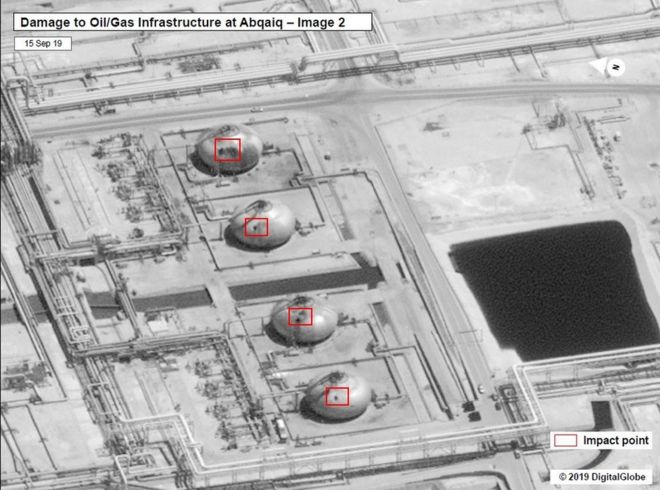
Image copyrightUS GOVERNMENT / DIGITAL GLOBEImage captionOne of the US government's satellite images showing apparent damage at the world's biggest oil-processing facilityThreat Assessment High: The Attack on Saudi Arabia's Oil Supply Signals a New Danger

Gulf Wealth: All That Glitters Is Not Gold
Yes, Iran Was Behind the Saudi Oil Attack. Now What?
Exploring the Complications of Counting Casualties After Natural Disasters
Integrating National Defense and Security Strategies to Win Complex Wars
Preventing Cold War II
Pentagon’s Former Top Hacker Wants His Startup to Inject Some Silicon Valley into the Defense Industry
Trump says US locked and loaded in response to drone attack
WASHINGTON (AP) — Tensions are flaring in the Persian Gulf after President Donald Trump said the U.S. is “locked and loaded” to respond to a weekend drone assault on Saudi Arabia’s energy infrastructure that his aides blamed on Iran.The Obama Administration Destroyed Libya. Could Trump Make It Worse?
The economic policy at the heart of Europe is creaking

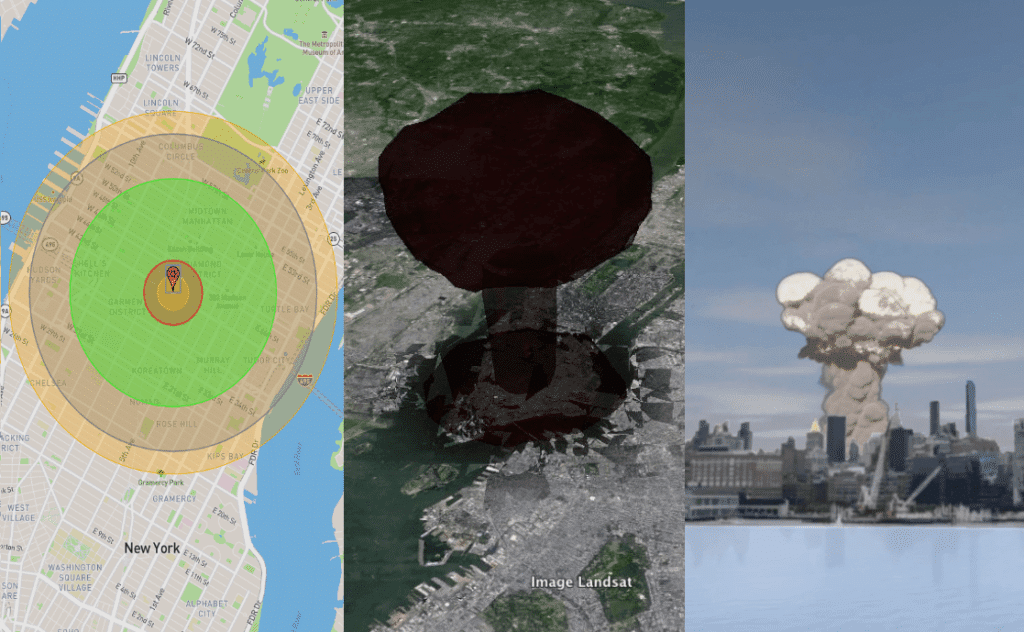
Interview with Alex Wellerstein on NUKEMAP VR
Trump Tells the World He’s Desperate to Play Dealmaker
Russian Population Decline in Spotlight Again
Last week, in a meeting with top advisors, Russian President Vladimir Putin lamented the population decline in the country’s Far East, saying it falls in an “alarming, red zone.” While this sparsely populated region, which shares a border with far more densely populated Chinese provinces, may raise particularly acute demographic concerns for the Kremlin, the country’s population decline more broadly—in both absolute and relative terms—is once again vexing the Russian leadership. Earlier this year the U.N. Commission on Population and Development concluded that the world’s population will grow from 7.7 billion in 2019 to 9.7 billion by 2050, an increase of some 26 percent; Russia, meanwhile, was projected to lose a little over 10 million people, shrinking by about 7 percent from 145.9 million in 2019 to 135.8 million in 2050, according to the U.N.’s World Population Prospects. Indeed, Russia’s population has dropped for the first time in a decade: According to World Bank data, this happened between 2017 and 2018 and the year-on-year drop was about 19,000; according to official Russian population statistics—which have been recalculated for 2015 and beyond to include the population of Crimea after its annexation from Ukraine—the drop happened between the start of 2018 and 2019 and was close to 100,000. While estimates of the country’s population vary from source to source (official national statistics place it at 146.8 million), the current downward trend is now undisputed. Its causes include a declining birth rate, a relatively high mortality rate and a drop in inbound migration.How 5G will reinvent “working from home”
After 6 Years in Exile, Edward Snowden Explains Himself
The Promise and Perils of Technology in International Affairs
Technology has the potential to dramatically improve the quality of life for the world’s populations, but there are no guarantees it will. Concerns remain about everything from how the growing digital divide risks leaving large swathes of society—and the world—behind, to questions about the security of data and its potential weaponization. And, of course, there is the ongoing debate around how technology and information platforms can be used to undermine democratic processes, including elections.