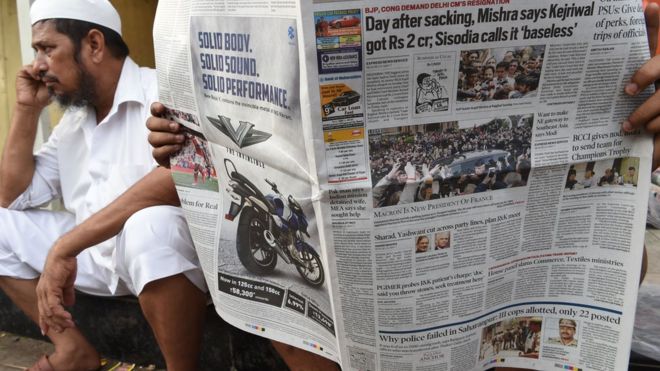
It is a potential scandal that claims to strike at a key pillar of Indian democracy - the freedom of the press - yet it is barely being reported in the Indian media. There's a simple reason for that: this alleged scandal involves many of the most powerful media institutions in the country. A sting operation by a news organisation called Cobrapost claims to have revealed a deeply engrained bias towards the ruling Bharatiya Janata Party (BJP) within many of India's leading media groups, as well as a willingness among some of the country's most senior media executives and journalists to take money in return for pushing a political agenda.The Profession of Arms: A Guide for Young Army Officers
It takes courage, especially for a young officer, to check a man met on the road for not saluting properly or for slovenly appearance, but, every time he does, it adds to his stock of moral courage, and whatever the soldier may say, he has respect for the officer who does pull him up.
Read Document →The Dragon's Teeth: Assessing China's Military Modernization
PLA has focused on modernising its capabilities across all warfare domains to achieve these goals. This includes land, air, and maritime operations, nuclear, space, counter-space, electronic warfare and cyberspace operations, aiming to become a fully integrated joint force.
Read Document →Transforming the PLA: A Decade of reorganisation from SSF to ISF
PRC has engaged in a sustained and broad effort to transform the PLA from an infantry-heavy, low-technology, ground forces-centric military into a high-technology, networked force with an increasing emphasis on joint operations and naval and air power projection.
Read Document →Eyes without Borders: Exploring the World of Open Source Intelligence (OSINT) in the Digital Age
Open Source Intelligence (OSINT) is gaining prominence with the rise of social media, the digital society and the vast growth of publicly and commercially available information (PAI and CAI).
Read Document →
The PLA’s Developing Cyber Warfare Capabilities and India's Options
Informationised warfare blurs the lines between peacetime and wartime. A nation in the information age cannot wait for the hostilities to break out to collect intelligence, carryout influence operations, develop antisatellite systems or design computer software weapons.
Read Document →
Galwan and After
Why did China did this when he is under tremendous pressure in all fronts, is this China's salami slice tactics being progressed rigorously, what will be new Rules of Engagement, what will be escalatory control mechanism, who has taken this decision, will there be some pressure put by China in India's North-East through insurgency.
Read Document →
India’s Joint Doctrine for Cyberspace Operations: A Critical Review
Chief of Defence Staff (CDS) General Anil Chauhan and Secretary, Department of Military Affairs, formally released declassified versions of the Joint Doctrines for Cyberspace Operations during the Chiefs of Staff Committee meeting in New Delhi.
Read Document →
Know your Enemy General(now Field Marshal) Syed Aseem Munir
Gen SA Munir's position in the hierarchy of Pakistan was not very comfortable. The state of economy, insurgency in Pakhtoonistan and Balochistan, attack on the Jaffar Express, constant protests by supporters of Imran Khan's supporters inside and outside of parliament.
Read Document →
Decoding Operation SINDOOR: Key Aspects and Implications
Precision strikes were carried out on nine sites—four in Pakistan and five in PoK—linked to anti-India terrorist groups such as the LeT, JeM and the Hizbul Mujahideen. The targeted sites included Muridke (LeT headquarters) and Bahawalpur (JeM headquarters).
Read Document →
Chinese Cyber Exploitation in India's Power Grid - Is There a linkage to Mumbai Power Outage?
The New York Times (NYT), based on analysis by a U.S. based private intelligence firm Recorded Future, reported that a Chinese entity penetrated India’s power grid at multiple load dispatch points. Chinese malware intruded into the control systems that manage electric supply across India, along with a high-voltage transmission substation and a coal-fired power plant
Read Document →31 May 2018
The story barely reported by Indian media
It is a potential scandal that claims to strike at a key pillar of Indian democracy - the freedom of the press - yet it is barely being reported in the Indian media. There's a simple reason for that: this alleged scandal involves many of the most powerful media institutions in the country. A sting operation by a news organisation called Cobrapost claims to have revealed a deeply engrained bias towards the ruling Bharatiya Janata Party (BJP) within many of India's leading media groups, as well as a willingness among some of the country's most senior media executives and journalists to take money in return for pushing a political agenda.The new world disorder: is war inevitable in the Asian century?
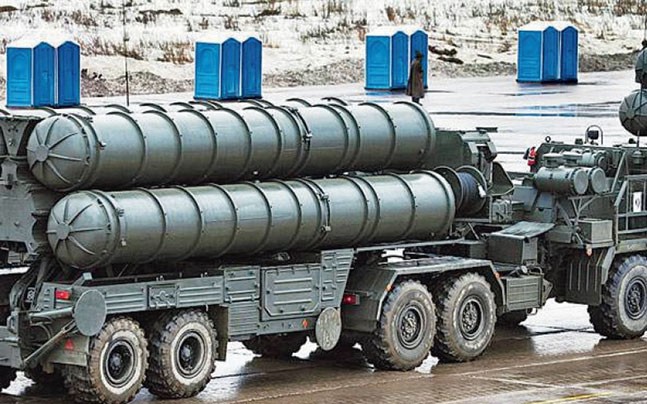
India, Russia conclude negotiations for Rs 40,000 crore air defence missile systems
The official said both Russia and India are likely to announce the deal before an annual summit between Prime Minister Narendra Modi and Russian President Vladimir Putin in October. S-400 Triumf deal: India, Russia conclude negotiations for Rs 40,000 crore air defence missile systems The Great Afghan Paradox By most metrics the war in Afghanistan is going badly.
By most metrics the war in Afghanistan is going badly. According to the most recent quarterly report by the Special Inspector General for Afghanistan Reconstruction (SIGAR), the troop strength of Afghan Security Forces is in “sharp decline” even as the Taliban are on the march throughout the countryside. The number of “security incidents” is similarly on the rise, to include a series of recent suicide bombings in Kabul, including one in late April attributed to Daesh (aka the Islamic State) that targeted and killed nine journalists and four police officers. Opium production skyrocketed by nearly 90 percent in 2017, and the Afghan government continues to rate near the bottom on Transparency International’s “Corruption Perception Index.” The publication Long War Journal, which tracks the conflict, recently estimated that the Taliban now “controls or contests” 58.5 percent of Afghanistan’s 407 districts, a high-water mark for the Islamist extremist group. The United States And Pakistan: Frenemies On The Brink
For much of its short seventy-year history, Pakistan has managed to thoroughly mismanage its strategic relationships with great power patrons, regional competitors, and non-state clients. It has waged and lost four wars with a larger and more powerful India, supported terrorist organizations that have destabilized Afghanistan and conducted deadly attacks in neighboring India, and alienated its long-time American ally. Only Pakistan’s geopolitical position as a land bridge between the Indian Ocean and Central Asia has kept U.S.-Pakistani relations from severing completely, due to the need to ship military supplies and equipment through Pakistani territory to land-locked Afghanistan. Otherwise, there is little love lost between Pakistanis and Americans; polling indicates three-quarters of Pakistanis view the United States as an enemy, while only 10 percent of Americans trust Pakistan. Never have supposed allies hated each other so much.Top Afghan Security Officials Visit Pakistan for Crucial Talks
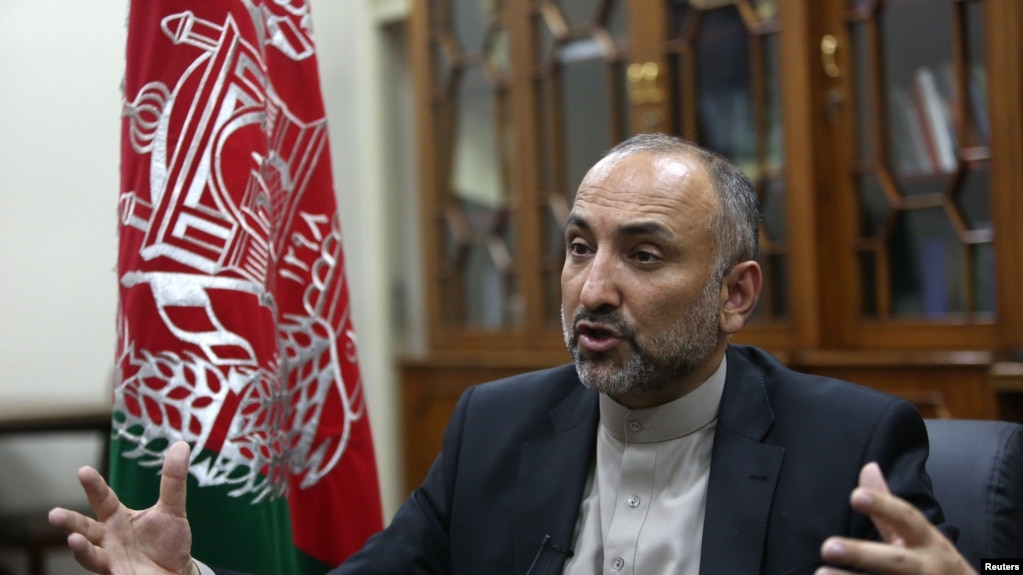
A high-level Afghan delegation held a daylong official visit to neighboring Pakistan Sunday to discuss bilateral matters, border management and regional security. Afghan National Security Adviser Haneef Atmar led a team of top security officials, including the country’s interior minister and heads of the army and the intelligence agency. The visitors held discussions with Pakistani National Security Adviser Nasser Janjua after landing in Islamabad. Janjua’s office said in a brief statement both sides reiterated their resolve to work jointly on issues related to bilateral ties and security. The Afghan delegation also met with Pakistan’s military chief, General Qamar Javed Bajwa. Islamabad and Kabul earlier this month put into operation a new bilateral engagement framework called the Afghanistan-Pakistan Action Plan for Peace and Solidarity (APAPPS) for “eliminating terrorism and achieving peace, stability, prosperity and development of the people of the two countries.”Looking For A Silver Lining In Indonesia's Black May
How China acquires ‘the crown jewels’ of U.S. technology
China is taking digital control of its people to chilling lengths
Watching Donald Trump trying to deal with China is like watching a clown dancing in front of an elephant. The US president’s entire approach is transactional – the methodology he employed in his allegedly successful career as a property developer. It’s all sticks and carrots, bluff and counter-bluff, aggressive bluster followed by rapid retreats. Sometimes, it appears to work. For example, the Chinese leader, Xi Jinping, clearly leant on Kim Jong-un to force him to agree to a summit meeting with Trump. But then Xi leant on Trump to rescue the Chinese tech company ZTE, brought to its knees by a US ban because it had evaded sanctions on trade with Iran. Trump duly complied and ZTE executives breathed again.China’s missiles in the South China Sea mean girding for war
US, Coalition Forces Used Cyberattacks to Hunt Down ISIS Command Posts
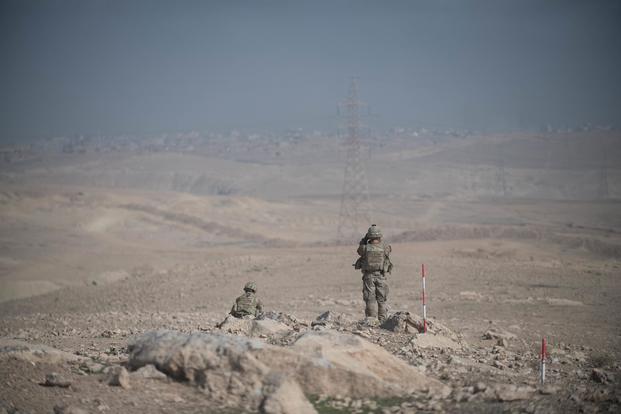
U.S. and coalition forces launched cyberattacks last year to help identify and destroy several command posts of Islamic State leaders, according to the former head of the task force to defeat ISIS in Iraq and Syria. "This is a vignette that actually played out during and after the battle of Mosul and after the battle of Raqqa," said Gen. Stephen Townsend, who commanded Combined Joint Task Force-Operation Inherent Resolve in 2017. Townsend, who now commands Army Training and Doctrine Command, described the multi-domain operation to an audience at the Association of the United States Army's LANPAC Symposium and Exposition in Hawaii.Top 3 Takeaways from Pompeo’s New Deal for Iran
The Populist Revolt Reaches Iraq
What Will It Take for Syrian Refugees to Return Home?
Oil Shock: Entry Point For Deepening Reform – Analysis
I Served with the Military Leaders Shaping America’s North Korea Plan. Here’s What They’ll Do Next
Erdogan Is Failing Economics 101

A Call for Realism in Europe
Hamas, Netanyahu and Mother Nature
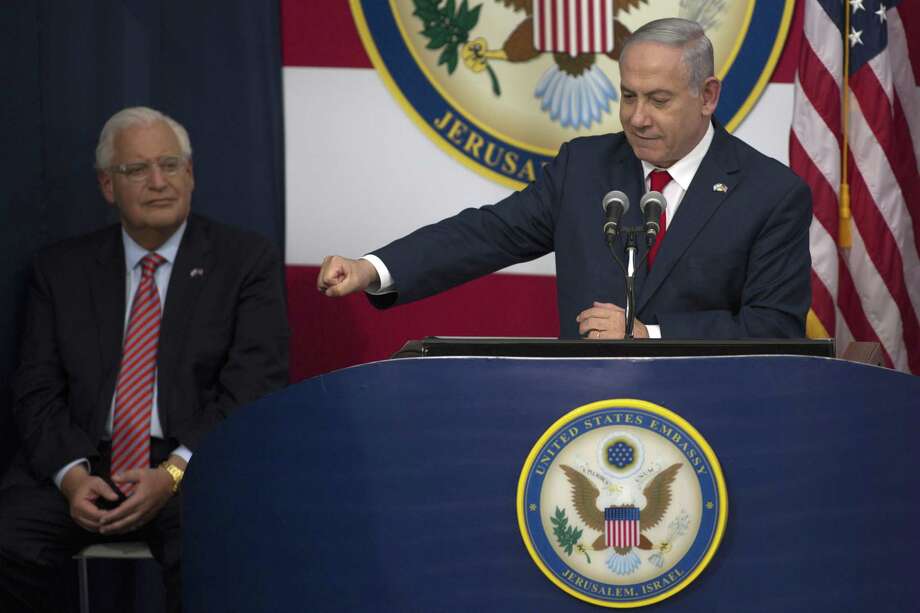
Israel's Prime Minister Benjamin Netanyahu speaks on stage as U.S. ambassador to Israel David Friedman (L) looks on during the opening of the US embassy in Jerusalem on May 14, 2018 in Jerusalem, Israel. US President Donald J. Trump's administration officially transfered the ambassador's offices to the consulate building and temporarily use it as the new US Embassy in Jerusalem. Trump in December last year recognized Jerusalem as Israel's capital and announced an embassy move from Tel Aviv, prompting protests in the occupied Palestinian territories and several Muslim-majority countries.The Israel-Palestine Standoff
What You Need to Know About Trump's Plan for Auto Tariff
Although the United States remains heavily focused on its trade dispute with China, the U.S. administration has another target in its crosshairs: the global automotive sector. The damage to supply chains and the auto sector could dwarf all previous moves made by President Donald Trump. But the proposal is also likely to see substantial pushback from within the United States.Denuclearization and the Demise of Moammar Gadhafi’s Regime
The United States has canceled its meeting to negotiate an end to North Korea’s nuclear weapons program. One of the many points of contention was not just if Pyongyang would denuclearize but how it would denuclearize. Some in the Trump administration advocated what is colloquially called the Libya model, a total abdication whereby former Libyan leader Moammar Gadhafi gave up his nuclear program, only to die partly at the hands of the United States years later. The graphic above provides a timeline of the events surrounding this deal.
Japan Wants Closer Relations With Russia. Good Luck With That.
The Japanese prime minister's political troubles will add urgency to his country's bid to improve relations with Russia and resolve their long-standing dispute over contested islands. But the ongoing standoff between Russia and the United States, lackluster Japanese investment in Russia and Moscow's concerns about sovereignty leave little room for a breakthrough that would move beyond the incremental progress of recent years. That said, Russia will maintain its outreach to Japan to gain leverage in the U.S. camp and in an effort to counterbalance China. How Italy's Next Government Will Shake Up the EU
Internal disagreements, along with Italy's bureaucracy, vested interests and parallel centers of power, could reduce the next Italian government's room for action on its ambitious agenda.What the GDPR Means for Companies in Europe and Beyond
Not all EU member states have enacted national laws on data protection, and many will have difficulty shouldering the costs of doing so. The second half of 2018 will provide early indicators of how much the European Union can influence large technology companies to address the privacy concerns of EU citizens. Uncertainty regarding the severity of national enforcement could influence the regional development of technology, especially in terms of small and medium-sized enterprises.30 May 2018
Narendra Modi govt’s last mile challenge
The Narendra Modi government’s last year in office will also be the most difficult one, and the biggest challenge will be to protect macroeconomic stability by not compromising on fiscal discipline The last few months before 2019 Lok Sabha elections could be dominated by economic pressure points, yet the Narendra Modi government is likely to leave behind an Indian economy that is in a far better shape than what it inherited in 2014. Illustration: Jayachandran/Mint The Narendra Modi government completed four years in office last week. Its last few months before the nation goes to the polls could be dominated by economic pressure points—rising inflation, a weak rupee, rural distress and a persistent banking crisis. Yet, it is likely to leave behind an economy that is in a far better shape than what it inherited in 2014.Capricious Afghanistan-Pakistan Trade: Who Wins?
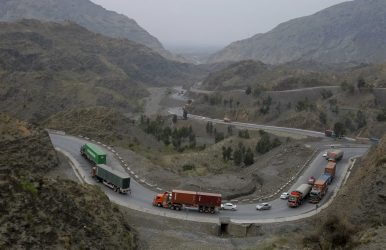
Economics literature insists that trade among nations is beneficial for job creation and fueling economic growth. Trade helps improve living standards and promote better quality products and services at competitive prices. Thus trade remains at the top of agendas when it comes to bilateral relations among countries. However, these benefits aside, trade relations between Afghanistan and Pakistan have suffered considerably under turbulent bilateral political ties. As a landlocked country, Afghanistan has remained dependent on Pakistan for its transit trade while both countries are also immediate markets for each other. Unfortunately, trade relations between Afghanistan and Pakistan have remained capricious, following the trajectory of turbulent political relations since the 1947 partition brought independent Pakistan into existence.Inequality in India can be seen from outer space
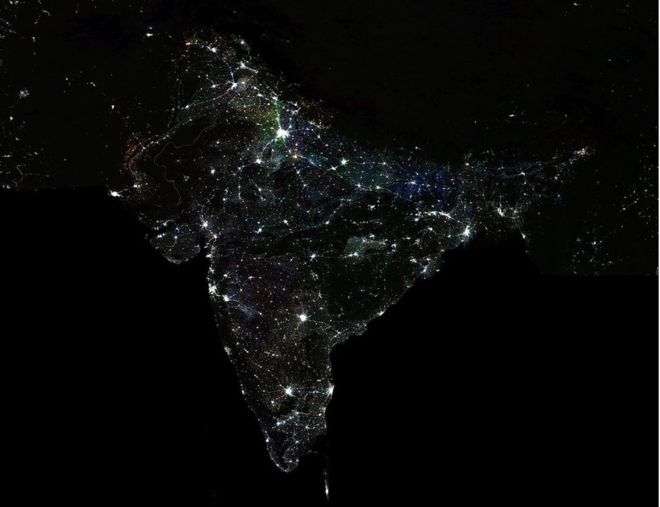
Economists Praveen Chakravarty and Vivek Dehejia certainly believe so. They acquired images grabbed by satellites from the US Air Force Defence Meteorological Satellite Programme. These satellites circle the earth 14 times a day and record lights from the earth's surface at night with sensors. They superimposed a map depicting India's districts on their images, allowing them to develop a unique data set of luminosity values, by district and over time. Using data generated by the night lights, they studied of 387 of 640 districts in 12 states. These districts account for 85% of India's population and 80% of its GDP. Some 87% of parliamentary seats are in these districts. Using the novel methodology, the economists documented income divergence in India.The Quad, Vietnam, and the Role of Democratic Values
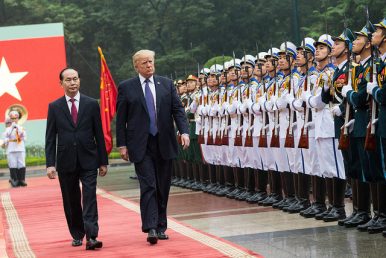
Since its revival of the sidelines of APEC last November, scholarship regarding the Quadrilateral Security Dialogue has addressed the various obstacles to the realization of its greater potential. Several contributions in the May issue of The Diplomat magazine underscored how the Quad’s incapacity to dispel perceptions of its “China containment” endgame have cast doubt in the minds of potential regional partners as to the merits of associating with the so-called “Democratic Security Diamond.” For example, one article noted that ASEAN’s agnostic outlook on the Quad is motivated in large part by the underdevelopment of the “Indo-Pacific” concept espoused by the dialogue’s members.China Will Need American Shale
Little Laos risks losing it all to China
TPP’s Regulatory Capitalism and China’s Belt and Road Challenges
The Trans-Pacific Partnership (TPP) — now back from the dead — is more than a trade agreement. While its geopolitical significance and security undertones have been severely affected by the U.S. withdrawal, TPP’s project to establish U.S.-style regulatory capitalism as the dominant mode of international economic ordering in the Asia-Pacific lives on. TPP will operate a significant alternative to China’s state-centered approach, exemplified in the hugely ambitious Belt and Road Initiative (BRI).What Does China Really Think of North Korea?
It is one of the most oft-repeated pieces of wisdom in modern diplomacy: The one power with true influence over the isolated North Korean regime is its neighbor, China. This is supported by a raft of seemingly irrefutable facts. China supplies the vast bulk of North Korea’s energy, accounts for almost all its foreign trade, and shares, in name at least, a similar political system (despite in practice being vastly different) and a deeply interlinked modern history. The two are so close that they are like “lips and teeth,” as the phrase — repeated during Kim Jong-un’s two visits to China earlier in 2018 — goes.Intelligence: China And The Shadow Wars
Whether or not Beijing defies US sanctions, China’s roots in Iran are already deep
US and China halt imposing import tariffs
So Much for North Korea Summit. Now What?
Regime Change for Dummies
In my last column, I argued that U.S. President Donald Trump’s rash decision to violate the Iran nuclear deal was the first step in a new round of regime change in the Middle East. If his goal was stopping an Iranian bomb and preventing a regional arms race, the existing agreement was working just fine, and he should have been trying to make it permanent instead of gutting it. If his goal was stopping Iran’s “regional activities,” the smart strategy would have been to keep the country from going nuclear while working with others to bring Iran to heel through pressure and additional diplomacy. Instead, Trump, National Security Advisor John Bolton, and Secretary of State Mike Pompeo are hoping that violating the Iran deal will let them re-impose sanctions on Iran. They hope this pressure will topple the Islamic Republic, or lead Iran’s own hard-liners to restart its nuclear enrichment program and provide a pretext for the preventive war that Bolton has long advocated.How North Korean hackers became the world’s greatest bank robbers
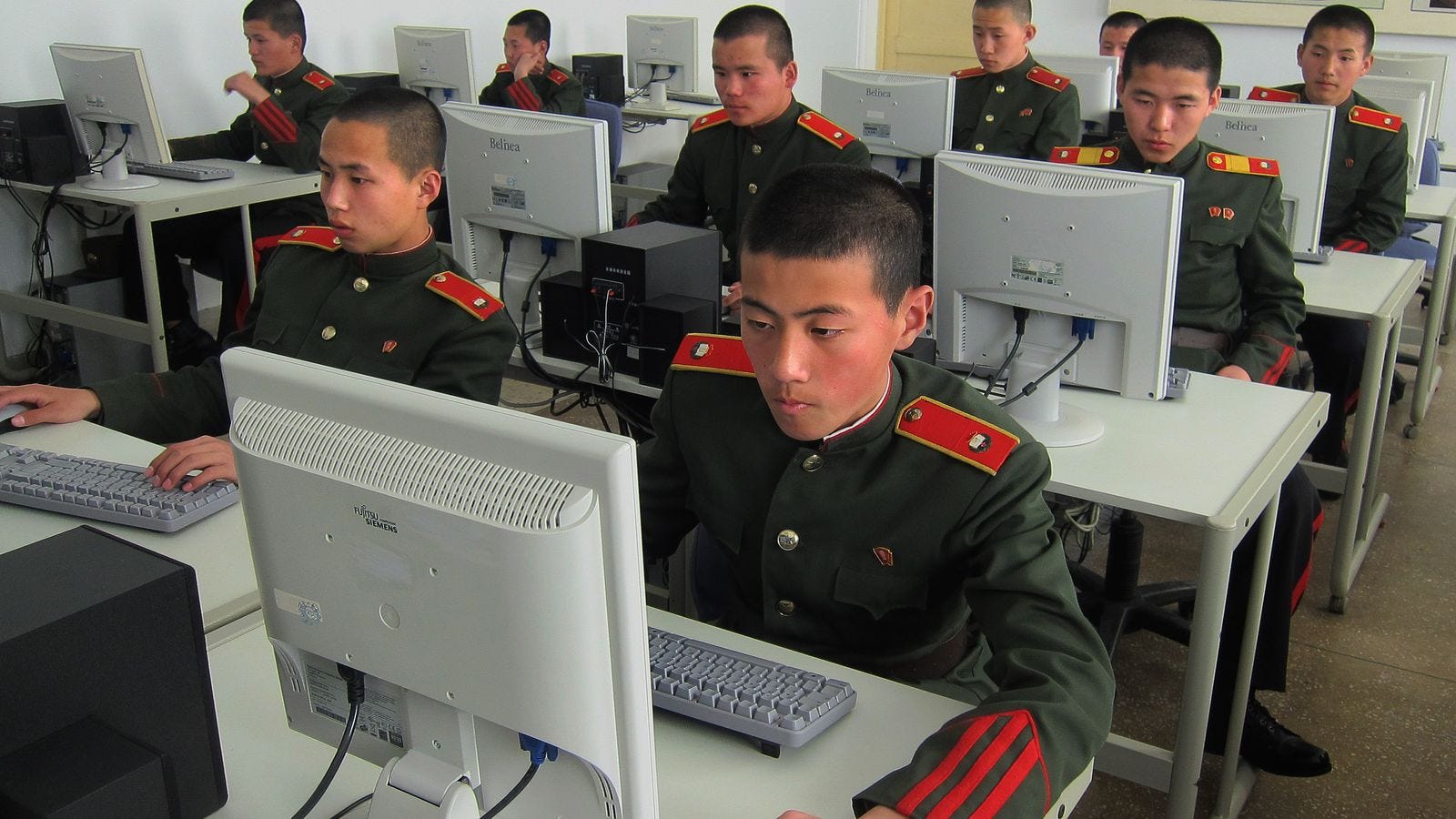
The Reconnaissance General Bureau, North Korea’s equivalent to the CIA, has trained up the world’s greatest bank-robbing crews. In just the past few years, RGB hackers have struck more than 100 banks and cryptocurrency exchanges around the world, pilfering more than $650 million. That we know of. Students at Mangyongdae Revolutionary School, a prestigious academy in Pyongyang. North Korea’s elite hackers are often deployed to countries with faster internet speeds to target banks around the world. In the US, they’ve gone after Wells Fargo, Citibank and the New York Federal Reserve. (Credit: KCNA)Europeans want to break up with America. They’d do so at their peril
The Top Secret Scandal Behind the Kremlin’s MH17 Massacre
I recently ignited a firestorm with my column about the 2010 Smolensk air crash, which killed 99 people and decapitated the Polish government. My recommendation for a new, third-party inquiry into that disaster, based on access to all available evidence, and free of politics, upset some people. I question the motivations of Westerners who dislike Poland’s current government more than Vladimir Putin and his nasty regime, particularly when they masquerade as anti-Kremlin activists. Moreover, the notion that Putin’s forces would blow up an airliner, without regard for innocent life, is anything but far-fetched. They’ve already done it. I am referring, of course, to the shootdown of Malaysian Airlines Flight 17 (MH17) over eastern Ukraine, an active warzone at the time, on July 17, 2014, killing all 299 passengers and crew aboard the doomed Boeing 777.Russia: Choosing A Side In Syria
Putin on cyberwarfare: Action causes reaction, you don’t like reaction – let’s talk rules
Diplomats, 'Net greybeards work to disarm USA, China and Russia’s cyber-weapons
EU considers baking new norms of cyber-war into security policies
12 Maps Covering 12,000 Years of History

BAPTISM BY FIRE: A SURVEY OF FIRST COMBAT EXPERIENCES
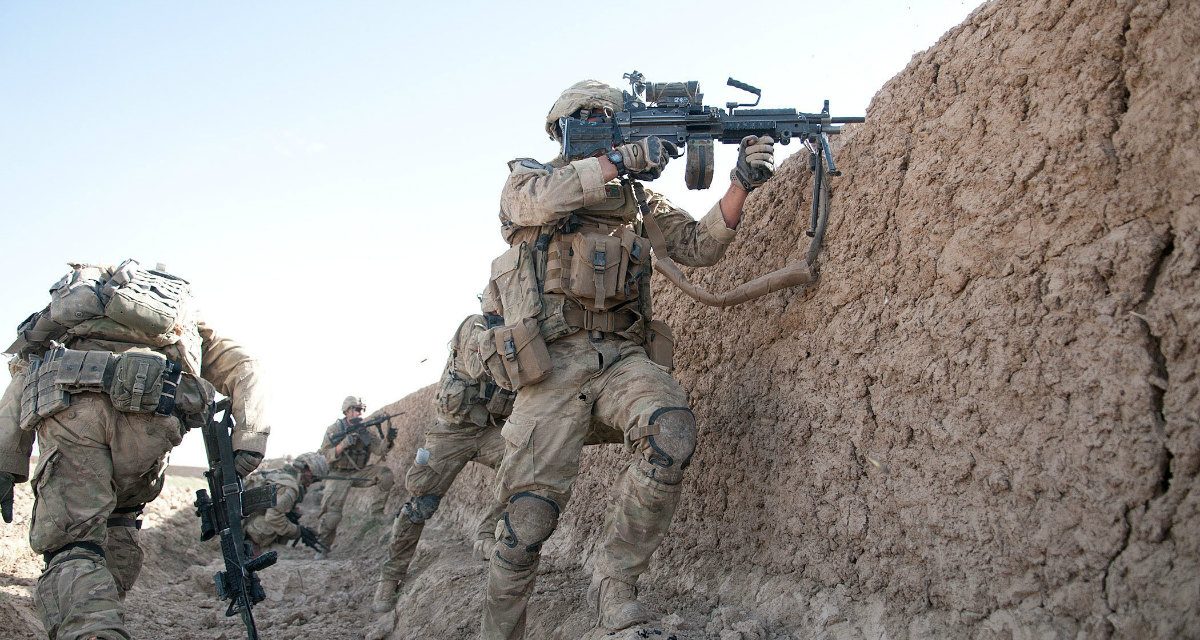
When a young man or woman enters military service, one existential question naturally arises in his or her mind: What will combat be like? For every service member, the answer will be different. Some professional soldiers may face a true combat situation a few times in a twenty-year career. Others may go from the recruiter’s office to combat in a matter of months and return many, many times. One commonality between these two extremes is that in each, a service member has a first experience; a moment that will likely change them forever. This article describes results of a survey that sought to capture veteran perceptions of first combat experiences to inform future generations as to what they might expect under similar circumstances.The Inside Story of What a Solider Feels and Thinks in Combat
Advances in Medicine During Wars: A Primer
29 May 2018
Is China replicating its South China Sea strategy in regions disputed with India?
On May 20, the South China Morning Post (SCMP) ran a report highlighting Beijing’s “unprecedented scale” of mining on its side of the disputed border with India in South Tibet, known in India as Arunachal Pradesh. The precious minerals, including gold and silver, are valued at about $58 billion by Chinese geologists, and are largely located in Lhunze county – a Chinese military stronghold occupied during the 1962 Sino-Indian border war. The following day, when asked about SCMP’s article at a media briefing, Chinese Foreign Ministry spokesman Lu Kang asserted that “it is completely within China’s sovereignty” to conduct such geological activities, stating that “China’s position on the India-China boundary is consistent and clear cut. China never recognised the so-called Arunachal Pradesh.”