The Profession of Arms: A Guide for Young Army Officers
It takes courage, especially for a young officer, to check a man met on the road for not saluting properly or for slovenly appearance, but, every time he does, it adds to his stock of moral courage, and whatever the soldier may say, he has respect for the officer who does pull him up.
Read Document →The Dragon's Teeth: Assessing China's Military Modernization
PLA has focused on modernising its capabilities across all warfare domains to achieve these goals. This includes land, air, and maritime operations, nuclear, space, counter-space, electronic warfare and cyberspace operations, aiming to become a fully integrated joint force.
Read Document →Transforming the PLA: A Decade of reorganisation from SSF to ISF
PRC has engaged in a sustained and broad effort to transform the PLA from an infantry-heavy, low-technology, ground forces-centric military into a high-technology, networked force with an increasing emphasis on joint operations and naval and air power projection.
Read Document →Eyes without Borders: Exploring the World of Open Source Intelligence (OSINT) in the Digital Age
Open Source Intelligence (OSINT) is gaining prominence with the rise of social media, the digital society and the vast growth of publicly and commercially available information (PAI and CAI).
Read Document →
The PLA’s Developing Cyber Warfare Capabilities and India's Options
Informationised warfare blurs the lines between peacetime and wartime. A nation in the information age cannot wait for the hostilities to break out to collect intelligence, carryout influence operations, develop antisatellite systems or design computer software weapons.
Read Document →
Galwan and After
Why did China did this when he is under tremendous pressure in all fronts, is this China's salami slice tactics being progressed rigorously, what will be new Rules of Engagement, what will be escalatory control mechanism, who has taken this decision, will there be some pressure put by China in India's North-East through insurgency.
Read Document →
India’s Joint Doctrine for Cyberspace Operations: A Critical Review
Chief of Defence Staff (CDS) General Anil Chauhan and Secretary, Department of Military Affairs, formally released declassified versions of the Joint Doctrines for Cyberspace Operations during the Chiefs of Staff Committee meeting in New Delhi.
Read Document →
Know your Enemy General(now Field Marshal) Syed Aseem Munir
Gen SA Munir's position in the hierarchy of Pakistan was not very comfortable. The state of economy, insurgency in Pakhtoonistan and Balochistan, attack on the Jaffar Express, constant protests by supporters of Imran Khan's supporters inside and outside of parliament.
Read Document →
Decoding Operation SINDOOR: Key Aspects and Implications
Precision strikes were carried out on nine sites—four in Pakistan and five in PoK—linked to anti-India terrorist groups such as the LeT, JeM and the Hizbul Mujahideen. The targeted sites included Muridke (LeT headquarters) and Bahawalpur (JeM headquarters).
Read Document →
Chinese Cyber Exploitation in India's Power Grid - Is There a linkage to Mumbai Power Outage?
The New York Times (NYT), based on analysis by a U.S. based private intelligence firm Recorded Future, reported that a Chinese entity penetrated India’s power grid at multiple load dispatch points. Chinese malware intruded into the control systems that manage electric supply across India, along with a high-voltage transmission substation and a coal-fired power plant
Read Document →6 April 2018
How India Must Take The Grand Alliance For Solar Power Forward
NIA’s Naga Terror-Funding Probe Reveals Insidious Role Of Top Bureaucrats, Politicians And Church Elders
The Taliban Have Gone High-Tech. That Poses a Dilemma for the U.S.
Once described as an ill-equipped band of insurgents, the Taliban are increasingly attacking security forces across Afghanistan using night-vision goggles and lasers that United States military officials said were either stolen from Afghan and international troops or bought on the black market. The devices allow the Taliban to maneuver on forces under the cover of darkness as they track the whirling blades of coalition helicopters, the infrared lasers on American rifles, or even the bedtime movements of local police officers.The Trump Administration’s New Afghan Problem: The Islamic State
The Trump Administration is supportive of Afghan President Ashraf Ghani’s call for talks with the Taliban in order to bring peace to Afghanistan. Russia, Iran and China have also reached out to the group The interest in talking to the Taliban is partly the result of concerns about the Islamic State in Afghanistan. Calling itself Wilayat Khorasan, the Islamic State’s South Asian branch is more commonly referred in Western media as ISIS-K or ISKP (Islamic State Khorasan Province). ISKP lays claim to an emirate comprising parts of Iran, three Central Asian republics, Afghanistan, Pakistan and in some maps parts of Kashmir in India and Xinjiang in western China. The group has sworn loyalty to Abu Bakr al-Baghdadi even though most analysts agree that at least in the early years there was little or no connection between this group and the Islamic State in the Middle East.How Bangladesh vanquished diarrhoea
IN THE 27 years since he became headmaster of a school in Trishal, in northern Bangladesh, Mohamed Iqbal Baher has noticed some changes in his pupils. Although boys and girls are often absent because they are helping their parents in the fields, they miss fewer lessons because of illness. Mr Baher does not recall an outbreak of cholera in the past ten years. And, although he cannot be sure, he thinks that pupils are taller than they used to be.Trade war escalates as China says it will impose tariffs on 128 U.S. exports, including pork and fruit
China and North Korea: Past, Present, and Future
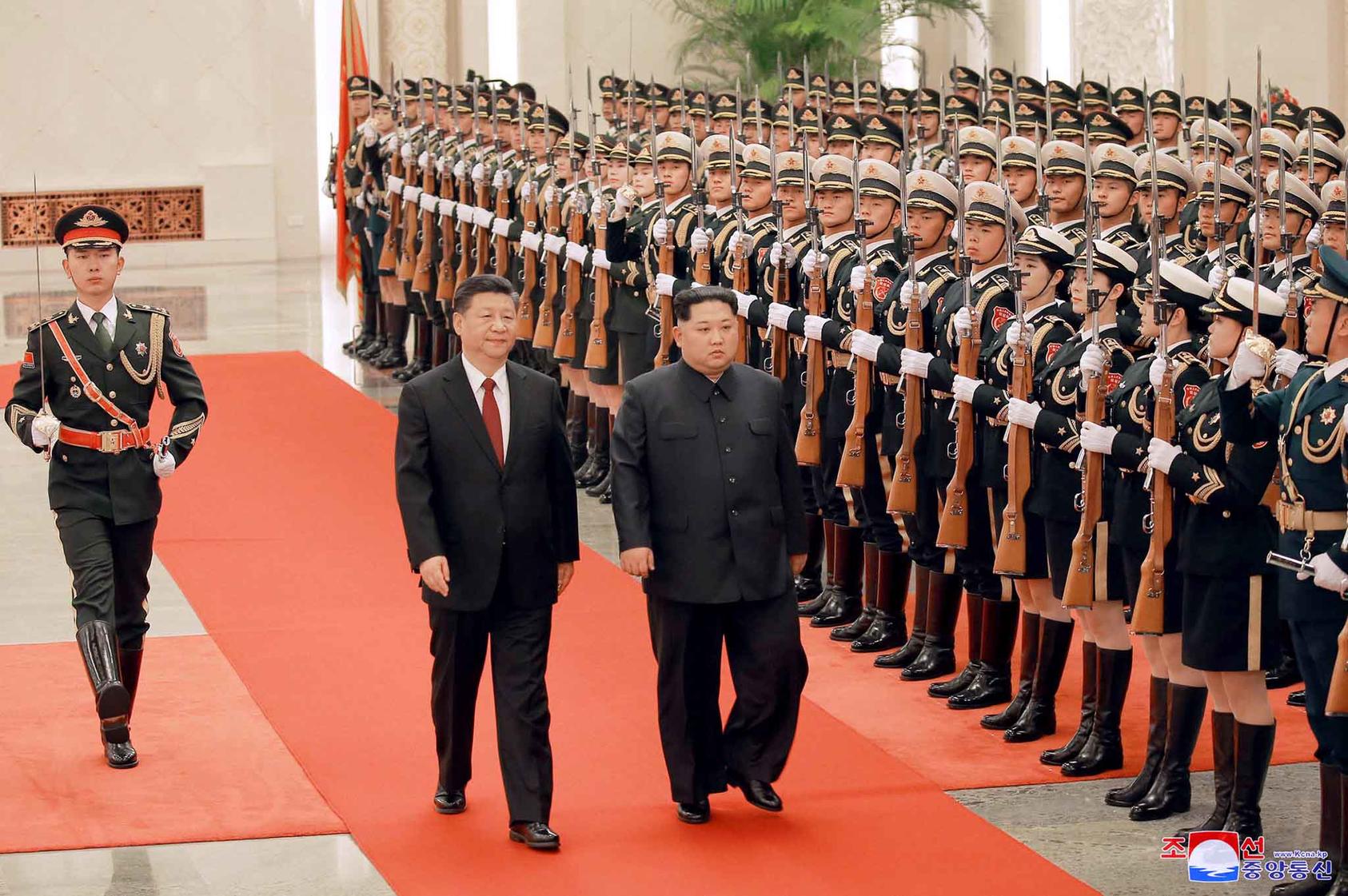
With international attention focused on a potential U.S.-North Korea summit meeting in May, North Korean leader Kim Jong Un made a surprise trip to Beijing in late March to meet with Chinese President Xi Jinping. The North Korean leader’s visit to Beijing, his first foreign visit since assuming power in late 2011, came amid strained bilateral relations in recent years. Kim and Xi appear to have reinvigorated the historical bonds between the two countries and reaffirmed China’s crucial role in the future of the Korean Peninsula. This conference will explore the dynamics and tensions of the historical relationship between China and North Korea, the potential impact of Korean reunification on China, and China’s role in a limited military conflict and its aftermath. President Xi Jinping of China, left, and Kim Jong-un, North Korea’s leader, inspect an honor guard during a ceremony at the Great Hall of the People in Beijing on March 26, 2018. (Korean Central News Agency via The New York Times)China’s AI ambitions are driving US innovation. So what’s America’s hold up?
WASHINGTON — China’s drive to lead the world in artificial intelligence is spurring American efforts keep its technological edge, especially when it comes to national security. A technology wave equivalent to the Industrial Revolution, electrification and mechanization, “intelligentization” has the potential to change the way wars are fought, as well as finance, medicine and transportation, said former Deputy Defense Secretary Bob Work, now part of the Center for a New American Security’s Artificial Intelligence and Global Security Initiative.China’s AI ambitions are driving US innovation. So what’s America’s hold up?
A technology wave equivalent to the Industrial Revolution, electrification and mechanization, “intelligentization” has the potential to change the way wars are fought, as well as finance, medicine and transportation, said former Deputy Defense Secretary Bob Work, now part of the Center for a New American Security’s Artificial Intelligence and Global Security Initiative. “I think AI is as ... important as the space race was in the Cold War. And as a nation, we responded to the challenge of competing in space.” Work said at a recent forum on the topic, drawing a comparison to America’s all-in effort to launch the Apollo 11 lunar mission. The national security nexus is more about economic competitiveness than weaponry, Work said. “We’re not going to approach this as though we’re in an AI arms race with China. But without question China is the pacing competitor in AI right now,” Work said.China Slaps Tariffs on 128 U.S. Products, Including Wine, Pork and Pipes
The Chinese government hit back Monday at President Trump’s tariffs on steel and aluminum by acting on a threat to put tariffs as high as 25 percent on imports of 128 American-made products, including pork and seamless steel pipes.The Chinese Ministry of Commerce indicated that the tariffs, which it first publicly suggested almost two weeks ago, were intended to pressure the Trump administration to back down from a simmering trade war. In addition to imposing additional tariffs on steel and aluminum from China and other countries, President Trump has threatened to put protective duties on other Chinese-made products worth $60 billion.China Has a Super Slick Plan to Crush the U.S. Air Force in a War
China’s Domestic Security Spending: An Analysis of Available Data
When America Stands up to China
In a speech just days before the founding of the People’s Republic of China, Chairman Mao Zedong famously declared, “The Chinese people have stood up.” Since then “standing up” has carried a special meaning in Chinese political discourse. It refers to an individual or group that finally shakes off humiliation and suffering inflicted by another individual or group, and potently reasserts one’s dignity and strength. Thus it caused a big stir when Australian Prime Minister Malcolm Turnbull used this phrase to hit back at Beijing’s criticism of him. “And we stand up and so we say, the Australian people stand up,” he proclaimed, referring to an anti-espionage law he had introduced earlier. That law was widely viewed as Canberra’s response to alleged Chinese interference in Australian politics. To make sure his message was not lost on his intended audience, Turnbull switched between English and Chinese as he spoke.Russia and China Are Now Building Weapons Together
Countering Illicit Funding of Terrorism: A Congressional Approach
Criminal and terrorist networks are exploiting today’s innovative technologies for their own gain, posing a direct threat to U.S. security and global stability. Illicit terrorist financing, including through bitcoin and other cryptocurrencies, are now being used to fund terrorist groups and circumvent U.S. sanctions. ISIS and rogue nation-states like North Korea, and regional powers like Iran and Russia, sanctioned for their role in conflicts, may also look to illicit financing in order to exploit the international financial system.The Counterterrorism Yearbook 2018
How an Outraged Europe Agreed to a Hard Line on Putin
BRUSSELS — When leaders of the European Union gathered last Thursday night for a working dinner inside their lavish new headquarters, the conversation turned to Russia. Over scallops and lamb, Prime Minister Theresa May of Britain shared intelligence detailing the high probability that the Russian state had carried out the poisoning of a former Russian spy on British soil. Usually, Mrs. May is the odd woman out at European Union gatherings, given that she is trying to negotiate Britain’s departure from the bloc. But not this time. By the next morning, European Union leaders agreed that a coordinated response was needed, according to four senior European officials. Then President Emmanuel Macron of France said everyone should go home and consider expelling Russian diplomats.Can Jim Mattis Hold the Line in Trump’s ‘War Cabinet’?
RUSSIAN TACTICAL NUKES ARE REAL: BY DR. MARK SCHNEIDER
Another great article, which includes a key quote and very basic question raised by Russian Tac Nukes: “Imagine this scenario: Much like it did in Ukraine, Russia invades Estonia. The U.S. comes to the defense of its NATO ally, but as American troops flow forward, Russia uses a tactical nuclear weapon on a U.S. carrier group in the Baltic Sea, killing a few thousand.” They intend to use them in a contrived conflict with “new NATO” – just as we did in the 50’s with “trip wire”. It’s what we get for “not paying attention” since RR, and spending trillions elsewhere….Patriot Missiles Are Made in America and Fail Everywhere
On March 25, Houthi forces in Yemen fired seven missiles at Riyadh. Saudi Arabia confirmed the launches and asserted that it successfully intercepted all seven. This wasn’t true. It’s not just that falling debris in Riyadh killed at least one person and sent two more to the hospital. There’s no evidence that Saudi Arabia intercepted any missiles at all. And that raises uncomfortable questions not just about the Saudis, but about the United States, which seems to have sold them — and its own public — a lemon of a missile defense system.What Turkmenistani President’s Visit to Gulf Means for TAPI Pipeline Project
Russian Siloviki Fight for Control of Still-Illegal ‘Private’ Military Companies
French: France's Tool for Global Power Projection
The population of the Francophone world will swell to more than 1 billion by 2065, creating a large demographic over which Paris will work to extend its influence.President Macron will take steps to boost the teaching of French in former colonies following decades of declining instruction.Paris will also seek to extend the reach of French in prominent Anglophone states such as Nigeria.Early Warning Tools Needed for Chem-Bio Defense
The Pentagon’s Secret, Permanent Wars
OVERCOMING THE DEATH OF MOORE’S LAW: THE ROLE OF SOFTWARE ADVANCES AND NON- SEMICONDUCTOR TECHNOLOGIES IN THE FUTURE DEFENSE ENVIRONMENT
Andrew Coyne: The pessimists might be right, social media may have plunged us into a new dark age
The Cambridge Analytica scandal is the latest in a series of incidents that, taken together, have contributed to a rising sense of alarm over the effects of social media — on human behaviour, on civil discourse, on democratic politics. A growing number of commentators have concluded that social media — shorthand for Facebook, Twitter and Google — are more a force for harm than good, whether in their own lives or society at large. Certainly the effects are not trivial. Whether or not you think the more underhanded uses of social media — fake news, Russian bots, or the exploitation of improperly obtained personal data to compile detailed psychological profiles of tens of millions of voters — decided the course of the last U.S. presidential election, they plainly were of some importance, or those responsible would not have gone to such lengths to deploy them.Has Cyber driven us MAD?
Those famous words resonate with us all, as does the dramatic mushroom cloud on the horizon. In fact, everything about nuclear weapons is worthy of a superlative; expense, explosive power, political clout to name a few. But are we going the same way with e-weapons? How do we measure the scale of a cyber-attack so that we can respond? There is no doubt that an e-weapon could kill thousands of people in a few seconds: bursting a dam, crashing airliners, destroying health IT or overheating a nuclear power plant.‘Cyber bullets’ were once a spy tool but may soon scan Wi-Fi networks for the Army
Advanced battlefield cyber capabilities were once only reserved for the most highly trained and secretive forces, but now these tools and concepts are emerging from the shadows where they originated. In the not too distant future, brigades could have their own “cyber bullets” that could be used without going through lengthy approval processes or require support from remote cyber operators. Leidos is working to make this capability a realty. During a demo at the AUSA Global Force Symposium in Huntsville, Alabama March 27, Leidos unveiled how local forces can use advanced capabilities through a jamming pod mounted to a large MQ-1C Gray Eagle drone. This would allow forces to mine IP addresses, intercept communications and even manipulate enemy messages.What every utility CEO should know about blockchain
The Seven Deadly Sins of Social Media
How a new Army team plans to modernize the network
After 17 years of war against low-tech adversaries, Army leaders understand that the next fight will be against high-end threats and recognize the need to modernize. One of the critical modernization points is the Army’s tactical network, which leaders have determined won’t stack up against sophisticated enemies who can detect electronic signatures, jam signals and conduct cyber attacks. Now, a newly established cross functional team is focusing on two priorities to meet these challenges: the unified tactical network and coalition interoperability.Enhancing the grunt: Sophisticated new tech means greater responsibility, heavier load
Marines with 3rd Battalion, 4th Marine Regiment test Step In Visor and Low Profile Mandible during Urban Advanced Naval Technology Exercise 2018 (ANTX-18) at Marine Corps Base Camp Pendleton, California, March 19. (Lance Cpl. Rhita Daniel/Marine Corps) Marines equipped with sophisticated optics, ops-core helmets, tablets and sensors move swiftly from room to room, clearing buildings in a futuristic urban environment. As autonomous and remote-controlled ground vehicles provide security and overwatch, it’s a redolent image of elite special operators amid a high-speed raid. But in reality, its part of an exercise aboard Camp Pendleton, California, and these Marines are grunts with Kilo Company, 3rd Battalion, 4th Marine Regiment.How to Start a War in 5 Easy Steps
Is the United States on the road to war? The number of people who think so seems to be growing, especially after President Donald Trump fired several of the grown-ups who were reportedly tempering his worst instincts and proceeded to elevate hawks such as CIA Director Mike Pompeo and John Bolton, the former U.S. ambassador to the United Nations. Writing in the New York Times Magazine this past Sunday, Robert Worth portrays Defense Secretary James Mattis as the sole voice of reason in Trump’s new “war cabinet” and highlights the risks of conflict with Iran, North Korea, and maybe a few other countries. How nervous should we be, and how might we tell if Trump is really serious about war or not?Skeptics Ask: Can Army Field Armed Robots By 2024?
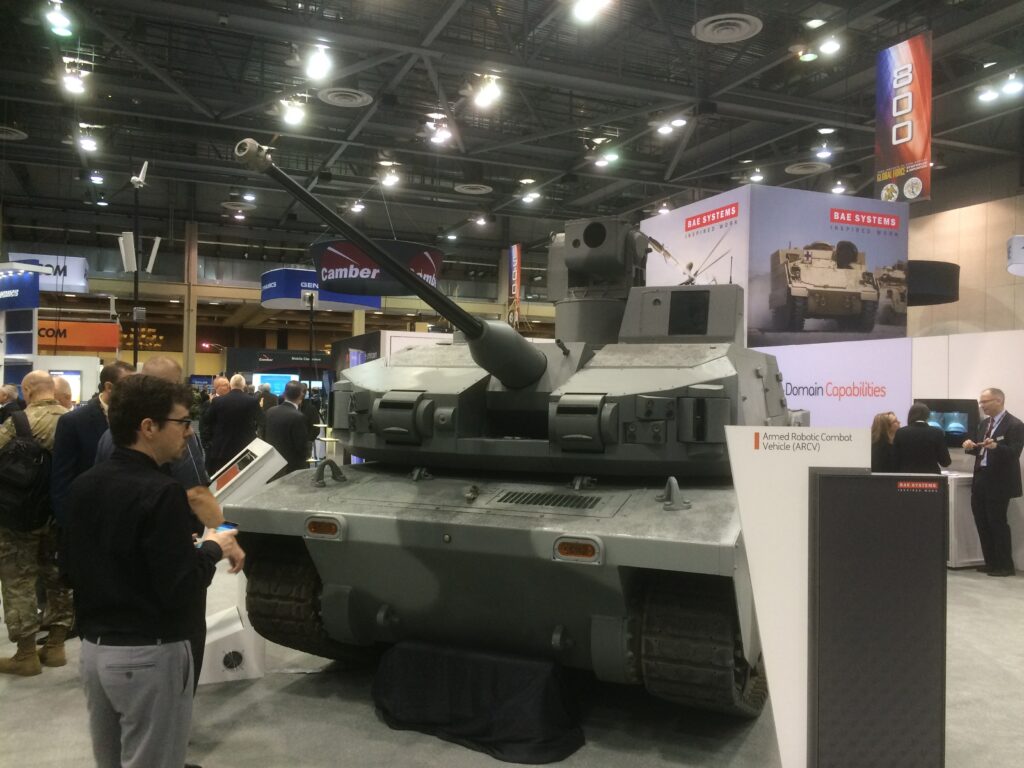
What mission does the Army really need armed robots for -- expendable scouts, perhaps, or supplementary fire support? And does buying robots for that role really offer more tactical value than spending the same money on mundane upgrades to, say, self-propelled artillery? BAE’s Armed Robotic Combat Vehicle (ARCV), originally developed for the Future Combat Systems (FCS) program, a potential model for the Army’s new initiative. Can the Army develop a Robotic Combat Vehicle within six years? Some of the experts we spoke to were deeply skeptical, including veteran congressional staffers badly burned by past acquisition disasters. Some, however, said the Army’s goal was achievable — but the early models will require a lot of human oversight, especially when it’s time to pull the trigger.