Last week, Indian Prime Minister Narendra Modi was on a three-nation visit to Southeast Asia – Indonesia, Malaysia, and Singapore – in an effort to give a fillip to India’s ‘Act East’ Policy. India’s Act East Policy acquired fresh momentum when Modi re-launched the original Look East Policy at the East Asia Summit in 2014. Most recently, the leaders of the ten Association of Southeast Asian Nations (ASEAN) countries were in India for the 69th Republic Day celebrations in January 2018, a reflection of the growing strategic convergence between India and Southeast Asia in ensuring a free, open, and transparent Indo-Pacific.The Profession of Arms: A Guide for Young Army Officers
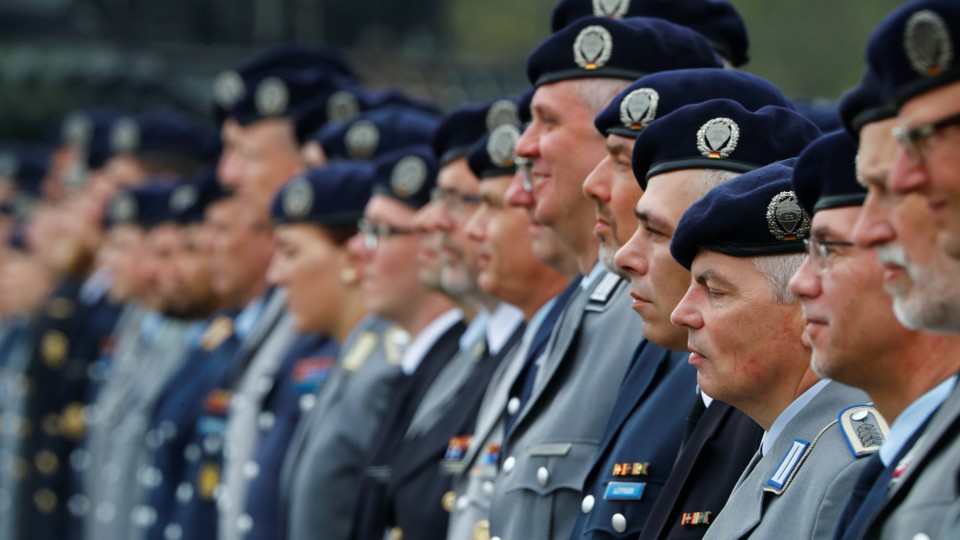
It takes courage, especially for a young officer, to check a man met on the road for not saluting properly or for slovenly appearance, but, every time he does, it adds to his stock of moral courage, and whatever the soldier may say, he has respect for the officer who does pull him up.
Read Document →The Dragon's Teeth: Assessing China's Military Modernization
PLA has focused on modernising its capabilities across all warfare domains to achieve these goals. This includes land, air, and maritime operations, nuclear, space, counter-space, electronic warfare and cyberspace operations, aiming to become a fully integrated joint force.
Read Document →Transforming the PLA: A Decade of reorganisation from SSF to ISF
PRC has engaged in a sustained and broad effort to transform the PLA from an infantry-heavy, low-technology, ground forces-centric military into a high-technology, networked force with an increasing emphasis on joint operations and naval and air power projection.
Read Document →Eyes without Borders: Exploring the World of Open Source Intelligence (OSINT) in the Digital Age
Open Source Intelligence (OSINT) is gaining prominence with the rise of social media, the digital society and the vast growth of publicly and commercially available information (PAI and CAI).
Read Document →
The PLA’s Developing Cyber Warfare Capabilities and India's Options
Informationised warfare blurs the lines between peacetime and wartime. A nation in the information age cannot wait for the hostilities to break out to collect intelligence, carryout influence operations, develop antisatellite systems or design computer software weapons.
Read Document →
Galwan and After
Why did China did this when he is under tremendous pressure in all fronts, is this China's salami slice tactics being progressed rigorously, what will be new Rules of Engagement, what will be escalatory control mechanism, who has taken this decision, will there be some pressure put by China in India's North-East through insurgency.
Read Document →
India’s Joint Doctrine for Cyberspace Operations: A Critical Review
Chief of Defence Staff (CDS) General Anil Chauhan and Secretary, Department of Military Affairs, formally released declassified versions of the Joint Doctrines for Cyberspace Operations during the Chiefs of Staff Committee meeting in New Delhi.
Read Document →
Know your Enemy General(now Field Marshal) Syed Aseem Munir
Gen SA Munir's position in the hierarchy of Pakistan was not very comfortable. The state of economy, insurgency in Pakhtoonistan and Balochistan, attack on the Jaffar Express, constant protests by supporters of Imran Khan's supporters inside and outside of parliament.
Read Document →
Decoding Operation SINDOOR: Key Aspects and Implications
Precision strikes were carried out on nine sites—four in Pakistan and five in PoK—linked to anti-India terrorist groups such as the LeT, JeM and the Hizbul Mujahideen. The targeted sites included Muridke (LeT headquarters) and Bahawalpur (JeM headquarters).
Read Document →
Chinese Cyber Exploitation in India's Power Grid - Is There a linkage to Mumbai Power Outage?
The New York Times (NYT), based on analysis by a U.S. based private intelligence firm Recorded Future, reported that a Chinese entity penetrated India’s power grid at multiple load dispatch points. Chinese malware intruded into the control systems that manage electric supply across India, along with a high-voltage transmission substation and a coal-fired power plant
Read Document →10 June 2018
The Strategic Logic of Modi’s Indonesia Visit
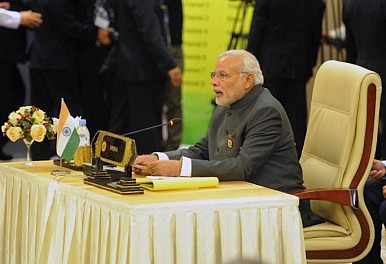
Last week, Indian Prime Minister Narendra Modi was on a three-nation visit to Southeast Asia – Indonesia, Malaysia, and Singapore – in an effort to give a fillip to India’s ‘Act East’ Policy. India’s Act East Policy acquired fresh momentum when Modi re-launched the original Look East Policy at the East Asia Summit in 2014. Most recently, the leaders of the ten Association of Southeast Asian Nations (ASEAN) countries were in India for the 69th Republic Day celebrations in January 2018, a reflection of the growing strategic convergence between India and Southeast Asia in ensuring a free, open, and transparent Indo-Pacific.Deciding Kashmir’s Future: Look Before You Leap – OpEd
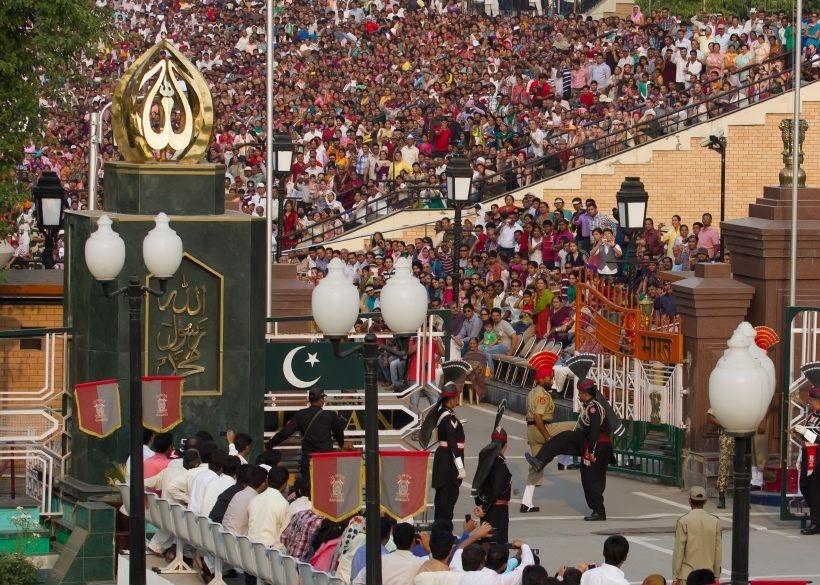
Pakistan and India’s vastly divergent political trajectories are often treated as a puzzle. Despite the fact that the people of both countries had a common past, India has ended up as a vibrant democracy with elected governments firmly in control, whereas Pakistan has witnessed a series of direct military interventions in the past and though it has an elected government in place for some time now, the army still controls Islamabad’s foreign and domestic policies from behind the scenes. This has created a severe civil-military imbalance that is retarding Pakistan’s progress. By institutionalising fundamentalism Gen Zia ul Haq sowed the seeds of sectarianism and due to this Pakistan is today reaping a bitter harvest of religious intolerance and it is ironical that India which Islamabad accuses of being a ‘Hindu nation’ has a far better record of ethnic and communal diversity than Pakistan.Pakistan Reflects on Nuclear Achievement in Run Up to Election
How Afghanistan's Next Elections Can Succeed
Distrust of electoral institutions haunts Afghanistan’s prospects of inclusive and credible elections as it embarks on another elections year. In a bid to restore public trust and confidence in the democratic process, the election law of 2016 requires the conduct of new voter registration in order to prepare a polling station-specific voter list to reduce instances of electoral fraud ahead of the long-delayed parliamentary and district council elections, which are scheduled on 20 October this year. The newly set up Independent Election Commission (IEC) formally launched the voter registration process – using the original paper national identity cards – on April 14 with the first phase scheduled to be completed on June 22.In Pre-Election Pakistan, a Military Crackdown Is the Real Issue
Just a month and a half away from national elections, Pakistan’s powerful military establishment has mounted a fearsome campaign against its critics in the news media, on social networks, and in mainstream political movements. It is all adding up: journalists abducted or threatened, major news outlets blocked, sympathetic views toward the civilian governing party, the Pakistan Muslim League-Nawaz, censored or punished. Interviews with journalists and political analysts in recent days have been dominated by concerns that a military campaign of intimidation and crackdown on dissent is intensifying ahead of the vote — and nearly unanimously, none dared discuss it on the record.How Chinese Tariffs Will Impact U.S. Beef, Ethanol and Apples
As trade negotiations between the United States and China continue on their bumpy and uncertain path, U.S. agricultural producers face the threat of retaliation across multiple fronts. This graphic illustrates where business and political fallout could be most keenly felt outside the intensive soybean production of the U.S. heartland.The Legacy of Tiananmen
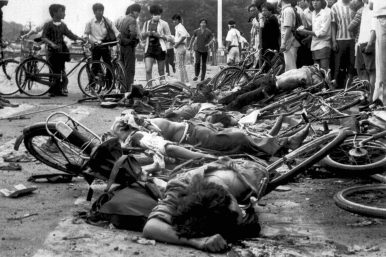
It has been 29 years since tanks rolled into Tiananmen Square from both east and west in Beijing, killing hundreds along the way, and irrevocably changing the history of modern China. In early 1990, a few months after the massacre and not long after a six-month period of martial law and curfews had just been lifted in Beijing, a Chinese Red Cross official told this correspondent that her organization’s official tally of the dead was 2,312. I was on a domestic flight in China, the only foreigner, as was often the case at that time. I do not know the woman’s name, nor did she want me to. She saw me sitting in a row just in front of her and created an opportunity to speak to me. She was nervous and afraid. She had every right to be. People had been disappearing in Beijing for months just for talking to foreigners.China's Naval Expansion Is No Threat
THE SUCCESSES AND LIMITATIONS OF RUSSIA’S ECONOMIC STRATEGY
East Asia Comes to Europe
Mid-May marked the one-year anniversary since the Belt and Road Initiative (BRI), China’s massive foreign policy initiative, held its first official Forum in Beijing. International reception of the initiative has been mixed, with the United States, Europe and Japan in particular expressing concerns about China’s possible ulterior motives, including in Europe. By contrast, there is little discussion of Japanese investments in Europe other than general agreement that more of them would be welcome. The countries in Central and Eastern Europe (CEE) in particular enthusiastically welcome Chinese investments with little consideration about potential hidden economic and political costs, and put comparatively little effort in attracting more Japanese investments.Spain’s Uneven Success Story
Why Canada Needs a Strong U.S. Economy
Cyberattacks Are 'Ticking Time Bombs' for Germany
BONN, Germany—It was a cyberattack that showed just how vulnerable Germany’s digital infrastructure truly is. In the summer of 2017, a group of hackers infiltrated NetCom BW, a regional telecommunications provider with about 43,000 subscribers in the state of Baden-Wรผrttemberg in Germany’s southwest. Given the company’s modest size, it may not seem like a prime target. But NetCom BW is a subsidiary of EnBW, one of Germany’s biggest power utilities. EnBW is part of what the government regards as its critical infrastructure: companies that operate crucial public services, from electricity to telecommunications to health care.Satellite Images Can Harm the Poorest Citizens
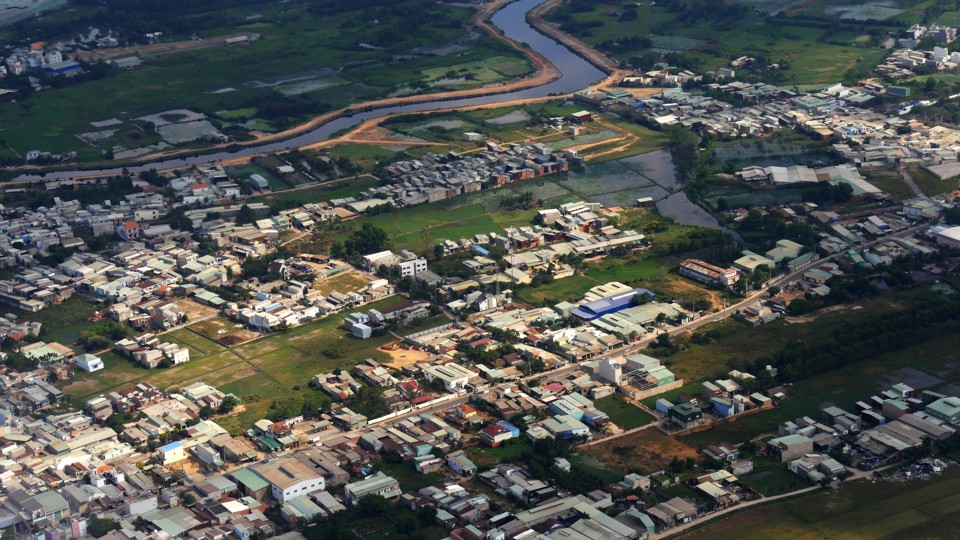
Mapping a city’s buildings might seem like a simple task, one that could be easily automated by training a computer to read satellite photos. Because buildings are physically obvious facts out in the open that do not move around, they can be recorded by the satellites circling our planet. Computers can then “read” these satellite photographs, which are pixelated images like everyday photographs except that they carry more information about the light waves being reflected from various surfaces. That information can help determine the kind of building material and even plant species that appears in an image. Other patterns match up with predictable objects, like the straight lines of roads or the bends of rivers.Report: Facebook Shared User Data With Device Manufacturers
Deterring cyber attacks: old problems, new solution
Ways 3D Printing May Threaten Security
3D printers already produce everything from prosthetic hands and engine parts to basketball shoes and fancy chocolates. But as with any technological advance, new possibilities come with new perils. A new RAND paper, Additive Manufacturing in 2040: Powerful Enabler, Disruptive Threat, explores how 3D printers will affect personal, national, and international security. The paper is part of RAND's Security 2040 initiative, which looks over the horizon to anticipate future threats. The same technology that might one day custom-print heart valves can just as easily produce gun parts. The same machines that allow astronauts on the international space station to print their own tools might also help a state like North Korea print military or industrial equipment to get around international sanctions. Here are four areas to watch as 3D printing makes the leap from high tech to home tech.Dazzled By Tech: Universities, Googlification And Microsoft – OpEd
The mechanical, robotic striving of university politburos and their jack boot managers have always been interesting when it comes to one particular topic: the role of technology and its adoption. For it is in technology that the mediocre paper clip shuffler can claim to have achieved something – on someone else’s back, naturally. The shift to Google by universities as a storage and communication mechanism was something taken with a breezy obliviousness to its implications. For Google, it was a magical boon: mass concentration of staff and student data, cloud facilities, the magic of information. Such decisions are generally taken without asking the staff who actually use it – the nature of university management is piously anti-democratic, with all the usual balloons of sentiment about faux consultation and the like.Microsoft sinks data centre off Orkney
Microsoft has sunk a data centre in the sea off Orkney to investigate whether it can boost energy efficiency. The data centre, a white cylinder containing computers, could sit on the sea floor for up to five years. An undersea cable brings the data centre power and takes its data to the shore and the wider internet - but if the computers onboard break, they cannot be repaired. Orkney was chosen because it is a major centre for renewable energy research.DISA, worried about cyberattacks, looks to the cloud
For the Department of Defense, that question keeps many planners up at night as they ponder how to answer cyberattacks that aim for users during internet browsing. To address the issue, the Defense Information Services Agency has begun to consider the potential of cloud computing. A recent request for information by DISA explores the feasibility of an enterprise cloud-based internet isolation capability that “would provide defense against a variety of attacks that exploit DoD networks and compromise end clients.” DISA envisions the enterprise cloud as able to “redirect the act of internet browsing from the end user’s desktop into a remote server” external to the department network. The isolation of all internet code execution in the cloud intends to prevent malware from entering the network through web use.CYBER THREAT PREDICTIONS FOR 2018
Cyber attacks like the global WannaCry outbreak and the million-dollar CoinDash breach made headlines in 2017. How will 2018 be different? We asked our most experienced threat intelligence analysts at Booz Allen Cyber4Sight to compile a threat forecast to watch for in the year ahead. Here are the top emerging trends and predictionsLife as a Private
The U.S. Army Recruiting Command asked RAND Arroyo Center to undertake research to improve its understanding of soldiers' motivations to join the Army, and how the reality of Army life matches up with expectations. Who joins, why, and how satisfied are they with their decisions? This study's portrayal of the U.S. Army private could serve as an educational tool for a variety of important audiences, such as Army senior leadership, junior officers, noncommissioned officers, and prospective new recruits. To conduct this study, RAND researchers interviewed 81 soldiers, ranked E-1 to E-4, generally assigned to their first Modified Table of Organization and Equipment unit. The findings from this study offer a rich description of experiences by a select few junior enlisted Army personnel; however, due to sample size limitations, the findings of this study cannot be generalized to the U.S. Army as a whole or to any rank or Career Management Field category. The research found that soldiers join the Army for family, institutional, and occupational reasons, and many value the opportunity to become a military professional. They value their relationships with other soldiers, enjoy their social lives, and are satisfied with Army life.Why the Military Can’t Quit Windows XP
World Less Peaceful Today Than At Any Time In Last Decade: Report
The 12th edition of the annual Global Peace Index (GPI) report, produced by the international think-tank the Institute for Economics and Peace (IEP), revealed that the world is less peaceful today than at any time in the last decade. The 2018 GPI reveals a world in which the tensions, conflicts, and crises that emerged in the last decade remain unresolved, resulting in a g radual, sustained fall in peacefulness. The largest contributors to the deterioration in the last year were the escalations in both interstate and internal armed conflicts, rise in political terror and reduced commitment to UN peacekeeping. Syria, Afghanistan, South Sudan, Iraq and Somalia are the least peaceful countries whilst Iceland, New Zealand, Austria, Portugal and Denmark are the most peaceful countries.