The Profession of Arms: A Guide for Young Army Officers
It takes courage, especially for a young officer, to check a man met on the road for not saluting properly or for slovenly appearance, but, every time he does, it adds to his stock of moral courage, and whatever the soldier may say, he has respect for the officer who does pull him up.
Read Document →The Dragon's Teeth: Assessing China's Military Modernization
PLA has focused on modernising its capabilities across all warfare domains to achieve these goals. This includes land, air, and maritime operations, nuclear, space, counter-space, electronic warfare and cyberspace operations, aiming to become a fully integrated joint force.
Read Document →Transforming the PLA: A Decade of reorganisation from SSF to ISF
PRC has engaged in a sustained and broad effort to transform the PLA from an infantry-heavy, low-technology, ground forces-centric military into a high-technology, networked force with an increasing emphasis on joint operations and naval and air power projection.
Read Document →Eyes without Borders: Exploring the World of Open Source Intelligence (OSINT) in the Digital Age
Open Source Intelligence (OSINT) is gaining prominence with the rise of social media, the digital society and the vast growth of publicly and commercially available information (PAI and CAI).
Read Document →
The PLA’s Developing Cyber Warfare Capabilities and India's Options
Informationised warfare blurs the lines between peacetime and wartime. A nation in the information age cannot wait for the hostilities to break out to collect intelligence, carryout influence operations, develop antisatellite systems or design computer software weapons.
Read Document →
Galwan and After
Why did China did this when he is under tremendous pressure in all fronts, is this China's salami slice tactics being progressed rigorously, what will be new Rules of Engagement, what will be escalatory control mechanism, who has taken this decision, will there be some pressure put by China in India's North-East through insurgency.
Read Document →
India’s Joint Doctrine for Cyberspace Operations: A Critical Review
Chief of Defence Staff (CDS) General Anil Chauhan and Secretary, Department of Military Affairs, formally released declassified versions of the Joint Doctrines for Cyberspace Operations during the Chiefs of Staff Committee meeting in New Delhi.
Read Document →
Know your Enemy General(now Field Marshal) Syed Aseem Munir
Gen SA Munir's position in the hierarchy of Pakistan was not very comfortable. The state of economy, insurgency in Pakhtoonistan and Balochistan, attack on the Jaffar Express, constant protests by supporters of Imran Khan's supporters inside and outside of parliament.
Read Document →
Decoding Operation SINDOOR: Key Aspects and Implications
Precision strikes were carried out on nine sites—four in Pakistan and five in PoK—linked to anti-India terrorist groups such as the LeT, JeM and the Hizbul Mujahideen. The targeted sites included Muridke (LeT headquarters) and Bahawalpur (JeM headquarters).
Read Document →
Chinese Cyber Exploitation in India's Power Grid - Is There a linkage to Mumbai Power Outage?
The New York Times (NYT), based on analysis by a U.S. based private intelligence firm Recorded Future, reported that a Chinese entity penetrated India’s power grid at multiple load dispatch points. Chinese malware intruded into the control systems that manage electric supply across India, along with a high-voltage transmission substation and a coal-fired power plant
Read Document →29 July 2018
The Billionaire Yogi Behind Modi’s Rise
Can Trump Get America Out of Afghanistan?
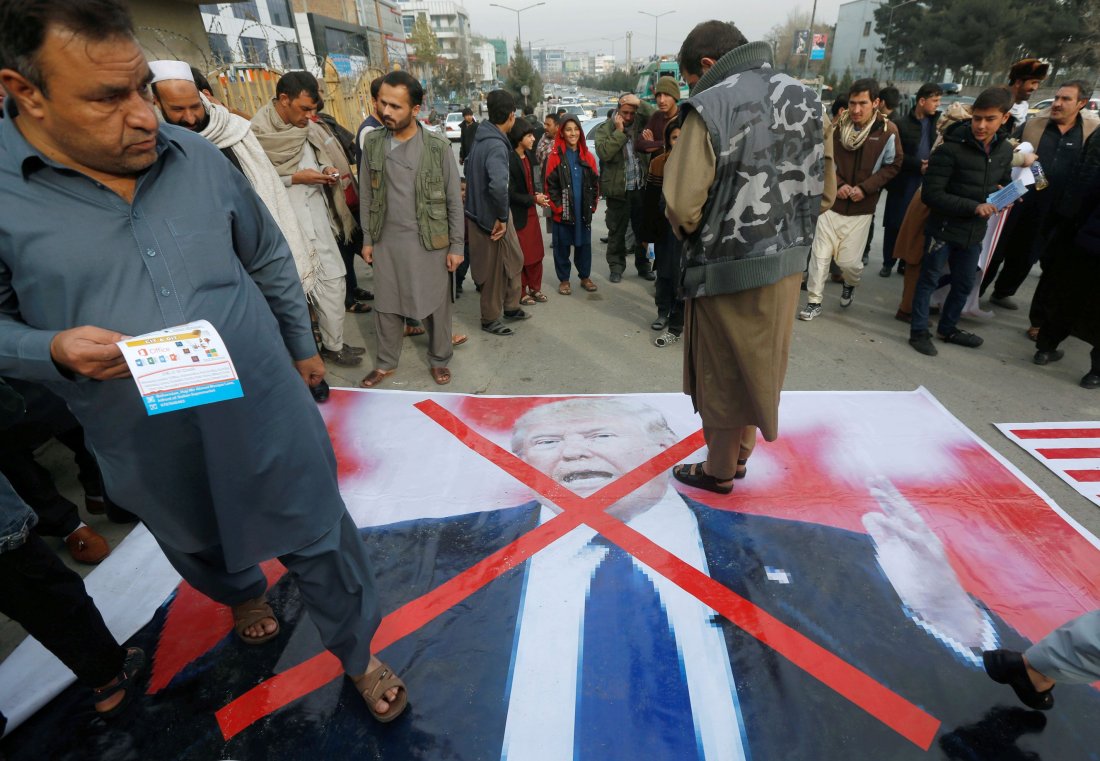
Last week the White House ordered its top diplomats to seek direct negotiations with the Taliban, the latest foreign relations about-face from an administration that seems to be specializing in them. After early escalation and record-setting bombs , President Trump is looking for a way out of Afghanistan. The Taliban is far from defeated, but negotiations may offer America a means to ending our participation in an intractable war in an irrelevant country. Earlier this month, during a surprise trip to Kabul, Secretary of State Mike Pompeo made the claim that the Taliban “cannot wait us out.” Evidence suggests otherwise.I Will Negotiate With the Taliban Anywhere
KABUL, Afghanistan — About half of Afghanistan’s population — around 33 million — is young enough to have never seen a day of peace. The milestones of their young lives have been marked by loss and violence. For 38 years now, peace in my country has remained a dream, a prayer on our lips. On June 15, on the festival of Eid, our prayers were answered. A few days earlier, as the month of Ramadan was coming to an end, almost 3,000 Islamic scholars convened in Kabul and issued a fatwa reminding us that the quest for peace is a commandment of Allah and a national imperative. They requested the government to declare a cease-fire.Time for Pakistan’s generals to stop meddling in politics
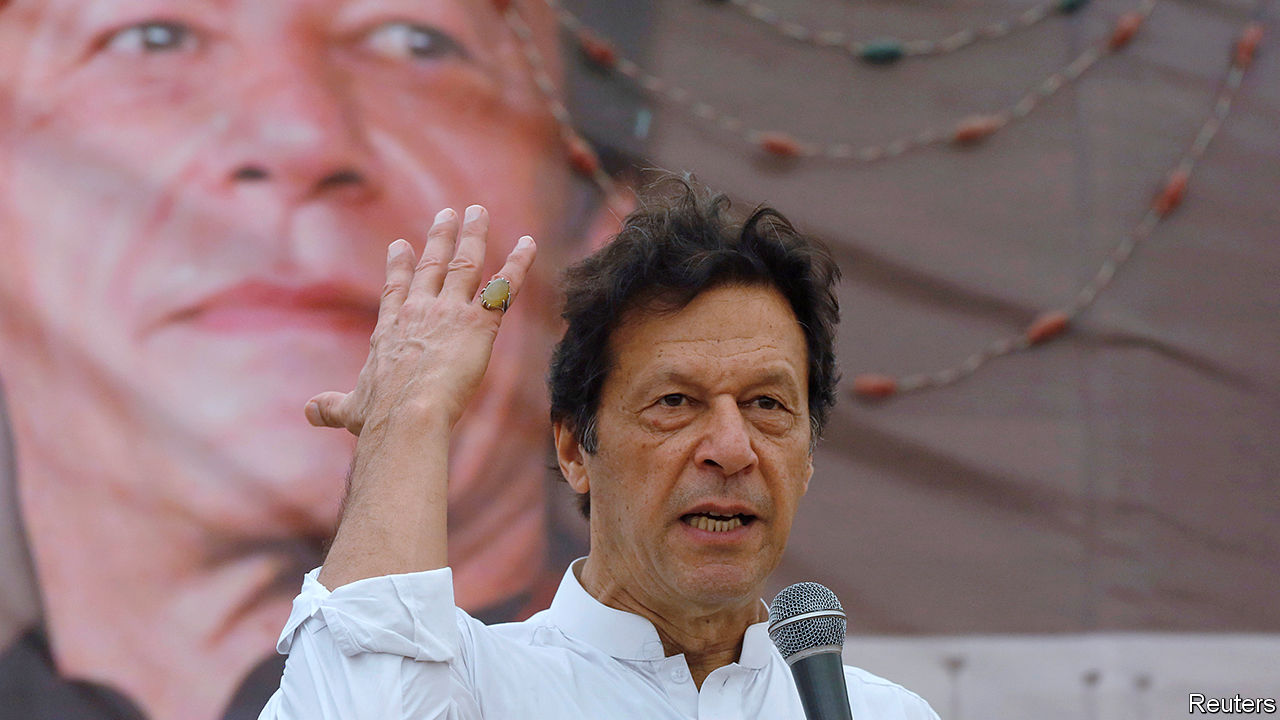
AS A fast bowler, Imran Khan made rival batsmen quake and led Pakistan to victory in the Cricket World Cup in 1992. As a politician, he is thundering towards the election on July 25th and appears to be on the point of scoring another famous victory. Polls suggest his party, Pakistan Tehreek-e-Insaf (PTI), may emerge as the largest; and Mr Khan may well become the country’s next prime minister.The Return of the Asia-Pacific Quad
In March 2018, The Heritage Foundation, in partnership with three leading think tanks from Australia, India and Japan, held the fifth iteration of its “Quad-Plus Dialogue” in Tokyo, Japan. Inaugurated in 2013, this unique Track 1.5 dialogue was designed as a forum for think tank and government representatives from the four democracies to discuss common geopolitical challenges and promote greater strategic collaboration. Equally important, it was intended to encourage the four governments to revive the formal Track 1 Quadrilateral Strategic Dialogue (QSD) which first met in May 2007 but was disbanded the following year.Chinese theft continues in cyberspace as new threats emerge, U.S. intelligence officials warn
China continues to steal intellectual property and trade secrets from U.S. companies for its own economic advancement and the development of its military but “at lower volumes” since the two countries forged an agreement in 2015 meant to curb the practice, according to a report published Thursday by American intelligence agencies. The assessment, which also incorporates the findings of private sector security experts, comes amid roiling trade tension between the U.S. and China that has spawned dueling tariffs on billions of dollars worth of goods. It is unlikely to quell concerns from the White House that China continues to pose a significant threat to American companies. Dirty Little Secret: How China Built Its Military Might (Thanks to America and Russia)
China builds a wall of BRICS to help counter US trade war barrier
With Senegal deals, China’s Belt and Road reaches across Africa
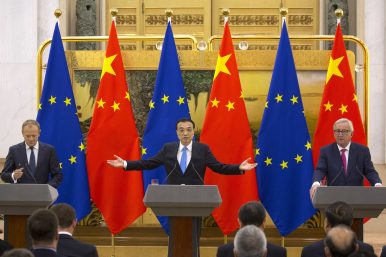
Can US Isolationism Boost EU-China Relations? Lessons from the 20th EU-China Summit.
IRAN AND ISRAEL ARE RACING TOWARD CONFRONTATION IN SYRIA
Russia to Use Irregular Forces Against ‘Hybrid Threats’: The Case of Kaliningrad
Take it from the military: Climate security is national security
AN AMERICAN WAY OF POLITICAL WARFARE: A PROPOSAL
EUISS Yearbook of European Security (YES) 2018
Kim Jong Un’s Long Game
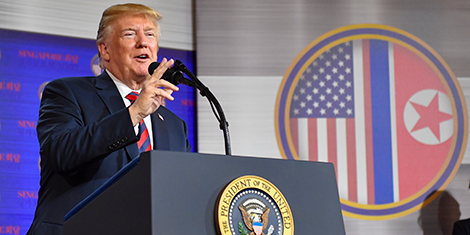
Welcome to North Korean Negotiations 101. North Korea’s reaction to Secretary of State Mike Pompeo’s recent visit to Pyongyang was expected and does not signal the end of the diplomatic process; it just shows us it will be a long and difficult one. On top of dealing with North Korean-style negotiations, President Donald Trump already made important concessions too soon before concrete North Korean denuclearization steps while Kim is playing a long game, looking 40 to 50 years down the road. Trump, on the other hand, seems to be focused on the next 2.5 years, until the next US presidential election in 2020.Deciphering the War of Words Between the U.S. and Iran
The White House's bellicose threats against Iran are not simply a foreign policy diversion to distract from growing scrutiny over the Russia and North Korea portfolios; they are part and parcel of the Trump administration's blunt drive for regime change in Tehran. As economic and social pressure in Iran intensifies under the White House's hard-line sanctions policy, the Iranian government will lock public anger onto external threats to curtail popular unrest. Iranian President Hassan Rouhani will steadily lose political ground to hard-line conservatives as his government is forced to increasingly rely on the security apparatus to contain dissent and circumvent sanctions.It’s too early to write off the Indo-Pacific strategy
Africa: China's Xi Jinping Strikes Deals With Rwanda During Four-Nation African Tour
Chinese President Xi Jinping has inked more than a dozen deals with Rwanda as his "economic partnership with African countries" continues. The deals include loans and grants worth millions of dollars. Chinese President Xi Jinping signed 15 bilateral agreements with Rwanda on Monday while visiting the East African country, the second stop on a four-nation tour to cement relations with African allies. The agreements, the value of which was not revealed, focused on visa exemptions, strengthening mutual investment in e-commerce, cooperation in civil air transport, law enforcement partnerships and human resource development. They included loans for construction, hospital renovation and the development of Rwanda's new Bugesera airport.Emergent Technology, Military Advantage, and the Character of Future War
America’s Hackers Are at Risk
The Law of Military Cyber Operations and the New NDAA
Congress wants DoD to hold a national cyber response exercise
NATIONAL DEFENSE AUTHORIZATION ACT FOR FISCAL YEAR 2019 CONFERENCE REPORT TO ACCOMPANY H.R. 5515
The military wants to help secure the midterm elections
WASHINGTON — America’s top uniformed military officer is offering to help secure the nation’s election systems, according to a key lawmaker. Sen. Lindsey Graham, a South Carolina Republican on the Senate Armed Services Committee, said July 18 via Twitter that the Chairman of the Joint Chiefs of Staff General Joseph Dunford told him “the Department of Defense can help states in securing their election systems.” "I don’t want to divulge what they are doing,” Graham told reporters on Capitol Hill the following day. “My point is a whole-of-government approach would include [the Department of Defense] — which is a bit surprising to me.”Russians hacked into US electric utilities: 6 essential reads
Soldier Learning 2050
Rebuilding America’s Military: Thinking About the Future
How to reshape the US military in 5 steps
The U.S. National Defense Strategy calls for increased investments to “restore warfighting readiness and field a more lethal force” capable of defeating aggression by the nation’s most capable adversary states. This is warranted: War gaming and analysis done at the think tank Rand point to troubling trends in the capabilities of U.S. and allied forces relative to those of key adversaries. U.S. and allied forces today could not expect to be able to defeat a short-warning Russian invasion of the Baltic states. China’s growing military capabilities, combined with unfavorable geographic asymmetries, raise questions about the future credibility of U.S. security guarantees to Taiwan. U.S. and allied forces lack satisfactory answers to the growing threat of North Korean nuclear weapons and ballistic missiles.