PURI, India — A group of men in loincloths assembled outside a 12th-century temple on a hot April day in Puri, India, preparing to venture deep inside to a pitch-black vault where piles of gold and silver jewelry were stored under lock and key. To enter Jagannath Temple, dedicated to an important Hindu deity, the group of 16 archaeologists, Hindu priests and government officials had to pass through metal detectors. Their skimpy loincloths were required as a security measure along with oxygen masks in case the vault, unopened for more than three decades, lacked breathable air. Their instructions were simple: Check the structural integrity of the vault and ignore the millions of dollars’ worth of antiquities stashed inside.The Profession of Arms: A Guide for Young Army Officers
It takes courage, especially for a young officer, to check a man met on the road for not saluting properly or for slovenly appearance, but, every time he does, it adds to his stock of moral courage, and whatever the soldier may say, he has respect for the officer who does pull him up.
Read Document →The Dragon's Teeth: Assessing China's Military Modernization
PLA has focused on modernising its capabilities across all warfare domains to achieve these goals. This includes land, air, and maritime operations, nuclear, space, counter-space, electronic warfare and cyberspace operations, aiming to become a fully integrated joint force.
Read Document →Transforming the PLA: A Decade of reorganisation from SSF to ISF
PRC has engaged in a sustained and broad effort to transform the PLA from an infantry-heavy, low-technology, ground forces-centric military into a high-technology, networked force with an increasing emphasis on joint operations and naval and air power projection.
Read Document →Eyes without Borders: Exploring the World of Open Source Intelligence (OSINT) in the Digital Age
Open Source Intelligence (OSINT) is gaining prominence with the rise of social media, the digital society and the vast growth of publicly and commercially available information (PAI and CAI).
Read Document →
The PLA’s Developing Cyber Warfare Capabilities and India's Options
Informationised warfare blurs the lines between peacetime and wartime. A nation in the information age cannot wait for the hostilities to break out to collect intelligence, carryout influence operations, develop antisatellite systems or design computer software weapons.
Read Document →
Galwan and After
Why did China did this when he is under tremendous pressure in all fronts, is this China's salami slice tactics being progressed rigorously, what will be new Rules of Engagement, what will be escalatory control mechanism, who has taken this decision, will there be some pressure put by China in India's North-East through insurgency.
Read Document →
India’s Joint Doctrine for Cyberspace Operations: A Critical Review
Chief of Defence Staff (CDS) General Anil Chauhan and Secretary, Department of Military Affairs, formally released declassified versions of the Joint Doctrines for Cyberspace Operations during the Chiefs of Staff Committee meeting in New Delhi.
Read Document →
Know your Enemy General(now Field Marshal) Syed Aseem Munir
Gen SA Munir's position in the hierarchy of Pakistan was not very comfortable. The state of economy, insurgency in Pakhtoonistan and Balochistan, attack on the Jaffar Express, constant protests by supporters of Imran Khan's supporters inside and outside of parliament.
Read Document →
Decoding Operation SINDOOR: Key Aspects and Implications
Precision strikes were carried out on nine sites—four in Pakistan and five in PoK—linked to anti-India terrorist groups such as the LeT, JeM and the Hizbul Mujahideen. The targeted sites included Muridke (LeT headquarters) and Bahawalpur (JeM headquarters).
Read Document →
Chinese Cyber Exploitation in India's Power Grid - Is There a linkage to Mumbai Power Outage?
The New York Times (NYT), based on analysis by a U.S. based private intelligence firm Recorded Future, reported that a Chinese entity penetrated India’s power grid at multiple load dispatch points. Chinese malware intruded into the control systems that manage electric supply across India, along with a high-voltage transmission substation and a coal-fired power plant
Read Document →18 July 2018
In India, a Missing Key to a Temple’s Treasure Vault Ignites a Furor
PURI, India — A group of men in loincloths assembled outside a 12th-century temple on a hot April day in Puri, India, preparing to venture deep inside to a pitch-black vault where piles of gold and silver jewelry were stored under lock and key. To enter Jagannath Temple, dedicated to an important Hindu deity, the group of 16 archaeologists, Hindu priests and government officials had to pass through metal detectors. Their skimpy loincloths were required as a security measure along with oxygen masks in case the vault, unopened for more than three decades, lacked breathable air. Their instructions were simple: Check the structural integrity of the vault and ignore the millions of dollars’ worth of antiquities stashed inside.When will India stop rewarding incompetence in the military?
CPEC And Pakistan-China Energy Cooperation – OpEd
The demands of global energy are substantially rising day by day in the 21st century, whereas the dependency on fossil fuels like coal, oil and natural gas have become a serious concern which is about 80% of the world’s primary source of energy. The concerns about fossil fuels are due to their ever rising prices and their negative impact on the environment due to the harmful emission of greenhouse gases. Therefore, in this context the reliance on nuclear power energy is considered by various countries, including Pakistan, as a good alternative option of energy supply, which is comparatively cheaper also.War to a New Front, and ZTE Stays Alive
New U.S.-China Tariffs Start Trade War
Xi Jinping’s Vision for Global Governance
China’s attitudes toward missile defense and its limitation
A Chinese HQ-9 air defense missile launcher, pictured in 2009. If there were to be a new international agreement to limit certain aspects of missile defense, it could reduce suspicion and competition among the United States, Russia, China, and other relevant parties. But the types of missile defense limitations that might be of interest to China – including agreements on numbers of missile interceptors, on the non-weaponization of space, and on elimination of ground-based midcourse defenses – involve policy changes that the United States has opposed in recent years.Chinese nuclear forces, 2018
The Nuclear Notebook is researched and written by Hans M. Kristensen, director of the Nuclear Information Project with the Federation of American Scientists, and Robert S. Norris, a senior fellow with the FAS. The Nuclear Notebook column has been published in the since 1987. This issue’s column examines China’s nuclear arsenal, which includes about 280 warheads for delivery by ballistic missiles and bombers. This stockpile is likely to grow further over the next decade.Inside China’s Dystopian Dreams: A.I., Shame and Lots of Cameras
ZHENGZHOU, China — In the Chinese city of Zhengzhou, a police officer wearing facial recognition glasses spotted a heroin smuggler at a train station. In Qingdao, a city famous for its German colonial heritage, cameras powered by artificial intelligence helped the police snatch two dozen criminal suspects in the midst of a big annual beer festival. In Wuhu, a fugitive murder suspect was identified by a camera as he bought food from a street vendor. With millions of cameras and billions of lines of code, China is building a high-tech authoritarian future. Beijing is embracing technologies like facial recognition and artificial intelligence to identify and track 1.4 billion people. It wants to assemble a vast and unprecedented national surveillance system, with crucial help from its thriving technology industry.The Pros And Cons Of Iran’s Oil Threat
As the Iranian economy begins to feel the growing pain of American-led sanctions, the question of a proper counterstrategy to minimize the damage and to ensure the sustainability of Iran’s economic well-being looms large. There is no denying the existential threat to the Iranian economy posed by these sanctions that have already resulted in significant damages, reflected in the growing number of foreign energy and non-energy companies pulling out of Iran and most of Iran’s energy trade partners buckling under pressure and reducing their Iranian oil imports, irrespective of political statements to the contrary by various governments including India. The latter have sought to receive exemptions from Washington to no avail (so far) and, chances are, by late Fall we will witness a substantial decline in Iran’s oil exports, which can be only nominally remedied by resorting to the pre-JCPOA pattern of oil smuggling.Trump and Putin’s unholy alliance could lead to war with Iran
A Conventional Arms Race
Japan’s Pivotal Role in the Emerging Indo-Pacific Order
Trump’s Protectionist Rube Goldberg Machine
We Need a Food Revolution
Hybrid war: Russian contemporary political warfare
Russia is waging a far-reaching political warfare effort against US interests in Europe and elsewhere, an effort facilitated by the Internet, cyber tools, cable news, and especially social media. This persistent political warfare effort largely eschews traditional military force; rather, it is focused on influencing the populations of targeted countries. Though the effects of Russian political warfare operations are hard to measure, they have likely had some effect on elections in France, the Netherlands, and elsewhere. Factors that make nations vulnerable to political warfare include physical proximity to Russia, high levels of corruption, contested politics, and cultural or historical affinities with Russia. Getting the most out of the Russia summit
Work in an Age of Automation
Myths of automation and their implications for military procurement
Several mythical beliefs surround military automation, including the belief that automation reduces manpower needs, that it requires less training for operators, and that it reduces errors. The unbridled enthusiasm for automation exhibited by some technologists – and, consequently, by some technology acquisition programs – extends to claims that computers will achieve and even surpass human-like reasoning capabilities. Such attitudes must be balanced by a recognition that automation’s reality rarely matches its promise. Garlin Gilchrist: Fighting fake news and the information apocalypse
In this interview, Garlin Gilchrist II, executive director of the University of Michigan’s new Center for Social Media Responsibility, discusses potential tools for deterring the spread of fake news and rebuilding the public’s trust in reliable sources of news and information. Gilchrist describes how “deep fakes”—audio and video recordings that have been digitally manipulated to convince people that a politician or celebrity, for example, said something that he or she did not actually say, or did something that did not actually happen—could eventually lead to an “information apocalypse” in which fact becomes indistinguishable from fiction, and people give up trying to tell the difference.Francine Prose: It’s Harder Than It Looks to Write Clearly
The quantified heart
More Recycling Won't Solve Plastic Pollution
The only thing worse than being lied to is not knowing you’re being lied to. It’s true that plastic pollution is a huge problem, of planetary proportions. And it’s true we could all do more to reduce our plastic footprint. The lie is that blame for the plastic problem is wasteful consumers and that changing our individual habits will fix it. Recycling plastic is to saving the Earth what hammering a nail is to halting a falling skyscraper. You struggle to find a place to do it and feel pleased when you succeed. But your effort is wholly inadequate and distracts from the real problem of why the building is collapsing in the first place. The real problem is that single-use plastic—the very idea of producing plastic items like grocery bags, which we use for an average of 12 minutes but can persist in the environment for half a millennium—is an incredibly reckless abuse of technology. Encouraging individuals to recycle more will never solve the problem of a massive production of single-use plastic that should have been avoided in the first place.NATO summit boosts cybersecurity amid uncertainty
Amid uncertainty over NATO member’s defense spending, energy deals with Russia and the very future of the alliance itself, combating Moscow’s campaign of digital war quietly emerged as an item of agreement for the 29-state body during a summit in Brussels. Consider: Few previous NATO meetings of world leaders have included so much discussion over cybersecurity. In a joint declaration, the word “cyber” appeared 26 times. In what appears to be a first for the alliance, leaders twice mentioned the threat of “disinformation campaigns,” that have spread chaos through western countries. The declaration devoted two sections to digital security.Celebrate the Rule Breakers: Why Unsafe Thinking Leads to Innovation
Deterrence and its discontents
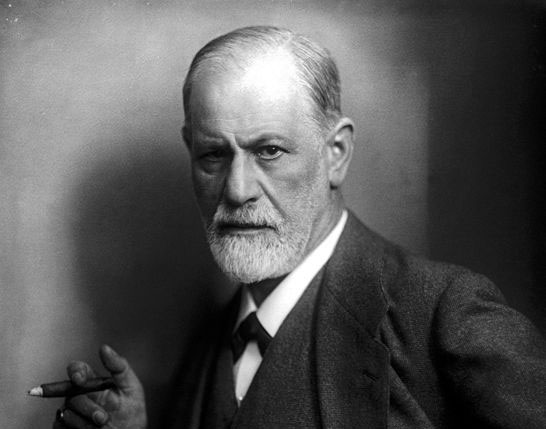
What might Sigmund Freud, the father of psychoanalysis, have found, had he lived long enough to study the 2018 US Nuclear Posture Review and its drafters? Anxiety about failure and death, fear of impotence, and an obsession with deterrence that obscures the ultimate question: “What is it that the United States wants in this world?” In this essay, the author uses psychoanalytic metaphors to explain why the United States does not currently have a long-term strategy for dealing with its most fundamental foreign policy challenges – and why it needs one, particularly as regards the global nuclear dilemma.Why a space-based missile interceptor system is not viable
The United States has plans to develop two new missile defense programs in the space domain: a space-based sensor architecture and a space-based missile intercept layer. Both proposed systems rely on a network of satellites in low Earth orbit to offer full or partial coverage of the Earth’s surface, precisely tracking a missile during its flight in one case, or shooting it down entirely in the other. A space-based sensor system could expand current capabilities for monitoring missile launches and warrants further study. The deployment of a space-based missile intercept layer, however, would require launching hundreds or thousands of weapons into space – an expensive, inefficient, and provocative idea. The technical discussion surrounding space-based interceptors should be decoupled from that of space-based sensors – a much more plausible proposal. Despite decades of support from influential policymakers, the resources required to deploy space-based interceptors would be better spent on other layers of US missile defense.Limitations on ballistic missile defense—past and possibly future
The ABM Treaty is unlikely to be revived any time soon. But it is possible that restraints on US deployment of ballistic missile defenses could make them seem less threatening to the effectiveness of Russia’s and China’s nuclear deterrents and set the stage for discussions about ways to preserve and even advance nuclear arms control. The proposed restraints are on systems designed to intercept warheads outside the atmosphere. Such systems are of little value in any case because they can be easily deceived by decoys and other countermeasures.Limitations on ballistic missile defense—Past and possibly future
Introduction: The great missile defense dilemma
Driven by varying (mis)perceptions of the motives and technological capabilities of their adversaries, major nuclear powers are pursuing their own versions of missile defenses – and a great variety of ways to defeat them through maneuverable missiles, decoys, and other missile defense penetration aids. In this issue, we look at this expensive and ineffective – yet potentially destabilizing – international pursuit of missile defense with the help of an extraordinary lineup of the world’s top missile defense experts: