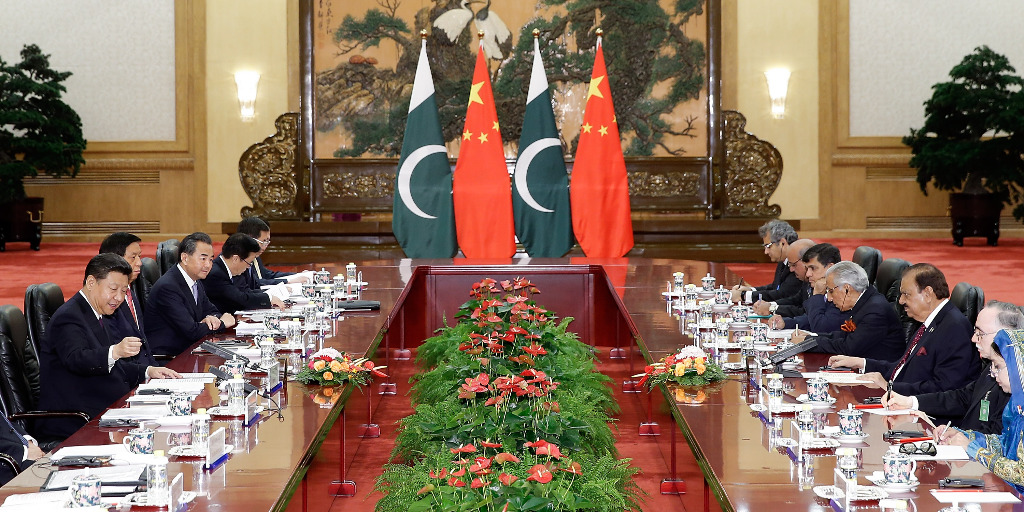
In the four years that he has been in office, Prime Minister Narendra Modi has animated domestic politics in India and the country’s foreign policy by departing often from conventional methods and shibboleths. As he focuses on winning the next general election, the key question is whether the Modi era will mark a defining moment for India, just as Xi Jinping’s ascension to power has been for China. The answer to that question is still not clear. What is clear, however, is that Modi’s stint in office has clearly changed Indian politics and diplomacy. In domestic politics, Modi has a stronger record: He has led the Bharatiya Janata Party to a string of victories in elections in a number of states, making his party the largest political force in the country by far. Under his leadership, the traditionally urban-focused BJP has significantly expanded its base in rural areas and among the socially disadvantaged classes and spread to the country’s eastern and southern regions. His skills as a political tactician steeped in cold-eyed pragmatism have held him in good stead. Modi, however, has become increasingly polarizing. Consequently, Indian democracy today is probably as divided and polarized as US democracy.The Profession of Arms: A Guide for Young Army Officers
It takes courage, especially for a young officer, to check a man met on the road for not saluting properly or for slovenly appearance, but, every time he does, it adds to his stock of moral courage, and whatever the soldier may say, he has respect for the officer who does pull him up.
Read Document →The Dragon's Teeth: Assessing China's Military Modernization
PLA has focused on modernising its capabilities across all warfare domains to achieve these goals. This includes land, air, and maritime operations, nuclear, space, counter-space, electronic warfare and cyberspace operations, aiming to become a fully integrated joint force.
Read Document →Transforming the PLA: A Decade of reorganisation from SSF to ISF
PRC has engaged in a sustained and broad effort to transform the PLA from an infantry-heavy, low-technology, ground forces-centric military into a high-technology, networked force with an increasing emphasis on joint operations and naval and air power projection.
Read Document →Eyes without Borders: Exploring the World of Open Source Intelligence (OSINT) in the Digital Age
Open Source Intelligence (OSINT) is gaining prominence with the rise of social media, the digital society and the vast growth of publicly and commercially available information (PAI and CAI).
Read Document →
The PLA’s Developing Cyber Warfare Capabilities and India's Options
Informationised warfare blurs the lines between peacetime and wartime. A nation in the information age cannot wait for the hostilities to break out to collect intelligence, carryout influence operations, develop antisatellite systems or design computer software weapons.
Read Document →
Galwan and After
Why did China did this when he is under tremendous pressure in all fronts, is this China's salami slice tactics being progressed rigorously, what will be new Rules of Engagement, what will be escalatory control mechanism, who has taken this decision, will there be some pressure put by China in India's North-East through insurgency.
Read Document →
India’s Joint Doctrine for Cyberspace Operations: A Critical Review
Chief of Defence Staff (CDS) General Anil Chauhan and Secretary, Department of Military Affairs, formally released declassified versions of the Joint Doctrines for Cyberspace Operations during the Chiefs of Staff Committee meeting in New Delhi.
Read Document →
Know your Enemy General(now Field Marshal) Syed Aseem Munir
Gen SA Munir's position in the hierarchy of Pakistan was not very comfortable. The state of economy, insurgency in Pakhtoonistan and Balochistan, attack on the Jaffar Express, constant protests by supporters of Imran Khan's supporters inside and outside of parliament.
Read Document →
Decoding Operation SINDOOR: Key Aspects and Implications
Precision strikes were carried out on nine sites—four in Pakistan and five in PoK—linked to anti-India terrorist groups such as the LeT, JeM and the Hizbul Mujahideen. The targeted sites included Muridke (LeT headquarters) and Bahawalpur (JeM headquarters).
Read Document →
Chinese Cyber Exploitation in India's Power Grid - Is There a linkage to Mumbai Power Outage?
The New York Times (NYT), based on analysis by a U.S. based private intelligence firm Recorded Future, reported that a Chinese entity penetrated India’s power grid at multiple load dispatch points. Chinese malware intruded into the control systems that manage electric supply across India, along with a high-voltage transmission substation and a coal-fired power plant
Read Document →6 June 2018
The Nehruvian Style of Modi’s Foreign Policy
In the four years that he has been in office, Prime Minister Narendra Modi has animated domestic politics in India and the country’s foreign policy by departing often from conventional methods and shibboleths. As he focuses on winning the next general election, the key question is whether the Modi era will mark a defining moment for India, just as Xi Jinping’s ascension to power has been for China. The answer to that question is still not clear. What is clear, however, is that Modi’s stint in office has clearly changed Indian politics and diplomacy. In domestic politics, Modi has a stronger record: He has led the Bharatiya Janata Party to a string of victories in elections in a number of states, making his party the largest political force in the country by far. Under his leadership, the traditionally urban-focused BJP has significantly expanded its base in rural areas and among the socially disadvantaged classes and spread to the country’s eastern and southern regions. His skills as a political tactician steeped in cold-eyed pragmatism have held him in good stead. Modi, however, has become increasingly polarizing. Consequently, Indian democracy today is probably as divided and polarized as US democracy.How India Is Making Its Place in the World
A Bleak and Sobering Lessons-Learned Report on the US Military’s War in Afghanistan
What to do with Pakistani militant Hafez Saeed? Pakistan and China grope for ambiguity
IMF Bailout Looms For Pakistan as Debt Surge Raises Alarm
Intervention – ‘Merkel’s Geography: Maps and Territory in China’
The Real China Threat Is That Its People Are Talented
Threat Report 2018: China’s Expanding Economy and Military Reach
Despite indications that China’s economy is likely to experience a moderate slowdown, the world’s second largest economy – and largest market by headcount – continues to expand the depth of its interactions with the world. From the One Belt, One Road project to the China-Pakistan Economic Corridor and the Asian Infrastructure Investment Bank, China’s economic footprint is set to expand dramatically over the next decades. China’s approach to foreign policy, military might, and international security are evolving as well.Iran's Strategy for Surviving U.S. Sanctions
Now that the United States is piling on sanctions, Iran's government is preparing for an inevitable economic decline. Iran's political factions are in relative agreement about how to handle the economic pressure, at least over the next several months. Tehran's goal will be to keep its head above water long enough to outlast the current U.S. administration. It will try to increase non-oil exports to make up for the loss of oil sales, implement financial reforms and slow the depreciation of its currency. Iran's key priorities while it is coping with sanctions will be to keep prices for food and other goods down, minimize protests against the government, and make foreign exchange reserves last as long as possible. One big question is how long Iran's discouraged population will trust the government's survival strategies before they start to protest against inflation and increasing wealth inequality. Iran and Israel are Racing toward Confrontation in Syria
Israel has long been wary of Iran’s power projection in the Levant, particularly in Syria. Ties between Tehran and Damascus have been close since the 1979 revolution, but the relationship deepened after Syria’s civil war erupted in 2011. With the Assad regime’s survival at stake, Tehran doubled down on its support, providing critical military assistance—fighters and strategists—and economic aid estimated to be in the hundreds of millions of dollars. Syria and Iran now have a partnership with existential stakes—for the Assad regime’s longevity and Iran’s enduring position in Syria, the most strategic property in the Levant. USIP’s Mona Yacoubian looks at Iran and Israel’s goals and concerns in Syria and the potential of their shadow war spilling over into a regional conflagration.U.S. MILITARY WILL LEAVE SYRIA BASE IN DEAL WITH RUSSIA, REPORTS SAY
Revisiting the U.S. Role in Three Middle East Crises
It has long been conventional wisdom to blame the Western powers, first and foremost the United States, for the ills of the contemporary Middle East. No sooner had al-Qaeda terrorists steered two hijacked airplanes into the World Trade Center than the atrocity was presented as a response to Washington’s overbearing and self-serving Middle Eastern policy. What goes around comes around, ran the common argument, and it is only natural for the seeds of rage that Washnigton has sown to come home to roost. In the words of historian Gabriel Kolko: “The events of September 11 were the direct result of over fifty years of American involvement in the region, the consequence of actions and policies that have destabilized the arc of nations extending from the Mediterranean to South Asia.”[1]Europe’s losing streak Why Brussels feels so dazed and confused in 2018.
Here are a few words you keep hearing about Europe today: Drift. Relapse. Malaise. Trouble. If news cycles now move in eye blinks, political epochs come in quicker too. The current era — of Europe in trouble once again — is at once jarring and familiar. Only two years ago, of course, Brusselswas a city on the verge of a nervous breakdown, struck hard by twin political blows. Shortly after Britain became the first EU country to choose, in June of 2016, to head for the exits, America elected a president vocally hostile to the EU and NATO. The pillars of the post-war order seemed to be shaking. Europe turned things around in 2017. The election surprises early that year were establishment-friendly victories in the Netherlands and France. The voting public’s embrace of stability and the golden middle came personified in the form of Emmanuel Macron, who celebrated his election win in France with Beethoven’s “Ode to Joy,” the EU anthem.The Ongoing Drama, or Farce, of Trump’s China Trade Policy
On the 20th anniversary of the 1998 nuclear tests by India and Pakistan
May 2018 marked the 20th anniversary of the nuclear weapon tests by India and Pakistan. Over these past two decades, the Bulletin of the Atomic Scientists has covered the growing nuclear programs of the two countries and the profound risks they pose to the roughly 1.5 billion people now living in these two countries, who make up one-fifth of humanity. Here, guest editors Zia Mian and M.V. Ramana select a few of the many articles on nuclear South Asia that have been published by the Bulletin. On 11 May 1998, Indian Prime Minister A.B. Vajpayee announced that three nuclear devices had been exploded earlier that day. Two days later, following two more explosions, Vajpayee proudly announced that India was now a nuclear weapon state. A couple of weeks later, on May 28 and 30, Pakistan’s Prime Minister Nawaz Sharif announced that his country had conducted six nuclear explosions.Emerging Market Meltdown Could Undermine Oil Rally – Analysis
Are We Truly Witnessing The End Of Violent Islamism? – Analysis
Trump’s Steel Tariffs on Allies Complicate Bigger Problem: China
The men waging Trump’s trade wars (from left): Treasury Secretary Steven Mnuchin, Commerce Secretary Wilbur Ross, U.S. Trade Representative Robert Lighthizer, and White House National Trade Council Director Peter Navarro, in the White House on March 8. The Trump administration’s decision Thursday to slap steep tariffs on steel and aluminum from some of its biggest trading partners — Canada, Mexico, and the European Union — will make it harder for the United States to tackle the very trade abuses it claims to be fighting. Despite a flurry of last-minute negotiations with Canada, Mexico, and Europe, the United States went ahead and levied a 25 percent tariff on imports of steel and a 10 percent tariff on aluminum imports from those three trading partners, ending the temporary exemption they’d enjoyed since the spring.U.S. Allies Hit Back as Trump Revokes Steel Tariff Reprieve
A Distracted U.S. Struggles To Shift Its Global Focus
The United States is restructuring its global military footprint, reallocating its resources and shifting its strategic focus to better compete against China and Russia. To achieve this, the United States will be compelled to prioritize its commitments in Europe and the Asia-Pacific region. However, enduring U.S. commitments elsewhere and emerging global flashpoints will sidetrack Washington's attention and resources. Changing times call for changing measures. In the face of an intensifying great power competition with Russia and China, the United States is expanding its efforts to refocus its global strategy, force deployments and resources to better position itself in a new struggle. But recalibrate as it might, the United States' enduring commitments, along with global flashpoints, will continue to sap the country's attention and resources as it wages a new global battle for influence.Italy and Spain Rattle the Eurozone
Italy's political crisis has deepened, significantly increasing the likelihood that another round of elections will be held soon. Should that happen, Euroskeptic parties will likely perform strongly again. In Spain, the government faces a vote of no confidence. Even if it manages to stay in power, the minority government in Madrid will be increasingly ineffective. While Euroskeptic politics in Italy represent a much more urgent threat to the eurozone than those in Spain, the countries using the currency are so deeply interconnected that financial risk from either country could easily spread.Uncertainty Is Pushing the EU to Speed Up Its Trade Deals
Worried about the future of global trade, the European Union is seeking to negotiate as many free trade agreements as it can. While the bloc is becoming slightly more flexible on some formerly restricted topics, its protective attitude toward agriculture and other areas will still present obstacles in talks. The strength of nationalist and populist movements in Europe will create political problems that impede the approval of new agreements. In the wake of the disruption of trade rolling out of Washington, the European Union is accelerating its drive to lock down as many import-export agreements as it can. In recent months, the bloc has completed deals with Japan and Singapore, updated an agreement with Mexico, authorized talks with Australia and New Zealand, and made progress with the Common Market of the South, the South American trade bloc known as Mercosur.Religion and Violence in Russia Context, Manifestations, and Policy
Will AI help save lives on the battlefield?
After a while the buzzwords start to ring hollow. What’s “artificial intelligence,” in practical terms? An Orwellian nightmare that will control our every battlefield maneuver? Or a helpful tool to aid the war fighter? Let’s bring it down to Earth, make it tangible. AI can, for instance, scan a live video feed faster and more accurately than any human and then warn commanders of imminent danger. At least that’s the premise behind an ongoing project at the Air Force Research Laboratory at Wright-Patterson Air Force Base. “Video is captured with such velocity and volume [that] no individual or team of individuals can hope to analyze that data in a meaningful way,” said Scott Clouse, senior research engineer at the Decision Science Branch.5 ways government will fight against botnets
Both government and the private sector must take action to combat the threat of botnets — networks of computers infected with malicious software that allows a hacker to control their actions — according to a May 30, 2018, report to the president. The “Enhancing the Resilience of the Internet and Communications Ecosystem Against Botnets and Other Automated, Distributed Threats” report released by the Department of Homeland Security and Department of Commerce was mandated under a May 2017 executive order on cybersecurity. It draws from federal agency and private sector input. To begin the process, the report proposed 24 actions that align with five overarching goals, ranging from improving the cybersecurity of internet of things devices to promoting engagement between different industries impacted by the botnet problem.