India’s new national budget accentuates its stagnant defence spending. India’s defence spending figure of $46.3 billion contrasts starkly with China’s $177.5 billion, underscoring the yawning power gap between the two. Indeed, India’s defence budget is smaller than even China’s trade surplus with it, highlighting the extent to which India underwrites China’s hostile actions against it.The Profession of Arms: A Guide for Young Army Officers
It takes courage, especially for a young officer, to check a man met on the road for not saluting properly or for slovenly appearance, but, every time he does, it adds to his stock of moral courage, and whatever the soldier may say, he has respect for the officer who does pull him up.
Read Document →The Dragon's Teeth: Assessing China's Military Modernization
PLA has focused on modernising its capabilities across all warfare domains to achieve these goals. This includes land, air, and maritime operations, nuclear, space, counter-space, electronic warfare and cyberspace operations, aiming to become a fully integrated joint force.
Read Document →Transforming the PLA: A Decade of reorganisation from SSF to ISF
PRC has engaged in a sustained and broad effort to transform the PLA from an infantry-heavy, low-technology, ground forces-centric military into a high-technology, networked force with an increasing emphasis on joint operations and naval and air power projection.
Read Document →Eyes without Borders: Exploring the World of Open Source Intelligence (OSINT) in the Digital Age
Open Source Intelligence (OSINT) is gaining prominence with the rise of social media, the digital society and the vast growth of publicly and commercially available information (PAI and CAI).
Read Document →
The PLA’s Developing Cyber Warfare Capabilities and India's Options
Informationised warfare blurs the lines between peacetime and wartime. A nation in the information age cannot wait for the hostilities to break out to collect intelligence, carryout influence operations, develop antisatellite systems or design computer software weapons.
Read Document →
Galwan and After
Why did China did this when he is under tremendous pressure in all fronts, is this China's salami slice tactics being progressed rigorously, what will be new Rules of Engagement, what will be escalatory control mechanism, who has taken this decision, will there be some pressure put by China in India's North-East through insurgency.
Read Document →
India’s Joint Doctrine for Cyberspace Operations: A Critical Review
Chief of Defence Staff (CDS) General Anil Chauhan and Secretary, Department of Military Affairs, formally released declassified versions of the Joint Doctrines for Cyberspace Operations during the Chiefs of Staff Committee meeting in New Delhi.
Read Document →
Know your Enemy General(now Field Marshal) Syed Aseem Munir
Gen SA Munir's position in the hierarchy of Pakistan was not very comfortable. The state of economy, insurgency in Pakhtoonistan and Balochistan, attack on the Jaffar Express, constant protests by supporters of Imran Khan's supporters inside and outside of parliament.
Read Document →
Decoding Operation SINDOOR: Key Aspects and Implications
Precision strikes were carried out on nine sites—four in Pakistan and five in PoK—linked to anti-India terrorist groups such as the LeT, JeM and the Hizbul Mujahideen. The targeted sites included Muridke (LeT headquarters) and Bahawalpur (JeM headquarters).
Read Document →
Chinese Cyber Exploitation in India's Power Grid - Is There a linkage to Mumbai Power Outage?
The New York Times (NYT), based on analysis by a U.S. based private intelligence firm Recorded Future, reported that a Chinese entity penetrated India’s power grid at multiple load dispatch points. Chinese malware intruded into the control systems that manage electric supply across India, along with a high-voltage transmission substation and a coal-fired power plant
Read Document →13 July 2019
Arming without a clear strategic direction
India’s new national budget accentuates its stagnant defence spending. India’s defence spending figure of $46.3 billion contrasts starkly with China’s $177.5 billion, underscoring the yawning power gap between the two. Indeed, India’s defence budget is smaller than even China’s trade surplus with it, highlighting the extent to which India underwrites China’s hostile actions against it.Optimizing India's Electricity Grid for Renewables Using AI and Machine Learning Applications
Arming without a clear strategic direction
Raghuram Rajan: How Markets and the State Betray Communitie
This wide-ranging interview by Wharton finance professor Jeremy Siegel with Raghuram Rajan, an economics professor at the University of Chicago and former Governor of the Reserve Bank of India, covers topics ranging from his new book to the economic future of China and India. Joining the discussion, which occurred on Wharton Business Radio’s Behind the Markets show on SirusXM, were Jeremy Schwartz, Liqian Ren and Gaurav Sinha from WisdomTree ETF Investments. Schwartz is also the regular moderator for the show, which features Siegel.Trump's Mini-Trade War with India
Two New IS Wilayat in South Asia: IS Reinvigorates Itself in Pakistan and India
Tell Me How This Ends: Military Advice, Strategic Goals, and the “Forever War” in Afghanistan
Can U.S. Reach Deal With Taliban by September in Afghanistan?
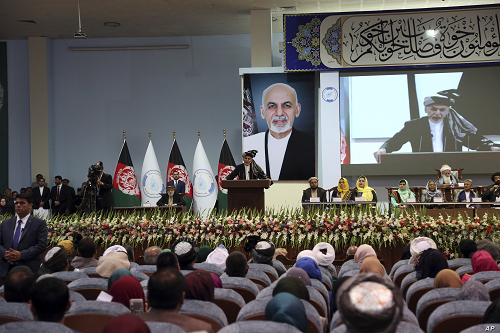
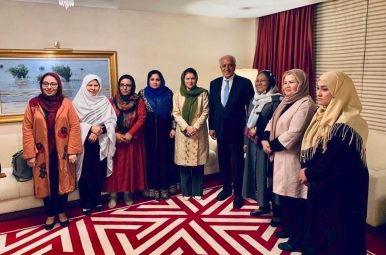
With the United States aiming for a potential deal with the Afghan Taliban by September, analysts and Afghan officials are skeptical that a comprehensive deal could be reached when the Afghan government has yet to hold direct talks with the Taliban.Afghanistan’s Bloody Peace Process
Long Awaited Intra-Afghan Conference Brings Peace One Step Closer
‘Our Duty to Fight’: The Rise of Militant Buddhism
Gibraltar Tanker Seizure, Uranium Enrichment Breach Add New Dimensions to Middle East Tensions
Xi Jinping Continues His Quest for Absolute Party Control
Is China Pulling Off Its Own ’Offset’ Strategy?
Where Is Indonesia on China’s Belt and Road Initiative?
A Bold Idea for Security Reform in the Indo-Pacific Region
Former Acting Secretary of Defense Patrick Shanahan’s recent speech at the Shangri-La Dialogue was expected to herald a new approach to the Indo-Pacific region by the United States. But the speech, and the subsequent release of a new Indo-Pacific strategy by the Department of Defense, did not announce any bold new initiatives nor offer specifics about operationalizing America’s Free and Open Indo-Pacific (FOIP). This is unfortunate and represents a missed opportunity. Although America has promoted FOIP and ramped up its Freedom of Navigation Operations(FONOPs) program in the South and East China Seas during the past year, it needs to do more to demonstrate its long term commitment to the Indo-Pacific region to its allies and partners. One way it could do this is by establishing a multi-national Standing Indo-Pacific Maritime Group (SIPMG).That New Consensus on China? It’s Wrong
Thinking About Space Deterrence and China
Global Terrorism May be Down but is Still a Threat In 2019 - Are We Ready?
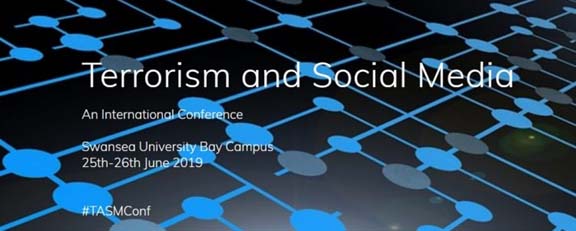
Terrorism and Social Media (TASMConf): International Conference - 25-26 June 2019 - Swansea University, Wales, UK - Radical Islamist Focused Presentations OSINT Listing
The 2019 Terrorism and Social Media (TASM) conference took place on 25 and 26 June 2019 at Swansea University Bay Campus, Wales, United Kingdom. The conference was organized by Swansea University’s Hillary Rodham Clinton School of Law and its Cyber Threats Research Centre (CYTREC), with the support of the VOX-Pol Network of Excellence. It brought together a broad range of researchers, policy-makers, and practitioners from a total of 23 countries, including the United Kingdom, United States, Canada, Australia, Ireland, France, Holland, Poland, Israel, and Ukraine. It featured three keynote presentations and hosted twenty-five panels with more than seventy-four other speakers over six breakout session sequences each lasting one and one-half hours over the two-day event. The conference utilized the Twitter hashtag: #TASMConf for tweets related to its activities. A selection of these tweets can be viewed here.The Baloch Liberation Army’s New US Terrorist Designation: Why Now?
In an unprecedented development, the U.S. Department of State has declared the Baloch Liberation Army(BLA) a militant organization under the country’s Foreign Terrorist Organization (FTO) listing. The BLA is a separatist group that primarily operates in Pakistan’s Balochistan province. According to the State Department’s listing, the “armed separatist group targets security forces and civilians, mainly in ethnic Baloch areas of Pakistan.”By Other Means—Part I: Campaigning in the Gray Zone
The United States is being confronted by the liabilities of its strength. Competitors are contesting the rules of the international system and U.S. leadership. With the significant costs of engaging the United States in combat, and the growing range of indirect and non-military tools at their disposal, rivals are finding avenues for threatening U.S. interests without triggering escalation. Their approaches lie in the contested arena between routine statecraft and open warfare--the "gray zone." The United States has yet to articulate a comprehensive approach to deterring competitors in the gray zone. A concrete and actionable campaign plan is needed to deal with the gray zone challenge; in order to do so, the United States must identify and employ a broad spectrum of tools and concepts to deter, and if needed, to compete and win contestations in the gray zone.ะฝะตััั: The Impact of Russian Energy on Europe
Targeting in Multi-Domain Operations: A Proposal to Update the U.S. Army’s Targeting Process for the Modern Operating Environment
Why America Remains a 2nd-Generation Military
Why Doctrine Matters
The Mekong in US Asia Strategy: Opportunities and Challenges
Shale is Not Forever: Why America Should Continue Protecting Gulf Oil and Gas Flows
A stout U.S. military deterrent to those who might threaten oil and gas flows from the Gulf does not guarantee stable prices, but it helps reduce the risk of both damaging spikes and the geopolitical risk premium that markets generally price-in during periods of instability in the region.Unpacking OPEC+’s Renewed Mission in Five Graphics
Taiwan’s Status is a Geopolitical Absurdity
TAIPEI—After nine years of construction, more than 400 American diplomats and staff have moved into new offices here, a $250 million compound built into a lush hill with security provided by marines. Employees will offer American citizens in Taiwan consular services and help Taiwanese obtain visas to visit the United States, just as they would anywhere else in the world.