The Profession of Arms: A Guide for Young Army Officers
It takes courage, especially for a young officer, to check a man met on the road for not saluting properly or for slovenly appearance, but, every time he does, it adds to his stock of moral courage, and whatever the soldier may say, he has respect for the officer who does pull him up.
Read Document →The Dragon's Teeth: Assessing China's Military Modernization
PLA has focused on modernising its capabilities across all warfare domains to achieve these goals. This includes land, air, and maritime operations, nuclear, space, counter-space, electronic warfare and cyberspace operations, aiming to become a fully integrated joint force.
Read Document →Transforming the PLA: A Decade of reorganisation from SSF to ISF
PRC has engaged in a sustained and broad effort to transform the PLA from an infantry-heavy, low-technology, ground forces-centric military into a high-technology, networked force with an increasing emphasis on joint operations and naval and air power projection.
Read Document →Eyes without Borders: Exploring the World of Open Source Intelligence (OSINT) in the Digital Age
Open Source Intelligence (OSINT) is gaining prominence with the rise of social media, the digital society and the vast growth of publicly and commercially available information (PAI and CAI).
Read Document →
The PLA’s Developing Cyber Warfare Capabilities and India's Options
Informationised warfare blurs the lines between peacetime and wartime. A nation in the information age cannot wait for the hostilities to break out to collect intelligence, carryout influence operations, develop antisatellite systems or design computer software weapons.
Read Document →
Galwan and After
Why did China did this when he is under tremendous pressure in all fronts, is this China's salami slice tactics being progressed rigorously, what will be new Rules of Engagement, what will be escalatory control mechanism, who has taken this decision, will there be some pressure put by China in India's North-East through insurgency.
Read Document →
India’s Joint Doctrine for Cyberspace Operations: A Critical Review
Chief of Defence Staff (CDS) General Anil Chauhan and Secretary, Department of Military Affairs, formally released declassified versions of the Joint Doctrines for Cyberspace Operations during the Chiefs of Staff Committee meeting in New Delhi.
Read Document →
Know your Enemy General(now Field Marshal) Syed Aseem Munir
Gen SA Munir's position in the hierarchy of Pakistan was not very comfortable. The state of economy, insurgency in Pakhtoonistan and Balochistan, attack on the Jaffar Express, constant protests by supporters of Imran Khan's supporters inside and outside of parliament.
Read Document →
Decoding Operation SINDOOR: Key Aspects and Implications
Precision strikes were carried out on nine sites—four in Pakistan and five in PoK—linked to anti-India terrorist groups such as the LeT, JeM and the Hizbul Mujahideen. The targeted sites included Muridke (LeT headquarters) and Bahawalpur (JeM headquarters).
Read Document →
Chinese Cyber Exploitation in India's Power Grid - Is There a linkage to Mumbai Power Outage?
The New York Times (NYT), based on analysis by a U.S. based private intelligence firm Recorded Future, reported that a Chinese entity penetrated India’s power grid at multiple load dispatch points. Chinese malware intruded into the control systems that manage electric supply across India, along with a high-voltage transmission substation and a coal-fired power plant
Read Document →25 January 2016
The Changing Face of Globalization
Pakistan’s Monster
HERSH FUROR BARES PAKISTAN’S PERFIDY MORE THAN OBAMA’S
Pakistani Taliban Faction Vows to Hit More Universities and Schools
The reek of denial
Five Myths to Dispel About An Afghan Peace
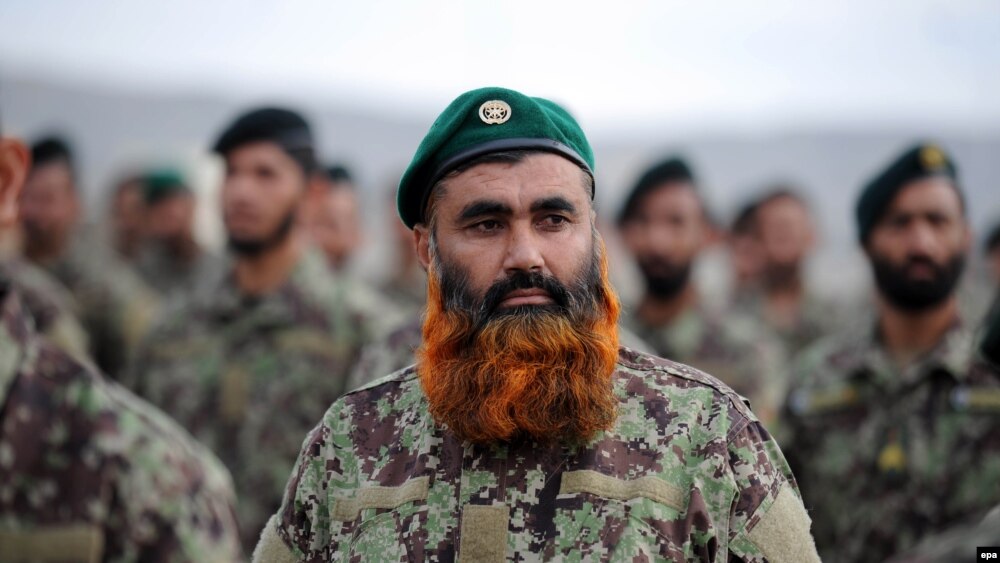
"Getting the Afghan army, the most credible institution in the country, into the field among the population is necessary to recapture and secure important territory, help serve as a watchdog for good local governance and check predatory actors."
Peace in Afghanistan is possible, but first the parties need to let go of five pernicious myths.
The Quadrilateral Coordination Group, consisting of Afghanistan, Pakistan, China, and the United States, met on January 11 and 18 in an effort to forge a road map for a peace process. They are due to meet next on February 6. This is critically important work, but the members appear to remain short of an agreed way forward. Addressing these five myths may assist.
Those serious about peace will immediately stop violence.
Actually, even combatants serious about peace normally use violence as leverage. They want to enter into negotiations at the strongest possible position and maintain that power throughout the process. Only a fool would forfeit advantage prior to bargaining.
Reductions in violence are essential for a credible peace process. Measures to reduce violence are key for building confidence once a process is underway and gaining traction. Start with small steps first; agreements in words, followed by deeds. This process should become more specific over time to include violence-reduction measures and eventually cease-fire agreements.
The Afghan government and Taliban need a power-sharing deal.
Power-sharing deals between warring Afghan parties have a very poor track record. The Peshawar (1992) and Islamabad (1993) Accords, for instance, led to the disastrous Afghan civil war and the Taliban seizure of power. Similar power-sharing deals in conflicts ranging from Sierra Leone to Angola, Cambodia, and Rwanda failed quickly and resulted in even greater losses of life.
A credible peace process is patient about power-sharing. The most difficult compromises tend to occur at the end of a negotiating process, because all sides have enough "skin in the game." Agreements that were unthinkable at the beginning become sensible. Demanding a final agreement up front is a recipe for cynicism. Until the parties can trust the process and each other, any power-sharing agreement runs a high risk of collapsing into even greater violence. After 38 years of war, Afghanistan will require a very deliberate road map that may take more than a decade to unfold.
A New Model for China’s Outbound M&A Deals?
Erdoฤan’s Neo-Ottoman Vision Meets Xi’s Silk Road Dream in the Middle East
As Christina Lin sees it, Recep Erdoฤan’s desire to protect Turkey’s energy interests in its near-abroad may disrupt the Middle East segment of China’s One Belt, One Road (OBOR) Initiative. To avoid this burgeoning problem, Ankara will have to tread cautiously and operate within a conciliatory “multiple modernities” framework.
By Christina Lin for Institut fรผr Strategie- Politik- Sicherheits- und Wirtschaftsberatung (ISPSW)
This article was originally published by the Institut fรผr Strategie- Politik- Sicherheits- und Wirtschaftsberatung in January 2016.
Abstract
The ancient Silk Roads crossed Eurasia to link trade between China and its Greco-Roman trading partners until the Ottoman Empire cut it off in the 1400s. With the newly revived One Belt, One Road (OBOR) Initiative under Chinese President Xi Jinping, will it meet the same fate as Turkey’s President Erdoฤan asserts his Neo-Ottoman ambitions in the greater Middle East?
China hopes it won’t. On December 17, DHL Global Forwarding, a leading provider of air, sea and road freight services in Europe and Asia, inaugurated its China-Turkey intermodal corridor as part of the One Belt, One Road initiative.1
The Lianyungang-Istanbul corridor takes around 14 days to transit Kazakhstan, Azerbaijan, and Georgia as well as the Caspian and Black Seas, with the option for immediate freight forwarding by truck to any Turkish city.
The rail corridor is expected to generate US $2.5 trillion in annual trade within the next ten years, and was recently expanded to connect Taiwan with Europe via China, thereby linking the Pacific Ocean with the Atlantic Ocean through the Eurasian continent.2
Steve Huang, CEO of DHL Global Forwarding China, said: “Turkey already counts China as its second-largest source of imports, and the EU as its largest export market… new corridors like the Lianyungang-Istanbul link will only further boost Turkey’s strategic importance and associated economic development as a conduit for trade between China and Europe.”
However, challenges remain. Foremost is how China and Turkey can cooperate in the Middle East segment of China’s OBOR, especially as Turkey is also taking a more robust military posture to protect its energy interests.
Turkey’s expanding military footprint in its oil & gas rich near abroad
After winning the November election, Erdoฤan has taken a more aggressive posture to realize his dream of reviving the Ottoman Empire both domestically by pushing for a presidential system and internationally by deploying Turkish troops abroad.
Qatar: In December, Turkey announced it is establishing a new military base in natural gas-rich Qatar, with an initial 3,000 troops being stationed at the base, including air and naval units, military trainers and special operations forces.
In an interview with Reuters, Turkey’s ambassador to Qatar Ahmet Demirok said, “Today we are not building a new alliance but rather rediscovering historic and brotherly ties,” referring to the Muslim Ottoman Empire which stretched from eastern Europe to the Arab Gulf.3
Iraq: At the same time, Hurriyet Daily announced Turkey would also set up a permanent military base in Iraq when Ankara sent around 200 soldiers and 20-25 tanks to Bashiqa (near oil-rich Mosul), following a deal with the Kurdistan Regional Government (KRG) on 4 November.4 After Iraq protested against Turkey’s invasion at the UN, Ankara responded by moving its troops around, some deeper inside Kurdistan, while it is not yet clear where other troops would move to.
U.S. Relies Heavily on Saudi Money to Support Syrian Rebels
By MARK MAZZETTI and MATT APUZZO, January 23, 2016
WASHINGTON — When President Obama secretly authorized the Central Intelligence Agency to begin arming Syria’s embattled rebels in 2013, the spy agency knew it would have a willing partner to help pay for the covert operation. It was the same partner the C.I.A. has relied on for decades for money and discretion in far-off conflicts: the Kingdom of Saudi Arabia.
Since then, the C.I.A. and its Saudi counterpart have maintained an unusual arrangement for the rebel-training mission, which the Americans have code-named Timber Sycamore. Under the deal, current and former administration officials said, the Saudis contribute both weapons and large sums of money, and the C.I.A takes the lead in training the rebels on AK-47 assault rifles and tank-destroying missiles.
The support for the Syrian rebels is only the latest chapter in the decadeslong relationship between the spy services of Saudi Arabia and the United States, an alliance that has endured through the Iran-contra scandal, support for the mujahedeen against the Soviets in Afghanistan and proxy fights in Africa. Sometimes, as in Syria, the two countries have worked in concert. In others, Saudi Arabia has simply written checks underwriting American covert activities.
The joint arming and training program, which other Middle East nations contribute money to, continues as America’s relations with Saudi Arabia — and the kingdom’s place in the region — are in flux. The old ties of cheap oil and geopolitics that have long bound the countries together have loosened as America’s dependence on foreign oil declines and the Obama administration tiptoes toward a diplomatic rapprochement with Iran.
And yet the alliance persists, kept afloat on a sea of Saudi money and a recognition of mutual self-interest. In addition to Saudi Arabia’s vast oil reserves and role as the spiritual anchor of the Sunni Muslim world, the long intelligence relationship helps explain why the United States has been reluctant to openly criticize Saudi Arabia for its human rights abuses, its treatment of women and its support for the extreme strain of Islam, Wahhabism, that has inspired many of the very terrorist groups the United States is fighting. The Obama administration did not publicly condemn Saudi Arabia’s public beheading this month of a dissident Shiite cleric, Sheikh Nimr al-Nimr, who had challenged the royal family.
Although the Saudis have been public about their help arming rebel groups in Syria, the extent of their partnership with the C.I.A.’s covert action campaign and their direct financial support had not been disclosed. Details were pieced together in interviews with a half-dozen current and former American officials and sources from several Persian Gulf countries. Most spoke on the condition of anonymity because they were not authorized to discuss the program.
From the moment the C.I.A. operation was started, Saudi money supported it.
“They understand that they have to have us, and we understand that we have to have them,” said Mike Rogers, the former Republican congressman from Michigan who was chairman of the House Intelligence Committee when the C.I.A. operation began. Mr. Rogers declined to discuss details of the classified program.
American officials have not disclosed the amount of the Saudi contribution, which is by far the largest from another nation to the program to arm the rebels against President Bashar al-Assad’s military. But estimates have put the total cost of the arming and training effort at several billion dollars.
The White House has embraced the covert financing from Saudi Arabia — and from Qatar, Jordan and Turkey — at a time when Mr. Obama has pushed gulf nations to take a greater security role in the region.
Spokesmen for both the C.I.A. and the Saudi Embassy in Washington declined to comment.
The Man Obama Asked To Defeat The Islamic State
By Michael Crowley, 01/18/16
Read more: http://www.politico.com/ story/2016/01/robert-malley- syria-bashar-assad-isil- 217503#ixzz3xcqVD43U
A few years before Syria’s civil war broke out, a Middle East researcher named Robert Malley paid at least two visits to Syrian President Bashar Assad to hear his views on the region.
Today, as President Barack Obama’s top adviser on Middle East issues, it’s Malley’s job to push Assad from power and help restore peace to a country where Malley himself has family roots.
Story Continued Below
That hugely influential – and challenging – role is a kind of redemption for the 52-year-old Malley, whose last encounter with Obama ended painfully. Obama’s 2008 presidential campaign severed its ties with Malley after reports that he’d met with members of the Palestinian militant group Hamas. Ardent Israel supporters piled on with charges that Malley, a former member of Bill Clinton’s Middle East team, harbored anti-Israel views. Top foreign policy hands denounced the “vicious” attacks, but the damage was done; the Obama campaign said that Malley never had a formal campaign role and never would.
Today, Malley holds one of the most important jobs in Obama’s White House, with a hand in everything from the Iran nuclear deal to the fight against the Islamic State, also known as ISIS or ISIL. In late November, Obama granted Malley a second title as his senior adviser for the counter-ISIL campaign – in effect an ISIS “czar” coordinating U.S. efforts against the terror group after complaints about an unclear chain of command.
Friends say Malley’s return from exile is no surprise, given Malley’s expertise and key beliefs he shares with Obama, including pragmatism and a willingness to seek common ground with enemies. “Rob brings a fundamentally realpolitik perspective to his job, and that’s well suited to the president’s worldview,” says one former colleague. “He’s capable of holding his nose.”
In that spirit, Malley has counseled Obama that, however despicable Assad may be, the U.S. has more urgent goals than fulfilling Obama’s vow that Assad be removed from power. Malley does not favor an outright partnership with Assad against the Islamic State, according to sources familiar with his thinking. But, as the former colleague put it: “He’s more inclined than some others to be flexible on the question of Assad’s durability.”
Since Malley took over the national security council’s Middle East job in March, the Obama administration has shown more tolerance for letting Assad hang on for several months, possibly into mid-2017. Obama is trying to broker a political settlement to the Syrian conflict but insists it must pave the way for Assad’s exit.
Other Obama administration officials, including Secretary of State John Kerry – who also met with Assad before the 2011 Syrian uprising began – are more impatient for the Syrian leader’s departure.
How Russia Sees the World
New Russian Gas Politics or Adapting to a Changing Gas Trading Dynamics in Central Asia?
Putin Calls on Germany to Mend Fences by Recognizing Russian ‘National’ Interests
THE BREXIT EQUATION: EU MINUS UK = ?
The Beard Shavers of Tajikistan
Former Special Operator to Lead State Department's Counter-ISIS Messaging Center
By Stew Magnuson
A former Navy SEAL and current Defense Department official is being called on to revamp the federal government's effort to counter ISIS and other groups' recruitment propaganda.
"The defining characteristics of [special operations forces] -- agility, precision and the effective use of intelligence -- are exactly what is needed to address this challenge," said Michael Lumpkin, in his final speech as assistant secretary of defense for special operations/low intensity conflict. President Obama has tapped him to lead the new Global Engagement Center at the Department of State.
His task is to rethink the government's effort to counter violent extremist propaganda.
"It is a critical part of our overall approach to counter violent extremism and one that quite frankly needs better direction and more resources," he said at the National Defense Industrial Association's Special Operations/Low Intensity Conflict conference in Washington, D.C.
"The center will focus on empowering and enabling partners, both governmental and nongovernmental, to speak out agains these groups to provide an alternative to Daesh's nihilistic vision," he said, referring to another name for ISIS. "The reality is that the U.S government is not always the most effective messenger to contest this propaganda." The most credible messengers come from within the region, he added.
The center's goal is to dismantle the groups' efforts worldwide by targeting recruitment, he added.
Industry can help with tools to counter the extremists online, he said. Attacks in Paris, San Bernardino,California, Istanbul and Jakarta show that this is a global fight, he said. "Working with the defense industry and the tech industry in Silicon Valley, we can use new tools to I detect and measure radicalization," he said. Such technology can also be used to measure how the center's and the violent groups' messaging is resonating, he added.
"With better information we can more effectively counter the narrative espoused by these violent extremist organizations," he said.
He added that there is a serious shortage of credible content that can be used to counter radical messaging. Working with defense and tech industries along with international partners, "we can do better," he said.
Lumpkin is a self-professed "knuckle dragger" who is "not a social media guy."
The center will take a "whole of government approach." He plans to use special operations forces military information support teams, formerly known as psychological operations, in his new job.
** It’s Time to Establish Ethics-Related Metrics
By Col. Charles D. Allen, U.S. Army retired
In July 2006, DoD initiated the “Check It” campaign as part of its internal management controls program and co-opted the military aphorism “what gets checked gets done.” To check that something is being done correctly requires measurement and metrics.
During the past decade, DoD has sought to measure the effectiveness of its counterinsurgency strategy in Afghanistan and Iraq. It also sought to measure the effect of fiscal year 2013 sequestration using varied metrics for readiness, modernization and force structure of the armed services. DoD is still struggling to find appropriate metrics to assess the efficacy of the Sexual Assault Prevention and Response Program.
The difficulties in measuring these areas of strategic concern do not bode well for DoD as it strives to check the character of its leaders and ethics within the profession of arms to ensure that we are “getting it right.”
The White House and Congress have paid a great deal of attention to the ethical missteps and misbehavior of DoD leaders in the early years of the 21st century. In response, the secretary of defense in 2014 appointed a senior advisor for military professionalism to focus its efforts for military ethics, character and leadership development. In a report in September 2015, however, the Government Accountability Office found that DoD “has not fully implemented two key tools for identifying and assessing ethics and professionalism issues, and it has not developed performance metrics to measure its progress in addressing ethics-related issues.” In the years since the renewed focus, ethical issues have continued in operational and institutional settings throughout the Army as well as in other services.
Too Many Failings
News accounts of officer, enlisted and civilian personnel misconduct are, unfortunately, not infrequent and are generally met with cynicism. The perceived lack of accountability for senior leaders is aptly captured by author Tom Ricks’ quip, “different spanks for different ranks.” While the 2011 Army Profession Campaign and study sought to revive trust in the Army as an institution, there are still too many incidents of ethical failings within the ranks.
In early 2015, my U.S. Army War College colleagues, research professor of military strategy Leonard Wong and professor of behavioral sciences Stephen J. Gerras, revealed in “Lying to Ourselves: Dishonesty in the Army Profession” a pervasive culture of false reporting resulting from overwhelming and burdensome requirements, and the accepted norm of telling higher headquarters what they want to hear.
Monica C. Higgins, a professor in education leadership at the Harvard Graduate School of Education, offers that career imprinting is a “form of learning that encompasses the professional impression left on individuals by an organization.” Given that career imprinting influences individual leader choices and behavior in an organizational context, then it would also affect the ethical climate of a unit set by its leaders.
Beyond the Build: How the Component Command Support the U.S. Cyber Command Vision
DOWNLOAD PDF
Networked technology is transforming society. That transformation has come with significant change to war and the military art. Until recently, cyber considerations rarely extended beyond the computers and cables that supported kinetic warfighting functions. The natural domains—land, sea, air, and space—dominated the planning and conduct of operations, while the risks entailed in using cyberspace for military purposes went largely unrecognized. Today, cyberspace ranks as its own warfighting domain—one that intersects the four natural domains.
U.S. Navy’s fourth Mobile User Objective System communications satellite will bring advanced, new global communications capabilities to mobile military forces (Courtesy United Launch Alliance/U.S. Navy)
Cyberspace operations demand unprecedented degrees of collaboration, which the U.S. Government must approach holistically—leveraging resources and expertise from industry, academia, and state/local governments, as well as allied and coalition partners. U.S. Cyber Command (USCYBERCOM) works as a subordinate, unified command under U.S. Strategic Command (USSTRATCOM) to conduct the full scope of cyberspace operations. These have three distinct mission areas: to secure, operate, and defend the Department of Defense Information Network (DODIN); to provide combatant command support; and to defend the nation against strategic cyber attack. USCYBERCOM is building the cyberspace operations force of tomorrow, and looking beyond that build to how the command will operate with mission partners in this dynamic and contested space.
USCYBERCOM and its components act to help the joint force operate globally with speed, flexibility, and persistence. USCYBERCOM headquarters focuses on defining and achieving strategic objectives and has delegated operational-level cyber mission areas to three types of headquarters. The first of these is the Cyber National Mission Force (CNMF), which defends the United States and its interests against strategic cyber attacks. The second type of headquarters comprises four distinct joint force headquarters (JFHQs) in addition to Coast Guard Cyber Command (CGCYBER) to support the geographic and functional combatant commands across the globe. The standup of a JFHQ-Cyber by each of the USCYBERCOM Service cyber components—Army Cyber Command (ARCYBER), Fleet Cyber Command (FLTCYBER), Marine Corps Cyberspace Command (MARFORCYBER), and Air Forces Cyber (AFCYBER)—constitutes a vital first step to integrating cyberspace operations to deliver effects in support of combatant commanders. The third type of JFHQs and newest of USCYBERCOM’s operational commands, JFHQ-DODIN, provides unity of command and unity of effort to secure, operate, and defend the DODIN.
Cyber Capabilities Key to Future Dominance
January 12th, 2016
By Lt. Gen. Edward C. Cardon
One of the stunning trends since 2001 is the tactical dominance of the American military, especially ground combat units. This success was not gained by accident or chance; it resulted from hard training and the ability of units to harness combat power down to the tactical edge. The historically unprecedented tactical prowess of our ground forces is enabled by a network, with systems and data, connected globally in ways that deliver power to the edge.
This level of connectivity, however, has created expectations within our formations that may no longer be realistic as cyberspace is increasingly contested. This is why mission assurance is so critical. Small ground units connected in ways to harness the power of the U.S. military have a much higher probability of mission success, and in many ways provide an overmatch that is second to none. At the same time, cyber itself, either alone or through its use to change the physical world or human understanding, has evolved to the point that it can lead to lethal kinetic effects, given the increasing connectivity in the world. Our adversaries also recognize this potential and will surely employ these capabilities to challenge our formations the same way.
Unlike the land, sea, air and space domains, cyberspace is continuously evolving and adapting along with each entrepreneur, inventor and actor that uses it. There is an ever-changing convergence and divergence of people, technologies and processes characterized by disruptive technologies and applications. Time is an important component. Software can change at the speed of code; hardware at the speed of chips; and the people change this domain at the speed of human thought, creativity and learning. This distinctiveness translates to a domain that is uniquely contested and competitive; and one that is passive and active, hyperanimated and inanimate, all at the same time. Soldiers participate in a cyber exercise at Joint Base Lewis-McChord, Wash. (Credit: U.S. Army/Capt. Meredith Mathis)
The growth of cyber capabilities has been exponential and is not limited to the U.S. military. We have peer competitors, and the struggle is for both competitive advantage and dominance. To help bring clarity to the U.S. military’s approach to cyberspace, U.S. Cyber Command recently published its vision, titled “Beyond the Build: Delivering Outcomes through Cyberspace.” Most importantly, this vision recognizes that cyber will change both military science and military art, requiring changes in joint and service doctrine, capabilities and operations.
The Army and its headquarters with primary responsibility for cyberspace operations, U.S. Army Cyber Command (ARCYBER), are organized to support this vision by focusing on priorities to strengthen both joint and Army cyber capabilities to support operations, including capabilities to enable ground forces to continue their dominance in the land domain.
Pentagon Delays Cybersecurity Requirement for 10,000 Contractors
The Pentagon has delayed for almost two years a requirement that as many as 10,000 companies show that they have systems to protect sensitive but unclassified information from cyber-attacks before signing new defense contracts.
“We got feedback from industry that they did not think they could fully comply Day One” with the demand that contractors document a fully operating access-authentication system down to the subcontractor level, Claire Grady, director of defense procurement and acquisition policy, said in an interview. “We want people headed in the right direction,” but “we probably overestimated what the state of the industry was.”
Congress mandated new cybersecurity rules as part of the Pentagon’s budget authorization in 2013 after repeated warnings from officials about hacking threats and successful incursions at companies including Lockheed Martin Corp., the biggest U.S. defense contractor.
An interim version of the rule, in effect since August, requires defense companies that get new contracts to report penetrations of their networks within 72 hours of discovery if those systems hold critical defense information. They also must report intrusions if the hacking degrades the contractor’s capability to provide critical support to the military or has the potential to do so.
“The goal is to get people to report as quickly as possible” without fear of penalty, Grady said.
While that provision remains in effect, the requirement for contractors to document that they and their suppliers have systems to protect sensitive information was delayed until Dec. 31, 2017.
Hundreds of companies have indicated they are already in full compliance with guidance from the National Institute of Standards and Technology on safeguarding unclassified but controlled information, said Grady, who called it “basic cyber hygiene.”
“But not everyone is at the same place, so we want to make sure we were moving people toward where they need to be and not creating impediments,” Grady said.
Chinese-backed hackers have infiltrated the computer networks of airline, shipping and information technology companies responsible for transporting personnel and weapons for the U.S. military, according to a 2014 Senate Armed Services Committee review.
The Pentagon also said foreign hackers stole 24,000 U.S. military files from a defense contractor it hasn’t identified in a single incident in March 2011. In May 2011, Lockheed Martin suffered what it called a “tenacious” attack on its computer networks, though the company said no employee, program or customer data was lost.
Against this backdrop, the Pentagon in August put into effect the interim rule on rapidly reporting network penetrations, citing “the urgent need to protect covered defense information and gain awareness of the full scope of cyber incidents being committed against defense contractors.”
One of the challenges that led to extending other provisions of the regulation is meeting the standards institute’s rule requiring multifactor authentication for network access, Grady’s spokesman, Air Force Major Eric Badger, said in an e-mail.