As a Pakistani journalist, China has always been of great interest to me. In recent years, I have had the opportunity to explore the country twice. Each time one visits China, it looks different and more developed compared to the last time. Many parts of the country are still changing rapidly. Pakistan’s most populous city, Lahore, is similar in that respect. In Lahore, in contrast to Pakistan’s other cities, there are roads, tunnels, buses, underpasses and other infrastructure, which look like they might have been designed in China’s capital, Beijing. It also seems that Pakistan wants to copy China at a broader level, following the investment – the largest in Pakistan’s history – in the multibillion dollar project, the China-Pakistan Economic Corridor (CPEC).The Profession of Arms: A Guide for Young Army Officers
It takes courage, especially for a young officer, to check a man met on the road for not saluting properly or for slovenly appearance, but, every time he does, it adds to his stock of moral courage, and whatever the soldier may say, he has respect for the officer who does pull him up.
Read Document →The Dragon's Teeth: Assessing China's Military Modernization
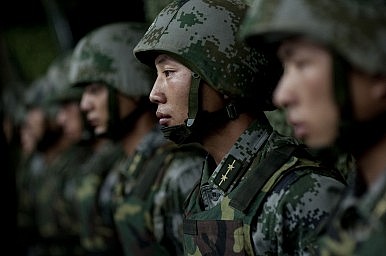
PLA has focused on modernising its capabilities across all warfare domains to achieve these goals. This includes land, air, and maritime operations, nuclear, space, counter-space, electronic warfare and cyberspace operations, aiming to become a fully integrated joint force.
Read Document →Transforming the PLA: A Decade of reorganisation from SSF to ISF
PRC has engaged in a sustained and broad effort to transform the PLA from an infantry-heavy, low-technology, ground forces-centric military into a high-technology, networked force with an increasing emphasis on joint operations and naval and air power projection.
Read Document →Eyes without Borders: Exploring the World of Open Source Intelligence (OSINT) in the Digital Age
Open Source Intelligence (OSINT) is gaining prominence with the rise of social media, the digital society and the vast growth of publicly and commercially available information (PAI and CAI).
Read Document →
The PLA’s Developing Cyber Warfare Capabilities and India's Options
Informationised warfare blurs the lines between peacetime and wartime. A nation in the information age cannot wait for the hostilities to break out to collect intelligence, carryout influence operations, develop antisatellite systems or design computer software weapons.
Read Document →
Galwan and After
Why did China did this when he is under tremendous pressure in all fronts, is this China's salami slice tactics being progressed rigorously, what will be new Rules of Engagement, what will be escalatory control mechanism, who has taken this decision, will there be some pressure put by China in India's North-East through insurgency.
Read Document →
India’s Joint Doctrine for Cyberspace Operations: A Critical Review
Chief of Defence Staff (CDS) General Anil Chauhan and Secretary, Department of Military Affairs, formally released declassified versions of the Joint Doctrines for Cyberspace Operations during the Chiefs of Staff Committee meeting in New Delhi.
Read Document →
Know your Enemy General(now Field Marshal) Syed Aseem Munir
Gen SA Munir's position in the hierarchy of Pakistan was not very comfortable. The state of economy, insurgency in Pakhtoonistan and Balochistan, attack on the Jaffar Express, constant protests by supporters of Imran Khan's supporters inside and outside of parliament.
Read Document →
Decoding Operation SINDOOR: Key Aspects and Implications
Precision strikes were carried out on nine sites—four in Pakistan and five in PoK—linked to anti-India terrorist groups such as the LeT, JeM and the Hizbul Mujahideen. The targeted sites included Muridke (LeT headquarters) and Bahawalpur (JeM headquarters).
Read Document →
Chinese Cyber Exploitation in India's Power Grid - Is There a linkage to Mumbai Power Outage?
The New York Times (NYT), based on analysis by a U.S. based private intelligence firm Recorded Future, reported that a Chinese entity penetrated India’s power grid at multiple load dispatch points. Chinese malware intruded into the control systems that manage electric supply across India, along with a high-voltage transmission substation and a coal-fired power plant
Read Document →27 January 2018
Pakistan’s Burgeoning Relationship with China
As a Pakistani journalist, China has always been of great interest to me. In recent years, I have had the opportunity to explore the country twice. Each time one visits China, it looks different and more developed compared to the last time. Many parts of the country are still changing rapidly. Pakistan’s most populous city, Lahore, is similar in that respect. In Lahore, in contrast to Pakistan’s other cities, there are roads, tunnels, buses, underpasses and other infrastructure, which look like they might have been designed in China’s capital, Beijing. It also seems that Pakistan wants to copy China at a broader level, following the investment – the largest in Pakistan’s history – in the multibillion dollar project, the China-Pakistan Economic Corridor (CPEC).What a U.S.-China Trade War Would Look Like
North Korea: China's Unwelcome Mirror
How Would a War Between the US and China End?
The question “How could war start between China and the United States?” has, quite reasonably, dominated much strategic analysis of East Asian politics. But wars that start have to end, sooner or later; Josh Rovner, associate professor in the School of International Service at American University, has repeatedly concentrated on the question “how does war between the United States and China end? In a recent article in the journal Diplomacy and Statecraft, Rovner notes that most analysts, and apparently most soldiers, expect that a war between China and the United States would end quickly. Theoretically, the collision of the two great reconnaissance-surveillance-strike complexes would quickly exhaust one side or the other of its most lethal weapons.China Wants Confrontation in the South China Sea
Turkey's Afrin Offensive and America's Future in Syria
The ISIS defeat myth: No one talks about ISIS sympathizers and US military remaining in Syria
Trump Should Abide by His Own National Security Strategy
With any other president occupying the White House, the above would be a strange headline. It typically goes without saying that presidents should follow their own strategies. But President Donald Trump’s raises a few questions — and not because it is a poorly crafted template for how the United States should engage with the world. Quite the opposite. The new National Security Strategy, released last month, is a commendable document that recognizes the reality of how countries interact and provides a comprehensive framework for the advancement of U.S. interests around the globe.Harnessing the Fourth Industrial Revolution for Life on Land
Serial Production of Russia's Deadliest Tank to Begin in 2020
Russia will begin serial production of the third-generation T-14 Armata main battle tank (MBT) in 2020 with the first batch of T-14s purportedly to be deployed to the country’s Southern and Western military districts, a Russian defense industry source said in Moscow this week. “In accordance with the 2018-2027 State Armaments Program, the serial production of the T-14 tanks based on the Armata platform is planned to begin in 2020, hundreds of tanks will be made,” the source told TASS news agency.The Glaring Flaws in the New Defense Strategy
Last week, retired Marine General now Secretary of Defense Jim Mattis released an 11-page summary of the nation’s latest national defense strategy. The strategy reflected the secretary’s philosophy and his experience as a brilliant practitioner of military art and a serious student of war in all its forms whose knowledge exceeds that of many scholars. The document is an extension of the last administration’s “four plus one” strategy.Analysts: U.S. nuclear modernization plan under-invests in cybersecurity
This is how democracies die
THE PENTAGON SHOULD ADJUST STANDARDS FOR CYBER SOLDIERS — AS IT HAS ALWAYS DONE
But while the private sector can offer higher pay and benefits to entice qualified applicants, the U.S. government isn’t so fortunate. To make matters worse, the federal government — including both the intelligence and defense community — has difficulty retaining the cybersecurity talent it already has, as talented experts may leave government service after a few years for lucrative private-sector jobs. Indeed, the National Security Agency, racked by deep morale problems, is suffering 8 to 9 percent attrition ratesamong its hackers.Can Mattis Succeed Where His Predecessors Have Failed?
Secretary of Defense James Mattis personally rolled out the U.S. government’s new National Defense Strategy in a speech last week, signaling his intellectual and bureaucratic ownership of the document. This is a good thing, and as one might expect from the so-called warrior monk, the strategy is a lot more about sensible approaches to a very complicated world — including a very strong emphasis on diplomacy and alliances — than it is about President Donald Trump’s “America First” agenda.Is Creativity Finally Dead?
Creativity has been on a downward spiral in many segments of society as a result of profound information overload. We can call up information on almost any topic with a few clicks of the keyboard. As a result, we’ve gained massive amounts of awareness into the way our world works and into things and people and places of which we would previously have never been exposed. And yet we’ve lost something, too: We’ve lost a sense of the powerful dangers of knowledge. We’ve lost the ability to create meaning and substance out of the power of not-knowing.2018: Innovation — Trends and Opportunities
Technology is moving at an incredible pace. We live in an amazing era where things like autonomous cars, personalized medicine and quantum computing are becoming real as we speak; Artificial Intelligence, crypto-currencies, advanced automation, deep learning and concepts like Universal Basic Income are about to reshape our world — what an exciting era to live! he years to come will bring impressive technological breakthroughs with massive impact on our lives, markets and societies. In our connected world, with the unprecedented level of information, knowledge and ideas exchange, innovation is happening continuously, at scale and in several forms; it is driven by corporations, secret labs, universities, startups, research scientists or simply by thousands of creative individuals across the globe.18 technology predictions for 2018
We are living in interesting times. Multiple technologies, improving exponentially, are converging. I have been chronicling this convergence for several years in my newsletter, Exponential View. As Bill Gates said, “Most people overestimate what they can do in one year and underestimate what they can do in ten years.” Likewise, most annual predictions overestimate what can occur in a year, and underestimate the power of the trend over time. Here are 18 areas, excluding climate change risks, which I think will be interesting to watch in the new year and why:Don’t Know What You’ve Got Till It’s Gone
Why Cyberattacks Don’t Work as Weapons
Cyberattacks must also be understood as a phenomenon of political violence and combated as such, says Myriam Dunn Cavelty. Digitalisation will fundamentally alter many aspects of our lives – in many cases for the better. However, our increasing dependence on computers and networks for data exchange and storage is creating new vulnerabilities for both individuals and society. The key word here is: cybersecurity. This encompasses more than just technical solutions: it involves not only security in cyberspace, but also security that is influenced by cyberspace.Cyber Threats to Democratic Processes
In this article, David Siman-Tov et al highlight how elections are vulnerable to cyberattacks and other information operations, and how such weaknesses leave democratic nations open to the influence of foreign powers. Our authors conclude that the threat posed by such vulnerabilities is such that nations must recognize elections as a form of critical infrastructure. Further, states must protect each competent of electoral processes – including the media, public discourse, political parties and the voting system itself – if they are to preserve the health of their democracy.6 reasons to be optimistic about the future of work
The path to a good life appears increasingly difficult to find and pursue for a growing number of people. A key factor driving these concerns is the extent to which opportunities for finding stable, meaningful work have increasingly become polarized, favouring those fortunate enough to be living in certain geographies and to be holding certain in-demand skills. We need a future in which a range of options open up for the many, not just for the few. How can we prepare everyone for the displacement – and the new opportunities – to come? Here are six findings from our new report, Towards a Reskilling Revolution: A Future of Jobs for All, on creating a future of jobs for all:5 key trends for the future of healthcare
A human embryo’s DNA is “edited” to take out a disease. Surgeons practice complicated procedures on models created by 3-D printers. A pre-programmed drone collects blood samples from residents of a rural village and travels back to the capital. These awe-inspiring scenarios have all recently unfolded in what is undoubtedly a golden era of innovation in healthcare. Rapid change and unprecedented opportunity are now the hallmarks of the biopharmaceutical industry. But the future of health won’t just be defined by the innovations we set out to create; it will be equally shaped by how we respond to — and anticipate — the challenges and consequences of each great advancement. The more we know, the more “known unknowns” are revealed. The boundaries of areas left for researchers to explore constantly expand, while possible applications of new technologies proliferate.50 Years Ago, A US Military Jet Crashed In Greenland - With 4 Nuclear Bombs On Board
The kill chain: inside the unit that tracks targets for US drone wars
In a dimly lit room at McConnell air force base in south central Kansas, analysts from a national guard intelligence reconnaissance surveillance group watch live drone surveillance video coming from war zones in the Middle East. During combat, the analysts become part of a “kill chain” – analyzing live drone video, then communicating what they see – in instant-message chat with jet fighter pilots, operators of armed Predator and Reaper drones, and ground troops. They carry out drone warfare while sitting thousands of miles from battlefields. They don’t fly the drones and don’t fire the missiles. They video-stalk enemy combatants, and tell warfighters what they see. The work, they say, helps kill terrorists, including from Isis. the group does this work in the middle of America, at an air base surrounded by flat cow pastures and soybean fields. The 184th Intelligence Wing of the Kansas air national guard, started this work about 2002. Until last year, most people in Kansas knew nothing about their role in drone warfare.WHEN DAUNTLESS ISN’T ENOUGH: THE MORAL AND STRATEGIC IMPERATIVE TO FIX AMERICA’S CLOSE COMBAT UNITS
Nearly 80 years ago, the German blitzkrieg took Europe by storm. Often lost in discussions about the German military’s panzers and Luftwaffe is that the assault on France would have never succeeded had it not been for “the remarkable performance of the German infantry.” Yes, it was the world’s best infantry small units that set the conditions for the German blitzkrieg in Sedan, France, allowing Germany to capture almost all of Western Europe in a month’s time. When the German Army was stopped at the Meuse River in Sedan, these small units, led by carefully selected and trained sergeants, crossed the water obstacle via small boats and then rapidly destroyed dozens of “pillbox” positions that anchored the French defensive system. The speed in which the Wehrmacht’s close combat “storm-troopers” destroyed these positions enabled their armor forces to cross the Meuse and continue their attack to the English Channel faster than the French could respond.