 Immediately after the first gulf war in the early 1990’s the theories of Revolution in Military Affairs (RMA) and Information Warfare were being studied all over the world as a new kind of warfare. During that time, a course on Information Warfare was conducted at the National Defense University of USA. The course participants were from senior officers of the armed forces, representatives of Department of Defence and Department of State and policy makers from the government. Rand Corporation of US was conducting this course. Continue reading.......
16 July 2020
Cyber Wargame - An Indian Scenario
Immediately after the first gulf war in the early 1990’s the theories of Revolution in Military Affairs (RMA) and Information Warfare were being studied all over the world as a new kind of warfare. During that time, a course on Information Warfare was conducted at the National Defense University of USA. The course participants were from senior officers of the armed forces, representatives of Department of Defence and Department of State and policy makers from the government. Rand Corporation of US was conducting this course. Continue reading.......Why India and Russia Are Going to Stay Friends
BY EMILY TAMKIN
 In December 1971, India and Pakistan fought for 13 days—one of the shortest wars in history—over the humanitarian crisis in East Pakistan, now Bangladesh. India had, for months, been trying to convince the world that West Pakistan’s subjugation of East Pakistan was an emergency. Refugees from East Pakistan were pouring into India, and the situation would only be improved with a resolution of the political predicament between West and East Pakistan.
The Soviet Union was the only country that listened. In August of that year, Indian Prime Minister Indira Gandhi signed the India-Soviet Treaty of Peace, Friendship and Cooperation. Gandhi had held off on completing the agreement for domestic political reasons; she had not wanted to give fodder to those political opponents who accused her of being too cozy with the Soviet Union. But international concerns were soon more pressing: With the signing of the treaty, the Soviet Union provided India both the diplomatic and arms support it needed for the war Gandhi knew was coming, helping India over Pakistan.
While the world in 2020 is in many ways changed from that time, 1971 looms large in the India-Russia relationship today. Moscow was a reliable partner for New Delhi when no one else was. And the United States, meanwhile, actively ignored India’s pleas to deal with the situation in East Pakistan: President Richard Nixon and National Security Advisor Henry Kissinger considered Pakistan a key go-between in opening relations with China.
India: Emerging Challenge In Punjab – Analysis
On July 5, 2020, the Union Ministry of Electronics and Information Technology reportedly took down 40 websites run and operated by the pro-Khalistan Sikhs For Justice (SFJ), on a recommendation from the Union Ministry of Home Affairs (UMHA). These websites were being used to propagate anti-India sentiment across the world and for trying to recruit young Sikhs to join militant ranks. Though both these ministries refused to disclose details of websites that were blocked, one of the prominent websites associated widely with the group – www.referendum2020.org – through which the SFJ sought support from Sikh youth for the formation of a separate ‘Khalistan State’, is not accessible. The SFJ’s Facebook page has already been blocked in India.
The spokesperson of the UMHA said that the action (blocking the websites) was taken subsequent to the outfit launching online voter registration for ‘Referendum 2020’. On July 4, 2020, SFJ launched its online voter registration for ‘Referendum 2020′ for people in Punjab through a Russian portal, www.punjabfree.ru. ‘Referendum 2020’ seeks to “liberate Punjab from Indian occupation”. The website was blocked in India, shortly after going online.
Unconfirmed reports, meanwhile, indicate that SFJ, without announcing any new dates, has deferred its ‘Referendum 2020’ programme to 2022, citing the COVID-19 pandemic as its reason. The possibility of deferment had been in the air since Pakistan-based Khalistani leader Gopal Singh Chawla had stated on May 29, 2020, “Neither is it written in Quran nor in Guru Granth Sahib that ‘referendum 2020’ has to be held in 2020 only.” There is now no clarity over the ‘referendum’ date.
Taliban Stage a Major Attack, as Violence Intensifies in Northern Afghanistan
 KABUL, Afghanistan — The Taliban waged a sustained assault against an Afghan intelligence complex in the city of Aybak on Monday, killing at least 11 people and wounding more than 60 others, part of a bloody wave of violence across the country’s north.
With the opening of peace talks between the insurgency and the Afghan government stalled for months, the Taliban have intensified their offensives, creating one of the deadliest years of the long war.
On Monday, insurgents detonated a car bomb at the entrance of the provincial headquarters of Afghanistan’s National Directorate of Security in Aybak, the capital of Samangan Province, about 150 miles northwest of Kabul.
The blast, which also struck a nearby municipal compound, opened the way for fighters to enter the intelligence agency complex, where they battled the Afghan forces for hours, said Sefatullah Samangani, the deputy governor of the province.
Mr. Samangani said 11 officers of the intelligence agency, mostly men but at least one woman, were killed and 63 others were wounded. Only 15 of the wounded were intelligence officers and the rest civilians.
As US Moves To Exit Afghanistan, Rivals Prepare To Swoop In – Analysis
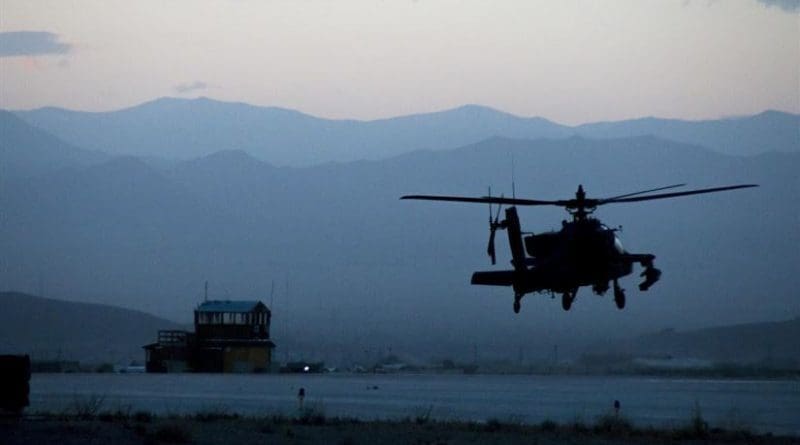 (RFE/RL) — The U.S.-led invasion of Afghanistan in 2001 was backed by most countries in the region, who shared the goal of ousting the extremist Taliban regime and eliminating the allied Al-Qaeda terrorist network.
The governments in Tehran, Moscow, and Islamabad readily helped the United States fight the extremist groups.
Iran provided crucial intelligence to support U.S. special forces and CIA teams orchestrating the invasion.
Russia supplied Soviet-era maps and intelligence and later allowed the U.S. military to send supplies to Afghanistan through its territory.
Even Pakistan, the chief backer of the Taliban, offered its assistance in helping hunt down Al-Qaeda militants and became the main supply line for NATO forces.
But in the intervening 19 years, the regional consensus favoring the U.S. troops in Afghanistan has eroded.
Through Hong Kong, Beijing Channels Its Repression to the World
By Sarah Cook
 There are many unprecedented and appalling dimensions to the new National Security Law that Beijing has imposed on Hong Kong. In one stroke, China’s unelected leadership stripped away the freedoms and legal protections that have long set the city apart from the mainland. Among the law’s most startling provisions is Article 38, which effectively applies criminal penalties for vague political offenses to anyone, anywhere in the world, regardless of whether they have a substantial connection to Hong Kong. As legal experts have noted, this extraterritoriality makes the measure even more expansive than the mainland’s own National Security Law.
But Article 38 — with all its implications — is only one of several steps that Chinese authorities have taken over the past month to assert control over views expressed abroad and to intimidate both foreign and Chinese citizens overseas. Taken together, these moves are forcing people around the world to reassess travel itineraries, business models, and communication methods. While some policymakers, foreign leaders, and civil society groups have been outspoken in their criticism of Beijing’s actions, they may ultimately be the outliers in a new global wave of self-censorship.
Overseas Students and Critics in Beijing’s Crosshairs
The Upside of a New Cold War With China
Hal Brands
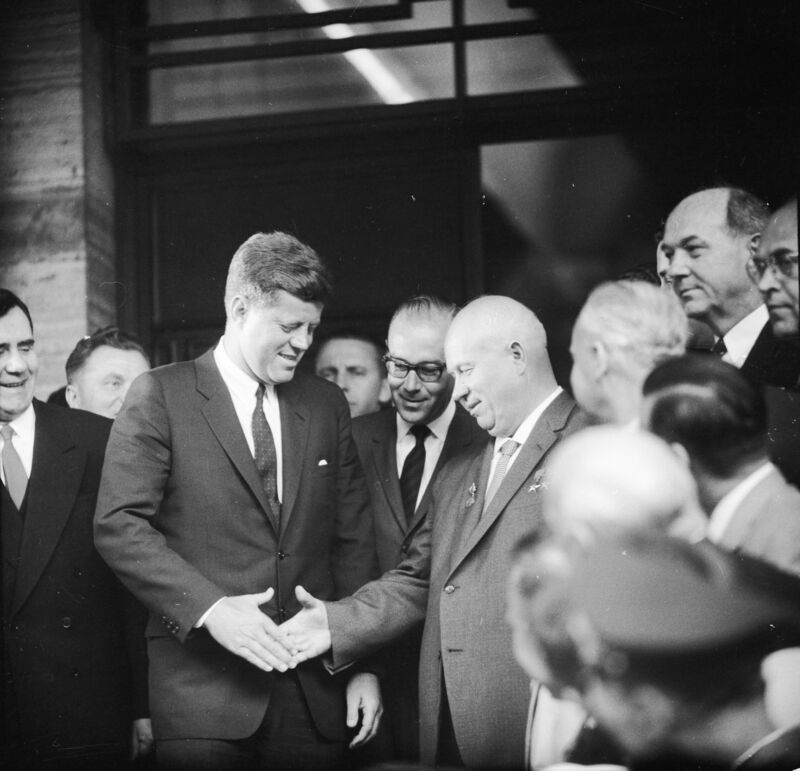 The American founders believed that prolonged rivalry and conflict abroad would eventually degrade the country’s democracy at home. Today, many of the strongest warnings against a “new Cold War” with China have a similar ring.
The New York Times, the Economist and pundits such as Fareed Zakaria have all warned of a “new Red Scare.” The implication is that geopolitical dangers could again cause a narrowing of political expression, a feverish search for internal enemies and a corrosion of the liberties U.S. foreign policy is supposed to defend.
That fear is reasonable: The Cold War showed that great democracies are not immune to committing self-harm in the name of security. But the history of that struggle also teaches a more hopeful lesson — that competition can create virtuous pressures for a nation to become a better version of itself.
The thesis that strategic rivalry undermines democracy is deeply rooted in history. During the Peloponnesian War, the strains of a long struggle against Sparta debased the politics of a relatively liberal Athens. At the founding of the American republic, Alexander Hamilton warned that a “state of continual danger” might convince citizens to “run the risk of being less free.”
Europe changes its mind on China
Thomas Wright
Over the past few years, the European Union and a handful of other European countries have reluctantly moved away from a China policy organized around economic engagement toward a policy of limiting China’s influence in Europe for strategic and security reasons. This is a distinctly and uniquely European style of balancing, which involves marshaling Europe’s internal power and working to build unity across member states. It has almost nothing to do with kinetic military power and is instead focused on technology, diplomacy, economics, and politics.
The driving force behind this shift is China’s behavior — its refusal to end practices of intellectual property theft and forced technology transfers, its failure to enhance market openness for European companies, its use of coercive economic tools and political influence in Europe, and its illiberalism on the world stage. In some ways, the European shift is occurring despite American pressure, not because of it. If China were a responsible stakeholder, U.S. pressure would very likely lead to Europe hedging against the Trump administration and increasing engagement with Beijing. After all, most Europeans are profoundly worried by President Donald Trump, and China seemed well poised to take advantage of this with adroit diplomacy to weaken the trans-Atlantic bond. That it utterly failed to do so shows how badly Beijing has bungled its Europe policy.
With all of that said, Europe is far from united behind this strategic shift. There are Europe-wide divisions, differences between countries, and within them. German Chancellor Angela Merkel remains the most important figure on the pro-engagement side. But unless China’s behavior becomes more benign, Europe’s evolution toward balancing looks set to continue.
Trying to loosen the linchpin: China’s approach to South Korea
Jung H. Pak
China sees South Korea as a critical part of its effort to establish its preeminence in Northeast Asia. South Korea’s status in the U.S. alliance architecture as the “linchpin” and its central role regarding North Korea issues, as well as its geographic proximity and economic dynamism, have underscored the country’s importance to China’s regional strategy. This strategy is driven by a desire to weaken Washington’s alliance relationships, increase Beijing’s influence on Korean Peninsula affairs, including North Korea denuclearization, and shape the region to be more amenable to supporting its preferences.[1] Beijing perceives Seoul as the weakest link in the U.S. alliance network, given its perception of South Korea’s deference and history of accommodating China’s rise relative to other regional players, such as Japan, which considers China a long-term security threat.[2]
For most of the two decades following the normalization of bilateral relations in 1992, Beijing primarily employed its soft power — encouraging economic interdependence and people-to-people ties, emphasizing China’s desire for peace and prosperity in the region, and highlighting its role as a “good neighbor,” for example — to woo South Korea. Seoul has welcomed the blossoming of trade cooperation and further developing security cooperation in large part because South Korean leaders view China’s cooperation as vital to Seoul’s North Korea policy, even as its leaders became increasingly wary about China’s rise and aggressiveness.
China’s Latest Crackdown in Hong Kong Will Have Global Consequences
STEVEN FELDSTEIN
On June 30, China passed a new national security law in Hong Kong that upended the city’s politics and threw the tech community into disarray. The law’s draconian provisions criminalize a range of activities and give law enforcement agencies power to carry out sweeping surveillance and censorship measures.
Not only is the law designed to break the back of the Hong Kong protest movement, but China’s actions effectively put an end to the one country, two systems model. This unusual governing arrangement had traditionally guaranteed Hong Kongers expanded rights of free expression beyond those held by citizens of mainland China. In substitute, Chinese authorities have taken decisive steps to bring Hong Kong into the fold of China’s Great Firewall—a closed, censored version of the internet that blocks most foreign apps and platforms from operating.
HOW ARE GLOBAL TECH COMPANIES RESPONDING
Some of these effects are already happening. A dramatic chill has descended over online speech in Hong Kong as the government prepares to implement the directive. Newspapers report that several apps designed to categorize businesses’ political affiliations (whether certain establishments are pro-mainland Chinese or pro-protester) have suspended their services. Some people are preemptively self-censoring their online content—taking down pro-independence posts, removing likes of protester group pages, and deleting social media accounts critical of the government. Amid rumors that WhatsApp may start handing over users’ private data to Chinese authorities, Hong Kong has experienced a surge of downloads of the encrypted communications app Signal.
The Houthi Art Of War: Why They Keep Winning In Yemen – Analysis
By Michael Horton*
Introduction
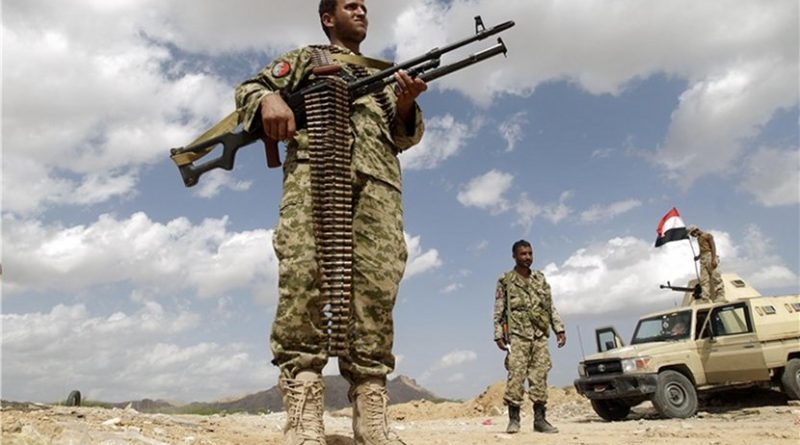
Underestimating or having contempt for an enemy, argues Lao Tzu, is among the costliest mistakes a commander can make. [1] This alone has led to more defeats than any other miscalculation. Conversely, underestimating the enemy is a great asset to those who are underestimated. The military and political capabilities of Yemen’s Houthi rebels have been underrated for nearly two decades. First, by the government of former Yemeni president Ali Abdullah Saleh, and then by Saudi Arabia and its supporters, including the United States.
From 2004-2010, the government of Ali Abdulla Saleh fought and lost six wars against the Houthis. The Houthi takeover of the Yemeni capital of Sana’a in September 2014 and their subsequent move southward toward Aden partly prompted Saudi Arabia and the UAE to launch their ill-fated intervention in Yemen in March 2015. The Saudis and Emiratis bet on a quick victory over the Houthis. Now, more than five years on, it is clear they have lost their bet. The Houthis and those allied with them have proved themselves to be resilient, capable, and strategically and tactically creative.
Yemen’s disaster becomes “cataclysmic”
Bruce Riedel
The five year-old war in Yemen is intensifying. The country is splitting apart as the pandemic ravages the poorest country in the Middle East. The war is a burden on the Saudi economy, dooming hopes of diversification. Iran is the winner in the quagmire.
The Saudis staged air strikes on Sana’a and other cities in the north under the control of the Zaydi Shiite Houthi rebels last week. At least 40 air attacks hit the capital. Another target was Saada, the home of the Houthis’ leadership. The Saudis say they are trying to kill the top Houthi officials.
The attacks follow the firing of missiles and drones at Riyadh and other Saudi cities and towns. The Saudis claim to have shot down the missiles. The Houthis claim they hit the Saudi Ministry of Defense.
The escalation in the fighting marks the failure of months of efforts to arrange a ceasefire, including the Saudi public call for a unilateral ceasefire. The Saudis are well aware that the war costs them a fortune, at a time when global oil demand is sharply down and Saudi revenue is low. Saudi oil is selling for around $40 a barrel, less than half what the kingdom needs to break even. The details of the multiple efforts at arranging a ceasefire are unknown, but certainly the Houthis don’t feel much compulsion to quit while they are winning on the ground. The war rallies many Yemenis against the hated foreign Saudis.
Florida Breaks U.S. Coronavirus Record for Most New Cases in a Day

The number reflects both increased testing and a surge in transmission of the virus that has strained hospitals, led to shortages in a key antiviral drug and amplified fears about the pace the state lifted restrictions on movement and commerce. And it is a new red mark on the nation’s floundering efforts to combat the virus.
“It has just been horrifically busy,” John Toney, a professor of infectious diseases at the University of South Florida, said of hospitals where patients were flooding in and doctors and nurses were growing overwhelmed and exhausted.
“It’s reminiscent of what everyone dealt with in New York,” Professor Toney said. “It’s certainly putting a strain on a lot of the systems, even though hospitals are trying to accommodate.”
After months of decline, America’s coronavirus death rate begins to rise
By Joel Achenbach, William Wan, Amy Goldstein and Joshua Partlow
Source Link
The daily death toll from America’s coronavirus crisis rose sharply this week amid a dramatic surge in confirmed infections across the South and West that has inundated hospitals with ill patients and forced several states to pause or reverse plans to reopen businesses.
Texas, Arizona and South Carolina have all seen their death tolls rise by more than 100 percent in the past four weeks, according to an analysis of state and county health data by The Washington Post. Four more states — Mississippi, Tennessee, California and Louisiana — have seen at least a 10 percent jump in that time span.
“They’re starting to tick up,” said Jennifer Nuzzo, a senior scholar at the Johns Hopkins Center for Health Security. “Deaths are a lagging indicator, so we always expected that if they were going to go up, it would take some time.”
As Arizona becomes the coronavirus epicenter, a dire warning from health-care workers
Arizona reported a record number of hospitalizations on July 2 due to a spike of covid-19 cases. Health workers urged the public to wear masks and stay home. (Zoeann Murphy/The Washington Post)
The Next Liberal Order
By G. John Ikenberry
 When future historians think of the moment that marked the end of the liberal world order, they may point to the spring of 2020—the moment when the United States and its allies, facing the gravest public health threat and economic catastrophe of the postwar era, could not even agree on a simple communiqué of common cause. But the chaos of the coronavirus pandemic engulfing the world these days is only exposing and accelerating what was already happening for years. On public health, trade, human rights, and the environment, governments seem to have lost faith in the value of working together. Not since the 1930s has the world been this bereft of even the most rudimentary forms of cooperation.
The liberal world order is collapsing because its leading patrons, starting with the United States, have given up on it. U.S. President Donald Trump, who declared in 2016 that “we will no longer surrender this country . . . to the false song of globalism,” is actively undermining 75 years of American leadership. Others in the U.S. foreign policy establishment have likewise packed their bags and moved on to the next global era: that of great-power competition. Washington is settling in for a protracted struggle for dominance with China, Russia, and other rival powers. This fractured world, the thinking goes, will offer little space for multilateralism and cooperation. Instead, U.S. grand strategy will be defined by what international relations theorists call “the problems of anarchy”: hegemonic struggles, power transitions, competition for security, spheres of influence, and reactionary nationalism.
Leaving the WHO Is No Way to Deal With a Pandemic
Stewart M. Patrick
 Secretary of State Mike Pompeo formally notified the United Nations last week that the United States would withdraw from the World Health Organization. This imprudent step, taken in the midst of a rapidly accelerating pandemic, weakens global health at the precise moment it needs to be bolstered. It will endanger lives around the world while further shredding America’s tattered reputation as an enlightened global leader.
Rather than abandoning the WHO and scapegoating it for its own failures, the United States ought to be reinforcing the U.N. agency’s central role in global health governance. That won’t happen while Donald Trump remains in the White House, of course. Fortunately, the U.S. decision only takes full effect on July 6, 2021, meaning that Joe Biden could rescind it if he wins the November election. Reversing Trump’s course on the WHO should be part of a broader multipronged effort by Biden, if he’s elected president, to strengthen the world’s collective capacity to prepare for and respond to future pandemics, as well as combat the current one. ..
Trees Are Still Our Best Defense Against Global Warming – OpEd
By Dr. Michael A. Bengwayan
Anyone who argues against trees being our best defense against global warming is either detached from reality or has never sat under a tree.
Trees are undervalued assets in meeting the twin global challenges of our time: achieving prosperity and safeguarding climate stability. It’s time we gave them the attention – and finance – that they deserve.
Pledges like the Paris Agreement are welcome, but they are not yet sufficient to avert catastrophic global warming. Tropical forests provide an opportunity to close the gap.
For many forest-rich developing countries, like the Philippines, deforestation, not fossil fuel use, is the major source of emissions. greenhouse gas emissions. So halting deforestation would be a giant step toward taming climate change.
That’s not all. Standing forests soak up carbon into vegetation and soil, providing a safe and natural Carbon Capture and Storage (CCS) technology. If we were to stop tropical deforestation tomorrow, allow damaged forests to grow back, and protect mature forests, the resulting reduction in emissions and removal of carbon from the atmosphere could equal up to one-third of current global emissions from all sources.
Inconvenient Truths About US Debt Explosion – Analysis
By Dan Steinbock
 The resurgence of COVID-19 in the United States is paving the way to a debt record, even relative to government debt at the end of World War II. The collateral damage in global recovery will be significant.
The delays and containment failures of the COVID-19 in major advanced economies, particularly the United States, are morphing into a faster-than-expected series of economic challenges, including debt crises.
Only two quarters ago, US federal debt hovered around $23 trillion; a stunning 106% as percentage of the GDP. Today – after barely two quarters – that debt is close to $27 trillion (Figure 1). Moreover, as US GDP has drastically contracted, the debt-to-GDP ratio is now closer to 133%; higher than that of Italy in 2018, or Greece prior to its debt crisis in 2010.
But unlike Italy or Greece, US is one of the global anchor economies. Consequently, spillover effects will ensue. Furthermore, both US government debt and the debt-to-GDP ratio will continue to climb.
Ron Paul: Will The Federal Reserve Cause The Next Riots? – OpEd
By Ron Paul
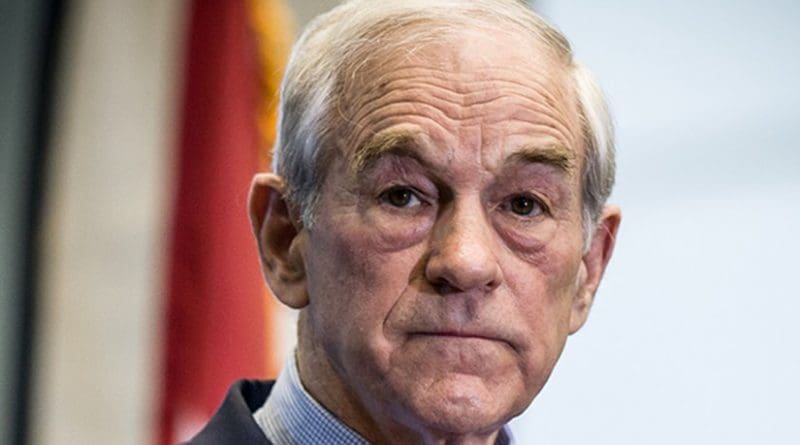 Federal Reserve Chair Jerome Powell and San Francisco Fed President Mary Daly both recently denied that the Federal Reserve’s policies create economic inequality. Unfortunately for Powell, Daly, and other Fed promoters, a cursory look at the Fed’s operations shows that the central bank is the leading cause of economic inequality.
The Federal Reserve manipulates the money supply by buying and selling government securities. This means that when the Fed decides to pump money into the economy, it does so by putting it in the pockets of wealthy, and oftentimes politically-connected, investors who are able to spend the new money before the Fed’s actions result in widespread inflation. Wealthy individuals also tend to be among the first to invest in the bubbles that form when the Fed distorts interest rates, which are the price of money. These investors may lose some money when the bubble bursts, but these losses are usually outweighed by their gains, so they end up profiting from the Fed-created boom-bubble-bust cycle.
In contrast, middle-class Americans lose jobs as well as savings, houses, and other assets when bubbles burst. They will also not benefit as much as the rich and well-connected from government bailouts and stimulus schemes. Middle- and working-class Americans also suffer from a steady erosion of their standard of living because of the Fed’s devaluation of the currency. This is the reason why so many Americans rely on credit cards to cover routine expenses. The Federal Reserve is thus the reason why total US credit card debt is almost one trillion dollars.
Taiwan faces a changed economic outlook in Asia following COVID-19
Liu Shih-chung
The outbreak of the COVID-19 pandemic brought cities across much of the globe under lockdown, forcing businesses to close and people to stay at home. However, in contrast to most parts of the world, people in Taiwan have been able to maintain many of their freedoms, retaining key elements of a normal life under certain social distancing rules. It even managed to hold free and fair presidential and legislative elections in January, without notable effects on public health. The successful story of Taiwan’s fight against COVID-19 has garnered it worldwide praise as a model, with Taiwan showing itself to be a “beacon of democracy” in many ways. After containing the pandemic following the election, Taiwan has earned the world reputation of being a “nation of resilience.”
Taiwan’s democratic institutions have been central to its efforts to contain the coronavirus, which have involved a combination of preventive awareness, concerted government efforts, public diligence, and a great deal of hard work from health care workers and other essential actors. As a result, Taiwan has not only contained the virus within its borders; it has also taken actions to help others.
But as the challenges associated with COVID-19 on the global economy unfold, it is clear that the pandemic has not only undermined economic growth for most countries, but also shifted global supply chains. The risks Taiwan will face ahead are multifaceted. Many leaders are preoccupied with post-pandemic economic bailouts and rejuvenation, exploring solutions to tackle rising unemployment and save small and medium businesses in particular. For her part, the newly reelected President Tsai Ing-wen and her administration have laid out a future blueprint to address the challenges Taiwan faces.
THE EFFECTS OF COVID-19 ON ASIAN ECONOMIES
The U.S. Defense Space Strategy works on paper, but will it be implemented?
Frank A. Rose
It’s become increasingly clear that outer space is a key domain of U.S. and international security, and the Trump administration has made it a priority in recent years. On June 17, the Department of Defense (DOD) released a summary of its new Defense Space Strategy (DSS). The document outlines a strategy for advancing U.S. military space power over the next 10 years.
Some experts have criticized the strategy, arguing that it lacks sufficient detail and coordination, especially when compared to the 2011 Obama administration National Security Space Strategy, issued jointly by DOD and the Office of the Director of National Intelligence. Though some of these criticisms are fair, overall, the DSS provides the guidance that DOD needs to plan and structure its forces to address the increasing threat to U.S. and allied systems from countries like Russia and China.
The biggest challenges the strategy faces are fundamentally political. While it rightly recommends that the United States increase space cooperation with allies, the statements appear directly at odds with President Trump’s negative rhetoric and actions towards key U.S. allies. Moreover, terms like “space superiority” are politically problematic. Russia and China will use them to falsely claim that the United States is responsible for “weaponizing” outer space, even though it is those countries that are aggressively developing and deploying anti-satellite weapons.
WHAT THE STRATEGY SAYS
How to cut (and not cut) the defense budget
Michael E. O’Hanlon
Whether Joe Biden or Donald Trump wins the presidential election in November, the United States could soon face a triple-whammy on the defense budget front.
First, nothing has gotten easier about dealing with the threats that existed before the coronavirus struck — from Putin’s Russia to Xi’s China to North Korea, Iran, and terrorism. Second, several new types of threats are more palpable and foreboding than ever, as COVID-19 has revealed; some will require more resources to address. Third, the nation’s fiscal plight is dire. Publicly held debt will likely exceed U.S. gross domestic product (GDP) later this year, and keep growing after that, even with a strong recovery.
In this environment, defense critics will make hay of the fact that at nearly $750 billion, while modest as a percent of GDP, the annual national defense budget exceeds its Cold War average by more than $200 billion in real terms. Some were already calling for cuts of as much as $200 billion in the annual defense budget before the COVID-19 crisis.
As scholars like former John McCain aide Chris Brose have warned, the American armed forces already routinely “lose” to China in combat simulations set in the western Pacific. How can the nation modernize its military, stay vigilant against rising great powers, handle existing challenges, and save some money in the process?
As Challenges Mount, Can Europe Correct Its Course?
 The liberal European order that emerged after World War II and spread after the collapse of the Soviet Union is now under attack from both within and without. The European Union—the ultimate expression of the European project—has become a convenient punching bag for opportunistic politicians in many of its member countries, as anti-EU sentiment has become part of the broader populist platform of protectionism and opposition to immigration. The EU still managed to withstand its latest challenge when the gains made by populist parties in last year’s European Parliamentary elections fell short of expectations.
Nevertheless, Britain’s withdrawal from the union, known as Brexit, has now become official, and there is no way of knowing whether the populist wave has crested. Illiberal governments hold power in Hungary and Poland, and a far-right party was part of a coalition government in Austria until its recent collapse. Centrist leaders seem unable to come up with a response to immigration that doesn’t alienate more voters than it unites. And now the coronavirus pandemic has further highlighted the EU’s difficulty in providing effective collective responses to a crisis that, at least initially, saw each member state looking out for itself.
The Collection Edge: Harnessing Emerging Technologies for Intelligence Collection
U.S. intelligence collection organizations can leverage emerging technologies such as artificial intelligence (AI), advanced sensors, cloud computing, and advanced analytics, to improve how intelligence is gathered, processed, and exploited for operations.
These technologies could enhance and automate a variety of core collection and processing tasks across intelligence domains and enable collection to better adapt to changing adversary behavior and operating environments.
The fielding of “edge” sensors and processing devices with AI and cloud computing could transform where, how, and how fast intelligence is collected to drive operations and decisions.
U.S. adversaries will also be innovating rapidly to develop, field, and exploit tech-enabled intelligence tools to degrade and disrupt U.S. and allied collection.
In the competition for the technological-intelligence advantage, the United States will need to accelerate the speed and scale at which technology is acquired and integrated and the skillsets and missions of intelligence professionals are adapted in order to stay ahead.
Rethinking the Technological Story of the Pacific Theater of the Second World War
By Robert Farley
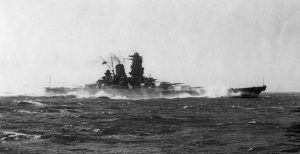 Is the fundamental technological story of naval battle in the Pacific War wrong? For a very long time, the narrative of the relative effectiveness of battleships and aircraft carriers has been told as one of stunning reversal, with the Pearl Harbor attack and the sinking of two British battleships off Malaya confirming the primacy of airpower (naval or no) and the obsolescence of the battleship. While historians have always had reservations about this narrative, it has retained a firm popular grip and substantial scholarly support. However, a new article in the Journal of Military History argues that the advantages of aircraft carriers over battleships has been wildly overstated in historical memory of World War II, even in the Pacific. James FitzSimonds argues that battleships remained central to naval power in the Pacific, even into 1944 and 1945 when the great U.S. Navy carrier task forces seemed to dominate the sea.
FitzSimonds argues that carrier aircraft lacked the ability to reliably sink or even damage battleships operating at sea, or sitting at port under guarded conditions. Very few battleships fell victim solely to attack by carrier aircraft, and that only in 1944 and 1945 when U.S. advantages were enormous. Explicit in the argument is that Japanese, American, and British admirals could have used their battleships more aggressively, even in the face of enemy air superiority. To some extent this is probably true, at least at the margins. Previous scholarly work has explored whether the U.S. Navy used its battleships efficiently during the war, concluding that the survivors of Pearl Harbor were badly under-utilized in 1942 and 1943. And Fitzsimons is probably correct in the implication that the two largest Japanese battleships, Yamato and Musashi, were effectively immune to destruction (if not damage) by carrier-based air in 1942 and 1943. More aggressive use of battleships by both sides in, for example, the Solomon Islands campaign was probably called for.
Ethics And Artificial Intelligence: An Unethical Optimization Principle

Artificial intelligence (AI) is increasingly deployed around us and may have large potential benefits. But there are growing concerns about the unethical use of AI. Professor Anthony Davison, who holds the Chair of Statistics at EPFL, and colleagues in the UK, have tackled these questions from a mathematical point of view, focusing on commercial AI that seek to maximize profits.
One example is an insurance company using AI to find a strategy for deciding premiums for potential customers. The AI will choose from many potential strategies, some of which may be discriminatory or may otherwise misuse customer data in ways that later lead to severe penalties for the company. Ideally, unethical strategies such as these would be removed from the space of potential strategies beforehand, but the AI does not have a moral sense, so it cannot distinguish between ethical and unethical strategies.
In work published in Royal Society Open Science, Davison and his co-authors Heather Battey (Imperial College London), Nicholas Beale (Sciteb Limited) and Robert MacKay (University of Warwick), show that an AI is likely to pick an unethical strategy in many situations. They formulate their results as an “Unethical Optimization Principle”: